The BBC has named Phnom Penh one of the 20 best places to travel in 2026 and I can see why. It’s a vibrant city, full of movement and colour – so much colour – with an interesting mix of historical and contemporary attractions – not to mention exquisite cuisine. In this post I delve more into the city’s history and heritage including a harrowing but educational trip to the Choeung Ek Genocidal Centre, one of 300 Killing Fields across Cambodia. To revisit my first post on Phnom Penh go to https://thisquirkylife.com/2025/12/30/fun-festivities-and-flavours-in-cambodia-phnom-penh-and-battambang-part-1-of-3/.
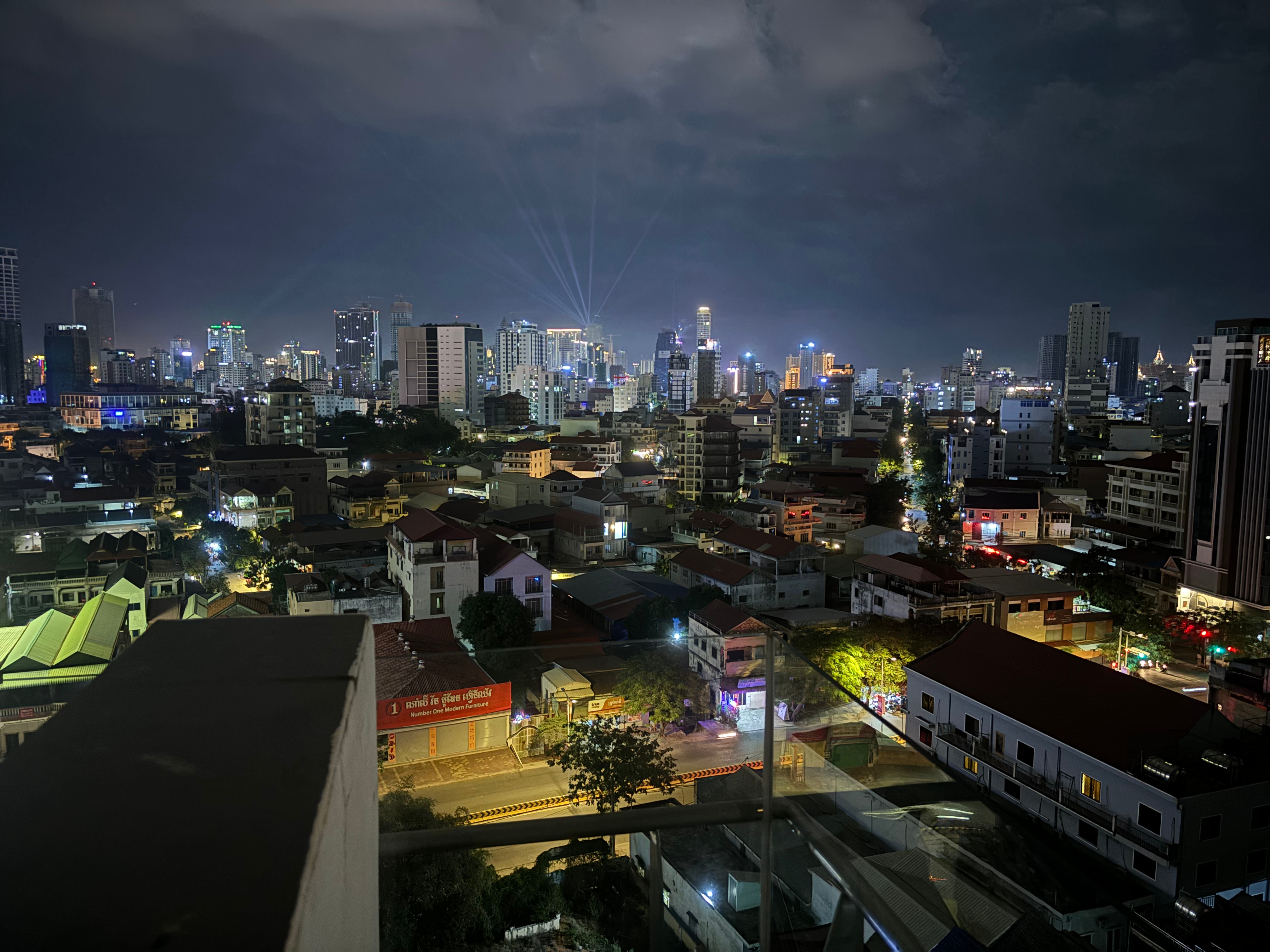
Di and I had seen in the New Year on the rooftop of her appartment block, each sipping a whisky and soda with a panorama of fireworks and crackers going off across the city. After a slow day – a swim in her rooftop pool, a Khmer massage and a meal out – on the 1st, it was back to exploring the city on the 2nd January.
The Choeung Ek Genocidal Centre is about 15km from the city centre. We took a tuk-tuk there and, on arrival, kitted ourselves out with the audio guide which takes you around the site including a lake. I grew up familiar with hearing about the brutal Pol Pot regime, but I had no idea that it was so savage, so rough and ready, so quick and so merciless. The army stormed through the cities in three weeks in 1975, rounding people up including anyone connected with education or a profession – wearing glasses was enough to single you out – and took them off in trucks to the Killing Fields or to work on collective farms. In their fervour to create a classless, agrarian society, they shut down schools, libraries, theatres, police stations and anything related to civic life.
Thousands of so-called enemies of the state were massacred at the Genocidal Centre– and the henchmen put on revolutionary music to mask the groans and cries of those being tortured or hacked to death. What struck me was the unsophisticated savagery of their methods – their weapons included lengths of plastic wire, bamboo canes, rakes and agricultural equipment. Their level of cruelty knew no bounds – they smashed babies against trees. I can’t find the words to describe the grief and horror – it was like being winded – I felt on seeing the memorial tree, hung with ribbons and wrist bands, that marks a site of child massacres. And all around are mass graves, fragments of bloodied cloth, clothing and bones. The audio tour ends at the memorial stupa, inside of which are the skulls or skull remains of some of the site’s victims. You can see the holes or marks in the skull where they were beaten or bludgeoned.
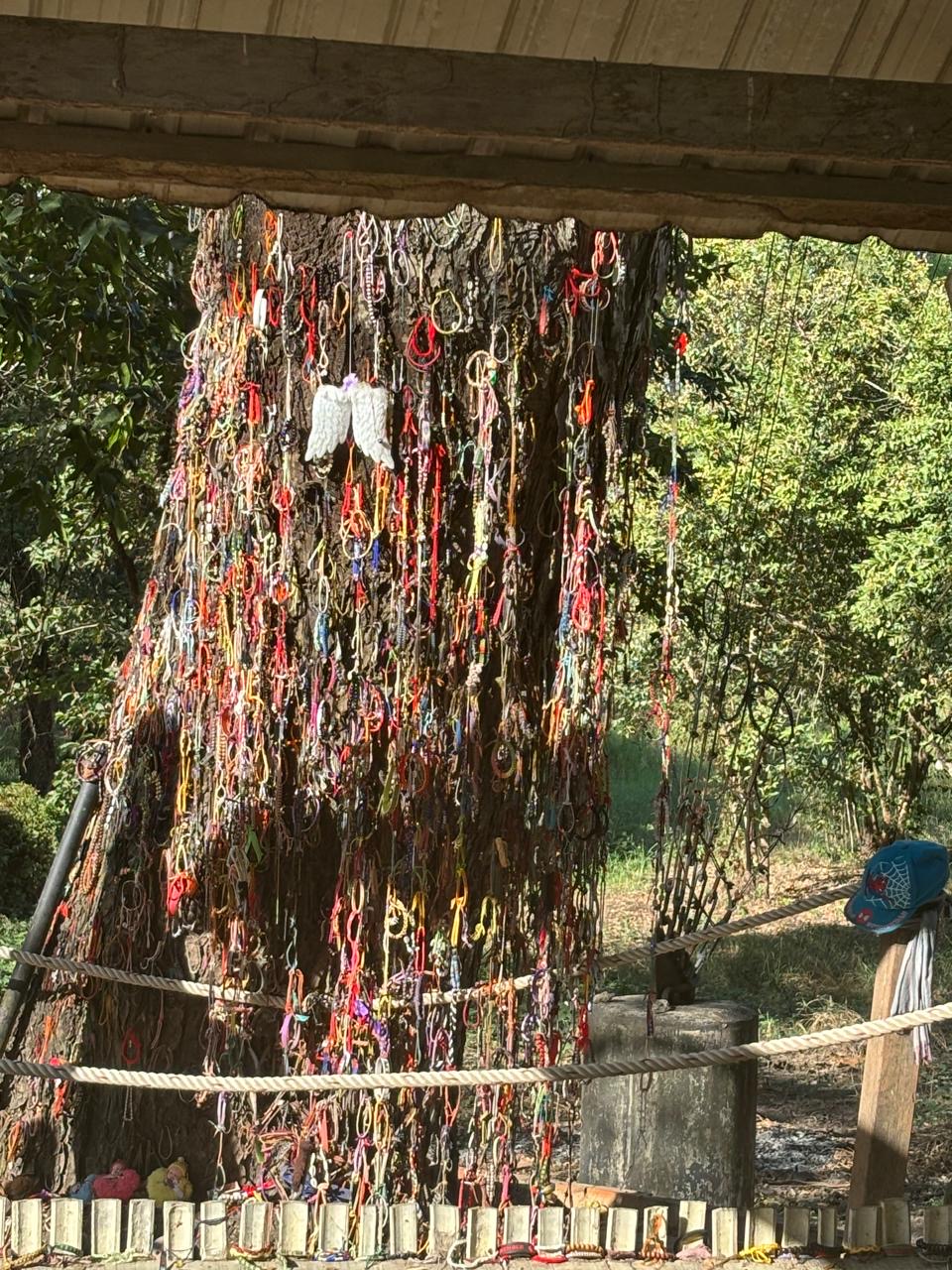
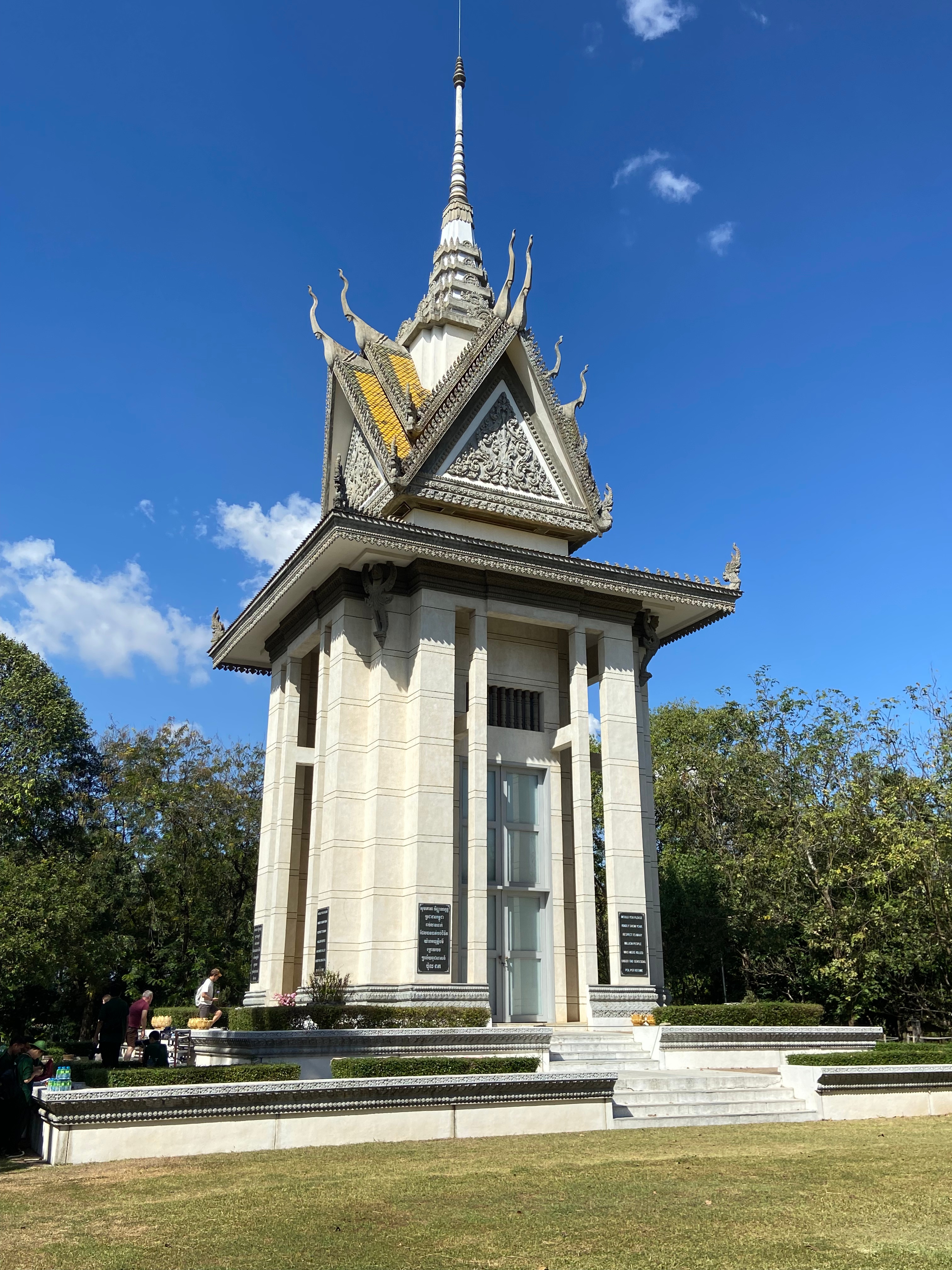
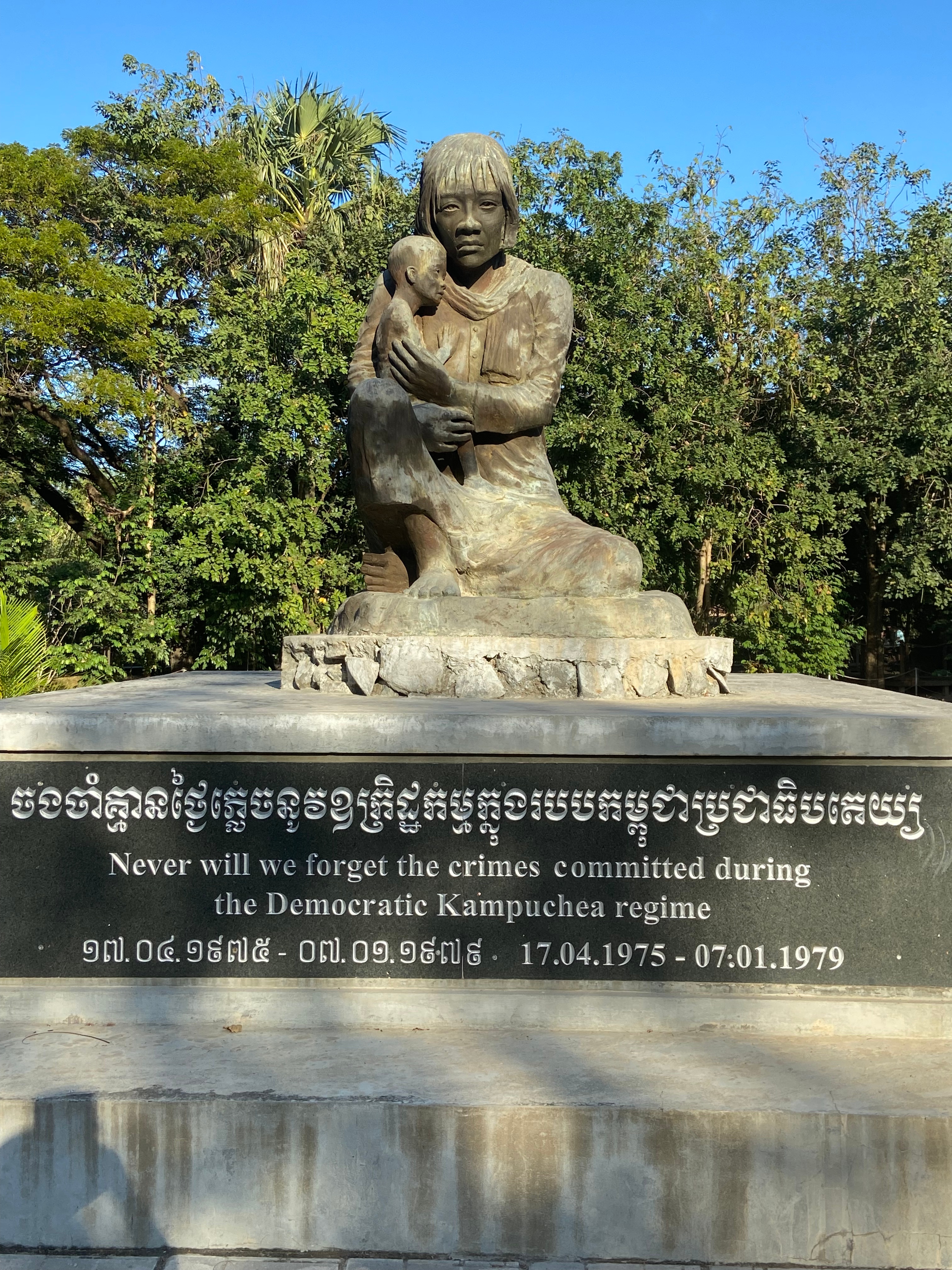
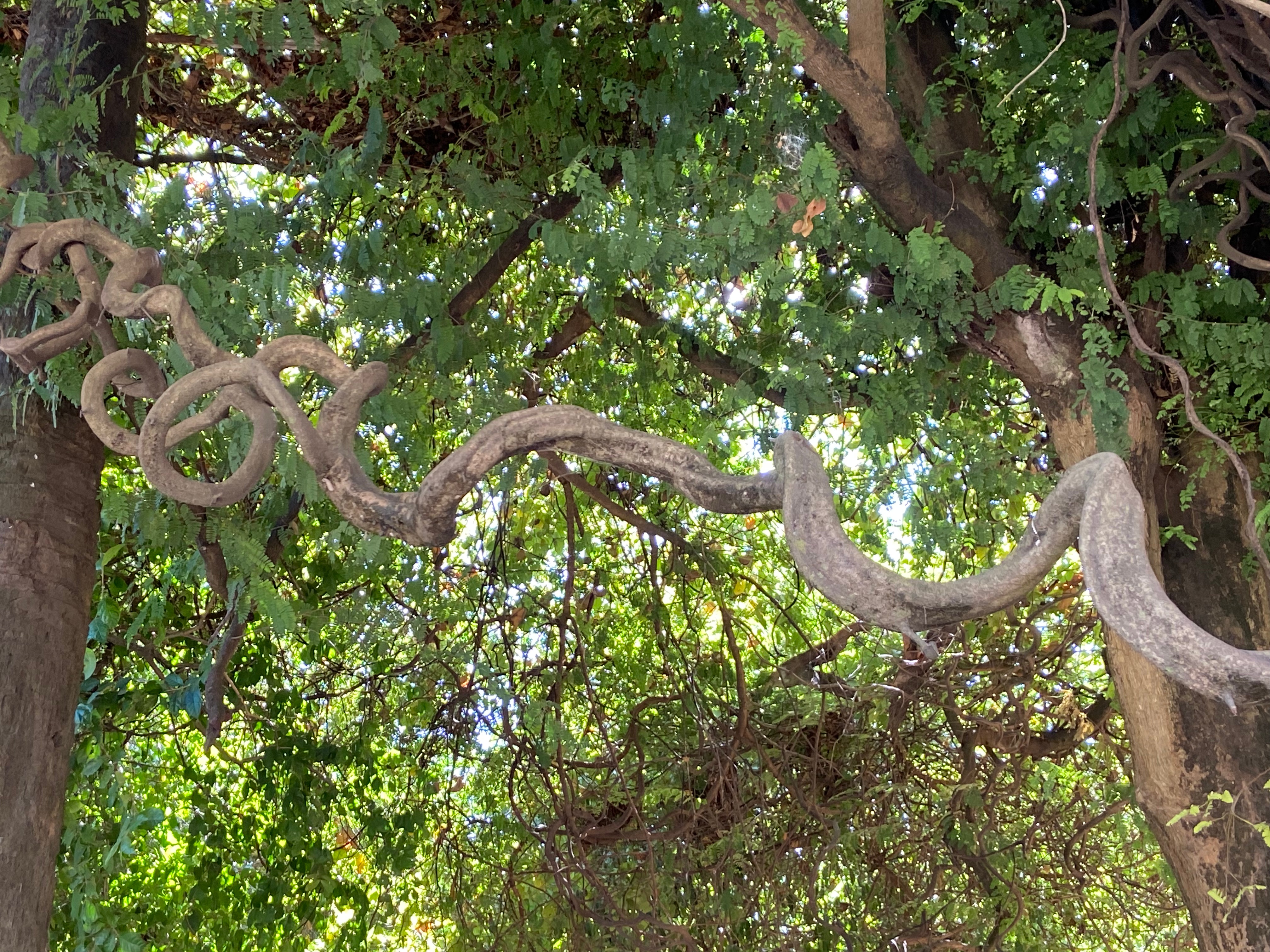
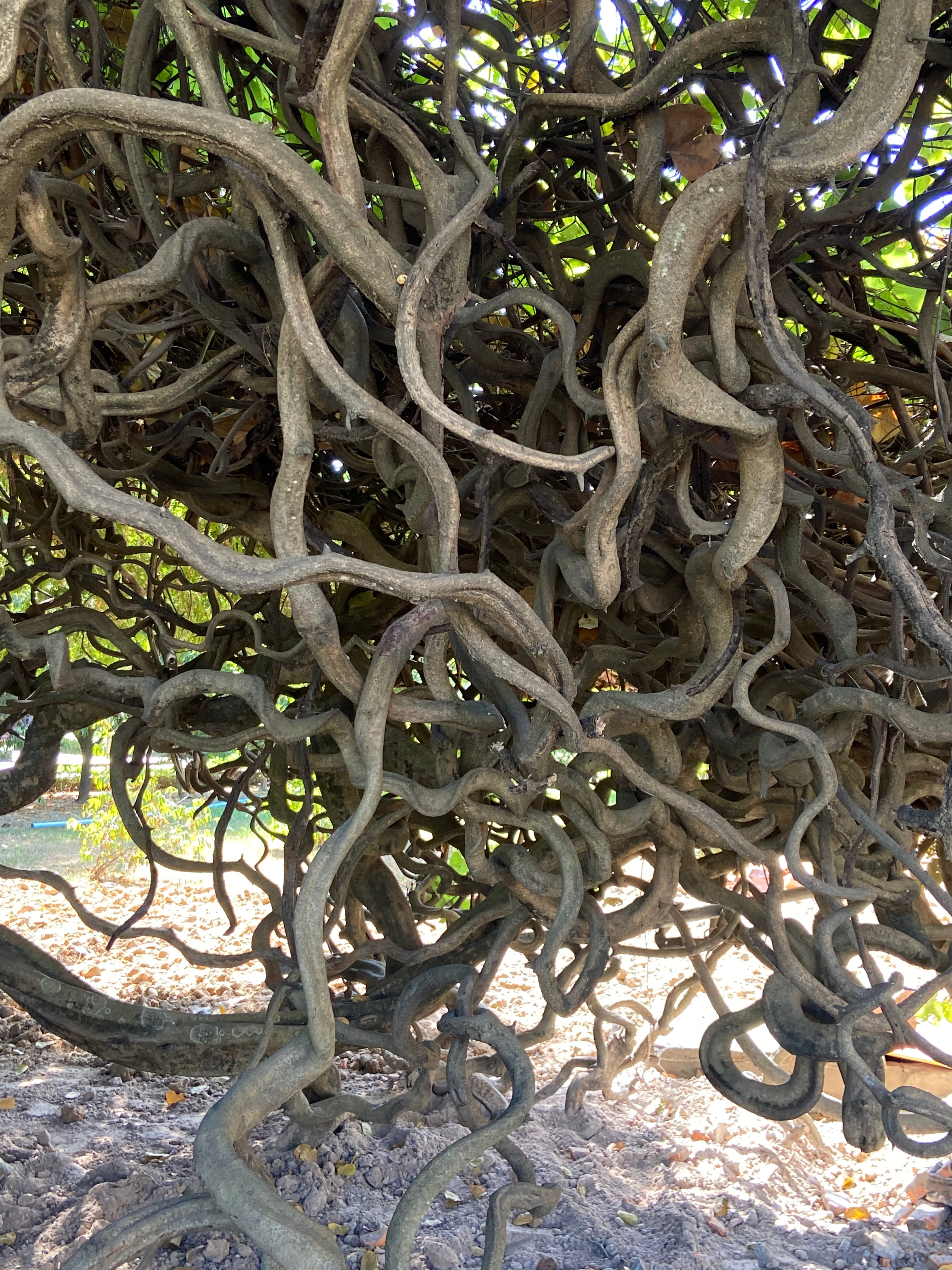
I share this information, at the risk of making readers uncomfortable, lest we forget – and to honour (and keep alive) the memory of those who senselessly lost their lives. Unfortunately, across the world, man’s inhumanity to man continues and history keeps repeating itself. If only we’d learn. You feel the heaviness of the place – it reminded me of doing a tour of Auschwitz – and we were tired and wrung out after our tour. There’s a tree at the site that has grown into a tangled knot of roots – it’s almost as if it’s mirroring the hellish conditions experienced there.
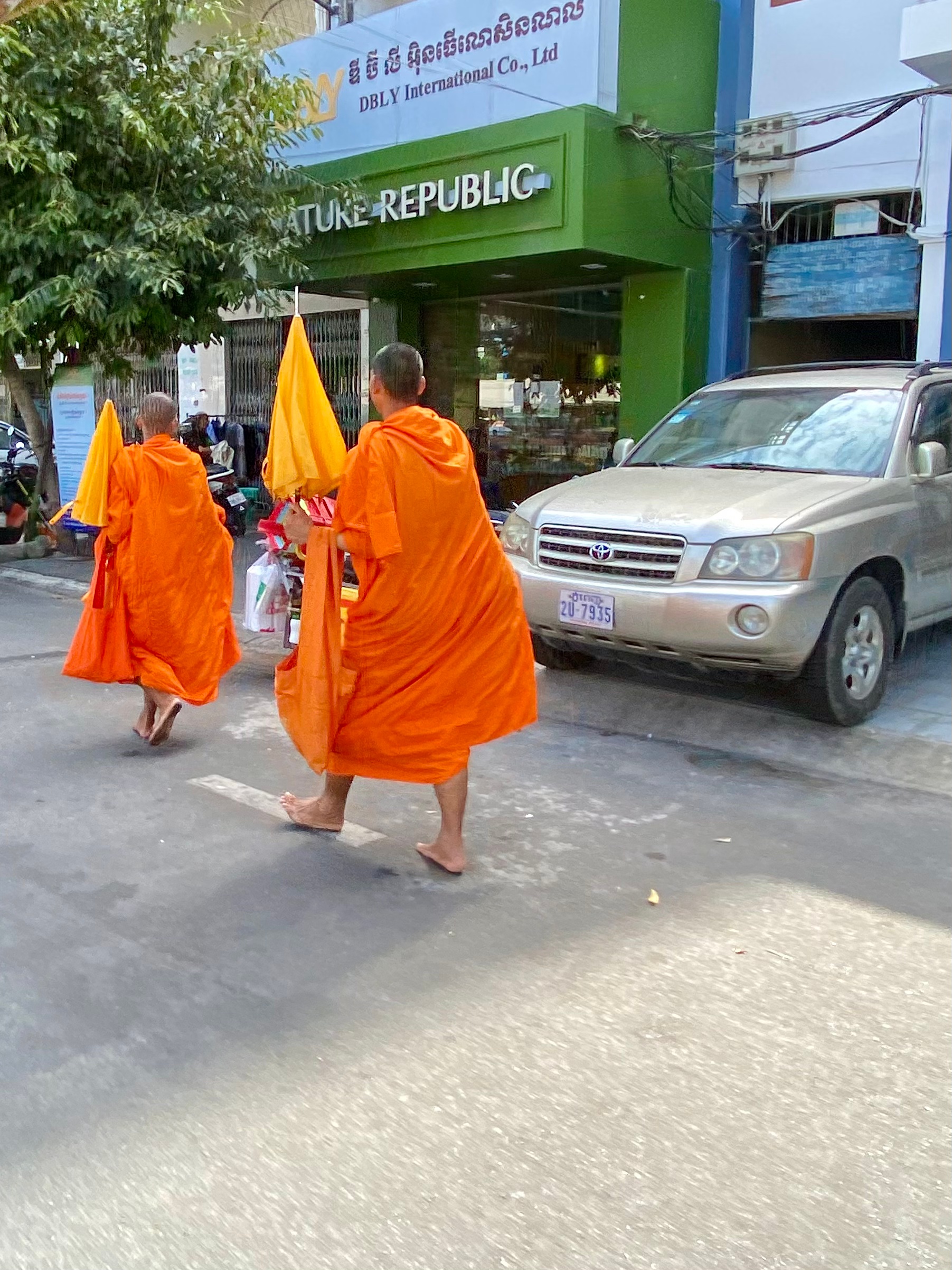
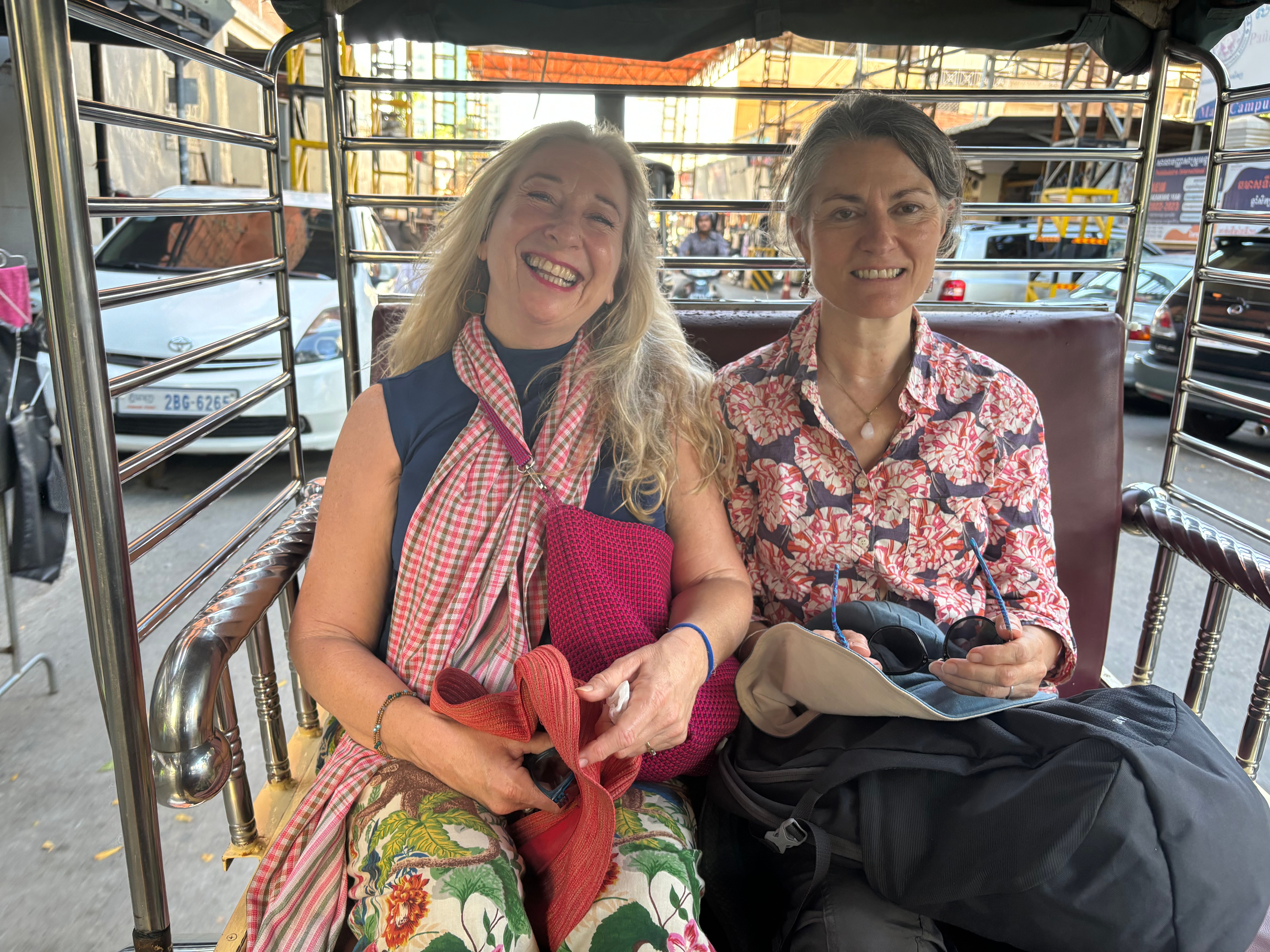
On a lighter note, our street art and street food tour took us to various neighbourhoods. Travelling by moto remorque, we started at the Boeung Keng Kang Market, a bustling market frequented by locals.
There were stalls with shoes, clothes, bedding, a hairdresser with old-fashioned pedestal dryers, a woman having her hair washed in full view and a fortune-teller – the cards spread out in front of her – supine and taking a quick nap. The fresh produce was displayed in shallow dishes on stools close to the ground in a palette of yellows, greens, purples, oranges and reds. Next door to a garlic-only stall fish was being filleted while other stalls offered fried food or fish and meat skewers as snacks on-the-go. We had the first of two breakfasts here – a delicious bowl of rice noodles in broth with crispy pork, pressed pork and fermented vegetables on the side. Our second breakfast came at the end of the tour at a roadside stall – we had a traditional breakfast of rice and pork with pickled vegetables.
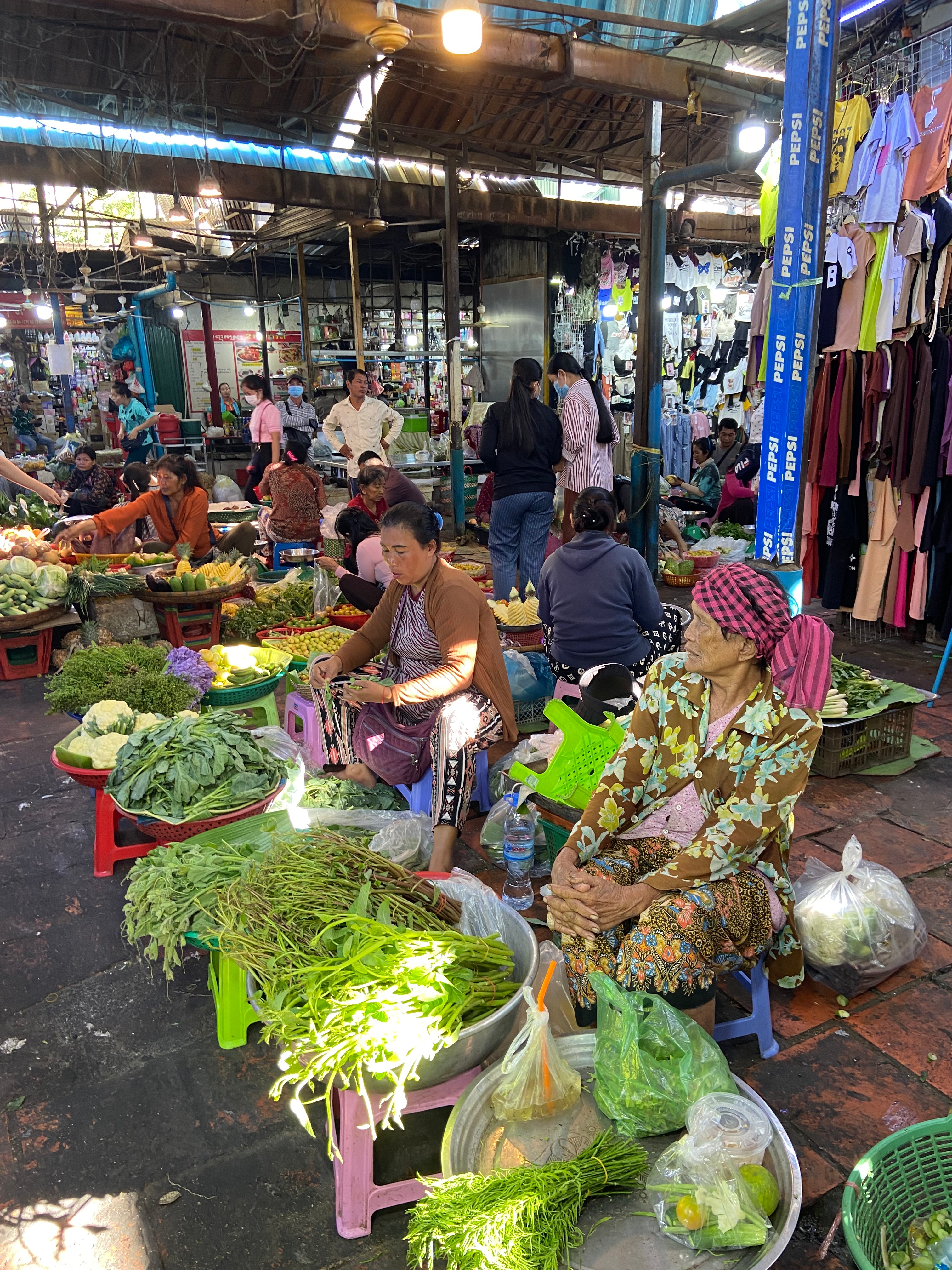
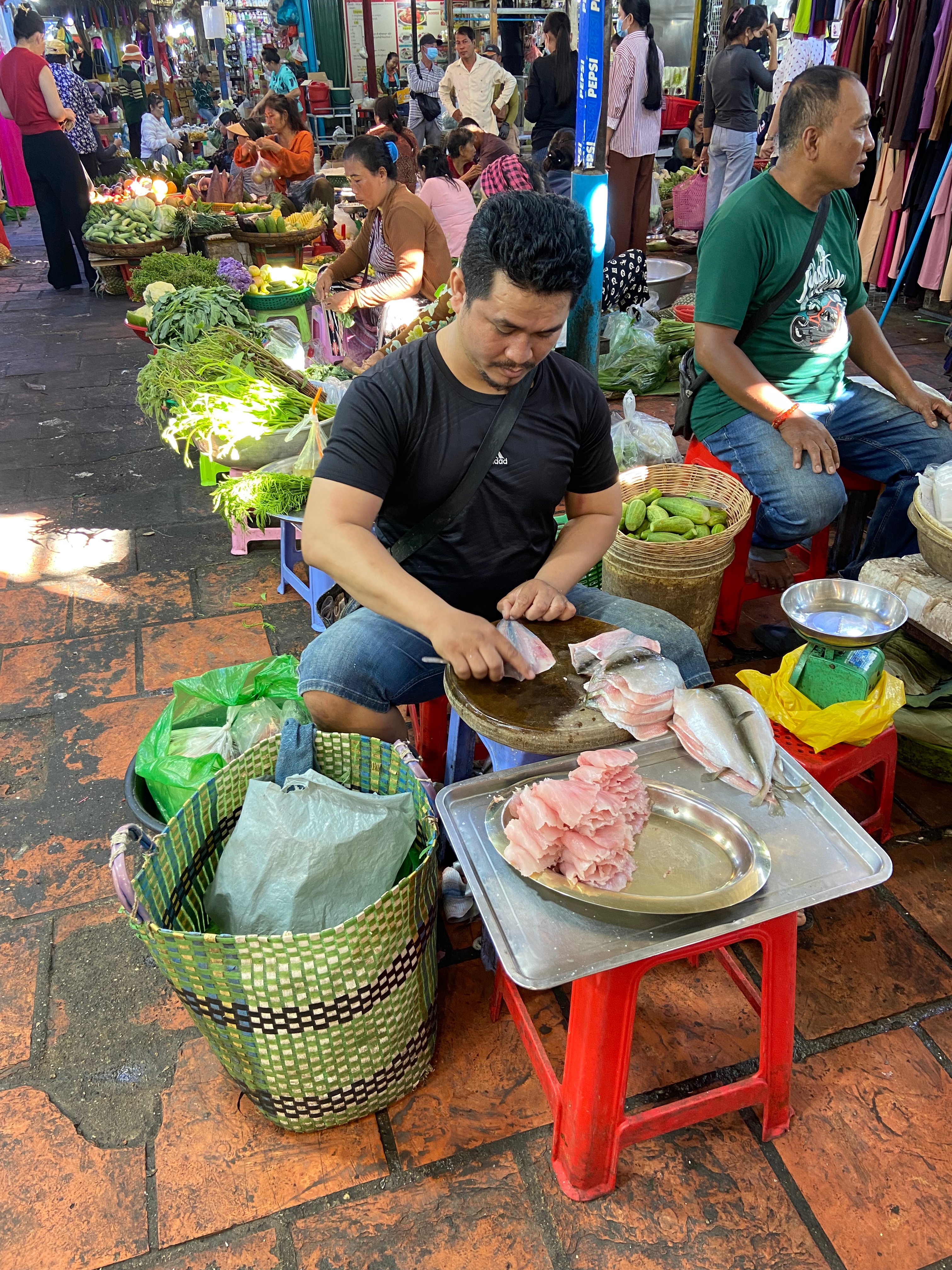
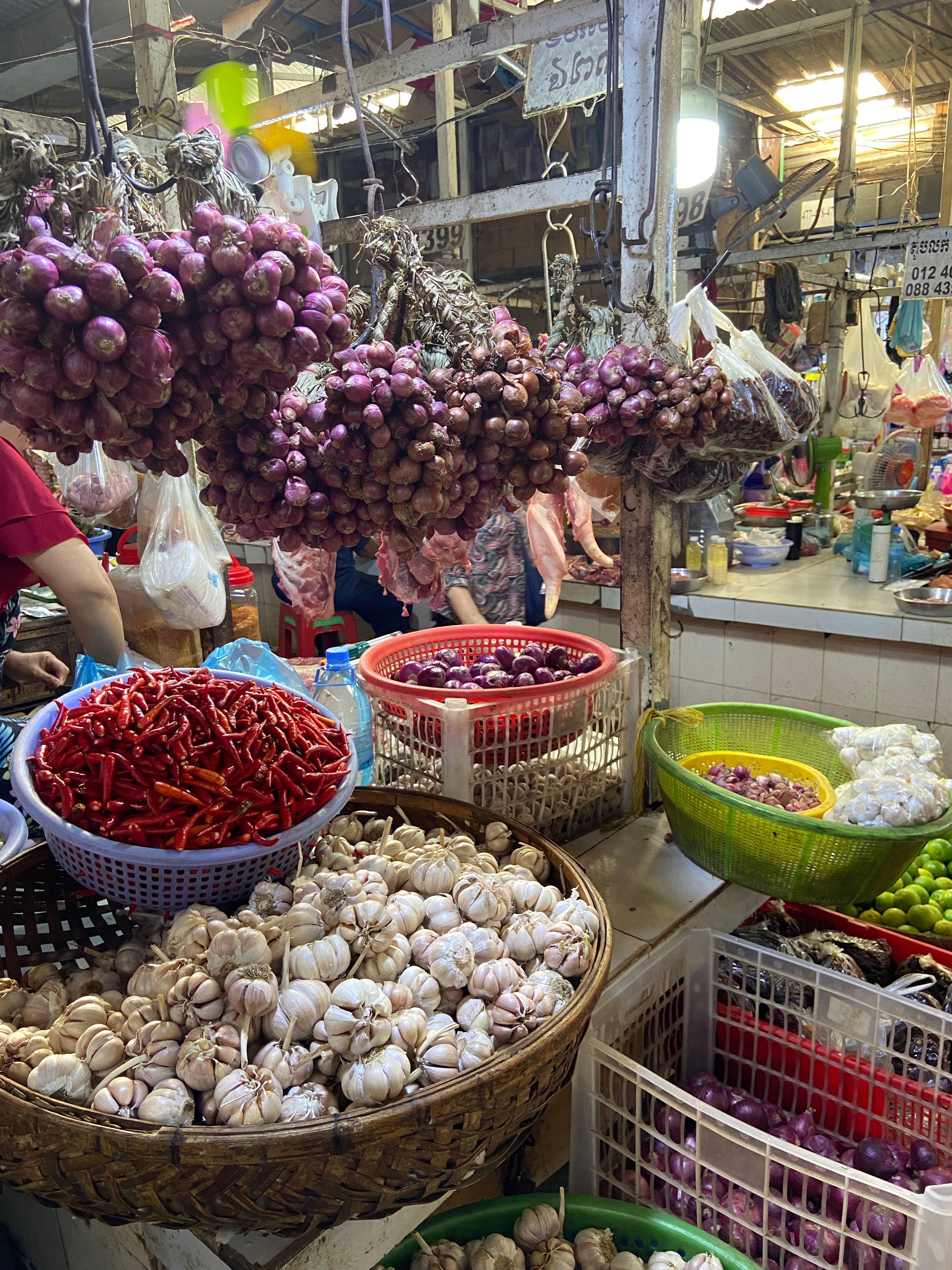
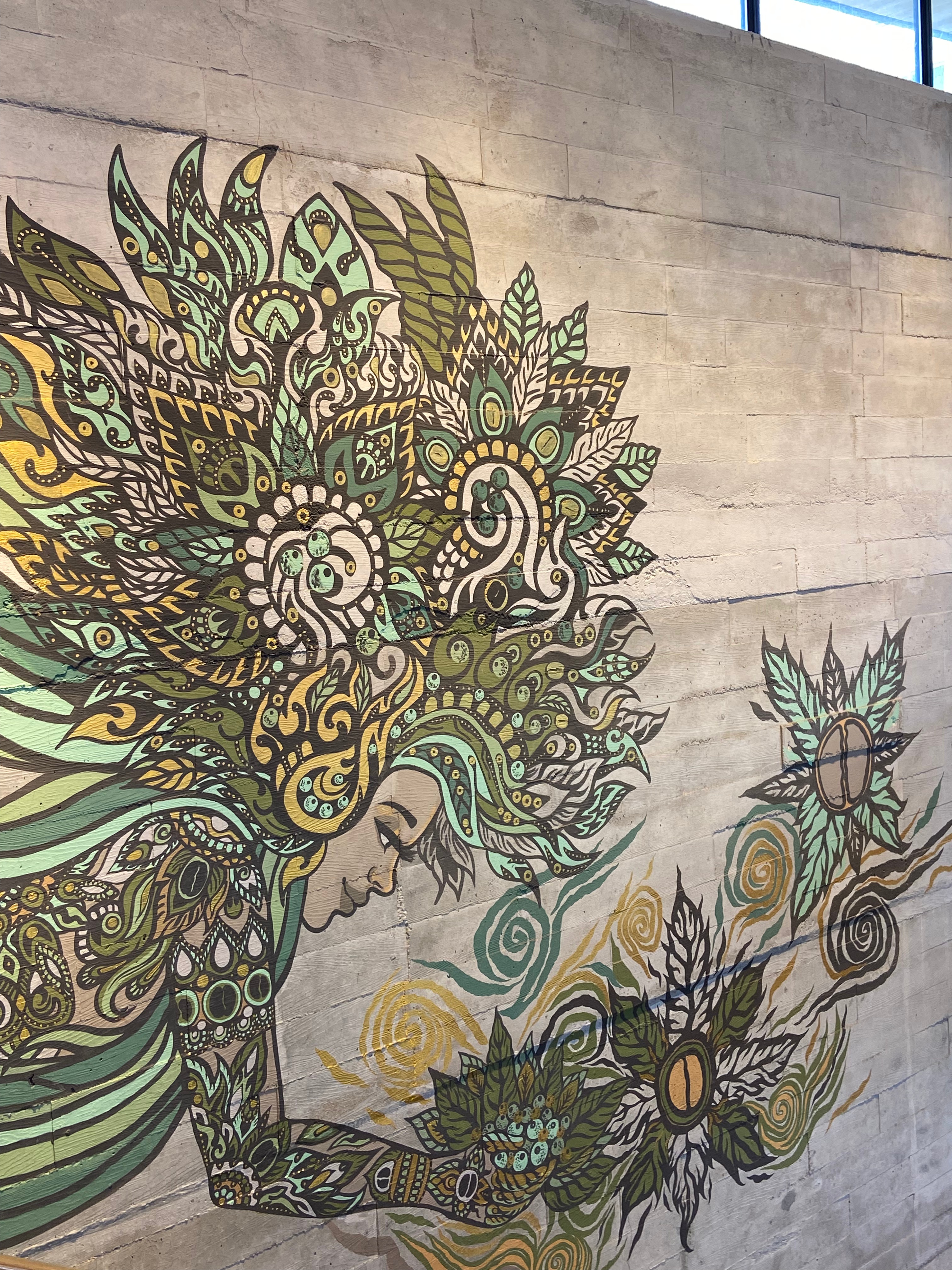
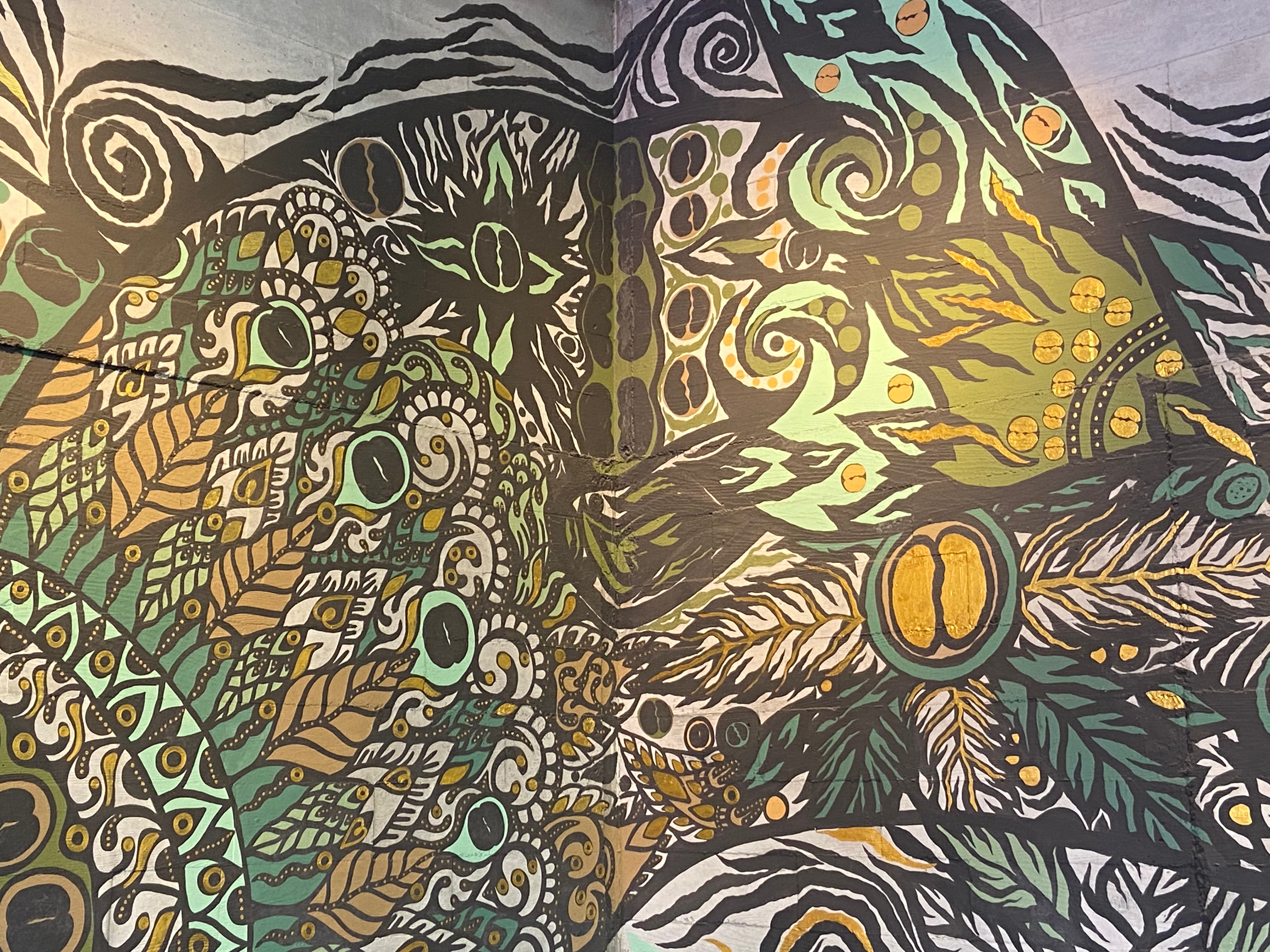
In BKK1, the ex-pat area, we dropped in at Starbucks, the first in Cambodia and a very upmarket one, but we were not there for the coffee but to see a stunning mural of a mermaid on the wall extending up the stairs. It’s by trailblazing female artists Lisa Mam and is stunning. The mermaid has big hair – a headdress of wonderful tendril-like plants in green, gold, yellow and a nearly-white pink. The mural incorporates coffee beans (in a nod to Starbucks) but also references traditional art.
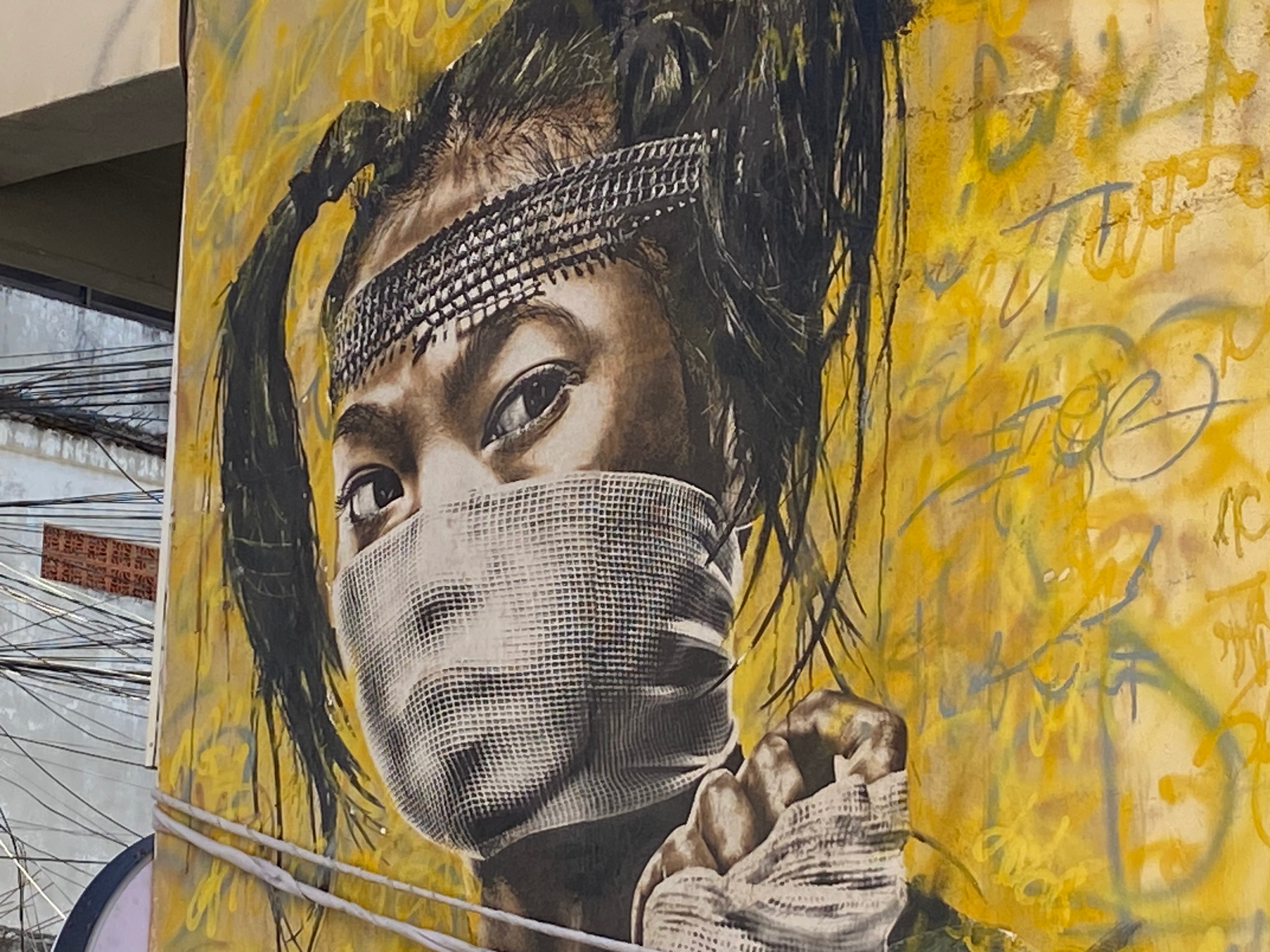
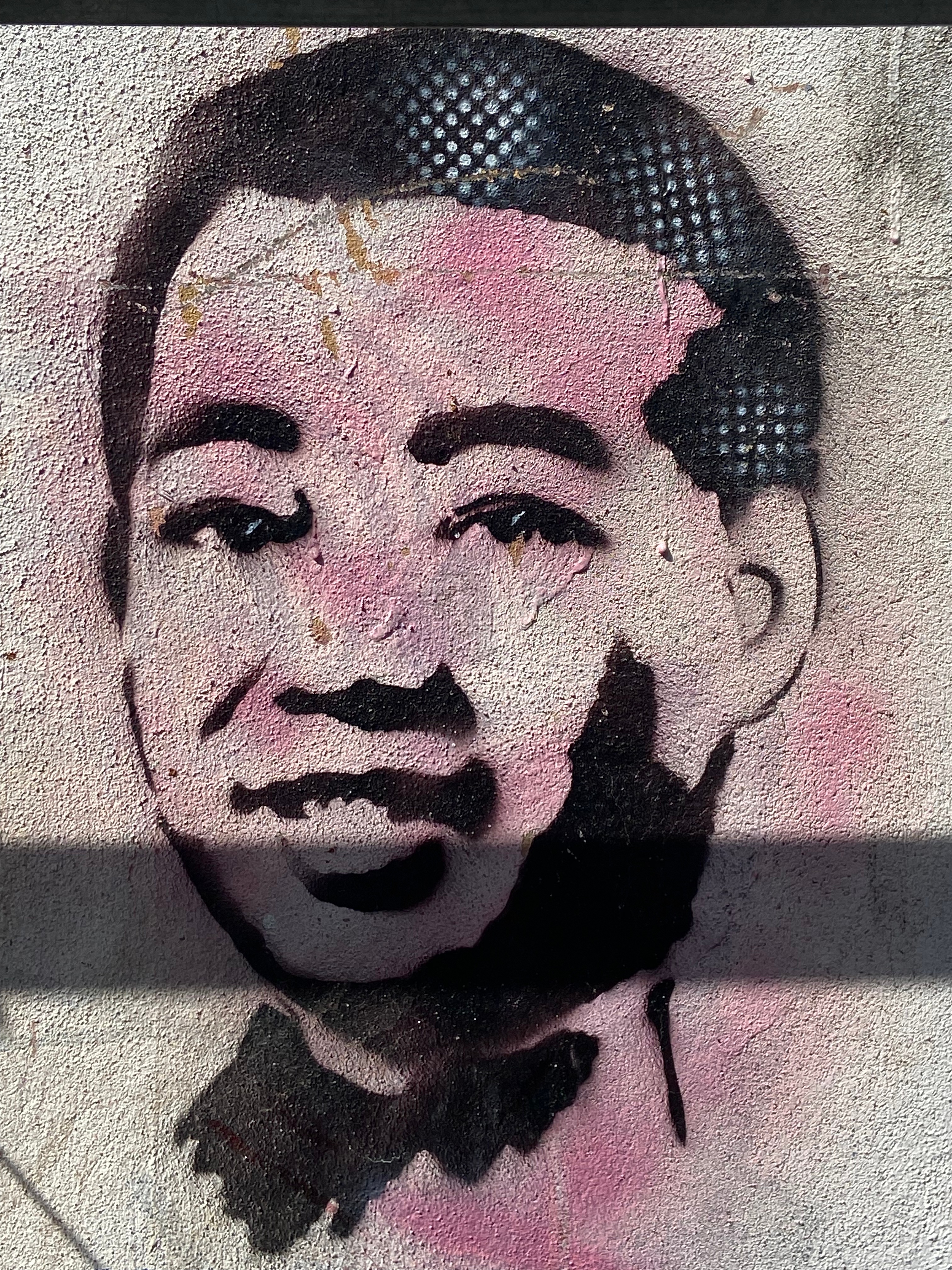
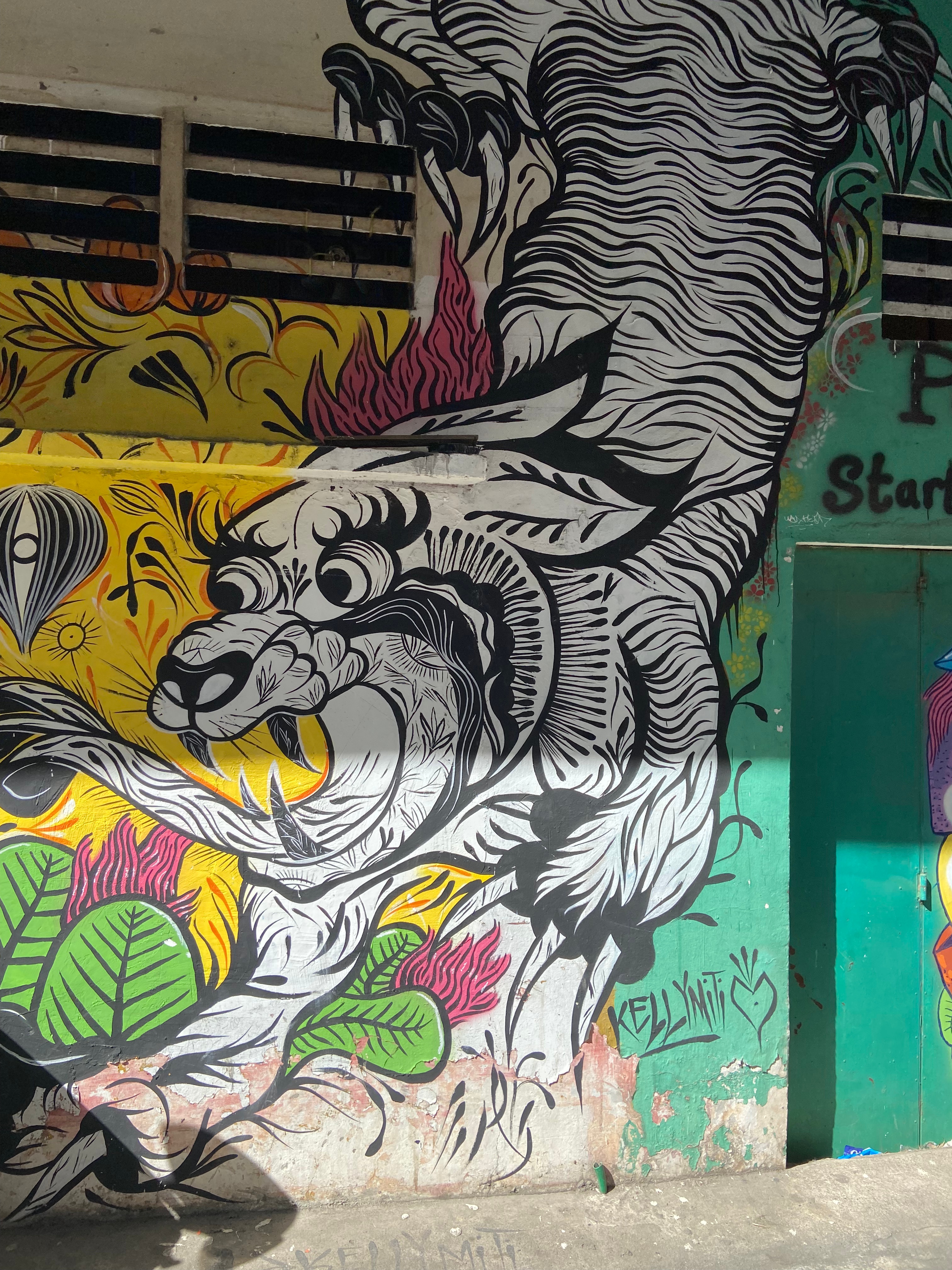
Our next stop was Boeung Kak 1 to see the street art. The Boeung Kak Lake used to be a thriving residential area for around nine villages and the lake, the largest urban wetland in Cambodia, an important source of fishing, food and water for around 4,000 families. In 2007 Chinese and Cambodian developers were granted a 99-year lease, triggering (peaceful) protests in 2011 by those facing eviction. Several BKK villagers were arrested, and others were beaten by armed anti-riot police. One of the protestors was land rights activist and human rights defender Tep Vanny – she was sentenced in 2012 and, although later pardoned and freed, she keeps a low profile to this day. I found the portrait of Tep Vanny – note the defiance in her eyes – to be one of the most powerful pieces of street art, which also includes traditional art and motifs such as dragons, demons, serpents and mythical monsters, as well as a picture of Cambodia’s Elvis, Sinn Sisamouth (apologies for the misspelling in Part 2/3) – see: https://thisquirkylife.com/2026/01/07/cambodia-part-2-3-siem-reap-embassy-restaurant-angkor-wat-temples-and-theams-gallery/.
Despite the corruption – there have been delays to the development of the filled-in lake resulting in half-finished high-rises – it’s encouraging to see there’s still a surviving community here: vegetable, fruit and palm sugar sellers came past on their motorbikes, some women were sitting chatting in a café and there’s a vinyl record shop.
Our tour guide – when asked – shared a bit about his personal story, which is one of disadvantage. His father died when he was young and he, his sibling and mother moved to Phnom Penh to get work, ending up being forced to scavenge a living on a landfill site. Happily, thanks to support from a French charity, he got an education enabling him (and his family) to break the cycle of poverty. Stories like this one are a reminder of why it’s such a disaster for countries such as Cambodia that Trump has cut so many of the foreign aid programs. On my first day in Phnom Penh back in December when we were walking along the river quay, Di had pointed out a disabled man who has no legs and is blind. She told me his relatives bring him there every day to beg for money. Then driving back into Phnom Penh after our trip to Siem Reap, I was startled to see a little girl, possibly as young as six or seven, walking into five lanes of traffic to beg. Cambodia is very much a developing country and has a legacy of intergenerational trauma, and many people and organisations are doing incredible work – but this work needs ongoing funding.
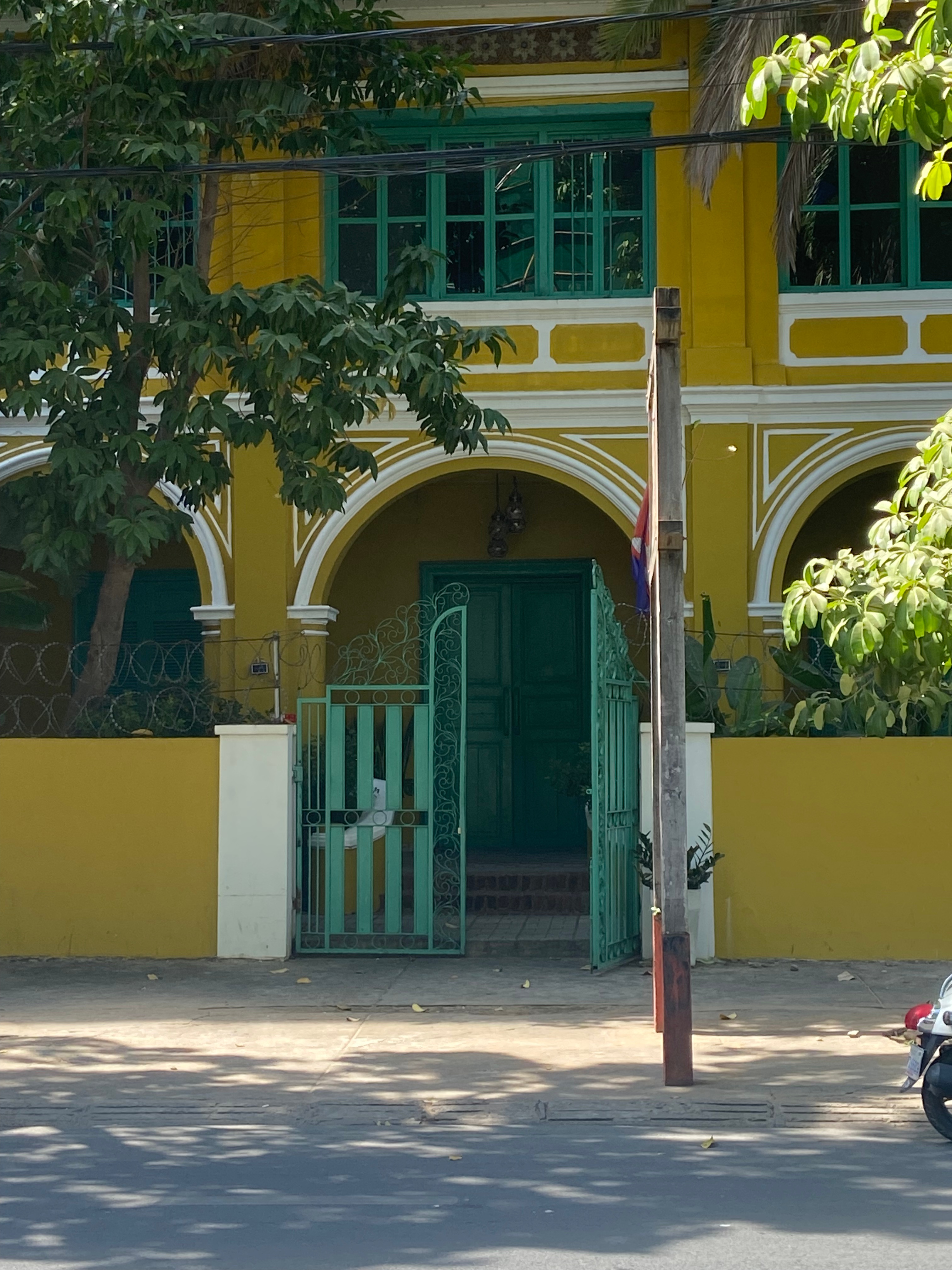
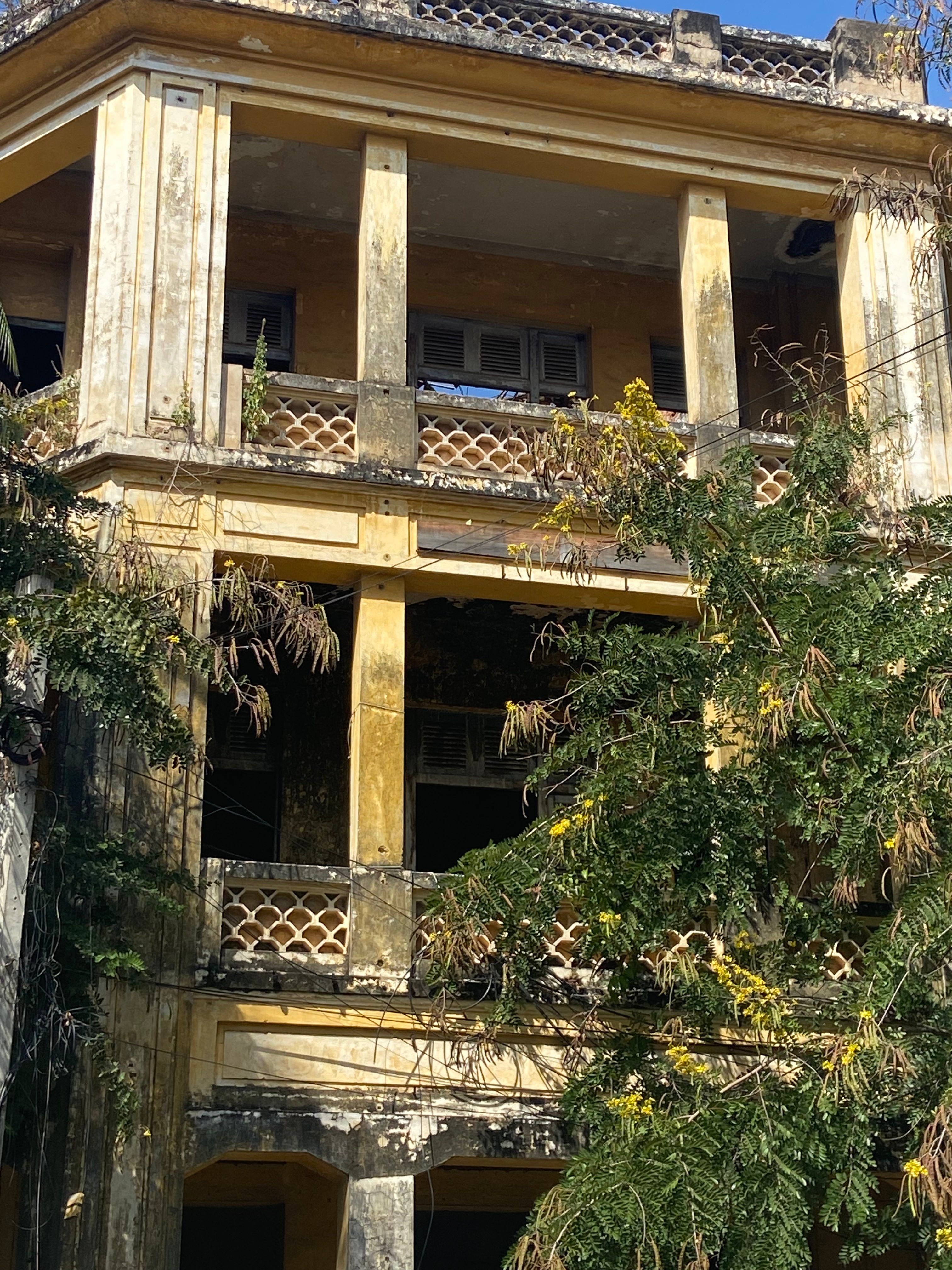
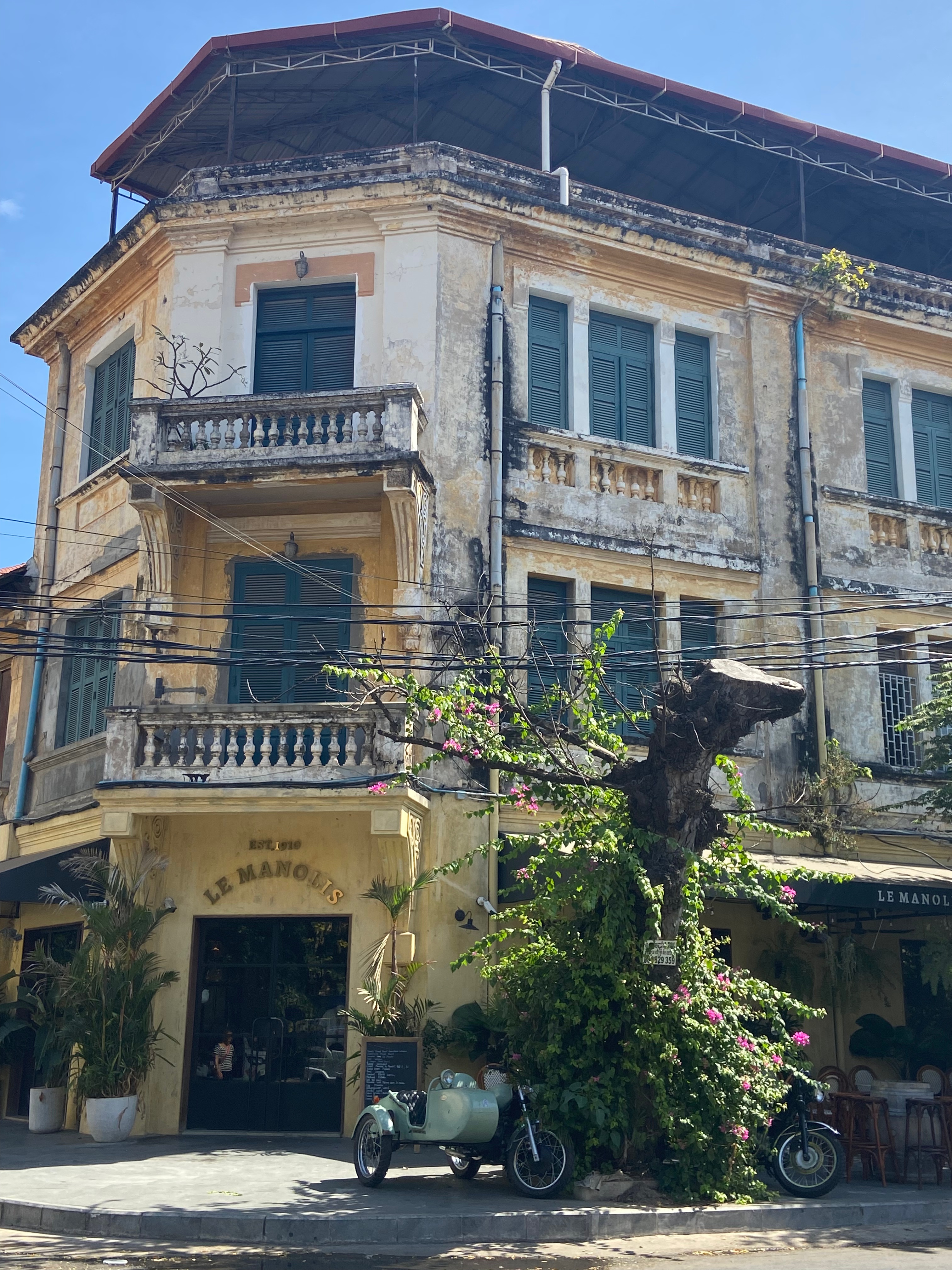
On my last afternoon we did a Heritage Tour– it’s a self-guided tour via tuk-tuk with an iPad populated with archive photos and videos explaining the history of the buildings. The tour started off with some of the buildings from the French Protectorate era (1863- 1953). Some of my favourites were the Central Post Office (1894), the French Police Station (1892), a three-storey sandstone building with lattice work on the balconies that has, sadly, fallen into disrepair, and is likely to be developed. And Hotel Manolis, once the Grand Hotel, renamed after a Greek owner. In 1979 it was filled with Khmer Rouge survivors – about 30 families. The original tiled floors inside are, apparently, still intact, and one floor of the building has been restored.
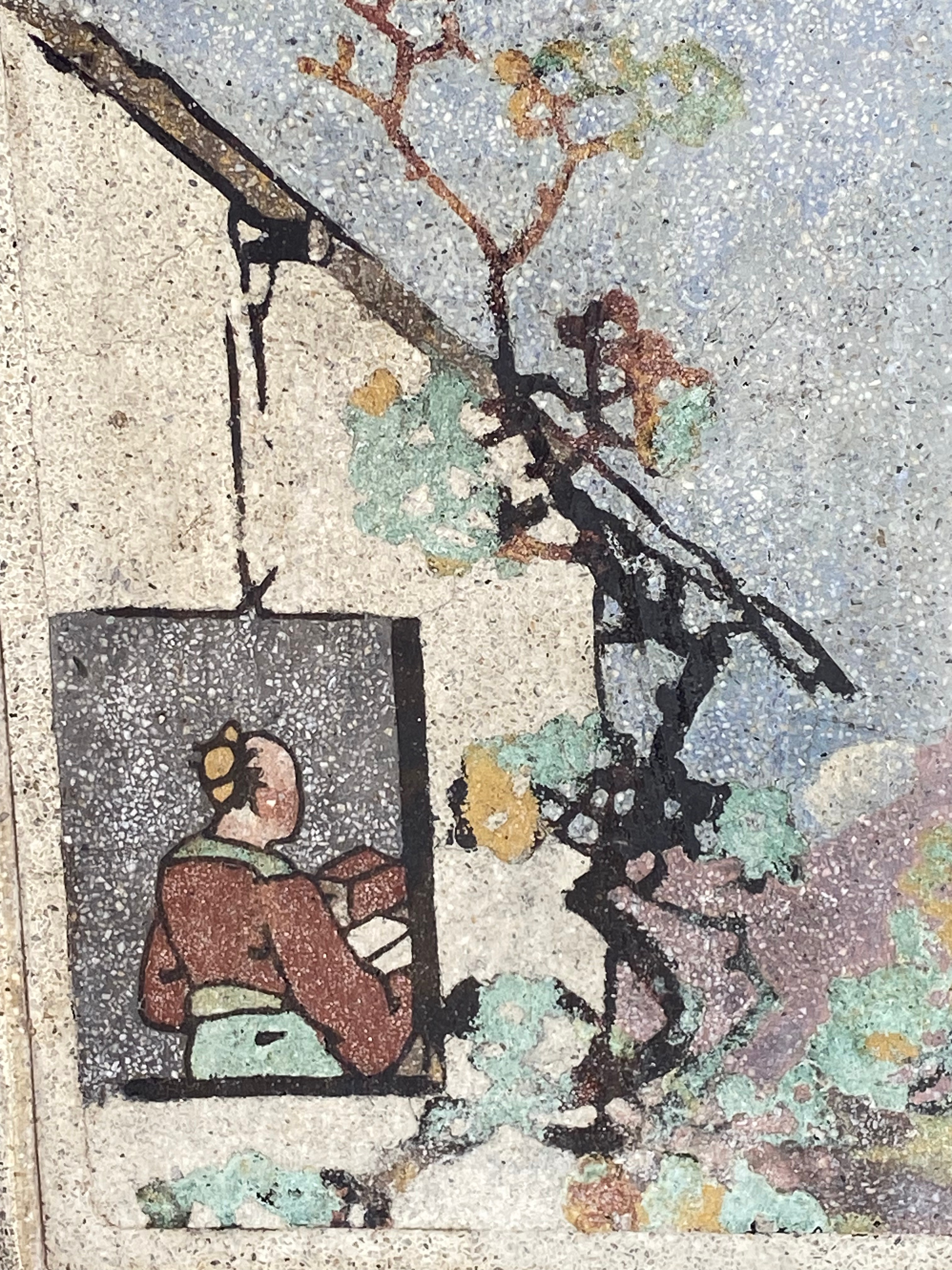
In complete contrast we also visited the Hokkien Chinese Temple – the only one to survive the Khmer Rouge. I loved the delicate, water-colour-like paintings on the door frames of figures in the landscape, blossoms and ibis perching in trees.
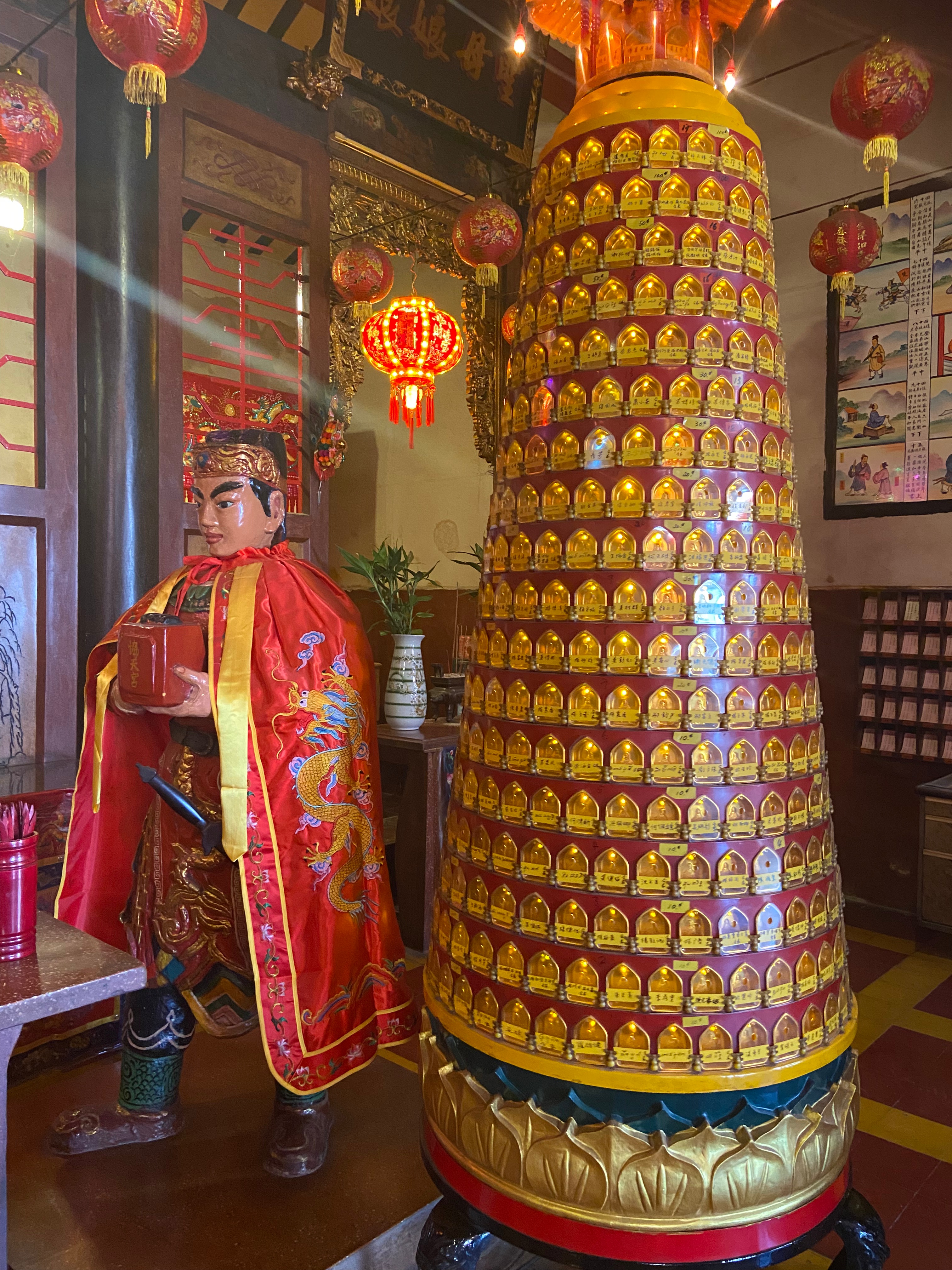
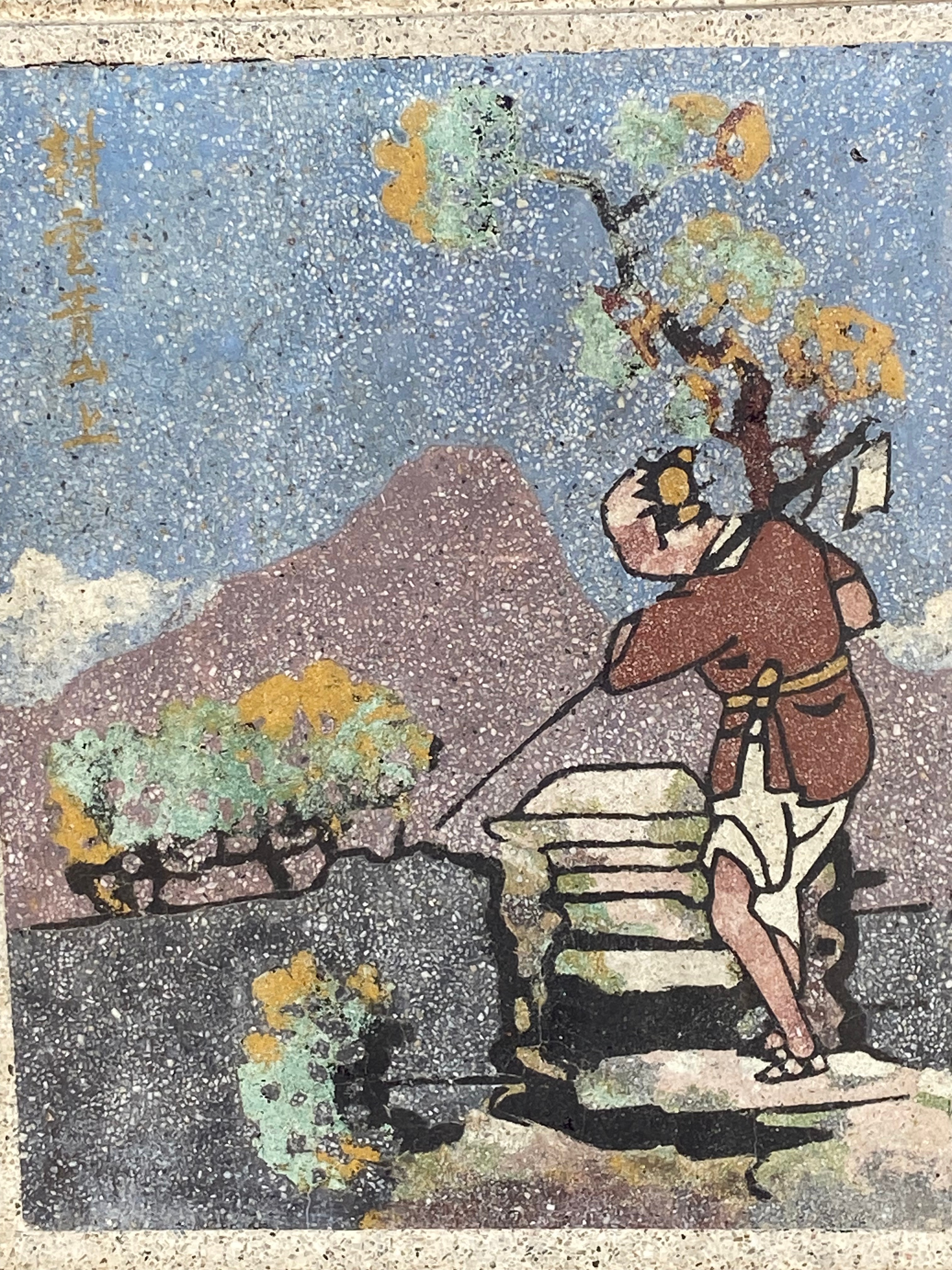
Inside it is brilliantly coloured – yellow and red – with statues, strings of Chinese lanterns suspended from the ceiling and depictions of white tigers and dragons – yin and yang. There are colourful statues of Taoist deities and a fortune-telling area by the altar comprising a cylinder of wooden sticks.
We then crossed the Naga Bridge – those now-familiar seven-headed serpents – and drove past Wat Phnom, a Buddhist temple set atop a 27m-high tree-covered knoll, the only ‘hill’ in town. We also saw – from our tuk-tuk – a pair of hornbills flying around the small circle of garden. I’d seen them featured on an ABC television programme, and was delighted to catch a glimpse of these extraordinary birds with their huge beaks!
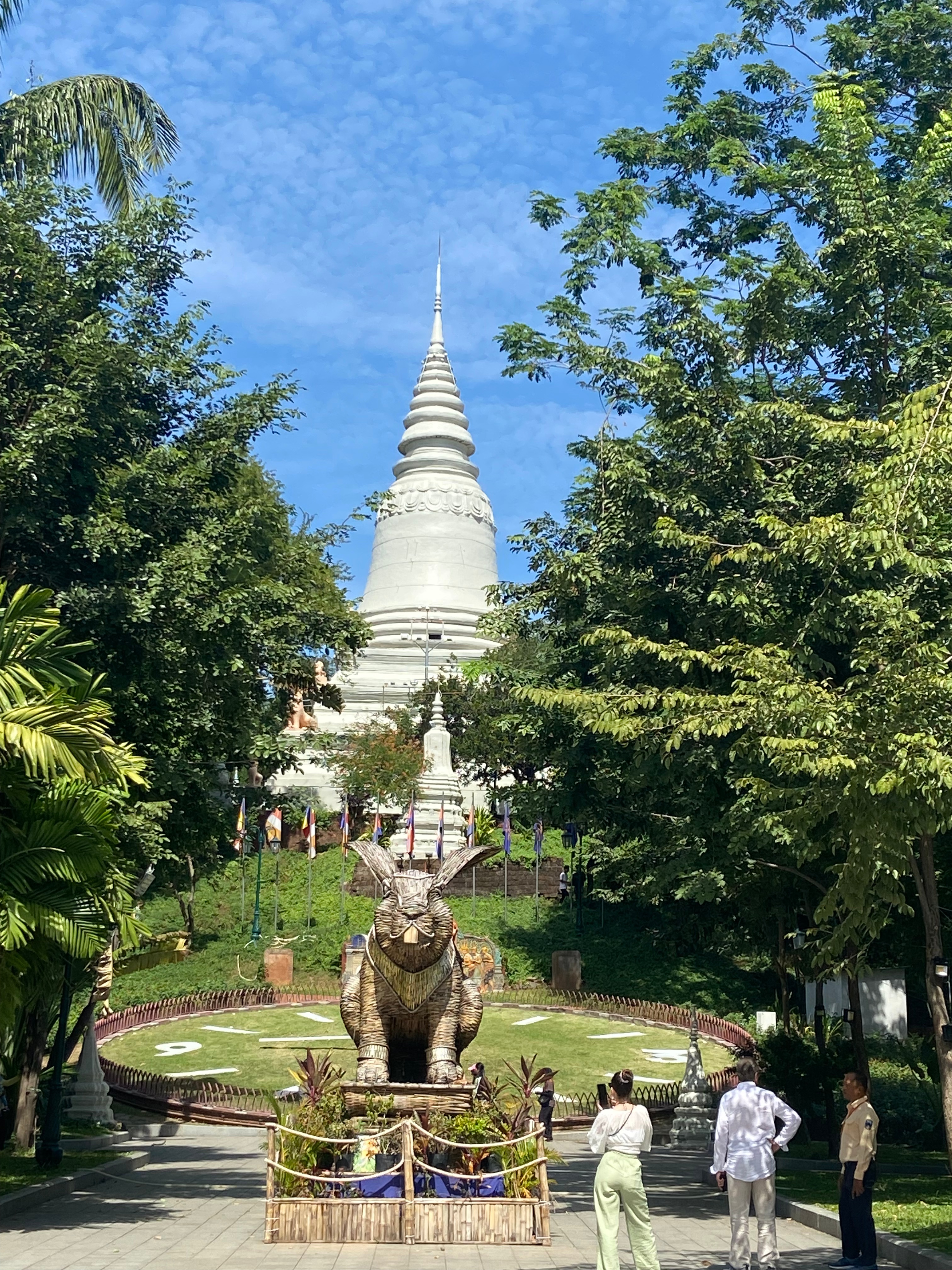
Other stops included the impressive Art Deco railway station, the Central market and Raffles, which in its heyday hosted Charlie Chaplin, Somerset Maugham and Jackie Kennedy – she had a cocktail named after her.
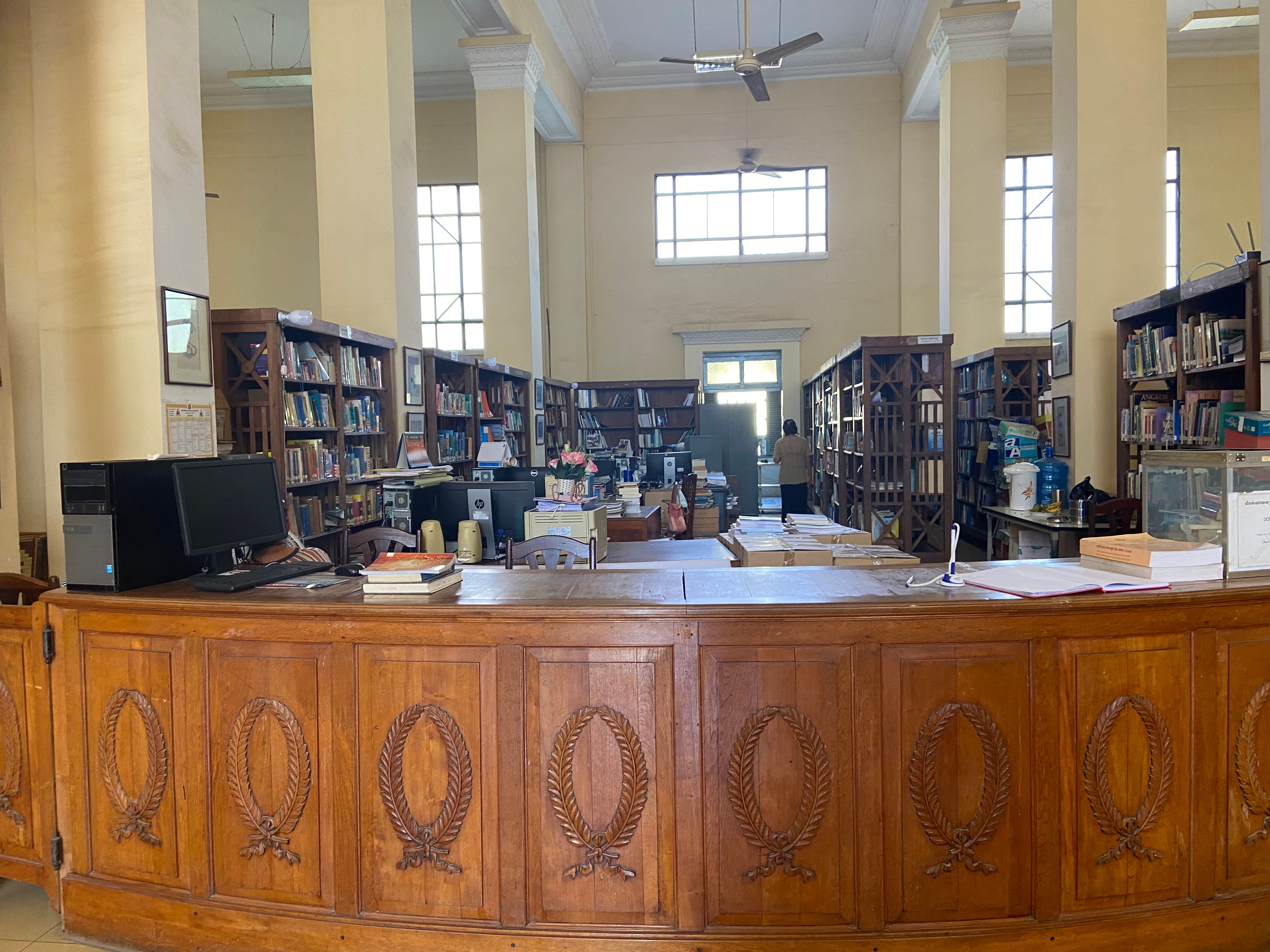
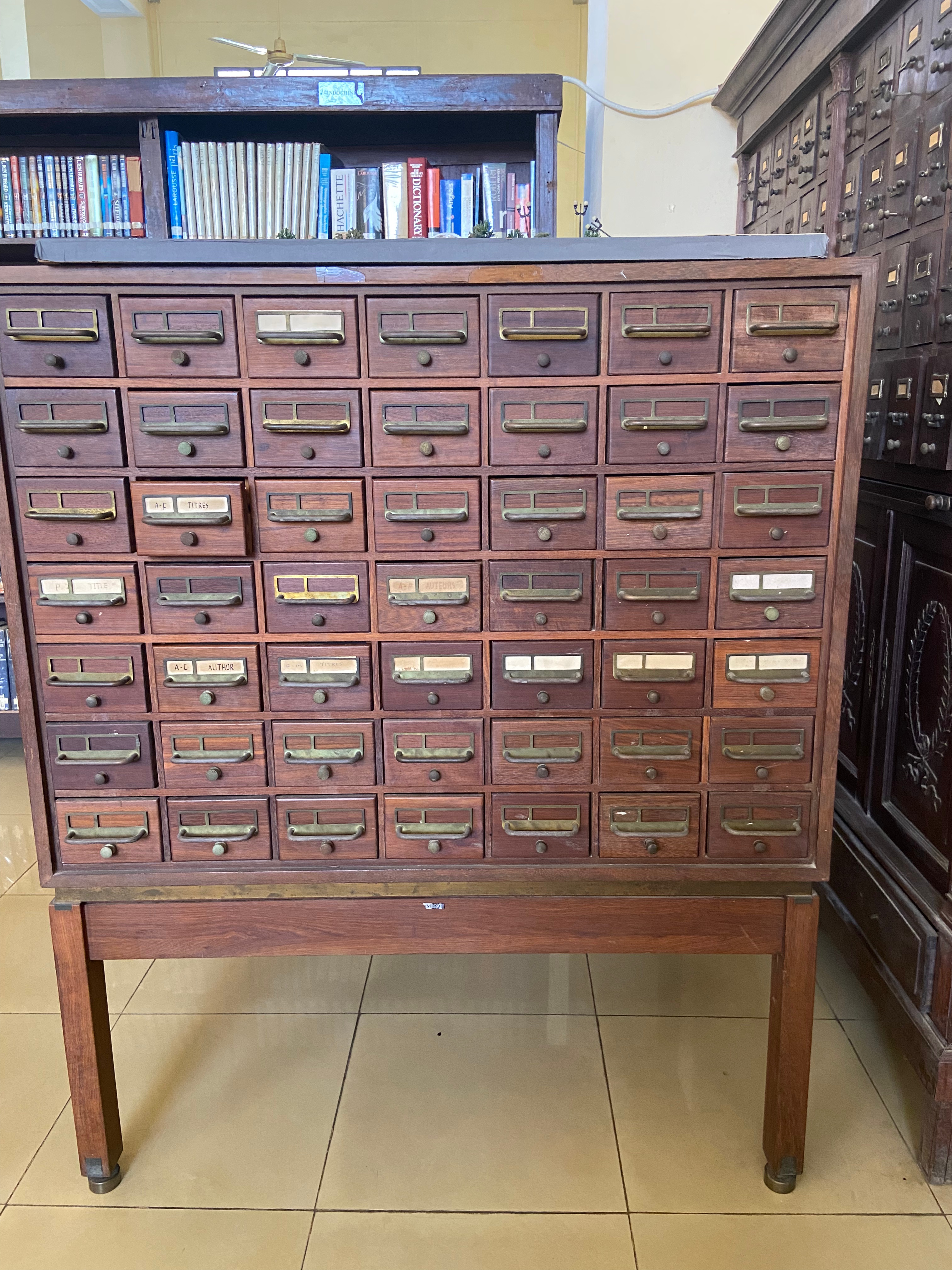
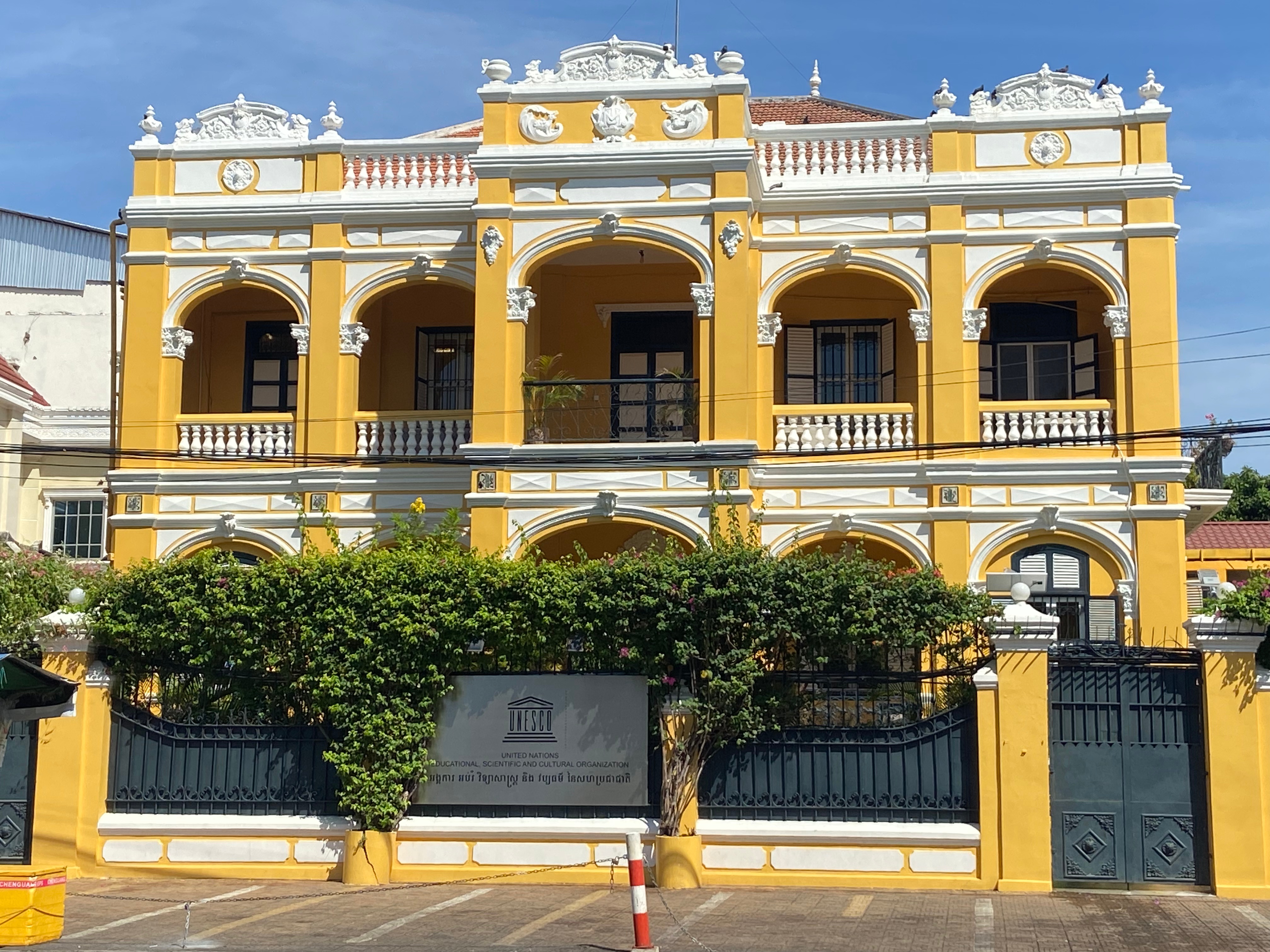
And although nearly 80% of the books at the library (built in 1924) were destroyed by the Khmer Rouge, it still has wooden shelves and a wooden cabinet with pull-out drawers for index cards – a wonderful reminder of how things were in the pre-digital age. One of the last stops was the UNESCO Building – a glorious example of colonial architecture – painted yellow with white stucco, pillars, columns and balconies.
And before I end my three-part Cambodian epistle (just look at the pictures if you’re out of time!) – one more restaurant recommendation – Maloop, which is set in a lush city park, a bit like an enchanted garden with a swimming pool repurposed as a lily pond, and offers exquisite locally inspired food. https://easy-cambodia.com/maloop. Add visiting Phnom Penh to your travel bucket list!
Discover more from This Quirky Life
Subscribe to get the latest posts sent to your email.
 This Quirky Life