Life Laundry and armchair travel 3 of 3

And now for the final instalment in my retrospective trip to Japan through the pages of my photo album:

I was disappointed by the shinkansen (bullet train)! I had imagined the landscape would rush by in an unrecognisable blur. Of course it is fast – trains travel at speeds of up to 320km/h, it’s just that I had imagined it would feel faster. Maybe it’s because I rush around so much anyway that I failed to notice the sensation of velocity. I certainly kept up a fairly hectic pace once in Tokyo. In fact, I did so much walking and sightseeing that my legs ached like mad and the balls of my feet felt bruised. I was battling an acute case of guidebookitis, a healthy dose of FOMO (fear of missing out; what if this was my one and only trip to Japan?) all topped off with a bout of homesickness having left friends and family back in England. In short, I didn’t stop from breakfast till dinner time.

It took me a few days to get used to the Tokyo Subway System; it’s a maze of different lines, seemingly endless underground shopping malls, confusing signage and ticket machines (well to a non-Japanese speaker) and a constant throng of passengers. According to one travel site, it’s the world’s busiest metro system handling approximately 8.7 million passengers daily.

On arrival in the up-market suburb of Ginza, I set off to find the Sony Store, famed for its Games and Interactive section, only to find it had moved to a different suburb. Later that day I walked for block upon block to find a restaurant in the Roppongi Hills area only to find it had never been in that suburb and probably never would be (I had misread the Guidebook). Another day I walked miles to find Hambachi-Dori, listed as a must-see in the Lonely Planet. It’s simply a street where they sell plates of wax look-alike food, the kind you find displayed outside restaurants. Frankly, once you’ve seen one waxen plate of noodles, you’ve seen the lot. See what I mean about Guidebookitis?
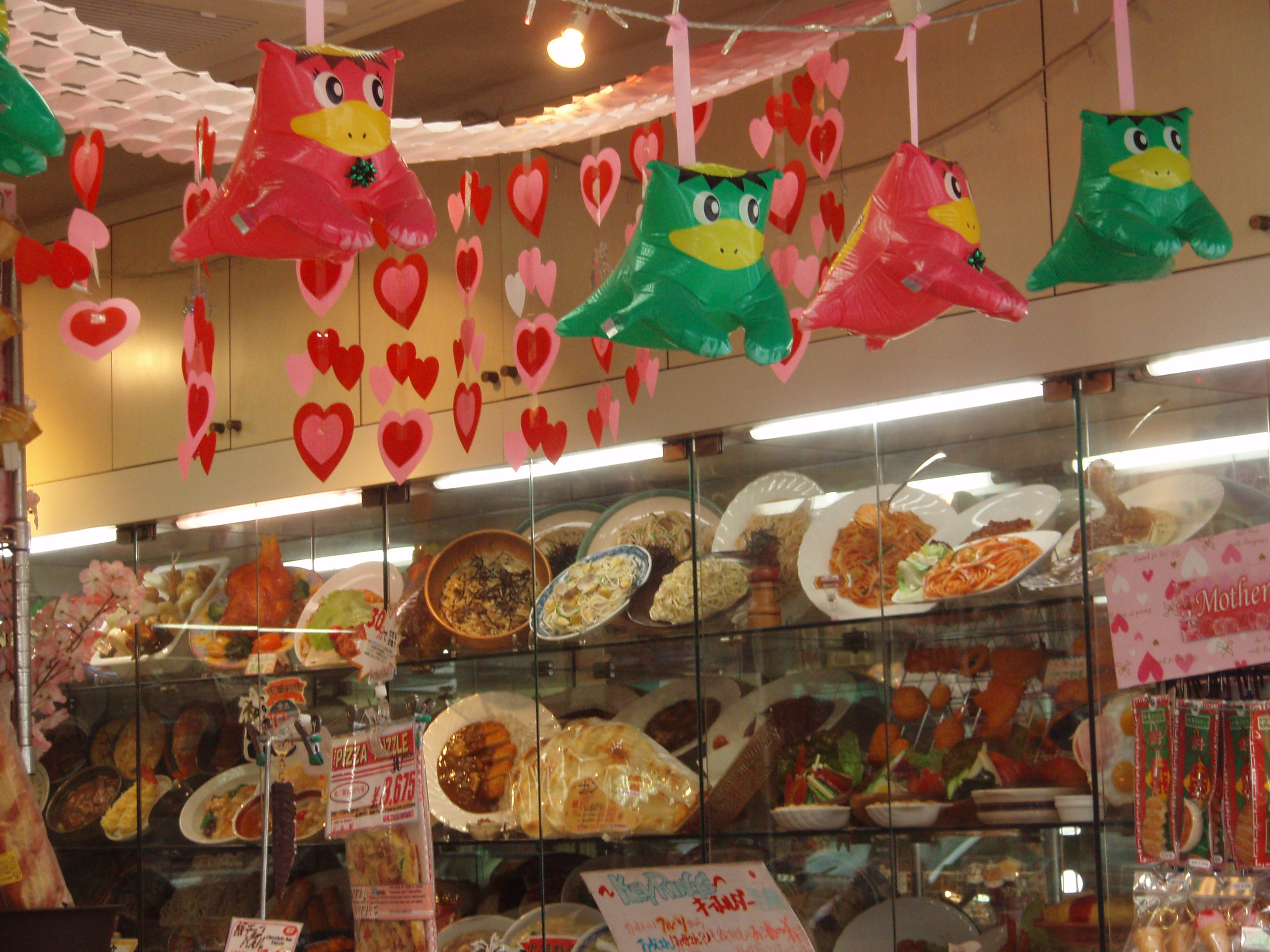
Waxen plates of food - once you've seen one, you've seen them all...

Waxen plates of food – once you’ve seen one, you’ve seen them all…

A few days later I covered at least five sides of a triangle (while my map reading is not the best, it didn’t help that many of the side streets were not marked) trying to locate an organic cafe in the heart of the old fabric district, Harajuku. It was 5pm when I finally arrived for a very late lunch.

I also ended up carrying Coals to Newcastle on a few occasions. For example, when I finally reach the 53rd floor of the Mori Arts Centre in Roppongi Hills, the exhibition, Kaleidoscope Eye, was full of Western modern art – including the likes of ‘Britartist’ Tracy Emin.

Louise Bourgeois' spider at the Mori Arts Centre

Louise Bourgeois’ spider at the Mori Arts Centre

Then in a lace shop in Harajuku, where I bought a few bits of Japanese lace, there was a decorative tea-towel featuring the story of Nottingham lace. And in an ultra-expensive cafe in Ginza as I sat down (at last) and heroically drank a cup of green tea (when in Rome…) that was strong enough to put hairs on my chest, the ultra-slim, Channel-clad lunching ladies sipped delicately on Earl Grey and ate tiny sandwiches and slices of apple pie.

OLYMPUS DIGITAL CAMERA

In truth, sitting down didn’t happen enough (sadly, I seemed to have left the rest-inducing heated loo seats behind in Kyoto) so I relied instead on a couple of reviving Suntory whiskies with dinner in the evenings and a few soothing-sounding Japanese baths that were, in reality, too hot to handle at 50-degrees! But I did sit down to watch a single act Kabuki play at the Kabukiza Theatre in Ginza. Kabuki is a highly stylised form of theatre (think highly painted faces, elaborate costumes, trapdoors and revolving sets) with plays usually based on historical events, moral conflicts or tales of love. Hiring earphones so I could listen to the plot in English was a great help and it was an enjoyable experience. I also had fun watching the theatre goers (this was after all posh Ginza) and noticed several women in kimonos.

Theatre-going women

Theatre-going women

On my penultimate day, restored by the freshest and most delicious sushi the night before, I went off to Yoyogi Park (where young people go to let off steam on a Sunday) and the nearby Meiji Shrine. It was a beautiful spring day and there were several Shinto weddings going on in the grounds of the Shrine. I saw one group being photographed, the women wearing white-hooded dresses and the men wide skirt-like trousers. Photographers ran around adjusting a tuck here and a fold there, nobody smiled and it all looked rather sombre.

Perfecting the shot...

Perfecting the shot…

By complete contrast, the Goths, the punks, Jane Austen and fairytale aficionados were all showing off their extravagant costumes in Yoyogi Park.

Sunday best outside Yoyogi Park

Sunday best outside Yoyogi Park

The Elvis impersonators (they are a fixture) were warming up, taping up their much-worn boots with masking tape, slicking back their hair and chewing gum before strutting their stuff to the muffled music of ghetto blasters that shared the same vintage as their shoes.
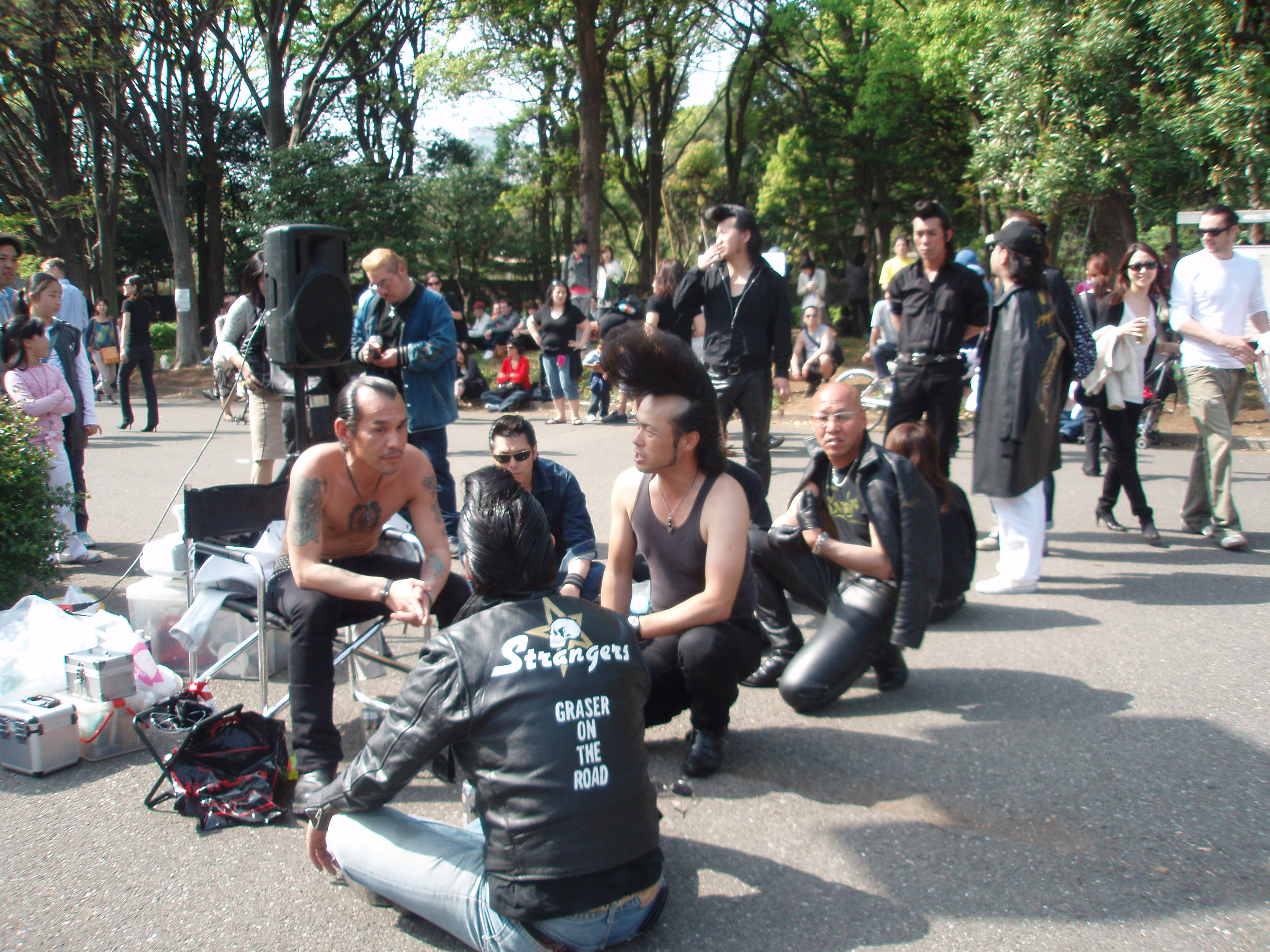
Elvis lookalikes

Elvis lookalikes

OLYMPUS DIGITAL CAMERA

I couldn’t leave Tokyo without seeing the lights in Shibuya so I stopped off on my last night to immerse myself in the flashing neon and videos adorning the skyscrapers. But my favourite thing – a bronze statue of Hachiko dog outside Shibuya Station – had much more permanence to it. Owned by a professor, Hachiko would come to meet his master from the train every day. When the professor died in 1925 the dog continued to show up at the station every day until his own death in 1935. Surely a Japanese version of the Greyfriars Bobby? That brings me neatly back to dogs. Watch out for my next post on people watching at the dog park.

Hachiko's statue

Hachiko’s statue

On Writer’s Block

So much has been written about writer’s block – that gridlocked state of affairs when hand, pen (or keyboard) and the creative brain fail to connect.

It seems to me that the way out of the jam is to create time and space to release the block – it’s literally like unblocking a dam, and the less you’re in your thinking head, the more the imagination flows. Recently, I’d been nose-to-screen and madly writing to deadlines and word counts for too many days in a row. I was so clogged up with ‘work’ writing that when I began to write my blog about Boris Johnson at the Melbourne Writers’ Festival, it was like wading in thick treacle. So I surrendered, lay down and listened to a 20-minute Yoga Nidra (a deep relaxation practice) tape and Bob – or should I say Boris – was my uncle. Just twenty minutes away from the screen and out of my busybody head did the trick.

Other blocks to writing can manifest as a lack of self-belief, a fear of failure of getting it wrong or of being judged. About ten years ago I read the Artist’s Way by Julia Cameron. It’s a 12-week course that helps struggling artists to overcome the barriers standing in the way of their creativity. Some may find it a bit self-helpy but I thoroughly recommend it.

Going back to pen and paper...

Going back to pen and paper…

But perhaps it’s the keyboard and the computer and all the stiffness and eye strain that go with screen work that are the real culprits behind writer’s block. Welsh-based Jay Griffiths, author of Wild, spoke eloquently at the Writers’ Festival about writing longhand in pencil and working the words like clay, moulding them, reshaping them, smudging them across the page. The very simplicity of pencil and paper really appeals to me; it’s a much more fluid and visceral approach to writing and you don’t need to plug anything in.

I also keep a quote above my desk by Henry David Thoreau: “How vain it is to sit down to write when you have not stood up to live.” It’s a reminder that you can’t expect to just sit at the computer and conjure up a best-selling novel. You need to get out there and grasp life with both hands. And always take a pencil and notebook with you!

Boris’s Blockbuster

Many of my blog posts seem to end up being about my puppy dog Bertie – not by design, more by default. It’s amazing how a curly-eared, doe-eyed, mischief-making, feather-legged, smooth-as-silk-coated, chocolate brown cocker spaniel cross can take up so much of my time, not to mention affection.

But today I’m writing about something different. Last week (yes, I’ve been inundated with work and a bit slow to post) I went to hear Mayor of London Boris Johnson present the Keynote Speech at the Melbourne Writers’ Festival. Actually, thinking about it, Boris, whose full name is Alexander Boris de Pfeffel Johnson (the Pfeffel bit sounds like a German cookie to me) is rather spaniel-like with his floppy hair and cuddly appearance. Oh dear, I can’t go more than a few sentences without mentioning dogs…

Anyway, back to BJ. Spending an hour listening to him talk was one of the best things I’ve done all year. Boris is a dazzling speaker – witty, engaging, erudite, encyclopaedic in his knowledge and self-deprecating in the way only the English can be; he referred, for example, to a small sporting event that took place in London last year and seemed to go quite well!

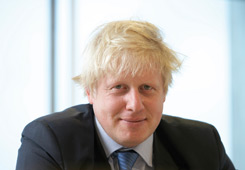
Our man in London, Boris

Our man in London, Boris

He was given the theme ‘the power of the written word’ but he also spoke in praise of urbanisation reminding us that 89 per cent of the Australian population live in urban areas, a density which rivals that of Monaco. He wove in all sorts of literary and cultural references from Virgil to Chaucer, Star Wars and Harry Potter never missing a beat or an opportunity to refer to his beloved London, Routemaster buses and the Oyster card (with a little side swipe at our Myki system). And, of course, he mentioned his book Johnson’s Life of London here and there. This was a writers’ festival after all.

He’s clearly fond of Australia and Melbourne – like Prince Charles, he spent some time at Timber Tops – and talked about London as Melbourne’s Antipodean mirror. With so many Aussies in London (are they still all in Earl’s Court?), he declared himself Mayor of Australia’s 12th largest city! It was heartening to hear a politician – and a Conservative at that – talk so passionately about cultural and linguistic diversity. London wouldn’t be London without its rich blend of migrants from different countries and cultures with over 300 different languages spoken. What a pleasant contrast to the inhumane refugee and asylum-seeker policies cooked up by our ‘turn back the boats’ politicians on both sides of the divide.

He wrapped up his talk by coming back to words and writing. Asked what he will do when he retires, Boris owned up to a secret desire to write a rip-roaring blockbuster, the kind of book that you’d find at an airport bookshop complete with pink embossed writing on the cover. He’d write under a pseudonym, something like Rosie M Banks. If his thriller is anything like his speeches, it will be utterly compelling.

Keeping Creativity Alive

Earlier this week I was forced to watch daytime TV. What else can you do when you’re lying captive in the dentist’s chair with nothing but the overhead screen to distract you from the all the grinding and drilling going on in your mouth? I only go to the dentist about every six months but the morning shows on the commercial channels never seem to change much, whether it’s the airbrushed, super enthusiastic, white-teethed, blow-waved presenters, the endless offers for age-defying creams or the features on new-fangled miracle diets and time-saving household gadgets. But, on this occasion an interesting story caught my attention.

It all started with a 9-year-old boy called Caine Monroy who built an elaborate games arcade out of cardboard boxes in front of his father’s spare auto parts store in Boyle Heights in Los Angeles. It so  happened that a film-maker stopped by to purchase a door handle for his car and was inspired to make a film, which was posted online and received over  one million views on the first day. What’s more, it spawned what has now become the Global Cardboard Challenge, an annual competition that invites children around the world to let their imagination run riot and create with cardboard.  To give you an idea, here’s a clip featuring Australia’s 2012 contribution.

I just love this! In our busy, achievement-driven lives creativity often gets squeezed out and neglected. Although technology can be a fabulous learning tool and create community connections worldwide, I feel lucky to have grown up in a pre-digital world where imagination and make-believe, rather than screens and keyboards, were constant companions. I used to make perfume with rose petals, cook up inedible and fantastic concoctions in the kitchen, dress up and put on plays, scribble in notebooks, splash paint on the page and generally muck about in the garden.

It’s the simplicity and accessibility of Caine’s Arcade project that is so appealing: it’s three-dimensional and operates in the real world, it’s open to anyone who can rustle up some old cardboard (yes, it ticks the sustainability and recycling boxes too), is endlessly variable and taps into right brain thinking and inventiveness. Thousands of people have since travelled to Caine’s Arcade, schools have embraced an educational version of the project, and kids around the globe are crafting cardboard constructions of all shapes and sizes. Inspired by this response and with a grant from the Goldhirsh Foundation, the Imagination Foundation was set up to encourage and fund creativity in children.

I’ve often thought what I’d do if I won the lottery – wouldn’t that be a nice problem to have? – and one of my dreams has always been to set up a foundation that would offer financial support to struggling creative types – writers, actors, thinkers, musicians, film-makers etc – who get stifled and bogged in routine, bill-paying 9-5 jobs that crush their creative spark.

Creativity is our birthright and, like any other part of us, needs a regular work-out and room to breathe.  It requires a sense of openness and a willingness to receive ideas and let them simmer until they are ready to be birthed.   When we’re in doing mode and under pressure to meet deadlines or get a job done, it can block the flow of ideas and inspiration. I don’t know about you but my most creative moments come when I get out of my head and into my body. I might be in the shower, walking by the beach, doing my stretches, sitting in a cafe, driving along in the car, picking up a snatch of song or chat on the radio or dropping off to sleep. Inspiration creeps up on me when I least expect it.  Ideas – like good stories on daytime TV – pop out of the ether when you’re not looking for them.