Back in Blighty 2: Village Life

Although I grew up in various English villages, both in the North and South, I never really thought about the nature of small communities. I just took it from granted. On my recent trip to the UK, I was reminded how delightfully timeless and whimsical village life can be, and looked at it with fresh eyes.

In Devon I stayed with my friends Monica and Jonathan in Chawleigh in the heart of Devon. It’s a small village with two pubs and a shop surrounded by tiny lanes with high hedges; I am glad I wasn’t driving – all that reversing to a passing spot requires a very flexible neck! I didn’t explore the village as such – we only had one fine day in three (the UK experienced its wettest July for years!), and that was spent doing a glorious circular walk on Dartmoor.

But their house is a voyage of discovery in itself. The Grade II listed farmhouse, with its smart thatched roof,  dates from the 17th century – some of the house possibly earlier – and, atop the front door, is the crest of the Earl of Portsmouth – the house would once have been part of his estate. Walking into the house you get a visceral sense of the palimpsest of history: flagstones worn by footsteps over the ages; the sloping and uneven floors; the heft of the of the cob walls (walls made from mud, chopped straw and horse hair, a common practice before 1850); the elegant 12- and 8- pane sash windows; the 19th century glazing evident in the whorls and imperfections and the thin glass (modern sashes have thicker glass); and the early 17th Century plank-and-muntin screens.

Now I don’t know about you, but I’d never heard of these screens. The name alone is fascinating – Google informs me that muntin is a corruption of montant and, in some early spellings, mountain, a word applied to various upright dividers. That makes sense, these screens are an early form of partition wall. The screens in Monica and Jonathan’s house are made of oak and full of holes – and, to add to the intrigue, on the screen by the front door there are initials carved into the wood dated 1941 – most likely by some evacuees.

Then there’s the outdoor privy with an adult-sized seat and a child-sized one – that made me smile – a barn, a well and a former piggery. The apertures carved into the cob wall under the thatch were for pigeons to nest, and are known as pigeon boles. Back in the day, pigeon meat and eggs featured on the dining tables of the gentry.

What an experience it was staying there. It’s the kind of place where things could go bump in the night. Unfortunately, Monica was chatting to me about a podcast about ghosts and mentioned something about a ghost cat and the study door slamming shut. That was enough to fire my fertile imagination. Lying in bed, I kept bobbing up and and down like a meerkat, craning my neck around as if to challenge any spectral forms!

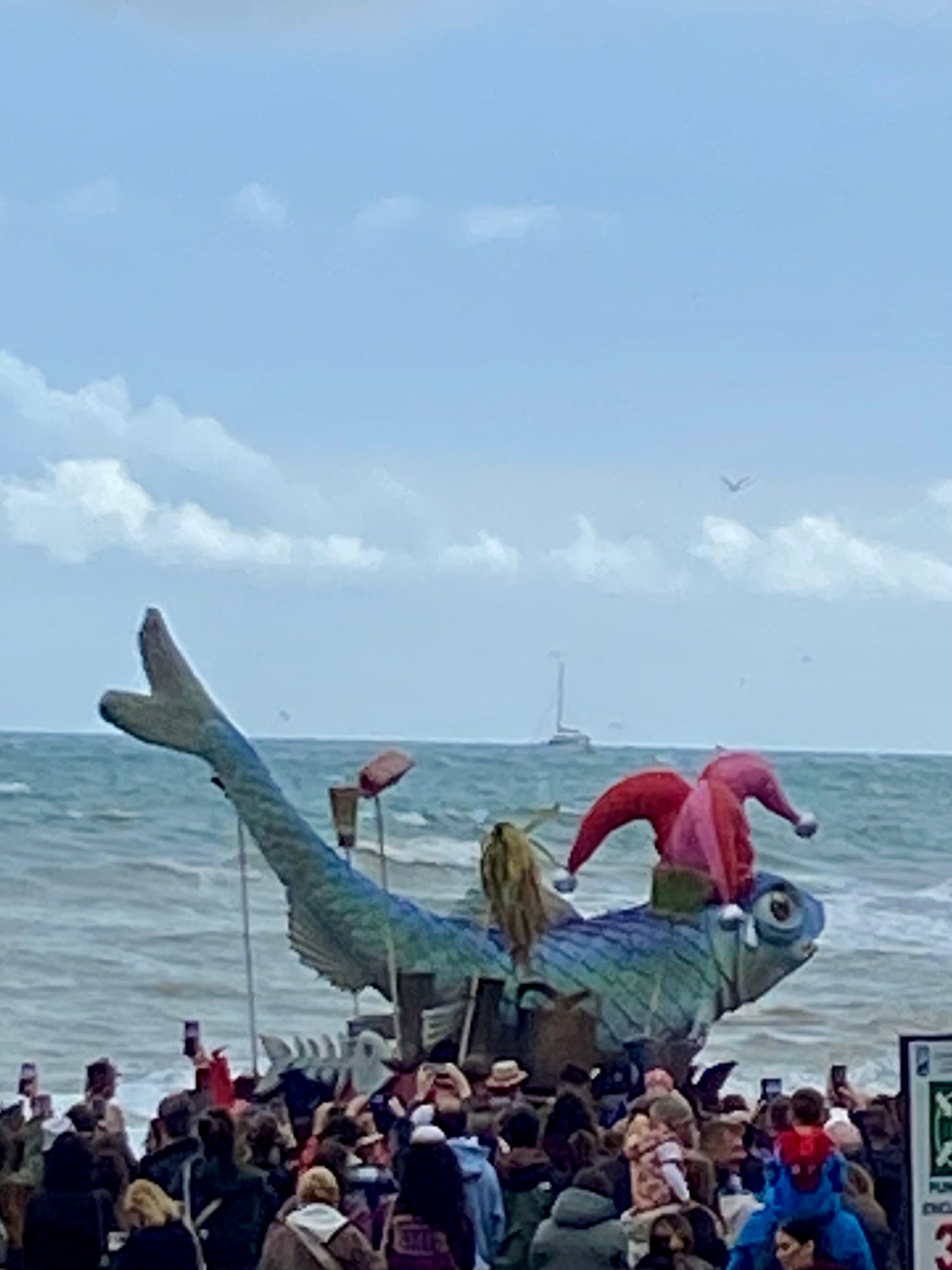
A country fair has taken place in the neighbouring village of Chulmleigh every year following King Henry III’s approval in 1253. What luck that this year’s fair coincided with my visit. We arrived in time to see the procession of vintage tractors and cars filing through the bunting-lined streets. Modern tractors just don’t have the same class as the old ones, their sputtering, chugging engines evoking days of yore. And the cars, among them, Austin Healeys, Triumph Heralds and Stags, Wolseleys, Hillmans and Morgans all belong to an era of fine craftmanship before the production line and robots took over.  Wonderful stuff.

As the rain advanced, we headed out of the village to the cricket field where all the tractors and vintage cars were lined up for closer inspection, and a DJ was playing Golden oldie hits – I couldn’t resist singing along to the Beatles Ob-La-Di, Ob-La-Da. I got cornered by a farmer telling me how much his badger-faced breeding sheep cost – alas, I was not in the market, but I enjoyed watching them being assessed by the judges. I felt I’d walked onto the set of All Creatures Great and Small...

Given the wet conditions we grabbed some lunch from one of the food vans and sheltered in the main tent where all sorts of home-grown, home-bottled and home-baked produce was on display to be judged – from rhubarb vodka to heritage tomatoes, Victoria sponge cakes and scones. In the crepe queue, I got talking to a local, a woman probably in her mid to late 60s, who has lived in Switzerland and Australia but now calls Chulmleigh home. She was waxing lyrical about the activities on offer in the village – the historical society, keep-fit and line-dancing, you name it!

While I’d probably love all the activities and goings-on, there’s nowhere to hide in a small village, everyone knows your business, and there are not that many people to go round. Good boundaries would be essential. Even so, you could quite quickly get Cabin Fever.

That can be the drawback. In my mother’s village in Nottinghamshire there is a village hall but no shop or pub and there’s not much going on. Mum’s house is down a lane leading to the surrounding fields, and she notes the various comings and goings and who’s who. Her running commentary, while not scripted, brings to mind Alan Bennett’s TV Monologues, Talking Heads, which all all feature single women – one a vicar’s wife (that one is quite dark), one a poison pen letter-writer, and one recently widowed woman – you get the drift. Thankfully Mum’s narratives, while full of conjecture and a bit curtain twitchy, tend to be highly amusing.

Evening view over the fields

There’s the man over the road who lovingly cleans his car daily, and takes an elderly relative out for trips, an immediate neighbour who endlessly practises his golf strokes in the garden (the ball making an irritating click noise) while his wife sunbakes on garishly coloured plastic sun loungers in between putting out the washing. The absence of washing on the line usually means they’ve taken off to somewhere in the Mediterranean in search of more reliable sun. That and the dust gathering on their car bonnets in the driveway. Similarly, Mum works out when the people behind her house are away as there’s no noise from the kids and their searchlight doesn’t beam into her bedroom at night. As it happens, she was convinced the light was some kind of special heat lamp on a timer for their chickens, but it turns out it’s just a very sensitive sensor light triggered by a gust of wind or a bird. Then if the lovely neighbours on the other side don’t draw back their hall curtains, she worries one of them must be ill. What again? I say, incredulous. You thought they were ill last week too – maybe they are just feeling private!

But curtains have their uses. Mum always draws the curtains on her top landing which faces the street. Three very kind neighbours know that if those curtains ever remain drawn during the day there’s a problem. It’s a very simple form of Neighbourhood Watch, the kind you only get in small, tight-knit communities. I find it comforting to know they are looking out for her.

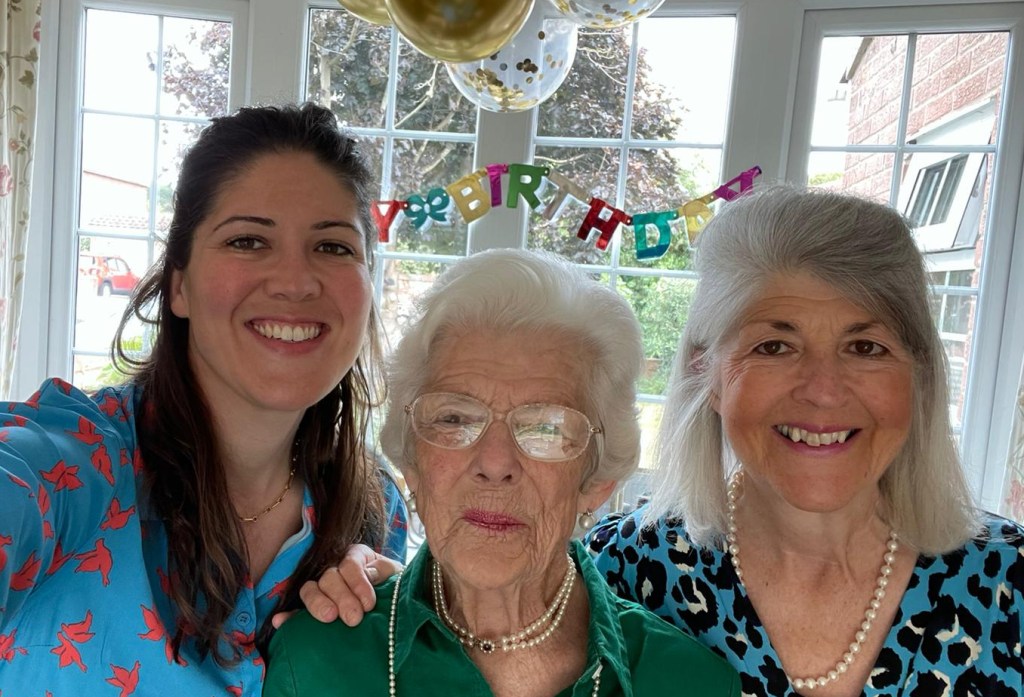
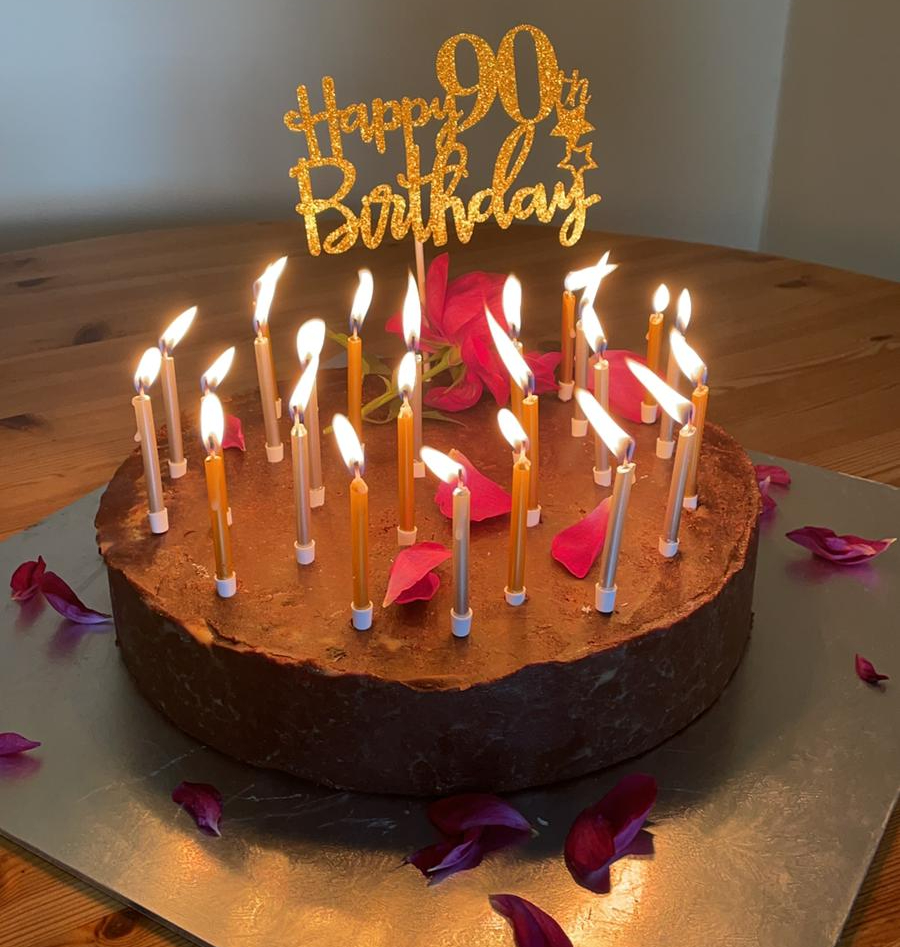
This post is dedicated – with great love and affection – to Mum who turns 92 today, 12th September, 2023. Despite battling the frustrations and degenerative effects of old age, she’s going strong and living independently. She doesn’t even have a cleaner! And two weeks ago she was in London helping out with my sister’s grandsons, Mum’s great-grandsons, bathing them and reading stories etc. Go Mum! Go Granny! Go Great Granny! We love you.

Back in Blighty Part 1

It’s always an adventure of sorts returning from Australia to family and friends in the UK! Due to the long, snaking passport queue and luggage delays, it took three hours to get from the plane to my sister’s front door in London. I had hoped to fly straight into my brother-in-law’s 70th birthday party and had rested as much as possible on the plane so I’d be in sparkling form on arrival. As it turned out the only sparkle was on the glasses I helped wash up; I arrived just as the last guests were leaving! Never mind, I was still part of it and happy to muck in and help clear up. And the wonderful consolation prize was meeting – and cuddling – my newest grandchild aka great-nephew, Douglas Finlay, aged just over two weeks.  I was- and remain – totally smitten!

A couple of days later my nearly 92-year-old mother met me at her local train station in Nottinghamshire. She’s still doing short local drives – just…We had an eventful first week together what with her malfunctioning hearing aids, a pesky bladder infection popping up (every time I come over, I seem to troop to the surgery with a urine sample!), and an outbreak of mice.  Mice are canny and opportunistic little blighters; we first detected them feasting on bird food in the garage, then suddenly they seemed to be everywhere, reminding me of that song about a mouse living in a windmill in Old Amsterdam. Like their Dutch forbears these mice must have been wearing clogs – judging from the scrabbling in the roof space – and the clip-clippety-clop on the stairs.  Not only did we spot one dashing under the grandfather clock in the hall, another one had clearly been upstairs to the spare bedroom and into my suitcase where it had snacked on a (wrapped and sealed) muesli bar. All a bit too close for comfort!

Among the highlights at Mum’s were having my Yorkshire-based brother and sister-in-law overnight and preparing lunch for them and my Australian nephew and his wife. While that entailed a fair bit of shopping and catering for Mum to plan (flap and worry about!), it all went brilliantly and no rodents were in evidence. I also enjoyed watching the Wimbledon Men’s Singles Final with Mum – in real time. AND I got her to sit still for more than 20 minutes – we were both gripped by the long and hard-fought match with the 20-year-old Spaniard Alcaraz beating four-time defending champion Dubrovnik (Mum does a very good line in Spoonerisms).

Back in London the big treat was a trip to Covent Garden with my sister and brother-in-law to see one of my favourite operas, The Marriage of Figaro. I first got into opera as a 17-year-old in Vienna where I was an au pair girl to a stuffy family with minor aristocratic leanings. Back then, I would purchase a standing place at the back for a few Austrian Schillings. My ticket to Figaro was a very generous early ‘milestone’ birthday present from my sister. There’s something hallowed about the Royal Opera House with all that plush red velvet, gold and gilt edging. The music is sublime, the sets beautifully crafted and the staff attentive and gracious. And, always a rebel despite outward appearances, I love that we smuggled in our Sainsbury’s sandwiches and surreptitiously ate them at the bar with our pre-ordered dinks during the interval. While we all know and love Il Nozze di Figaro, numb bum did start to set in during Act Four. You can’t help wondering if there’s one too many layers of subterfuge, hiding in the bushes and letters falling into the wrong hands!

A few days later I went with other friends to an open-air opera at Holland Park in Kensington. Itch is a modern opera about science, adapted from a book about chemistry written by DJ Simon Mayo for his son –  and we attended was the world premiere. Against the backdrop of a brilliant set comprising 118 cubes – as in the periodic table – the plot involves the discovery of a new undiscovered element, a radioactive rock that has the power to solve the global energy crisis but also destroy humanity. Referencing climate change and the Gaia Theory and greedy corporations, it becomes a battle between the chemistry-obsessed schoolboy, Itchingham Lofte, and a bunch of corporate baddies.  I really enjoyed it and the soaring arias – accompanied by the City of London Sinfonia –wouldn’t have been out of place in a classical opera. The only drawback was the lashing rain – while the Holland Park Opera auditorium is under a canopy, the sides are open and it was none too warm! As I write this, it’s now August – but the UK has had the wettest July for years. Just my luck.

After the opera, I stayed with my friends at the Army and Navy Club in Pall Mall. It wasn’t as formal as I had imagined, and it was a treat staying in central London. My room reminded me of a cabin on a cruise ship and had everything I needed. The club has a rich history; the founder and First President was wounded in the Battle of Waterloo and – and here I’m missing the detail – there is some connection with the Entente Cordiale signed between Britain and France in 1904. The walls are lined with prints and pictures from wars, battles and country pursuits from the 1800s onwards – ranging from WWI cartoons and fox hunting scenes to portraits of members of the Royal Family across the ages including one of the young Queen Victoria. And then, as you might imagine, there are various trophies of the stuffed variety – from a greater kudu head to an emperor penguin from Scott’s Antarctic Expedition.

I book-ended this second London visit with an after party for my brother-in-law’s 70th to make up for missing the first one. It was just about warm enough to sit outside and I loved catching up with friends over drinks and nibbles. The following morning, I was off to Devon to sample rural village life. More next time.

Getting my Brit Fix and Bridging the Divide

If you had told me when I moved to Melbourne in the early 2000s that a pandemic in 2020 would see Australia close its borders, pull up the drawbridge and ban international travel, I would probably have hightailed it back to the UK (I can hear my Mum saying she wishes I had!). Never did I imagine having to face enforced separation from my family and a country I love dearly with an indulgent rose-tinted, nostalgic fondness.

But I/we’ve managed magnificently: we’ve been suitably British and stoic – and even a bit Buddhist (well, I have; ‘this too shall pass’) – and made the best of it. And, as one with strong Luddite tendencies (yes, I still have a paper diary and LOVE it!) I acknowledge that technology and video calling has given us a lifeline and a rich sense of connectedness; in fact, as a family we’re more up to date with each other’s news than we used to be. I am one of four: there’s two of us here, and two of us there and we have a sibling video call every Friday.

And, thanks to the perseverance of my eldest brother Charlie, Mum uses an iPad and is FaceTime literate. Mum and I started out chatting twice a week, then – as COVID dragged on – I suggested a new way to bridge the divide. When Melbourne is nine hours ahead of the UK, I drop in at Mum’s at noon her time on a Sunday, and we listen (via her radio and our respective iPads), to her favourite programme on Radio 3, Private Passions. Each week presenter (and composer) Michael Berkeley explores the musical passions and lives of his guests. Sometimes we’re riveted by the subject and their musical choices, other times we drift off into chit chat, easy kitchen table tittle-tattle.  Quite often, Mum gives me an update on the birds on her birdfeeder, the state of her garden, what she is having for lunch or who has just walked past the window. It’s as if I am there in the room with her, and we treasure these special interactions.

Tuning into Private Passions with Mum

I’ve also had regular Brit Fixes thanks to plugging into BBC Sounds and listening to abridged versions of classic favourites such as Middlemarch – how did Dorothea stick it out with the GHASTLY Rev. Edward Casaubon? – Desert Island Discs, a Victoria Wood retrospective and, just recently, a reading of a beautifully nostalgic and touching story, written in 1931, of a family on their annual holiday to the seaside. There’s something wondrous about my physical self strolling along banksia- and wattle-fringed coastal paths with my dog Bertie, my headspace transported to Bognor Regis on Britain’s South-East coast, following the Stevens family strolling along the Promenade. Escaping the humdrum of everyday life, excitements back then included freedom from wearing ties, tight collars and stockings, and securing a bathing box with a balcony!

Other wonderful Brit Fix moments have included TV programme Secrets of the Museum – a behind the scenes tour of London’s V & A – looking at the extraordinarily detailed and delicate work of the curators and conservators. What joy to sit on my sofa, getting up close and personal with exquisite treasures, without the slow shoe shuffle past glass display cases, peering in at the small font captions. Another highlight was an episode of Rob Bell’s Walking the Lost Railways of Britain which took in the now disused railway station in Great Longstone, the Derbyshire village where my mother was born in 1931.

So far, so good. But as the months rolled on, I realised, with great sadness and a very heavy heart, that I was going to miss my niece Annabel’s wedding in July this year (it had already been postponed from July 2020) and Mum’s 90th in mid-September.

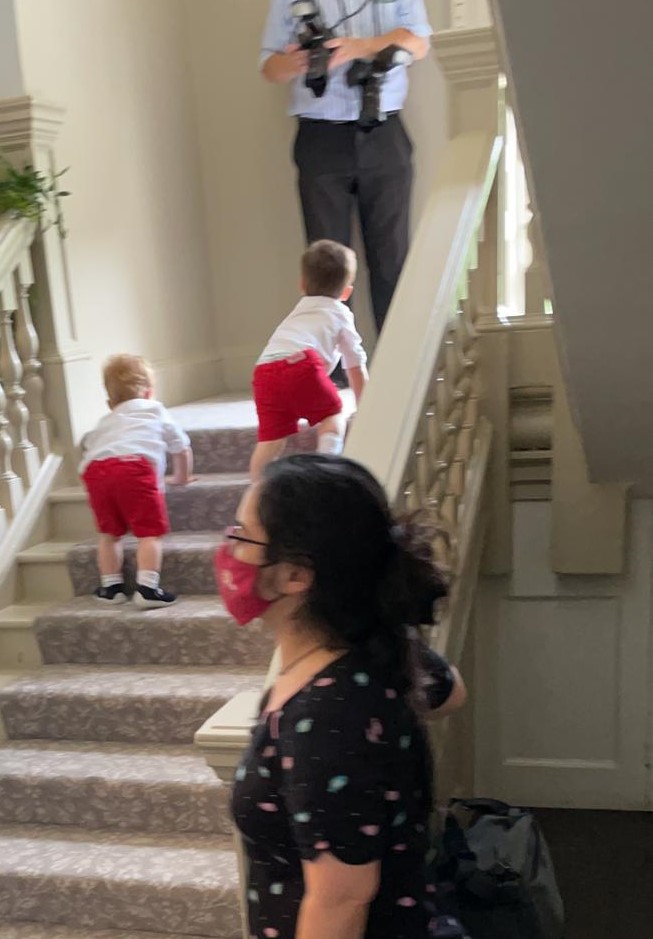
Once again, technology came to the rescue. My sister’s friend John gave me the most splendid (and I use that very British word deliberately) guided tour of Annabel and Jonny’s wedding in South London. We kicked off early and I had a bird’s eye view of the cake, the flowers, the cheeky bridesmaids and the page boys scampering about, the latter my nearly 2-year-old great-nephew twins, like little princes in their red shorts, white shirts and tartan bow ties.  I was there ‘live’ for the service, witnessed the exchange of vows, my niece radiantly happy and elegant, and Jonny resplendent in his kilt, cape and full tartan regalia, both brimming over with love. As they filed out, I had a quick chat with the just-married couple (making me the first person to address them as Mr and Mrs) and then stayed online while they were strewn with rose petal confetti, posed for photographs and then mixed and mingled. I had chats with many of the guests – from friends to family – until it got to 1am here and I had to remind them I was in my PJs and ready for bed!

And then, the weekend before last, my brother Tim and I video-called into Mum’s 90th birthday celebrations – in fact, it was a four generation, three-country call from Mum’s breakfast table in Nottinghamshire to Tim and me tuning in from Melbourne, and my niece Georgie and the twins (the page boys) in suburban Paris! On the first call we watched Mum – in the swing and bright as a button from the get-go – open some of her cards and presents.

Four Way International Call

We tuned in again closer to her lunchtime party. This time, the newly-married Annabel, now Mrs Recaldin, was emcee. As bubbles and copious canapes were served, Annabel waltzed us around pointing out Mum’s many cards (35 and counting), the birthday banners and balloons and the assembled guests.  “Which of the grey-haired old dears do you mean?’ enquired Annabel as I asked to speak to some of Mum’s friends, “there are a few in the room!”

My brother, Charlie, toasted Mum with some heartfelt and touching words, acknowledging, too, the extraordinary kindness of her neighbours, George and Annette, who have been her rock and strength throughout the pandemic. “I’ve made it to 90,” replied Mum triumphantly, “and it doesn’t feel so bad!” Then, after thanking friends, family and neighbours for celebrating with her, she added: “I know I can be difficult sometimes…”  Thank Goodness for gin, piped up Charlie.

Having felt weepy on and off all weekend about missing Mum’s party, I went to bed with my heart aglow. I felt the love through the screen and across the divide, and was thrilled to see Mum, the belle of the ball, in her green linen dress and pearls. The word splendid comes to mind again. And next year I’ll be able to visit in person, catch up on hugs, lots of them, and kitchen table chat.

Now is the time

How heart-shakingly moving was Amanda Gorman’s poem The Hill We Climb which she read at Joe Biden’s presidential inauguration. For me, it summed up so powerfully and with such grace and eloquence the choices that stand before us in the COVID era. While she was speaking of America, and against the background of the storming of the Capitol on 6th January, her wise words apply to all of us wherever we live. What also stood out for me – and gave me hope – was that Biden is a man of soul, of the heart, capable of compassion and empathy; the polar opposite to the morally-corrupt, orange-faced ego-maniac Reality TV business tycoon who previously held office. I won’t even mention his name.

It’s ironic in some ways that we mourn the pre-COVID world. So much of that world was already broken and unsustainable; the pandemic has magnified the challenges we face with global warming, food (in)security, factory farming, inadequate systems to deal with the rising mountains of waste, inequity on so many levels (the politics of vaccine distribution to developing nations just one example) and power-hungry corporations putting profit before people and planet.

And then the senseless destruction of forests in so many parts of the world. Since 2016 one football pitch of forest is lost every second. Not only are trees vital sinks for carbon, but emerging science indicates that trees are social creatures that communicate and support each other via an interconnected fungal highway. Who hasn’t experienced a sense of soul amid towering trees in a forest cathedral? I read an article in The Melbourne Age this weekend instancing how a tree on the brink of death bequeaths a substantial share of its carbon to its neighbours. How magnificent is that?

One of the benefits – if we can call it that – of COVID restrictions putting the brakes on ‘normal’ life (and my heart goes out to all those in the UK and other parts of the world faced with wide-scale community transmission, over-whelmed hospitals and high death rates, particularly those who don’t have the economic or social luxury of being able to socially-isolate) – is time to reflect, to slow down, to live more simply, to look out for our neighbours – get to know our neighbours even – to appreciate the small things, and importantly, to revere the natural world that sustains us. And I say revere deliberately.

In a pre-COVID post in February 2020, I wrote that Planet/Mother Earth can do without us and will cast us aside if we don’t look care for her. Recently I watched David Attenborough’s Witness Statement: A Life on Our Planet – on Netflix in which he went through the decades of his life demonstrating humanity’s impact on the planet as measured by population growth and the decline in wild spaces and biodiversity. It’s a compelling call to action. We have overrun the world he says, with nothing to stop us. We are intelligent but not wise, apart from nature, not a part of nature. Since that was filmed, COVID has swept across the world. If COVID doesn’t stop us from plundering the planet, polluting and over-consuming, nothing will. If we fail to clean up our act, more zoonotic viruses are waiting in the wings. Surely, that’s enough of a deterrent?

Now is our chance to change how we live our lives and how we interact with others and our environment, being kinder to ourselves, each other and the planet. Some say we’re doomed – human beings are inherently greedy, corrupt and selfish; history is merely repeating itself. Isn’t that a lazy let-out clause; a way of propping up the status quo?

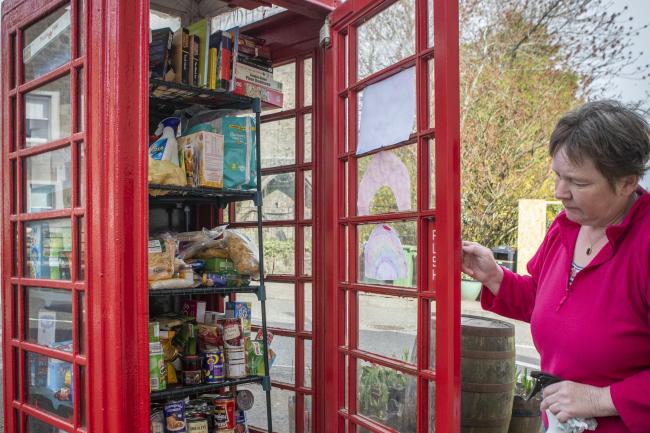
We mainly read the gloom and doom stuff in the news – and there’s plenty of it – but we hear less about the initiatives to increase sustainability and ethics in the fashion industry, clever waste recycling, renewable energy and rewilding projects or community support schemes (one of my favourites the conversion of a red phone box in an English village into a community food larder). What a lot of schemes lack is the scale and infrastructure to achieve systemic change, but there’s opportunity for that to change. If we care enough and dare enough, we can all be part of that change through the choices, decisions and values we live by.

Tuning into the digital version of the Melbourne Writers’ Festival last August, I was struck by the words of film-maker Damon Gameau and his efforts to humanise climate change through story-telling, and his positivity: “we need to reframe the crisis as an opportunity and privilege to be alive at this time” and “Optimism is the basis of solutions for a sustainable future.” Like many commentators he instanced how major global events in the past brought about advancements, from the social changes triggered by the Black Plague to the creation of the NHS and welfare state in Britain after the Second World War.

Hope, like trees in the forest, nourishes the soul. One of my mother’s favourite phrases is: ‘Hope springs eternal’ (from Alexander Pope’s Essay on Man). Another of her favourites is the poem Leisure by William Henry Davies: “What is this life if, full of care/We have no time to stand and stare.” With life turned upside down and without being able to plan ahead with any certainty, it’s become a bit easier to live more mindfully and in the moment– with more time to stand, stare, smell the roses and meditate. Even a few minutes of micro meditation can take you out of your head and back into your heart.  The trick, I have found, is to cultivate a practice of gratitude and to trust that there is some grand design behind the current global shake-up.


Lockdown gave me the time, space and single-minded focus to build a freelance practice as a grants specialist. And in a pleasantly organic and synchronistic way, organisations and projects that are close to my heart have found me. At the end of last year I supported five arts and entertainment organisations to win Federal Government grants – such a boost for artists whose livelihoods and performance opportunities have been decimated by COVID. Since then, there’s been youth mental health, environmental education and projects to re-purpose food waste. I feel as if I have found my professional feet and carved out my own niche and signature brand.

As a homebody, lockdown was less challenging for me than some. And that’s where the gratitude came in. Finally, I had time to give my garden more love, and to tackle jobs that had been on my domestic to-do list for years. I didn’t clear out a single cupboard but I did install a Vertical Garden in my courtyard and plant out various cuttings I had collected from friends’ gardens.

I painted my various garage sale and nature strip finds (for non-Australians, this has nothing to do with nudity; the nature strip is the grass verge bordering the pavement where people put out ‘hard rubbish’ to be collected by the Council!). While it’s illegal to pinch things from the hard rubbish, I see it as neighbourhood recycling, and it saves items going to landfill. A win-win. A neighbour, Jill and I, alert each other when we spot see something languishing by the side of the road that is crying out for a good home…

More than ever, I learnt to savour the small things: a cuddle with Bertie, a new green shoot in my garden, the first cup of tea in the morning, cloud formations in the sky, the changing colours of the ocean, the magpies carolling, an engrossing book or fascinating podcast. My home-based staycation over the Christmas holidays was a series of simple savoured moments adding up to quite a feast.

None of us knows what lies ahead. All we can do is to keep caring, keep learning, keep hopeful and keep putting one foot in-front of the other. I’ll leave you with a few lines from Amanda Gorman.

But one thing is certain:
If we merge mercy with might,
and might with right,
then love becomes our legacy
and change our children’s birthright
So let us leave behind a country
better than the one we were left with


Spikes, tights and fairy lights: a bit of lockdown lightheartedness

One thing about the Covid-19 lockdowns (we are in lockdown take two in Melbourne) is that the dog child and I are confined to barracks every evening. And in winter that means possum o’clock begins around 6 pm when the pesky little critters emerge from their daytime resting spots and start scampering about, taunting my spaniel Bertie by using my fence as a runway, and me, by chomping on a few shrubs into the bargain.

possum-nibbled shrub

Bertie is by nature a hunting dog so the appearance of these squirrel-like nocturnal visitors drives him into a frenzy of frustration.  Whenever I hear him squeaking and shrieking, I dash out to find him hopping around on his back legs, hurling himself at the fence. Safely perched at the top of the trellis, the possums stare complacently at Bertie as if to say ‘bark all you want, you’ll never get us.’ Schadenfreude in action.

I’m not so worried about the noise of his barking, although it is pretty disruptive, but more concerned that his efforts to scale the fence are damaging his already stiff back. Even as a pup he’d sometimes limp a bit in his left hip. And he’s always sat with his right leg sticking out at an angle – presumably to relieve the stiffness on the other side. While an X-ray showed he doesn’t have hip dysplasia as such, there is wear and tear in the back and hip area. And if you try and massage that area or apply pressure, he’s not impressed.

Having said that, noise abatement has been part of my game plan. For the last year I’ve had pesky noise-phobic neighbours – renters rather than owners, thank Goodness. The first time I met them the conversation was ALL about them, their health, trials and tribulations.  As if in warning, they said they hoped my dog didn’t bark, and that in previous houses they’d had to write to the Council about dogs that yapped all day. Bertie does have an impressive bark but it’s never continuous, more a response to certain stimuli – a bird on the roof, a possum, a knock at the door etc.

As I write this, I’ve decided to devote a future post to these crazy neighbours who have applied an accusatory and forensic approach to each and every noise – be it my heating, a sporadic Bertie bark, the neighbour’s air-con or occasional loud parties, construction noise or the guy over the other side playing music. They write letters, they climb up on ladders to peer over the fence, and they throw eggs. They are due to vacate – after much wrangling and a VCAT case – in August ­, so watch out for my celebratory blog then. Stressful at the time but amusing and cathartic looking back…

Suffice it to say I’ve had ample motivation to do my utmost to deter the possums and divert them to someone else’s garden. A few years back I installed a sonic possum deterrent– it may have helped for a while but I reckon the possums grew accustomed to it. I re-positioned it recently and at one point turned up the volume. Then I got calls from Mrs Noise Phobe asking if I could hear a strange whirring noise around midnight. Had I got a new possum deterrent? I denied everything, but did turn it down. The minute they move out, I’m going to crank it up again!

Then a friend recommended solar-powered coloured fairy lights as a way of keeping possums away. I duly trooped off to Bunnings, and my hero brother helped me string them along the fence. Clearly, there’s got to be enough solar gain in the day to keep them flashing at night (oh yes, I have set them to epileptic fit-inducing flash). Still the little buggers scampered across the fence, driving Bertie berserk. Next, I resorted to Old Wives’ Tale remedies and, keeping some hair from Bertie’s last groom, stuffed it into a stocking which I suspended from the fence. That only compounded the problem as he mistook the dangling black shape for a possum, and barked at it!

Some nights if I caught the possums red-handed in a stand-off with Bertie, I’d train the hose on them or poke them with a long pole. And please don’t go Animal Rights-y on me. I’m not harming them, simply encouraging them to hang out elsewhere. Suffice it to say, none of the above proved to be sustainable solutions. Back to Dr Google. This time I invested in humane possum spikes 2cm high and 4.5cm wide, which I positioned at strategic points along the fence. That didn’t work either. Perhaps if I had covered the whole fence it would have been more successful, but, then again, the possums didn’t seem to mind to walking on then.

Back to the drawing board and to the possum spike company, who were only too happy to cash in on trying to solve what is clearly my (insert marketing speak) ‘pain point’ as a customer. Taking advantage of the end of year sale, I ordered a different type of spike. Tall, resembling 6-inch icicles, and made of Perspex, these are the real deal. My brother, bless him, came over and put them along the entire length of the fence. For the first few nights it was quieter. But possums are resourceful – I reckon there’s a movie in this along the lines of Wallace and Gromit’s The Curse of the Were-Rabbit or Roald Dahl’s Fantastic Mr Fox – and, soon after, I spotted a possum crawling along my fence underneath the spikes, and another using the side of the spikes as a climbing frame.

I reckon they got in through the gaps down the side of the fence adjoining the noise phobes’ garden – so I have strung up netting and filled in the gaps. It is quieter on the Western Front now. Bertie can still hear the possums on the other side of the fence but he’s less frenzied when he’s no longer eye-balling them. It’s only a matter of time, of course, before they discover they can leap from my other neighbour’s gutter onto my shed and along the fence underneath the spikes – but till then we’ll keep on with our spikes, sonic possum deterrent and flashing lights. Never a dull moment over here!

Steeped in history: from Malta to Queen Mary’s Mansion in Yorkshire

When I studied history at school it was often delivered parrot fashion – reciting dates, battles, Kings and Queens – or from musty-smelling books wrapped in brown paper. There were occasional highlights such as making a book about the Romans and their customs (I still have my little cardboard effort somewhere) but, on the whole, it was one-dimensional and flat. But now I can’t get enough of it. Piecing together, and making sense of, the present through studying who and what went before is endlessly fascinating.

Visiting the island of Malta in November I was captivated by a timeline in the museum of archaeology in the capital, Valletta. That morning I had visited a 6000-year-old underground burial chamber at the Hal Saflieni Hypogeum. Only discovered by chance in 1902 by construction workers, scientists estimate that more than 6000 people were buried here. And, to put it in perspective, the tombs pre-date Stonehenge, the Acropolis and the Colosseum.

For three days I became a timeline obsessive, immersed in the multi-layered history of this rocky Mediterranean island, each of the many occupiers leaving their mark on the culture, language and architecture from the Romans to the Carthaginians, the Arabs, Italians, Sicilians, the Knights of St John, who arrived from Rhodes in 1530, the French (during the Napoleonic occupation) and, of course, the British. It was a British colony from 1814 to 1964, and served as a strategic military base in the Second World War.

Malta was love at first sight for me. As  the taxi from the airport negotiated Valletta’s labyrinth of narrow streets near my hotel, I was enchanted by the painted wooden box-frame balconies, like mini greenhouses, on the sides of buildings, the retro shopfronts, the many churches, statues of saints seemingly on every street corner and the plethora of plaster saints adorning doors along with brass door knockers designed variously as dolphins, lions, mythical figures or in the shape of the Maltese Cross.

One of my favourite places was the Casa Rocca Piccola, a privately owned palace that has been in the de Piro family for nine generations. Full of treasures including an 18th Century sedan chair, a Venetian glass chandelier, a cabinet of fans, a  private chapel,  a portable chapel (the kind the aristocracy took to their summer residences), silverware,  several Maltese clocks – these were only owned by the aristocracy who had staff to wind them several times a day –  and the ‘summer’ dining room laid up for a banquet with fine lacework mats, silverware, candelabras and cut glass.

From there it was an orgy of Baroque gold at St John’s Co-Cathedral with its frescoed barrel vault ceiling and marble tombs underfoot, each one commemorating a Knight of the Order.  I got a bit bogged with the audio guide meaning I took too long working out which side chapel was which. By the time I got to the Oratory with the two Caravaggio paintings it was closing time. No sympathy from the guard who suggested I took photos of the paintings with my phone, presumably so I could enjoy them over my dinner for one later! Damn!

In Mdina, once the capital of Malta, and derived from the Arabic word Medina, I skipped the Cathedral – no more audio guides – and instead sat for ten minutes in the Carmelite church admiring the stained-glass windows and relaxing into the pealing of the midday bells. Then, by chance, I discovered Palazzo Falson, a private museum housing the collection of Frederick Golcher OBE (1889-1962), a philanthropist, artist and researcher of Swedish descent, educated in Britain. I marvelled at the collection of Bohemian glass including a double-ended Victorian scent bottle (perfume one end and smelling salts the other), the snuff boxes, fob watches, model ships, Dutch still life paintings, table top cabinets inlaid with marquetry, and closer to home in the UK, Staffordshire figures.

One room at the Palazzo Falson was given over to weapons and armour, but nothing compares to the Palace Armoury in Valletta which ranks among the world’s greatest arms collections, and spans the reign of the Knights from the 15th Century till the arrival of Napoleon in 1798. Fashions changed, and as designs got more sophisticated suits of armour allowed for greater movement. Actual armour and weapons used in the Great Siege (against the Turks) in 1565 sit alongside shields, swords and muskets captured from the Ottomans. Fascinating stuff.

Every time I return to Britain, I wallow in history and often visit a castle or historic building – it’s kind of de rigueur! This time, I got to stay in a Grade II early 17th Century stately home in Yorkshire. Goldsborough Hall gets a mention in the recent Downton Abbey film; HRH Princess Mary, the Queen’s cousin, lived here in the 1920s.  I was there for the wedding of my niece Anna to Simon. The service was in the delightful adjoining church of St Mary the Virgin, where, regal, relaxed and radiant, my niece swept in to Pachelbel’s Canon in D Major.

From there – dodging the rain – it was back to the hall for drinks in the Library complete with oak panelling, stag heads, Chesterfield sofas and copies of Country Life dotted around. After much feasting, drinking, dancing and merrymaking, we ascended the oak staircase framed by stained glass windows to our various rooms. My bedroom was named The Duke of York, thankfully not after the current Duke of York, he of Pizza Express in Woking notoriety, but after Albert (aka Bertie), second son of George V, who later became George V1, the king with the stammer featured in the film The King’s Speech. Luckily my brother, Charlie, had no such problems and delivered a masterfully crafted Father of the Bride speech; clever, moving and funny.

The next morning it was wonderful to wake up to views over parklands and grounds laid out in the style of Capability Brown during the 1750s.  A right royal occasion indeed, and suitably historic on all levels.

What is the use of a house if you haven’t got a tolerable planet to put it on?” (Henry David Thoreau)

The other day as I was walking in my local suburb with the dog child, I noticed that yet another house had been bulldozed to the ground to make way for yet another new build. But this was no ordinary house and certainly not a tumbledown. Well-maintained, it was an elegant and gracious Victorian-style home enclosed by a bluestone wall with a polished brass number plate. In fact, it was smart enough to have statues in the garden. Like Hans Christian Andersen’s Little Match Girl – albeit in a Southern Hemisphere setting – I used to peek through the fence, admiring the porch with the tiled floor, the wrap-around veranda and the ornate cornices on the roof. This is the kind of house I would buy if I won the Lottery, I told myself.

I was aghast seeing it demolished and furious at the waste of materials – those lovely long sash windows – and the senselessness of it.  And this during the summer that Australia has been experiencing the worst bush fire season in its recorded history, with over 2000 homes destroyed. One the hand greedy developers and fickle homeowners and, on the other, individuals and families powerless to save their homes from being razed to the ground by ferocious fires.

Whatever your views about climate change and its impact on our environment, one thing is indisputable. The way we are living on planet Earth is not sustainable. We rape, pillage, plunder, pump out pesticides and plastic, spend, acquire, amass, throw away and then start over again. And we don’t learn from the past or heed the warnings. Think of Rachel Carson’s Silent Spring published in 1962, considered to be the book that kick-started the global grassroots environmental movement.

And I’ve just read – and very much enjoyed – John Steinbeck’s Travels with Charley: In Search of America. In 1960 Steinbeck set off in a truck converted to a camper van on an epic journey across America with his standard poodle, Charley, a colourful character in his own right.  It’s a wonderful tale full of rich and lyrical observations of the natural world – especially the giant redwoods in southern Oregon, amusing anecdotes about the different states he passes through, and chats over coffee and whisky with a cast of quirky characters he meets on the way. But it’s also deeply reflective and the themes he raises are still relevant today.He laments the amount of waste (including wrecked and rusting cars) in American cities, and the amount of packaging used in every day life: “I do wonder whether there will come a time when we can no longer afford our wastefulness – chemical wastes in the rivers, metal wastes everywhere, and atomic wastes buried deep in the earth or sunk in the sea.”  He talks of towns encroaching on villages and the countryside, supermarkets edging out ‘cracker-barrel’ stores. “The new American finds his challenge and his love in traffic-choked streets, skies nested in smog, choking with the acids of industry.” And he encounters political apathy – life seems to revolve more around baseball and hunting than discussions about the respective merits of Kennedy versus Nixon in an election year.  Sound familiar?

Steinbeck died in 1968, just eight years after writing this book, at the age of 66. I wonder what he would have made of the digital era. I suspect he might not have been much of a fan. “No region can hold out for long against the highway, the high-tension line and the national television.” And he rails against trailer homes, a tax efficient form of property ownership with an inbuilt form of one-upmanship as owners constantly upgrade to a better model. Overall, he comes away disenchanted.

“We have in the past been forced into reluctant change by weather, calamity, and plague. Now the pressure comes from our biologic success as a species. We have overcome all enemies but ourselves.”

How prescient, and how uncomfortable, especially given the recent outbreak of Coronavirus. Let’s face it, humans are the problem. Planet Earth can do without us, and most likely will cast us aside – as insignificant specks of dust – unless we learn to live in harmony with the ecosystems that support all life, giving us clean soils, air and water.

Rather than getting depressed and defeated, however, it’s vital that we use the current level of global discontent to campaign and advocate for change to policies and practices that reduce emissions and promote sustainability. And as we do that, let’s not lose sight of the many positive initiatives being undertaken by changemakers, entrepreneurs, inventors and scientists to tackle social and environmental challenges.  It’s not all bad: just this week I read that one of Britain’s largest builders, Bovis Homes, is incorporating “hedgehog highways’ into existing and future housing – hedgehogs walk more than a mile each night foraging for food, but numbers have dropped significantly due to habitat loss and pesticide use. A nice win for biodiversity!

For the love of reading

I’ve taken a bit of a break from my blog for various reasons, one being that I’ve always been a bit iffy about social media, not only the public nature of it, but the busy-ness and noisiness of it, the fact it never sleeps but churns on and on keeping us in thinking and doing mode, and over-stimulated. Not to mention fake news, ‘deepfake’ videos, trolling, interference in elections and data mining.  I tune out of the whole circus more often than not, leaving those pages to scroll on without me.

Given my ambivalence around 24/7 digital connectedness I was interested to read that author Patrick deWitt screens out the world while writing: “Wi-Fi feels like the death of solitude, of solitary thought. It feels like you’re in a room with people all the time. And I think if you’re going to write, you should have some quality time to yourself, daily.”

So the return to my blog is on my terms – I may not get round to reading many other blogs and posting likes and comments. And for now, my aim is not to boost my ‘traffic’ or attempt to generate income. I invite those that enjoy it to read it at their leisure. And I will write it as and when, perhaps in a more flow-y way.

One consistent anchor and pleasure throughout 2019 – when I took a chunk of time out from career and work to spend extended time with my family, particularly my elderly mother, and friends in the UK – was the luxury of having more time to read. Reading is a gentle, quiet pleasure that engages our heart, mind and imagination in a way no other medium does. Even if we choose to listen to an audio book, it’s less demanding than a Podcast or other streaming service.

I enjoyed resisting the pull of FOMO-tinged new releases and got down to some  classics. As a German language graduate, I was thrilled to finally read Thomas Mann’s Buddenbrooks – albeit in translation. Written in 1901 but set in the mid to late 1800s, it’s about four generations of a wealthy north German merchant family, and their eventual decline amid a changing world. It explores tensions between head and heart, business versus the arts, old and new, with exquisitely drawn characters reminding me of Dickens. When it came to George Eliot’s Middlemarch, described by Martin Amis and Julian Barnes as ‘the greatest novel in the English language, I cheated and listened to a wonderful dramatized adaption on BBC Radio 4. It proved the perfect bedtime accompaniment when I returned from my second UK trip at the end of the year when I was still suspended between worlds, half of me still in Mum’s kitchen, and half of me back here in Melbourne. What a relief when the caustic Reverend Edward Casaubon dies!

A few literary memoirs provided fascinating insights into how writers choose their subjects and the kind of world they inhabit. The best was Claire Tomalin’s A life of My Own. She has written outstanding biographies of subjects as varied as Mary Wollstonecraft, Charles Dickens and Thomas Hardy but is very sparing in the details of her own day to day life, exercises self-restraint around her emotional life and lacks self-pity. I found that so refreshing in the me-me-me era. The daughter of a French intellectual and a musical mother, her first husband, a journalist, is killed by a Syrian missile in Israel, one of her daughters, Susanna, a brilliantly gifted girl, commits suicide, and her son, Tom, is born with spina bifida. What she does describe are her dealings with the literary great and the good – including an affair with Martin Amis – and her work as literary editor of the New Statesman and The Sunday Times.

Another non-fiction highlight was historian Annabel Venning’s At War with the Walkers, an enthralling account of her family’s experience of World War II. Meticulously researched, it’s the saga of her grandfather Walter and his five siblings: Harold was a surgeon in London and his sister Ruth a nurse when the Blitz started; Peter is captured in the fall of Singapore, Edward fights the Germans in Italy, Bee marries an American airman and Walter battles the Japanese in Burma. I learnt so much, not just about the war (particularly in the Far East) but the rich social detail from the  escalating price of horses in 1939  due to petrol rationing to the extraordinarily rigid social hierarchy in the Indian Army: “Even if only one officer was dining in the mess at night, the regimental brass band had to turn out and play while the solitary diner had to wear full military regalia and observe all the mess customs…”

It’s many years since I read a Daphne du Maurier. The Parasites written in 1949 about three half siblings and their theatrical parents is as relevant as a study of human nature as it was then. Julie Myerson, in her 2005 introduction, sums it up brilliantly as: “a strange ambiguous love story set in a world of dark, Lutyens house, Morny soap (I remember that brand so well, French Fern and Lavender etc!) and brittle, fading theatrical glamour.”

My most recent read was SNAP by crime fiction author Belinda Bauer, a Christmas present from my dear friend Monica. Not my usual choice of genre, I loved this romp of a thriller set in Devon. It starts on the M5 when a mother of three children leaves them in the car on the hard shoulder while she goes to the emergency phone to report a breakdown. She never returns… Curmudgeonly detectives, eccentric neighbours and characters living in the shadows made this a perfect bit of escapism.

I can’t finish without including another treasured Christmas present: The Artful Dog – Canines from the Metropolitan Museum of Art – and one of my favourite quotes: Outside of a dog, a book is man’s best friend. Inside of a dog, it’s too dark to read.” Groucho Marx.


London: Hamming it up in…Ham

My ankle now healing I am now more mobile if not entirely comfortable, and more or less beyond the RICE (Rest, Ice, Compress and Elevate) period – at least the ICE bit, not that I could follow that neat little anagram on my travels in France; I’d have needed a lackey to fetch me cold packs or to carry me around in a sedan chair!

So it made me smile when I met up with my oldest and dearest friend Monica last week and saw she was also sporting a bandage around her ankle. She has a bit of a history with ankles – I once pushed her around the Royal Academy in a wheelchair – and this time she’s broken a bone and so her foot is (as one of my nieces would say) well puffy. Puts mine in the shade in fact. Suffice it to say, however, that we were as one moving at the same non-brisk pace, every now and then having a stork-like rest on one foot.

We started our day out at Petersham Nurseries near Richmond in London, an upmarket (shorthand for pricey), artsy, vintage-y nursery surrounded by grassy meadows along the Thames. We had lots to talk about over our artisan tea in the café, the walls framed by cascades of fuchsia-coloured bougainvillea in full bloom.

From there it was a short hop to Ham House, a Jacobean mansion gifted to courtier William Murray by Charles I. Educated with the King, Murray was a ‘whipping boy’ and took the lashings for any of the king’s behavioural transgressions – it was meant to serve by example. Talk about a scapegoat. The least the King could do, later in life, was to make Murray one of the Gentlemen of the Bedchamber and reward him with a sumptuous mansion!

Before visiting the house, we had lunch in the Orangery café situated in the walled kitchen garden, a riot of colour and lushness with purple lavender borders contrasting with the orange nasturtiums and yellow sunflowers. Ham House was considered one of the grandest in Stuart England, and is now hailed as ‘the most complete survival of 17th century fashion and power’. Not only that, it’s reputed to be one of the most haunted too. I was disappointed not to see an aristocratic spectre or even an ectoplasmic footman!

Ascending the intricately carved wooden staircase you come to a series of rooms including the Long Gallery lined with aristocratic portraits including one by Van Dyck of Charles I, a library with a screen made of a double-sided map dated 1743 in which Australia and New Zealand are drawn as one landmass, and my favourite, The Green Cabinet Room, with walls covered in green damask and hung with small paintings and miniatures, one of Elizabeth I dated 1590. Another portrait of note was of Erasmus (school of Holbein) with an intricate frame carved by Grinling Gibbons.

Monica and her husband Jonathan (we met at university) live nearby, and to my delight, Jonathan joined us unexpectedly. By 3.30 pm a volunteer guide started to close the blinds and to shut up the house to protect the paintings – interestingly, the Green Chamber was designed with a curtain rail and protective silk curtains, now restored by the National Trust. Like kids running away from the Bogey Man, we rushed to stay one step ahead.  That was all we needed to revert to our long-standing default of hamming it up – silly faces, voices and giggling – as we sped-read the information cards in each room, here a Japanese lacquer cabinet, there an exquisite monogrammed parquetry floor, here a leather stamped wall, there a bedchamber decorated in honour of Charles I’s wife, Catherine of Braganza. By the time we got below stairs to the servants’ quarters – complete with the Duchess’s bathing room with its round wooden bathtub – we were off the hook. Phew. That’s what I love about old friends; you simply pick up where you left off.

Our final stop was The Still, perfumed with dried lavender and other herbs, the shelves lined with ointments for gout containing pig fat and a bottle of dew harvested in spring this year. In bygone eras, May dew was considered a cure-all and beauty treatment for women, and for men, washing their hands in dew was said to strengthen their skills in knots, locks and net-mending.

I looked up the origin of the word hamming it up as I thought it might be Shakespearean but my research indicates that it means “overacting inferior performer,” dates from America, circa 1882,  and refers to ham fat used to remove stage make-up. Who knew!

But I did get a double Shakespeare fix, once in the British Library, repository of the Shakespeare’s First Folio dated 1623, and then at an open- air production of Midsummer Night’s Dream in Regents Park with my sister and brother-in-law. Booking an al fresco event in England is always a gamble but we hit the heatwave week, perfect for a sumptuous picnic accompanied by a fine English rosé wine, and then watching the play with the setting sun as a backdrop. What a treat to see mischievous Puck, Titania in her fairy bower and the elves on a stage fringed with reeds and surrounded by oak trees. And one of my favourite lines spoken by Helen to Demetrius (who scorns her): “And even for that do I love you the more. I am your spaniel.” Seems spaniels have a long history of being faithful and adoring!

Today my niece and I are off to see a wartime comedy by Terrence Rattigan at Richmond’s Orange Theatre, a theatre in the round. Heatwave permitting, we also plan to do a guided tour of Sandycombe Lodge, one of the houses designed and built by J. M.W. Turner in Twickenham, amid the Thames-side landscape that inspired him.  My long-cherished plan of making the most of my self-awarded time-out in the European summer is going to plan!

Adventures of a solo traveller: crossing Paris on one foot

I’m 50-something and have never been in ambulance – until last week that is.  And while I was no flashing light casualty – thank Goodness – it was a new adventure.  After five blissful days of reading, swimming and walking (oh yes, and eating very well) with my brother and his wife in Provence, I was on day two of a side trip to Avignon. And, for once, I hadn’t planned anything in advance but knew I wanted to make the most of the Festival.  The Avignon Festival is a huge two-week theatre festival originally founded in 1947. Running alongside the official ‘In’ Festival is the ‘Off’ Festival, offering hundreds of shows across theatre, dance, visual arts and music in multiple venues across the city.

Palais des Papes, Avignon

I was coming out of a performance of Molière’s L’Ecole des Femmes – in French no less – when I tripped on a step, caught my foot and wrenched my ankle back. Who knew it could be so excruciatingly painful, making me nauseous and dizzy? I tried not to f ‘n’ blind too loudly as I drew quite a crowd and the Red Cross volunteers came zipping over on their bikes.

Tearing those ligaments was more painful than breaking my wrist so I was very happy to discover that I hadn’t broken any bones when I was X-rayed in hospital. And on the plus side I’d basically got a free bone density test. Having spent all night in the Emergency Department of a French hospital with a family member last year, I knew what to expect: a long wait, some interesting characters – this time a woman delivering a three-hour monologue – and staff stretched to the limit. I felt hugely grateful to be otherwise well and able-bodied and not stuck in hospital in a war zone. And my sympathies were with the staff who were wearing T-shirts advertising they were on strike, no doubt for much-needed improved pay and conditions.

I was hungry when I got back in the taxi at 9.30 p.m. that night – lunch had been a bit of fruit and a biscuit on the run after doing a tour of the Palais des Papes.  One drawback to my Airbnb accommodation, just outside the city walls, was that it didn’t have a kitchen and was not well served by cafés and shops. I limped along until I found a shop with inviting pictures of avocados and tomatoes in the window, but when I got inside there were only dried goods, carbonated drinks, laundry powder, toiletries and ice creams. Channelling my inner Girl Scout, I bought a tin of tuna and four ice lollies in lieu of a bag of frozen peas to ice my ankle. It had to be that or the chicken nuggets. The only thing about ice lollies is that they melt quite quickly especially when stuck down one’s sock. Never mind, I put the remaining two in the mini bar fridge for the morning.

I lay awake with a throbbing foot that first night worrying how I would manage the train journey – in 31 hours’ time – from Avignon to Paris and Paris to London, what with my luggage, the long platforms and crossing Paris. I decided to start the day by icing my foot only to find the ice lollies had dissolved to a sticky orange puddle in the very un-cold fridge. Do minibar fridges ever work?!

Getting to the pharmacy was a bit laboured – while it seemed miles with a swollen and bruised foot, it wasn’t far enough to warrant a taxi or Uber. I stocked with an ankle support, arnica pills, painkillers and une canne anglaise (how interesting that crutches are called English canes!), the idea being that, when travelling, I could use one crutch to take the weight off my bad foot leaving one hand free to wheel my case. At least that’s what the travel insurance suggested when I had called at 3 a.m. to register my claim.

Then rather than sit in my room and fuss and fret, I asked my Airbnb host to give me a lift to the busy Place des Corps Saints as it would give me a choice of cafes and three theatres. And what a perfect place to hang out! Buzzing with life, people and performers plugging their shows either with flyers or bursts of song, trumpet notes, dances or outrageous costumes, it was one long spectacle. I treated myself to a hearty lunch (the highlight being the lavender-infused goats cheese panna cotta) in one café and then moved to a 1950s style bar for a cup of tea. That afternoon I went to see (foot conveniently propped up) an hour-long Offenbach ‘opera bouffe’– the Ile de Tulipan – a one-act comic operetta with some great duets that explores idea of gender, gender muddles and even the idea of same sex marriage. After a spell in another café, a pack of ice on my foot, I managed to get myself to one more show right around the corner from my accommodation. Il Nouvo Barbiere was full of farce, acrobatics and fun performed by some zany Italians – set, as the name suggests, in a barber shop. Perfect.

I didn’t manage to pre-book assisted travel for my return journey to London but, channelling my friend and erstwhile colleague Heather Ellis (see previous blog: https://wp.me/p3IScw-t0) who travelled solo by motorbike across Africa and the Silk Road, I decided to trust it would all work out, canne anglaise at the ready. And sure enough, the girl next to me on the platform in Avignon had only a small rucksack and offered to help with my case all the way through Paris and to Eurostar as she was also travelling through to the Gare du Nord.  What an angel. I was exhausted and sore on arrival in London but happy to have arrived back in one piece ready for a big family reunion weekend.  Avignon had worked out­ just a bit differently than envisaged: I’d seen some of the sites, had some interesting chats, seen five shows – each one un bon spectacle indeed – and had a free ride to hospital.