Paris Part 2: Musée Jacquemart-André, Le Grand Mosquée, Saint Mammes, the Seine and soggy knickers…

First of all a PS to those who subscribe by email – please click on the ‘Read on Blog’ link at the top of the email to enjoy the benefit of the formatted blog rather than the WordPress newsletter version.

Picking up where I left off in my last post, I started off slowly on day two in Paris. After a bit of unpacking and general faffing, I enjoyed a good breakfast at my hotel, the Holiday Inn, Gare de Lyon. Others might not get excited about apple compote, but I love it (especially when I haven’t had to peel and stew the apples) and it’s not something you often find on breakfast bars! Combined with creamy yoghurt dispensed from a machine by pulling on a lever – which reminded me of Mr Whippy ice cream – and topped with nuts and seeds, it was a winner.  I also enjoyed one of the best gluten-free bread rolls I’ve had in a while with some fresh figs and goat’s cheese.

It was a fine morning, and once again I set off for the Jacquemart-André Museum, this time by metro, criss-crossing my way to Miromesmil.  I arrived to find there was a queue to get in unless you had already reserved tickets. The wait time was advertised as at least an hour thanks to a once-in-thirty-year retrospective of paintings by Georges de la Tour (1593-1652), a chiaroscuro painter influenced by Caravaggio.  Thank Goodness I hadn’t slogged my way there the night before only to be turned away – no room at the inn – and refused entry.  

In just under an hour, I had a ticket in my hand and was inside. The Jacquemart-André Museum is a sumptuous Belle Époque private mansion built at the end of the 19th century by wealthy banker Edouard André and his wife society portraitist Nélie Jacquemart. They married in 1888, did not have children and were avid collectors of fine art and treasures from around the world.  The museum is described as the finest private collection of artworks in Paris – and that’s no exaggeration.  

The place is full of big name artists from across the centuries. Right at the start of the tour in the Picture Gallery are two Canaletto paintings of Venice, in Nélie’s boudoir there are paintings by Gainsborough and Reynolds, and the library walls are hung with paintings by Dutch masters including Rembrandt, Franz Hals and Van Dyck.

Paintings in Nelie’s boudoir reflected in a mirror

There are no less than three works by Tiepolo:  a fresco at the top of the double marble staircase and a ceiling painting on the roof the mansion’s dining room, the Salon de Nélie. Both were transposed from a Venetian villa. The third Tiepolo is a ceiling painting in the study, a room furnished with chairs covered with Aubusson tapestries, a Japanese lacquer writing desk and a Louis XV desk stamped by the king’s favourite cabinetmaker.

Tiepolo ceiling painting in the Salon de Nelie

Edouard and Nélie loved to entertain – the picture gallery leads into the Grand Salon where the partition walls could be lowered into the ground via a hydraulic system that converted the Picture Gallery, the Grand Salon and the adjacent Music Room (and musician’s gallery above) into a single space – catering for up to a thousand guests. You can almost hear the frou frou of opulent gowns, lace and silk, the hum of chatter and the clink of champagne flutes.  And you can picture the men retiring to the smoking room which is furnished in the ‘Oriental’ style with treasures from Persia.

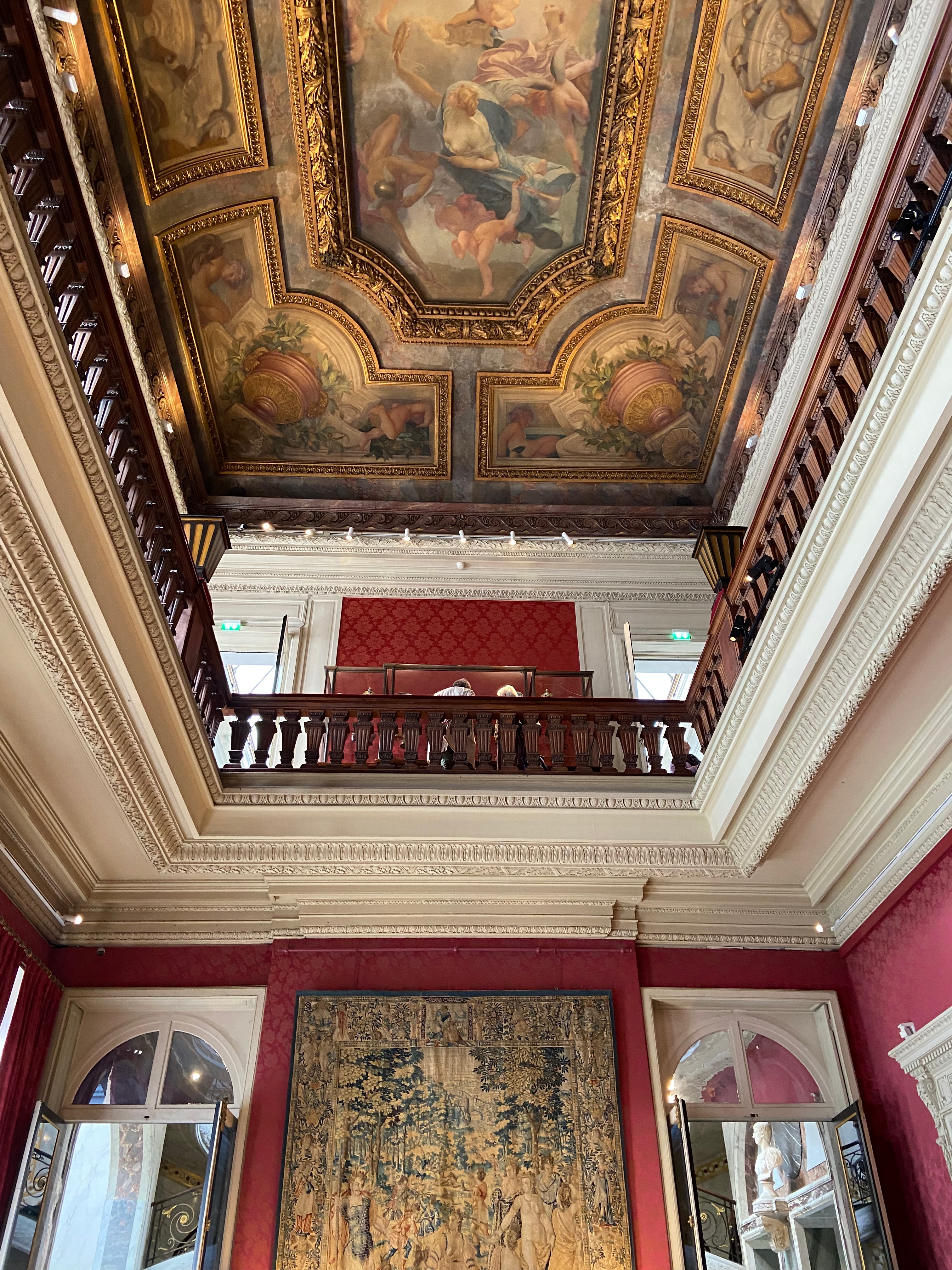
To keep their entertaining space unimpeded, Nélie and Edouard departed from the norm of having a centrally situated staircase – the double marble staircase is no less magnificent, but it’s located to the side of the building. To the left of the staircase is the Winter Garden, a status symbol at the time, a place to showcase plants from around the world.

The Italian galleries – the Venetian and the Florentine – are crammed with treasures: 15th century sculptures, bas-reliefs and paintings by the likes of Uccello and Botticelli.  I had a little break at lunchtime and managed to get a spot in the Salon de Nélie, in the annex overlooking the courtyard.
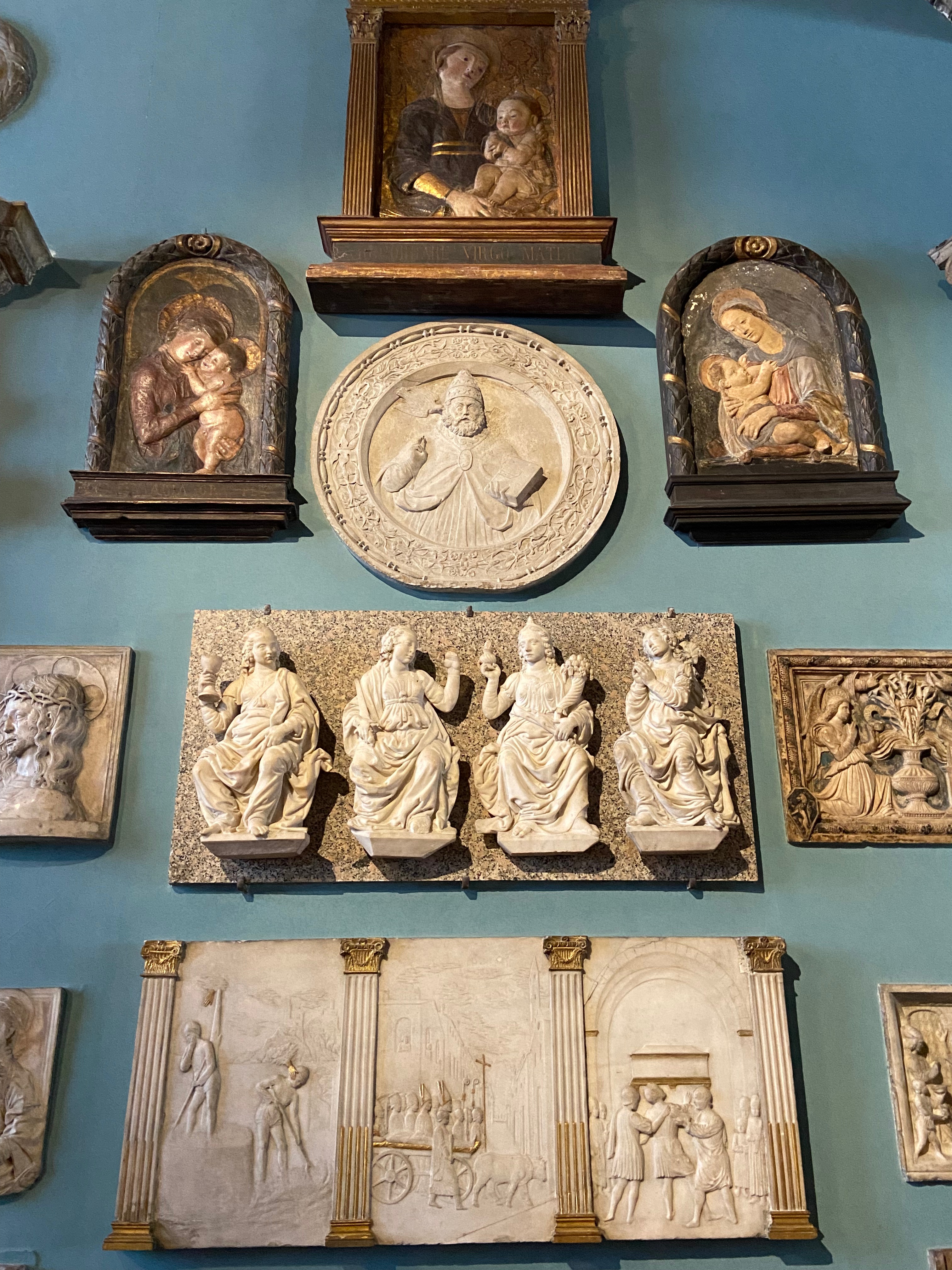
After lunch, I enjoyed browsing some of the 40 Georges de la Tour paintings. He focused on portraits of saints and people on the margins of society – blind musicians, beggars, old men and women, capturing them in a moment in time, his subjects imbued with grace and dignity, and often illuminated by a single candle flame or a shaft of light. I could have spent longer but it was getting towards mid-afternoon and I was due to meet friends from Oxford for drinks at 4.45pm. Time waits for no man not even Georges de la Tour, so I ran back to Miromesmil, sped-walked along the long passageways (if you want to get your steps up, travel on the Paris Metro!) connecting with the M1 line back to the Gare de Lyon. From there I dashed to the hotel to change and then, with a swipe of lippy, was back underground on my way to Châtelet where I changed line to get to Cité and to our meeting place near Notre Dame. I just made it.

It was pure chance that I overlapped with Hilary and John for one night in Paris and pure joy to see them and catch up on two year’s chat over drinks and pommes frites. To add to the fun, my niece, Georgie, a wonderful conversationalist and all-round bright spark, joined us just as the heavens opened and the wind picked up. We were sitting outdoors so we huddled under the awning but were soon rewarded with exquisite light and a double rainbow. From there, Georgie and I walked back to the Gare de Lyon and to Ground Control, a warehouse space behind the station with food stalls, bars, vintage fashion, a book stall and alive with the buzz of chatter from children, families, the lot. We drank a Hugo cocktail and tucked into a tasty and generous Greek share platter.

The next morning, Sunday, I was back at the Gare de Lyon, now my second home, and took a train out towards Fontainebleu to spend a day with Georgie, her husband Manu and the three boys. She met me at the station in Moret-Veneux with three-year-old Ralphie in tow. From there, it was a short drive to Veneux -les-Sablons, where we walked across an arched suspension bridge at the confluence of the Seine and the Loing over to the town of Saint-Mammès, which has a vibrant Sunday market with lots of local and organic produce and an entire stall devoted to goat’s cheese – heaven!

The rest of the day was spent with the family in Thomery, a wonderful spot on the Seine, known for its history of viticulture and use of walled vineyards. It’s forty-five minutes on the train from Paris but a hundred times more peaceful. No suitcases, sirens or heavy ‘circulation’! Georgie and Manu are renovating their house bit by bit – it’s full of character – and they live a very eco-oriented life.  

The long garden complete with Granny Flat (la dépendance), veggie patch, walnut trees and mown paths slopes down in the direction of the river.  It’s a bucolic idyll and the three boys – Ralphie’s twin brothers are now six – charge around the garden, their playground. So far, they are living a screen-free life (not even a TV), which I so admire, their imaginations free to roam, their attention unshackled by technology.

We all did a bit of drawing after lunch. Even I, who can’t draw a stick man, managed a decent flamingo thanks to a book that steps you through the process. A delightfully bonding family day – good for the soul – and I have bagged a spot in the dépendance for future trips. And next time I’m eager to try the walnut wine which was still at the macerating stage when I visited.

Monday, my last day in Paris, I explored Le Grand Mosquée, which is in the Latin Quarter near the Jardin des Plantes, the Botanic Garden.  It was built to honour the African, mostly Muslim, soldiers who fought in the First World War and was inaugurated in July 1926.   
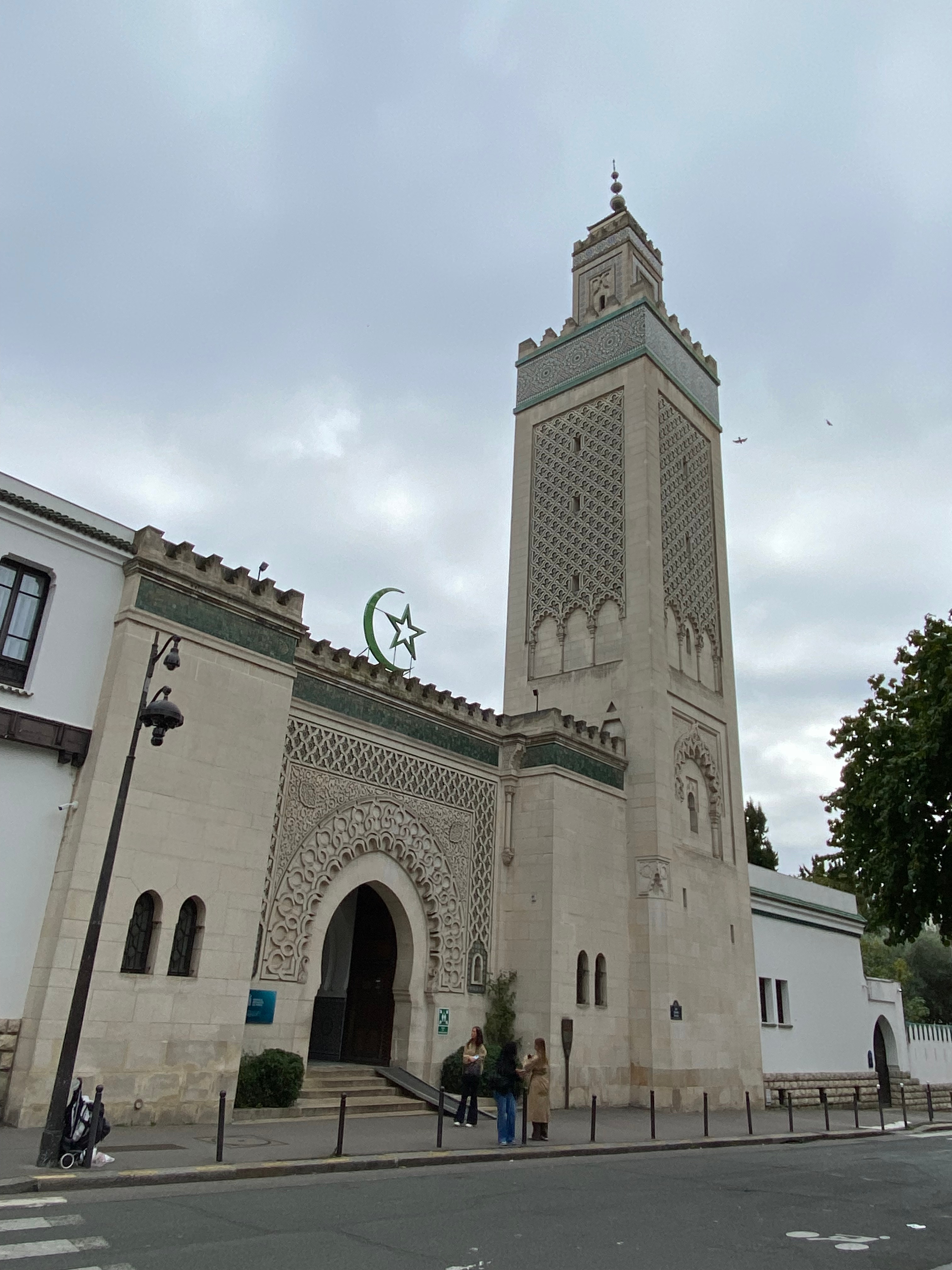
Reminding me of my March trip to Malaga and visit to the Alcazaba, the Grand Mosque is built in the Hispano-Moorish style with the familiar arches, decorative tiles, Arabic calligraphy, intricate geometric patterns, Mahgrebin carved cedar wood and lush courtyard garden with fountains. It’s wonderfully peaceful, a place for quiet contemplation and, unlike the museums, not crowded. I was flagging by lunchtime – jetlag maybe – so rather than have lunch at the mosque’s café, where you can get a full meal – tajines, couscous etc., – or mint tea and Arabic sweet treats, I decided to visit the ladies only hammam (steam bath).

In keeping with the mosque, the hammam is a tranquil space with detailed mosaics, arches and ornate plasterwork. Years ago, I was scrubbed to smithereens in a Moroccan hammam so this time I opted for a simple steam bath without the ‘gommage’ option (exfoliation).  The dress code is bathers or a bikini – topless is fine but you need some form of ‘bottoms’. I hadn’t planned to go to the hammam so didn’t have either – spontaneity has its drawbacks! So here I was topless in a Turkish bath trying – in faltering French – to navigate how it all worked and in what order – from the difficult-to-shut 1 Euro lockers to the wrist tag, plastic slippers and showering protocol.

I got myself into the main room which has a long marble ledge running down each side, divided into three alcoves for sitting or lying in and furnished with buckets and water taps. I lay down and semi-relaxed but it would have been better to have a friend to lounge about and laugh with. After a while I graduated to the furthest room, which is more like a sauna with stepped ledges – the higher you go the hotter it gets – and a cold-water dipping pool. This is where my M & S undies got the full immersion treatment!

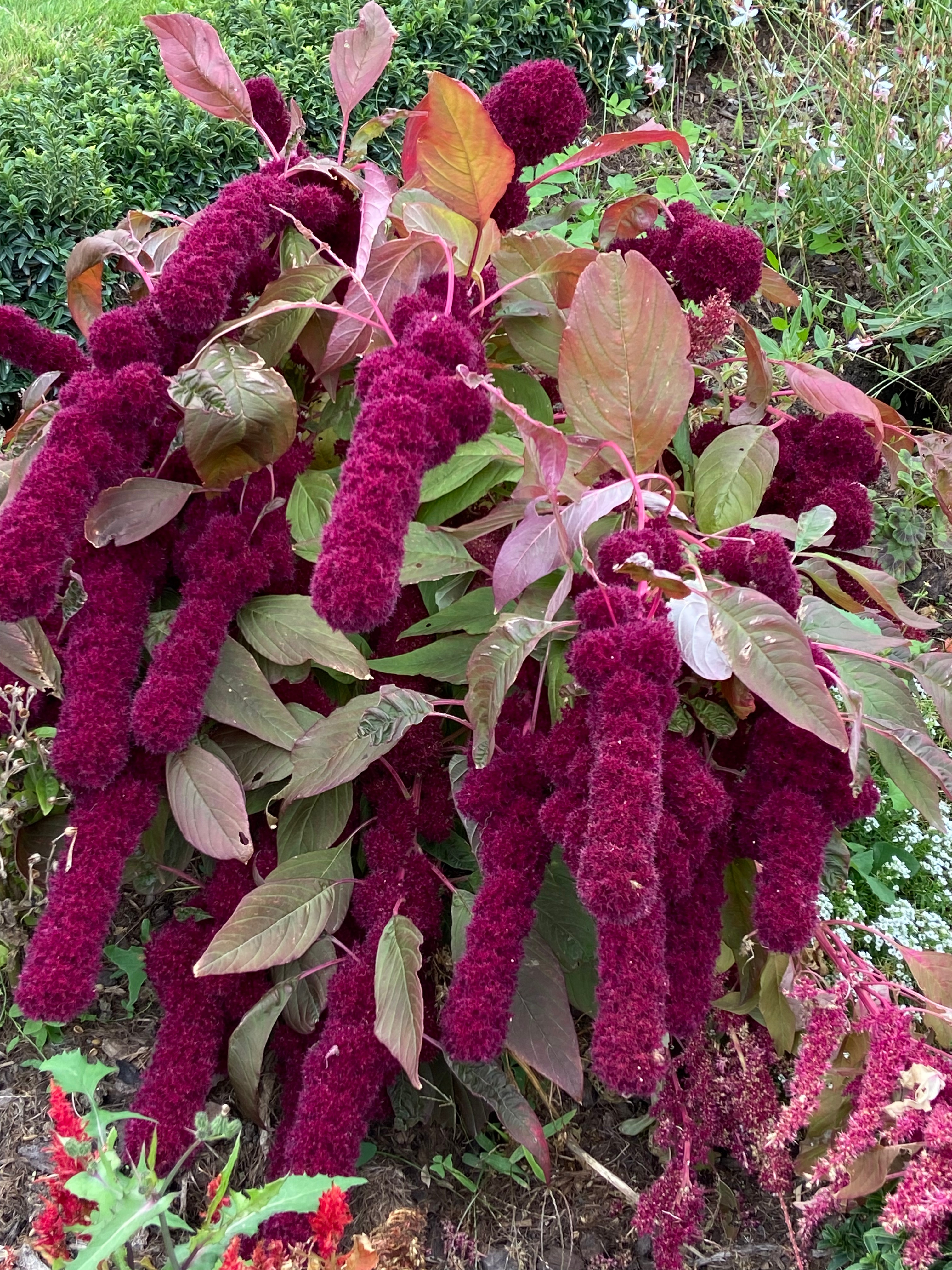
Once I was fully steamed and cooked, I progressed to an anteroom, where they bring you mint tea, which, although teeth-squeakingly sweet, is refreshing. I emerged feeling rejuvenated but, with damp knickers and damp hair, I soon lost the glow and warmth of the steam room as I was walking around the nearby Jardin des Plantes. On went the fingerless gloves and then I found a small café where I had a very overpriced but warming cup of tea, enough for me to enjoy all the autumn colours, pumpkin displays and curious woolly plants while I dried out!

How making the most of a Melbourne winter saved me from travel envy

Over the winter friends and family have shared northern hemisphere holidays photos – lots of wish-you-were-here vibes. There’ve been pictures of sardines grilling in Southern Spain, Gothic churches in Germany, flower-lined canals in Utrecht, dazzling white-washed vistas in Santorini, yodel-inducing Swiss alpine scenes, lush green coastal paths in Devon, quirky markets and Lord’s Cricket Ground in London and windswept beaches at the northernmost tip of Denmark.

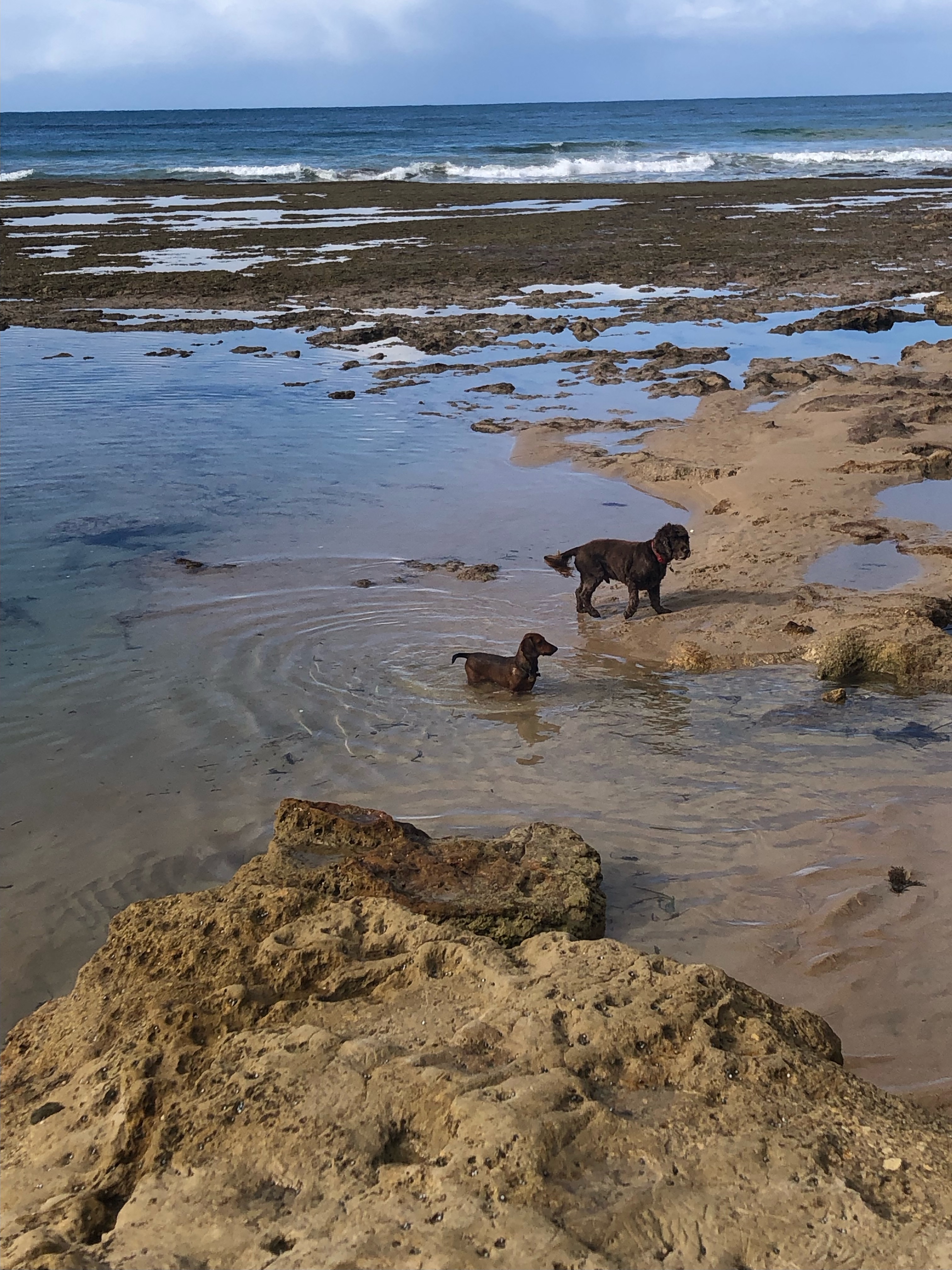
I’ve enjoyed looking at the pictures and have imagining myself there in mind and body, but I haven’t felt an ounce of envy. I’ve been just fine and dandy staying put in Melbourne. The Melbourne winter can bite, especially the wind, but it’s mild compared to a UK winter. Although I feel the cold, there’s nothing more energising than a rain- and wind-lashed walk on the beach with the dog children – Rupert, the dachsie, my canine nephew, has ‘over-wintered’ with me and Bertie.

I enjoy the seasonal variation – summer can be very intense requiring a lot of sunscreen slip, slop, slap – and finding warmth in soups, stews, candles, hot baths and snuggling with the dogs on the sofa. There are grey days in the mix which make me feel right at home but there are also some glorious sunny days in the high teens, when there’s no better place to hang out than in my courtyard garden.

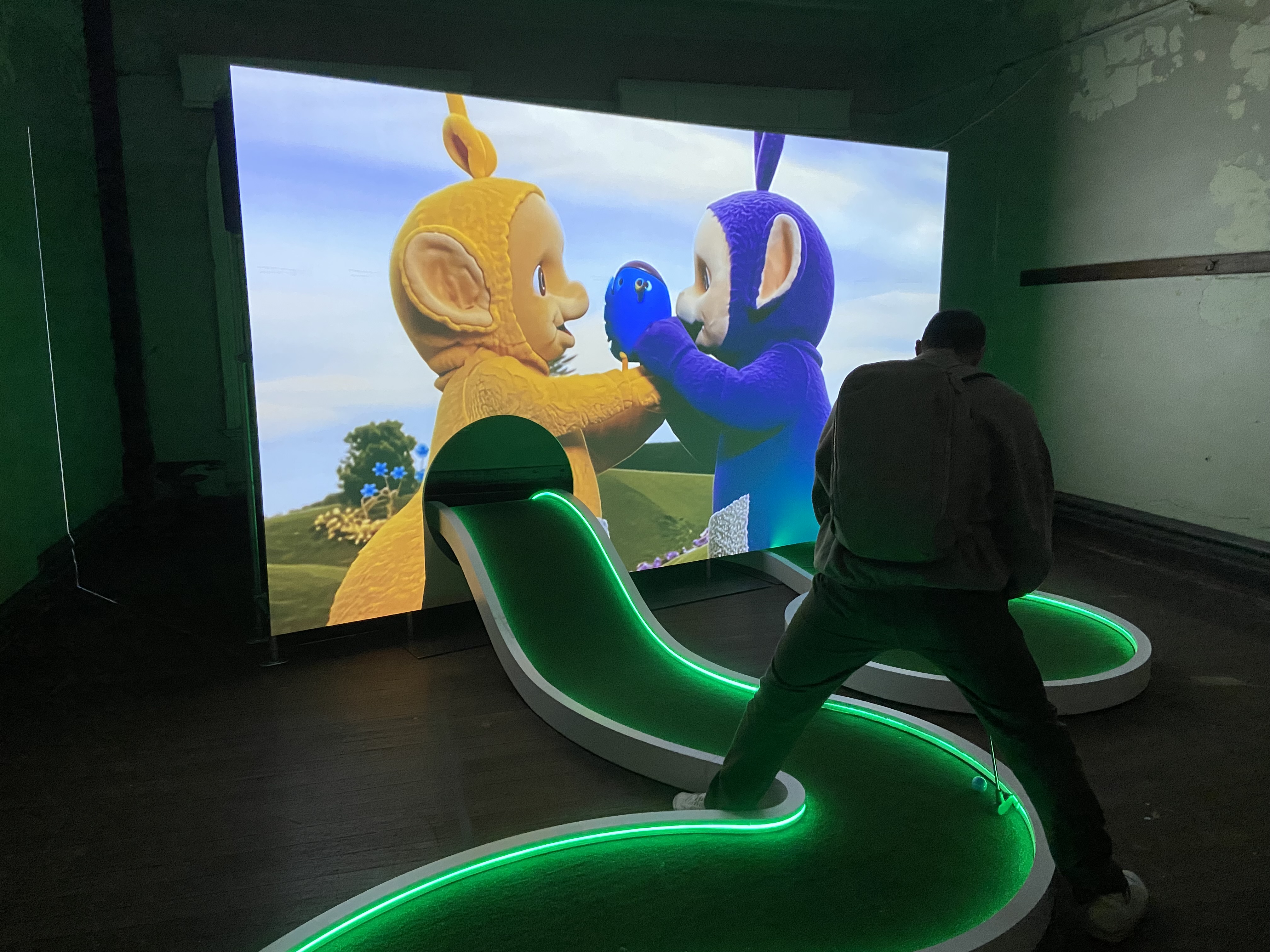
Immersing myself in artsy things has provided another form of nourishment these last few months. One of the zanier exhibitions my friend Kaliopi and I went to was Swingers – The Art of Mini Golf. I had no idea that mini golf had its origins in feminism. In the 19th Century a group of Scottish women, rebelling at being told that swinging a golf stick was unladylike, commissioned a 9-hole putting-only course which became known as the Himalayas due to the uneven terrain. The course still exists today, alongside St Andrews Golf Course near Edinburgh.

Swingers is an interactive exhibition staged in the former Victorian Rail Institute ballroom upstairs at Flinders Street Station. We navigated the nine-hole golf course created by nine female and gender-diverse artists. My favourite was the first hole, a big, bold and colourful desert scene by Yankunytjatjaraartist Kaylene Whiskey, complete with Greyhound bus and featuring Cathy Freeman and Dolly Parton. Putting is harder than it looks – you’re never going to get me playing golf – but we navigated the course as best we could.

Other works included videos of the Teletubbies, an eerie Carnival Clown face, spooky scenes reminiscent of the Mexican Day of the Dead and, at one of the holes, we had to attach a latex animal tail and swing it with our bodies to putt the ball. Well, what can I say, maybe if you’re as flexible as a hula hoop dancer… Much hilarity ensued but it did nothing for our technique.

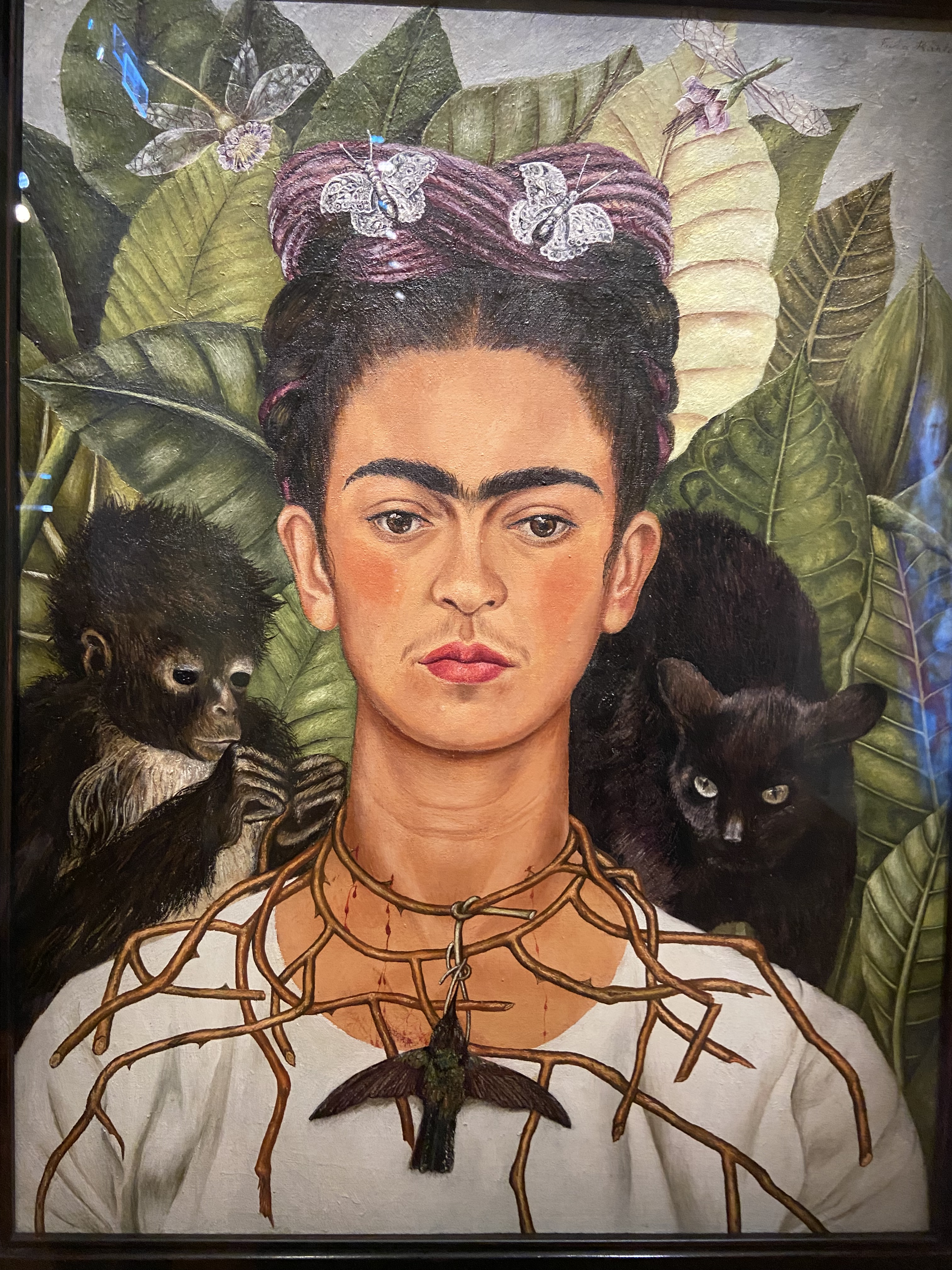
Another big pop of colour came courtesy of another feminist – in July I went up to Bendigo in regional Victoria to see Frida Kahlo: in her own image. As well as her paintings, self-portraits and the fabulous costumes, jewellery and flowers that she wore are some of her personal items that were sealed in a bathroom for 50 years after her death. These include lipsticks, powder compacts, medicines and herbal tinctures. As well as polio aged six, she suffered a horrendous accident in 1925 leading to life-long injuries when a streetcar collided with the bus she was travelling in. During her recovery she began to paint and used mirrors and an easel positioned over her bed. She underwent multiple surgical interventions, lived with chronic pain and had to wear a corset every day from 1944.

What shines through is her resilience, her deep love of animals and the natural world, her courage not only to channel her pain and disability into art but her readiness to challenge the prevailing societal and political norms. She was the daughter of a German/Hungarian father and a Mexican mestiza mother and, rather than follow the European-influenced fashions of the time, she honoured her Indigenous heritage and wore the traditional blouses, skirts and shawls from the Tehuantepec Isthmus, a matriarchal society. And although her life was cut short by gangrene in 1953, she lived to the full. She and Diego Rivera had an up and down marriage, they both had affairs – Frida even had a brief affair with Leon Trotsky. She was a member of the Mexican Communist party and painted one of her plaster corsets with a hammer and sickle.

Continuing with all things Hispanic, and following my March trip to Malaga, I saw five exquisite films at the Spanish Film Festival and luxuriated in the cadence and rhythms of the language. My two favourites were Wolfgang, a warm-hearted comedy about a nine-year-old highly intelligent boy with autism spectrum disorder, who re-establishes a relationship with his father following the death of his mother. And Ocho, a love story set across eight decades and eight defining moments in Spain’s history including the Civil War which split friends and families apart. A masterful and magical movie from the 2025 Malaga Film Festival.

A creole mass – Missa Criolla by Argentinian Ariel Ramirez – in a city church was a revelation. In place of the traditional Latin Mass, this was a folksy mass featuring dance, instrumental and song forms from Argentina blending Indigenous, African and European influences. The concert included other gems ranging from Spanish classical guitar pieces and a Peruvian hymn in the Quechua language to an Afro-Brazilian chant by Villa-Lobos, and Libertango, a piece composed by Argentinian tango composer Piazzolla. You’ll likely know the famous instrumental version, but we heard the choral adaption by Oscar Escalada with voices playing the parts of instruments.

I came out of the concert with an Andean beat pulsing in my veins, the maracas sounding in my ears and added South America to my travel wish list.  There’s been a strong Hispanic thread this winter. A few months ago, I went to a jazz club in north Melbourne to hear the Brazjaz Ensemble headed up by Carlos Ferreira, a Samba specialist from Rio de Janeiro. It was the real deal – mellow, moody and intense – and the newly graduated (2022) flautist, Yael Zamir, gave an extraordinary performance. The set included about five songs, two of which I recognised from a CD I used to play in my London days in the 90s.  

I’m a big fan of escapist musicals – it’s easier than meditation – that transport me to a make-believe world. Beetlejuice with Eddie Perfect was no exception. It’s a dark comedy about ghosts, zombies, life and death with a great score including a couple of Harry Belafonte favourites – Day-O and Shake Senora.

I went with my friend Angela and her daughter Alice, and we indulged in a Beetlejuice-themed high tea beforehand which included ghoulish lime green cocktail, black and white sugar snakes, dark chocolate and pepper scones, shrunken head tarte and a smoking concoction that added to the mystique.

This Sunday, I celebrated the last day of winter by going up to Kyneton to see Alice – a rising star – perform in Mary Poppins with Sprout Theatre, a youth musical company in the Macedon Ranges.  A wonderfully high energy production performed by a cast of talented young people ranging from tiny tots in the junior class to teenagers in the senior classes. Beautifully staged and choreographed, it was a knockout with great singing and dancing including coordinated moves and can-can kicks that must have taken a fair bit of rehearsing. As a two left feet person, I was impressed.  Absolutely supercalifragilisticexpialidocious!

Mary Poppins is one of my all-time favourite musicals, and its story and messages are as relevant today as they ever were; family is more important than work and money, find the silver linings and positives “Just a spoonful of sugar”, and believe in the power of creativity and imagination: “Anything can happen if you let it.” Sound advice!

Remembering adventures in Western Australia – Eye Candy Colin, coral reefs, Carnarvon, cancelled in Karratha and the Karijini National Park

A colleague recently travelled with his family to the Kimberley in Western Australia (WA), hiking in the remote bush. Hearing of his tales and seeing the photos reminded me of my travels and adventures in WA in 2003, and prompted me to dig out my photo album*. The characters I met were as colourful as the sea- and landscapes I explored. *please excuse the grainy photos photographed from said album.

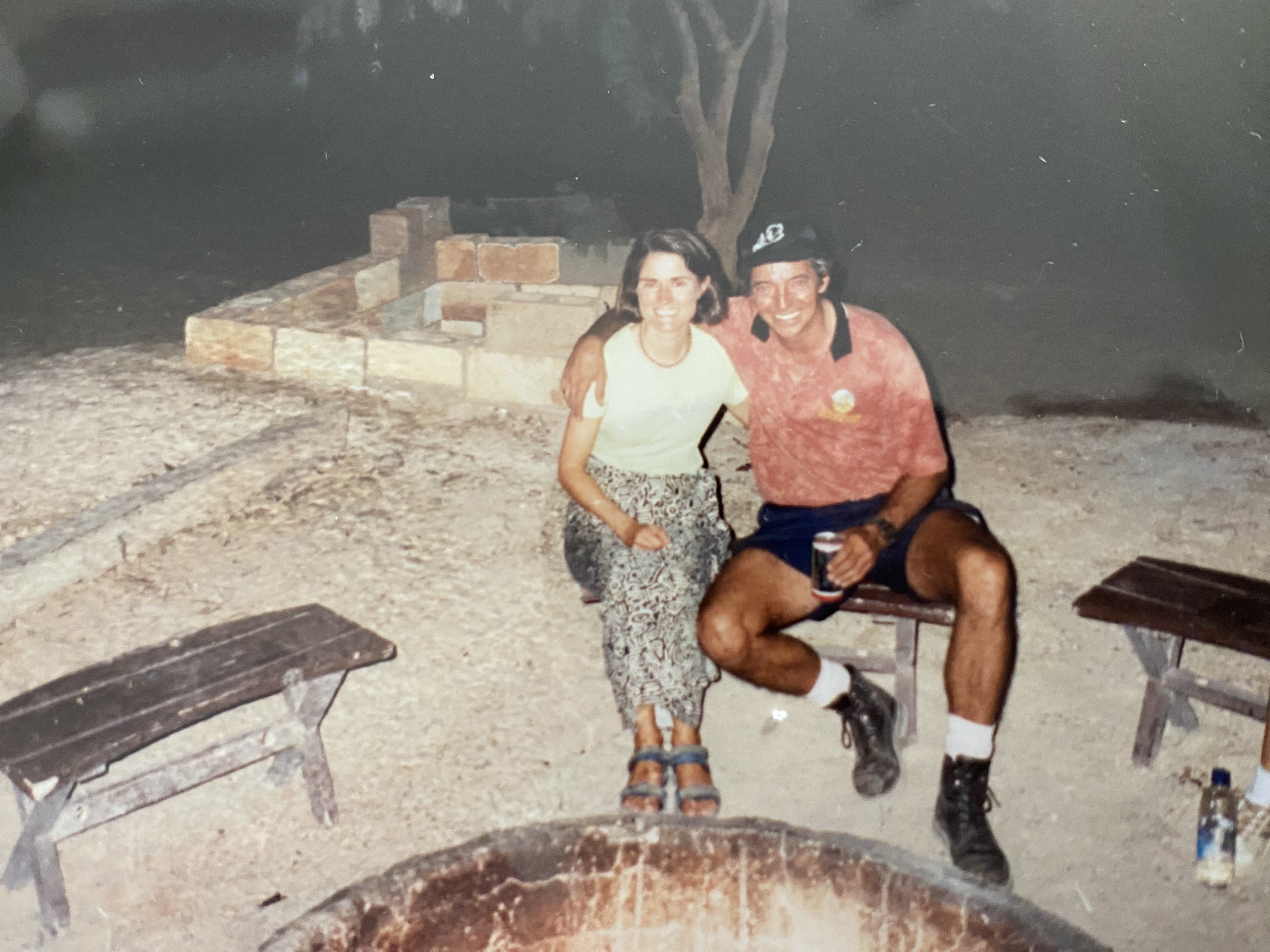
On a mature gap year in Australia – my house in Oxford rented out – I had been staying with friends of friends in Freemantle, a suburb of Perth, camping in their garden.  A bit less Princess and the Pea than I am now, I shared the tent with a littler of Jack Russell puppies for company. I’d wake up with the puppies snuggled in my armpit, across my belly and around my head. How I adored them, particularly one of them whom I named Oscar.

From Perth I travelled north up to Exmouth with Australian Adventure Tours. The tour included sandboarding in Geraldton, marvelling at the Pinnacles, ancient limestones formations – some rather phallic-looking – as our guide Colin was (very) quick to point out, hanging out with bottlenose dolphins at Monkey Mia in the Shark Bay World Heritage Area and learning about the nearby Hamelin Pool stromatolites, layered sedimentary rock formations, single-celled organisms, that produce oxygen in a saltwater environment and were once the dominant lifeforce on earth! We passed through Carnarvon (my diary reading simply: Boiling! Banana plantations, NASA dish, supermarket and, according to Colin, the cheapest grog till Broome), swam with the whale sharks at Coral Bay, a wonderfully life-affirming – and energetic – experience, drank in orangey-red dawn and dusk skies and travelled on red dust dirt roads.


We stayed at various old homesteads and stations including Warroora Station (meaning Woman’s Place in the local Aboriginal language), where we made raisin damper, sat round the campfire, and where I did my best to keep Colin at bay.  I was the odd number on the tour; our party consisted of two gay girls from Tasmania, two rather inflexible German girls (they eschewed the damper at breakfast saying: “nein danke, only ever muesli in the morning”) and two sweet and giggly Japanese girls.

Colin was unapologetically Colin endlessly searching beaches for ‘Eye Candy’ and regaling us with apocryphal stories of past conquests such as Debbie from Essex.  He was sweet on me, insisting I sit next to him in the front of the van and dropping inuendo-laden hints, but I came away unscathed bar some campfire hugs. While he was a bit of a tour guide cliché, he created camaraderie, kept us all entertained and energised and loved his job.  

My next stop was the Ningaloo Reef Retreat (before it got upmarket and swanky). Ranger Dave with his bright eyes and rasta blond hair took out us to the turtle beds and kayaking on the Blue Lagoon. Sadly, even then, more than 20 years ago, there were sections of dead coral but what I remember more is the extraordinary diversity of marine life, the dazzling colours and quirky names of the fish. To name a few, we saw sailfin catfish, the harlequin snake eel, Tawny nurse sharks, Christmas Tree worms, fusiliers, humbugs, sweetlips and convict surgeon fish being chased by black damsels. A very different vibe from Colin’s tour, Dave was more Hippie Hippie Shake and exuded the kind of positive energy that comes from living close to nature. I also enjoyed the company of Mike, a curator of Indigenous art, a chain smoker of roll-ups with gappy teeth and wild and woolly grey-blond hair, and his wife Ilse, a linguist.

From Ningaloo Reef I took the overnight bus to Karratha, a mining town, to join a tour to the Karijini National Park. Due to arrive at 6.30 am, I had booked into a backpacker’s, and, as arranged, the manager came to meet me at the service station. I had stayed in some wonderful youth hostels in the south of WA – at Denmark, at Bunbury and Albany. Here, my room overlooked a courtyard full of cigarette stubs and empty beer cans, there were ants, chicken bones and food on the floor in the kitchen, and I’ll spare you the detail of the bathrooms.  Tired from a night on the bus, I couldn’t handle the nicotine-imbued squalor. Looking back, I realise this place was a budget option for mine workers and transient labourers rather than travellers.

The manager was furious when I complained it was dirty. She screamed at me, blaming me for getting her out of bed at 6 am and flung $30 of the $50 I had paid into my hand and booted me out the door. In today’s parlance, we’d say I’d been cancelled!  Smarting from the experience, I cut a tragic figure wheeling my case along the streets looking for alternative accommodation. But all was well as I pitched up at the Mercure and for $98 (bargain!) got a sparklingly clean room, TV, air-con, private bathroom and access to the pool. Bliss.

At 7.30 am the next morning, Andrew from Snappy Gum Safaris picked me up for the tour I’d booked to the Karijini National Park. We had to wait around a bit as his brother Brendan was still in the shower and nursing a hangover and sore leg from coming off his motorbike the night before. Something about the camber of the road. Yeah, right… And guess what? I was the only one on the tour, a fact which came back to haunt me.

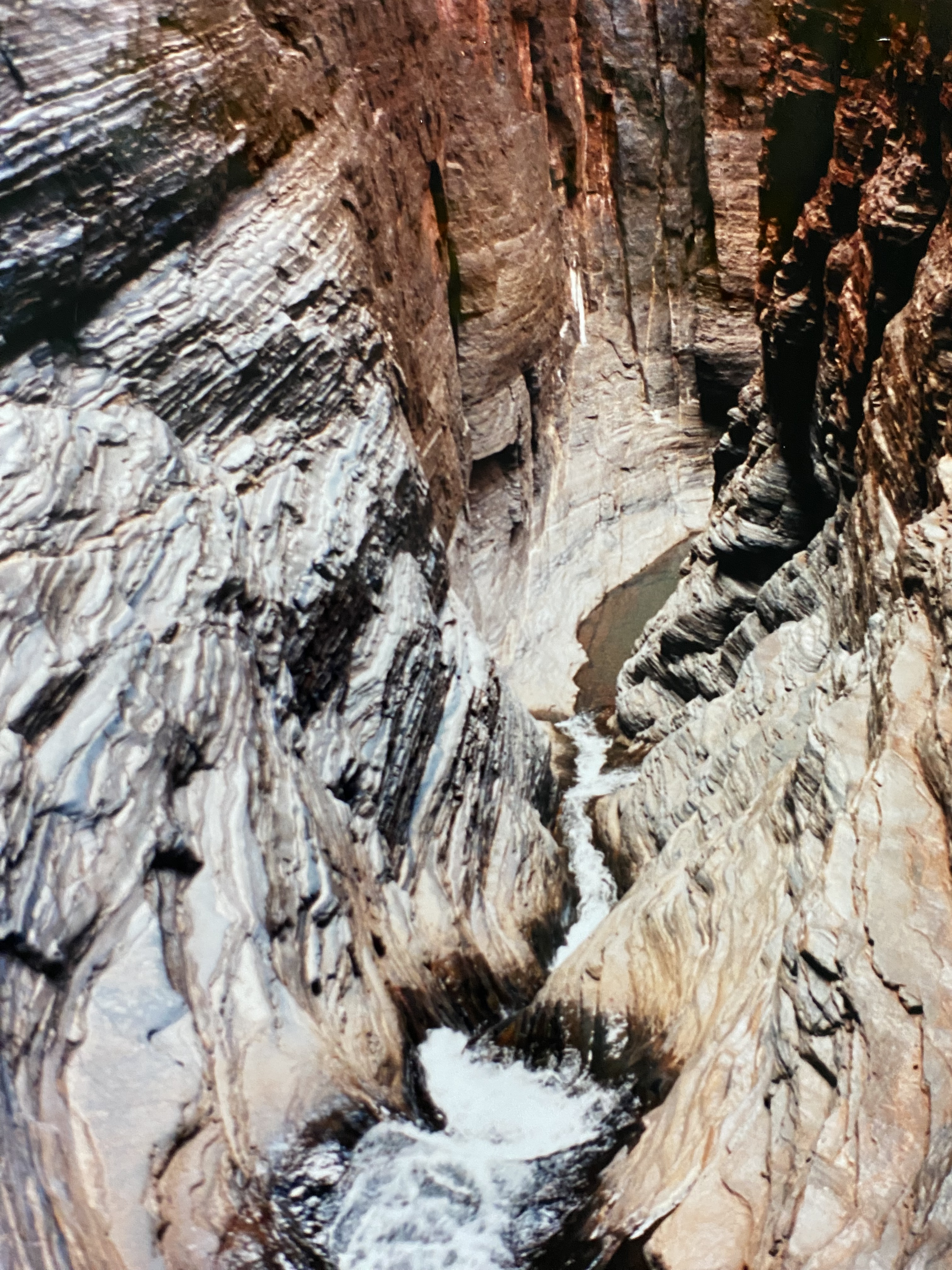
Karijini is iron ore country. It is vast, remote and characterised by rust red dirt roads, cliffs, gorges and large termite mounds interspersed with splashes of green ranging from the grey green of the gum trees and the spinifex grass to the brilliant jade of the water in the rock pools. It’s like being inside a Fred Williams painting.

It’s a four-to-five-hour drive and, with a few stops along the way – a deserted homestead and a spidery drop dunny – we got to our first stop at lunchtime, the Hamersley Gorge, where Brendan and I had a dip in a water hole, the waterfall giving our shoulders a gentle massage. Sounds good doesn’t it but the brothers were distant and disengaged, cross that they were not making any money by taking one person on the tour.   While there was no male/female tension, they were keen to get their pound of flesh.

By early evening we crossed the dry riverbed of the Fortescue River towards the Rio Tinto Gorge (note how the big mining companies have claimed and named the land as theirs) and the Dales Gorge camp site, which was just a patch of red earth. Here they set up our swags and, for mine, hitched up a mosquito net to a tree branch.

Dinner was cheap sausages cooked over a fire served with salad and, to drink, bog standard cask wine or Victoria Bitter (VB).  My diary reports the boys ‘romped through the VB’ and complained about penny-pinching backpackers.  I was almost starting to miss cuddly Colin.

By chance a group of four tourists – an English girl, a Dutch girl and two Canadian blokes – came over after dinner and asked Andrew and Brendan if they knew the park and the various hikes. They boys went into a huddle with them while I sipped at my wine. Dollar signs in their eyes, they turned back to me after about ten minutes and asked how I’d feel about changing the itinerary to walk the much-more-exciting Miracle Mile the next day? It’d be the walk of a lifetime, the said. The tourists were keen to engage them as guides. Ching Ching.

Miracle Mile, why not?  It sounded good and I didn’t want to be the party pooper.  I slept reasonably well in my swag –  apart from being startled awake by one of the boys shouting in his beer-soaked sleep, after which I got a bit lost going for a pee in the spinifex. No mobile phone torches in those days!  

After a light breakfast, the day started gently with a trip to the Joffrey Falls, Knox Gorge lookout and Oxers lookout which is the meeting point of four gorges.

And then the adventure started. No wonder they had stuck to the catchy Miracle Mile moniker rather than detailing what it involves. The Miracle Mile is within the Hancock Gorge and the Joffre Gorge and involves walking along extremely narrow 20-metre gorge walls. While we did have helmets, there was no rope, and one wrong foot could have spelled disaster.  

It was physically and mentally demanding, but what made it most challenging for me was being the odd one out while the other four were a bonded team, walking together and encouraging each other on. I’ve always loved a bit of solitude and peace and quiet, but this was uninvited exile. I changed schools a lot as a child, and this reminded me of being the new girl and not having a gang to belong to.

At one point I slipped and grazed my knee, irritating Andrew, who was walking behind me. Shaking, I picked myself up and pushed on, desperate not to let the others see my fear – and suppressed fury! We crawled, climbed, clambered and inched our way along, in parts spreadeagled between gorge walls, jumping into rock pools below and swimming between gorges, floating our day packs on air beds. Andrew and Brendan set challenges and dares for the others, while I waited around – like a spare part at a wedding – getting cold (think damp bathers in shaded gorges), tired and hungry. When I got back to the car at the end, I bit into an apple only to crack a tooth!

The scenery was out of this world SPECTACULAR but I’m appreciating it more all these years later looking back at the photos in my album. My diary description from 11 May 2003 is underwhelming: Fab gorges, layering and rocks but wasn’t happy in my head as Phil (an ex) would say.  It was a tough character-forming experience, but one I will never forget. And as my German teachers would say: it’s all grist to the mill. Indeed, and 22 years on it makes a good story for my blog!

Now is the time

How heart-shakingly moving was Amanda Gorman’s poem The Hill We Climb which she read at Joe Biden’s presidential inauguration. For me, it summed up so powerfully and with such grace and eloquence the choices that stand before us in the COVID era. While she was speaking of America, and against the background of the storming of the Capitol on 6th January, her wise words apply to all of us wherever we live. What also stood out for me – and gave me hope – was that Biden is a man of soul, of the heart, capable of compassion and empathy; the polar opposite to the morally-corrupt, orange-faced ego-maniac Reality TV business tycoon who previously held office. I won’t even mention his name.

It’s ironic in some ways that we mourn the pre-COVID world. So much of that world was already broken and unsustainable; the pandemic has magnified the challenges we face with global warming, food (in)security, factory farming, inadequate systems to deal with the rising mountains of waste, inequity on so many levels (the politics of vaccine distribution to developing nations just one example) and power-hungry corporations putting profit before people and planet.

And then the senseless destruction of forests in so many parts of the world. Since 2016 one football pitch of forest is lost every second. Not only are trees vital sinks for carbon, but emerging science indicates that trees are social creatures that communicate and support each other via an interconnected fungal highway. Who hasn’t experienced a sense of soul amid towering trees in a forest cathedral? I read an article in The Melbourne Age this weekend instancing how a tree on the brink of death bequeaths a substantial share of its carbon to its neighbours. How magnificent is that?

One of the benefits – if we can call it that – of COVID restrictions putting the brakes on ‘normal’ life (and my heart goes out to all those in the UK and other parts of the world faced with wide-scale community transmission, over-whelmed hospitals and high death rates, particularly those who don’t have the economic or social luxury of being able to socially-isolate) – is time to reflect, to slow down, to live more simply, to look out for our neighbours – get to know our neighbours even – to appreciate the small things, and importantly, to revere the natural world that sustains us. And I say revere deliberately.

In a pre-COVID post in February 2020, I wrote that Planet/Mother Earth can do without us and will cast us aside if we don’t look care for her. Recently I watched David Attenborough’s Witness Statement: A Life on Our Planet – on Netflix in which he went through the decades of his life demonstrating humanity’s impact on the planet as measured by population growth and the decline in wild spaces and biodiversity. It’s a compelling call to action. We have overrun the world he says, with nothing to stop us. We are intelligent but not wise, apart from nature, not a part of nature. Since that was filmed, COVID has swept across the world. If COVID doesn’t stop us from plundering the planet, polluting and over-consuming, nothing will. If we fail to clean up our act, more zoonotic viruses are waiting in the wings. Surely, that’s enough of a deterrent?

Now is our chance to change how we live our lives and how we interact with others and our environment, being kinder to ourselves, each other and the planet. Some say we’re doomed – human beings are inherently greedy, corrupt and selfish; history is merely repeating itself. Isn’t that a lazy let-out clause; a way of propping up the status quo?

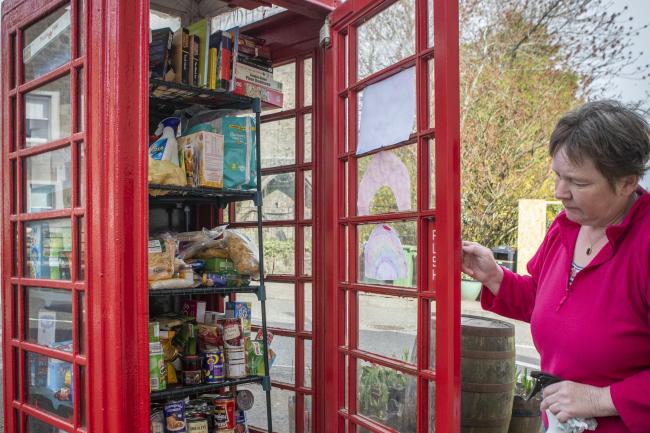
We mainly read the gloom and doom stuff in the news – and there’s plenty of it – but we hear less about the initiatives to increase sustainability and ethics in the fashion industry, clever waste recycling, renewable energy and rewilding projects or community support schemes (one of my favourites the conversion of a red phone box in an English village into a community food larder). What a lot of schemes lack is the scale and infrastructure to achieve systemic change, but there’s opportunity for that to change. If we care enough and dare enough, we can all be part of that change through the choices, decisions and values we live by.

Tuning into the digital version of the Melbourne Writers’ Festival last August, I was struck by the words of film-maker Damon Gameau and his efforts to humanise climate change through story-telling, and his positivity: “we need to reframe the crisis as an opportunity and privilege to be alive at this time” and “Optimism is the basis of solutions for a sustainable future.” Like many commentators he instanced how major global events in the past brought about advancements, from the social changes triggered by the Black Plague to the creation of the NHS and welfare state in Britain after the Second World War.

Hope, like trees in the forest, nourishes the soul. One of my mother’s favourite phrases is: ‘Hope springs eternal’ (from Alexander Pope’s Essay on Man). Another of her favourites is the poem Leisure by William Henry Davies: “What is this life if, full of care/We have no time to stand and stare.” With life turned upside down and without being able to plan ahead with any certainty, it’s become a bit easier to live more mindfully and in the moment– with more time to stand, stare, smell the roses and meditate. Even a few minutes of micro meditation can take you out of your head and back into your heart.  The trick, I have found, is to cultivate a practice of gratitude and to trust that there is some grand design behind the current global shake-up.


Lockdown gave me the time, space and single-minded focus to build a freelance practice as a grants specialist. And in a pleasantly organic and synchronistic way, organisations and projects that are close to my heart have found me. At the end of last year I supported five arts and entertainment organisations to win Federal Government grants – such a boost for artists whose livelihoods and performance opportunities have been decimated by COVID. Since then, there’s been youth mental health, environmental education and projects to re-purpose food waste. I feel as if I have found my professional feet and carved out my own niche and signature brand.

As a homebody, lockdown was less challenging for me than some. And that’s where the gratitude came in. Finally, I had time to give my garden more love, and to tackle jobs that had been on my domestic to-do list for years. I didn’t clear out a single cupboard but I did install a Vertical Garden in my courtyard and plant out various cuttings I had collected from friends’ gardens.

I painted my various garage sale and nature strip finds (for non-Australians, this has nothing to do with nudity; the nature strip is the grass verge bordering the pavement where people put out ‘hard rubbish’ to be collected by the Council!). While it’s illegal to pinch things from the hard rubbish, I see it as neighbourhood recycling, and it saves items going to landfill. A win-win. A neighbour, Jill and I, alert each other when we spot see something languishing by the side of the road that is crying out for a good home…

More than ever, I learnt to savour the small things: a cuddle with Bertie, a new green shoot in my garden, the first cup of tea in the morning, cloud formations in the sky, the changing colours of the ocean, the magpies carolling, an engrossing book or fascinating podcast. My home-based staycation over the Christmas holidays was a series of simple savoured moments adding up to quite a feast.

None of us knows what lies ahead. All we can do is to keep caring, keep learning, keep hopeful and keep putting one foot in-front of the other. I’ll leave you with a few lines from Amanda Gorman.

But one thing is certain:
If we merge mercy with might,
and might with right,
then love becomes our legacy
and change our children’s birthright
So let us leave behind a country
better than the one we were left with