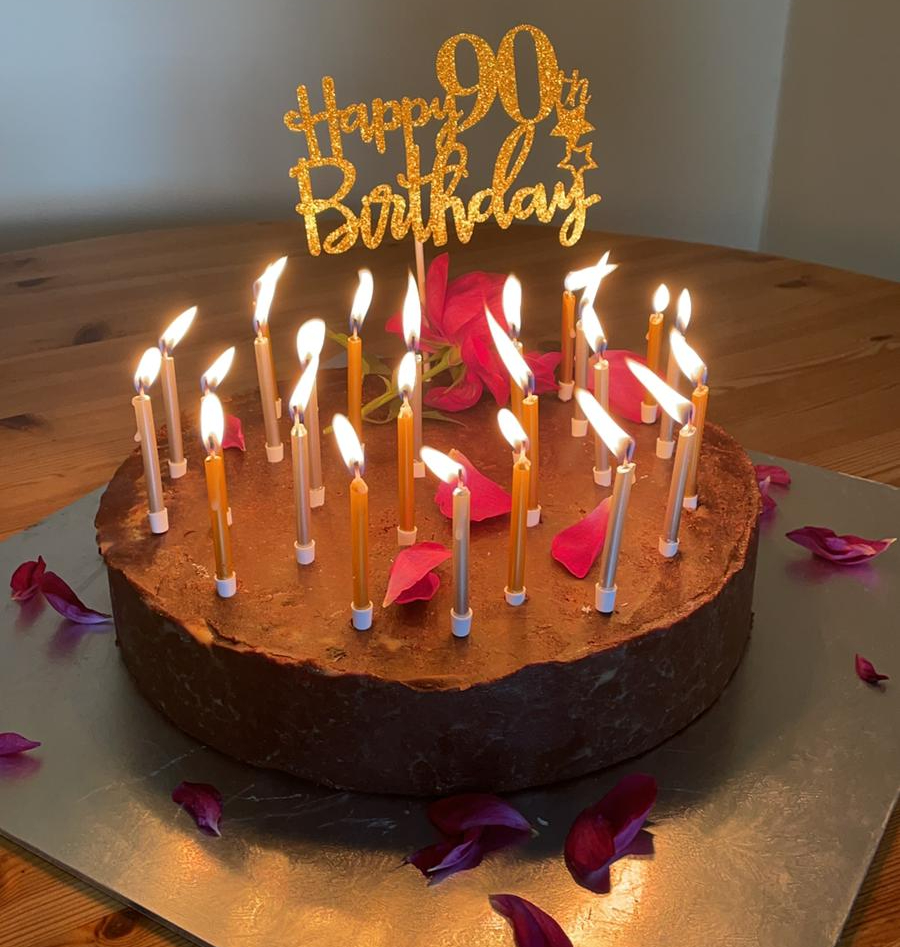
Paris Part 2: Musée Jacquemart-André, Le Grand Mosquée, Saint Mammes, the Seine and soggy knickers…

First of all a PS to those who subscribe by email – please click on the ‘Read on Blog’ link at the top of the email to enjoy the benefit of the formatted blog rather than the WordPress newsletter version.

Picking up where I left off in my last post, I started off slowly on day two in Paris. After a bit of unpacking and general faffing, I enjoyed a good breakfast at my hotel, the Holiday Inn, Gare de Lyon. Others might not get excited about apple compote, but I love it (especially when I haven’t had to peel and stew the apples) and it’s not something you often find on breakfast bars! Combined with creamy yoghurt dispensed from a machine by pulling on a lever – which reminded me of Mr Whippy ice cream – and topped with nuts and seeds, it was a winner.  I also enjoyed one of the best gluten-free bread rolls I’ve had in a while with some fresh figs and goat’s cheese.

It was a fine morning, and once again I set off for the Jacquemart-André Museum, this time by metro, criss-crossing my way to Miromesmil.  I arrived to find there was a queue to get in unless you had already reserved tickets. The wait time was advertised as at least an hour thanks to a once-in-thirty-year retrospective of paintings by Georges de la Tour (1593-1652), a chiaroscuro painter influenced by Caravaggio.  Thank Goodness I hadn’t slogged my way there the night before only to be turned away – no room at the inn – and refused entry.  

In just under an hour, I had a ticket in my hand and was inside. The Jacquemart-André Museum is a sumptuous Belle Époque private mansion built at the end of the 19th century by wealthy banker Edouard André and his wife society portraitist Nélie Jacquemart. They married in 1888, did not have children and were avid collectors of fine art and treasures from around the world.  The museum is described as the finest private collection of artworks in Paris – and that’s no exaggeration.  

The place is full of big name artists from across the centuries. Right at the start of the tour in the Picture Gallery are two Canaletto paintings of Venice, in Nélie’s boudoir there are paintings by Gainsborough and Reynolds, and the library walls are hung with paintings by Dutch masters including Rembrandt, Franz Hals and Van Dyck.

Paintings in Nelie’s boudoir reflected in a mirror

There are no less than three works by Tiepolo:  a fresco at the top of the double marble staircase and a ceiling painting on the roof the mansion’s dining room, the Salon de Nélie. Both were transposed from a Venetian villa. The third Tiepolo is a ceiling painting in the study, a room furnished with chairs covered with Aubusson tapestries, a Japanese lacquer writing desk and a Louis XV desk stamped by the king’s favourite cabinetmaker.

Tiepolo ceiling painting in the Salon de Nelie

Edouard and Nélie loved to entertain – the picture gallery leads into the Grand Salon where the partition walls could be lowered into the ground via a hydraulic system that converted the Picture Gallery, the Grand Salon and the adjacent Music Room (and musician’s gallery above) into a single space – catering for up to a thousand guests. You can almost hear the frou frou of opulent gowns, lace and silk, the hum of chatter and the clink of champagne flutes.  And you can picture the men retiring to the smoking room which is furnished in the ‘Oriental’ style with treasures from Persia.

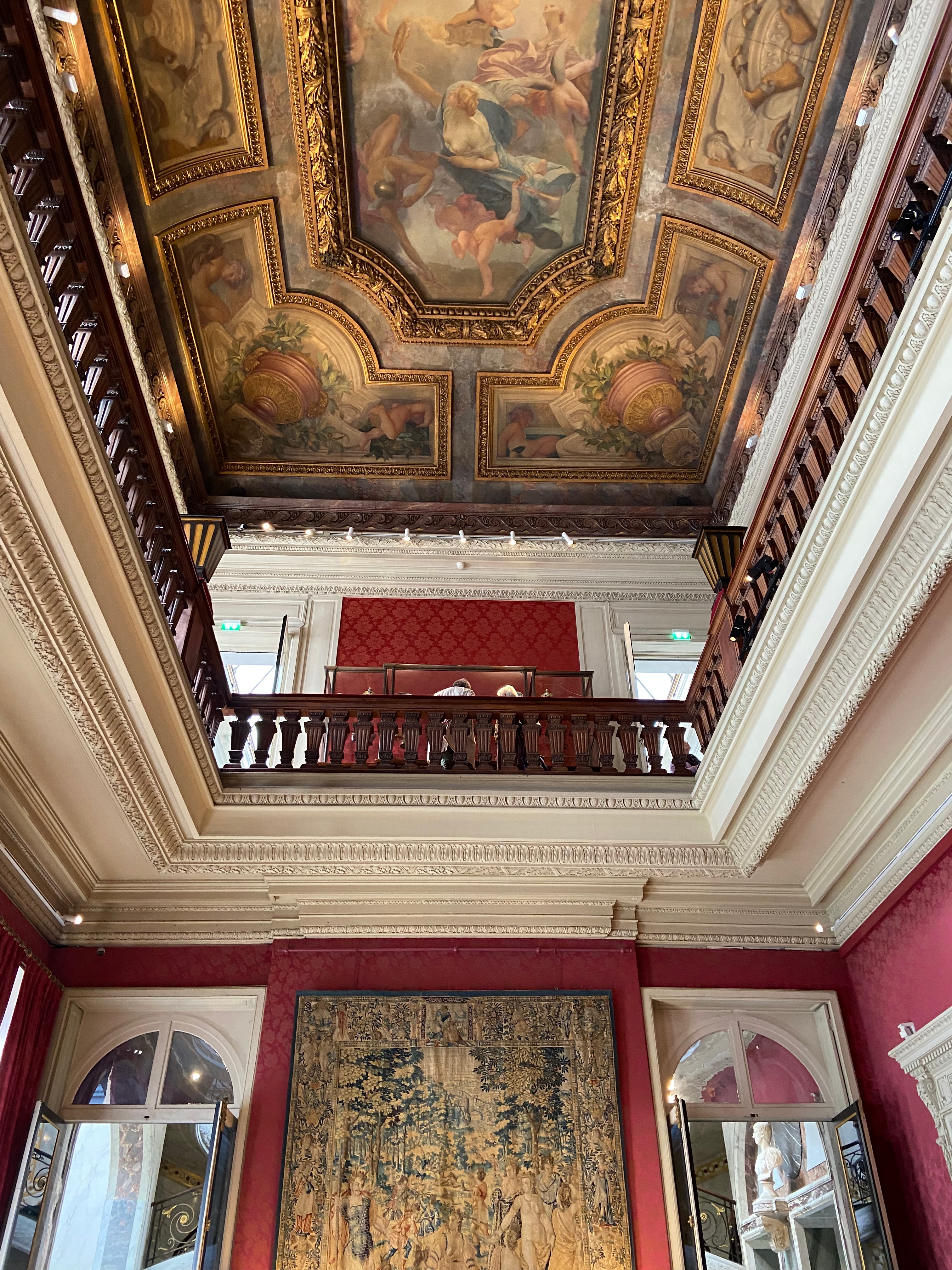
To keep their entertaining space unimpeded, Nélie and Edouard departed from the norm of having a centrally situated staircase – the double marble staircase is no less magnificent, but it’s located to the side of the building. To the left of the staircase is the Winter Garden, a status symbol at the time, a place to showcase plants from around the world.

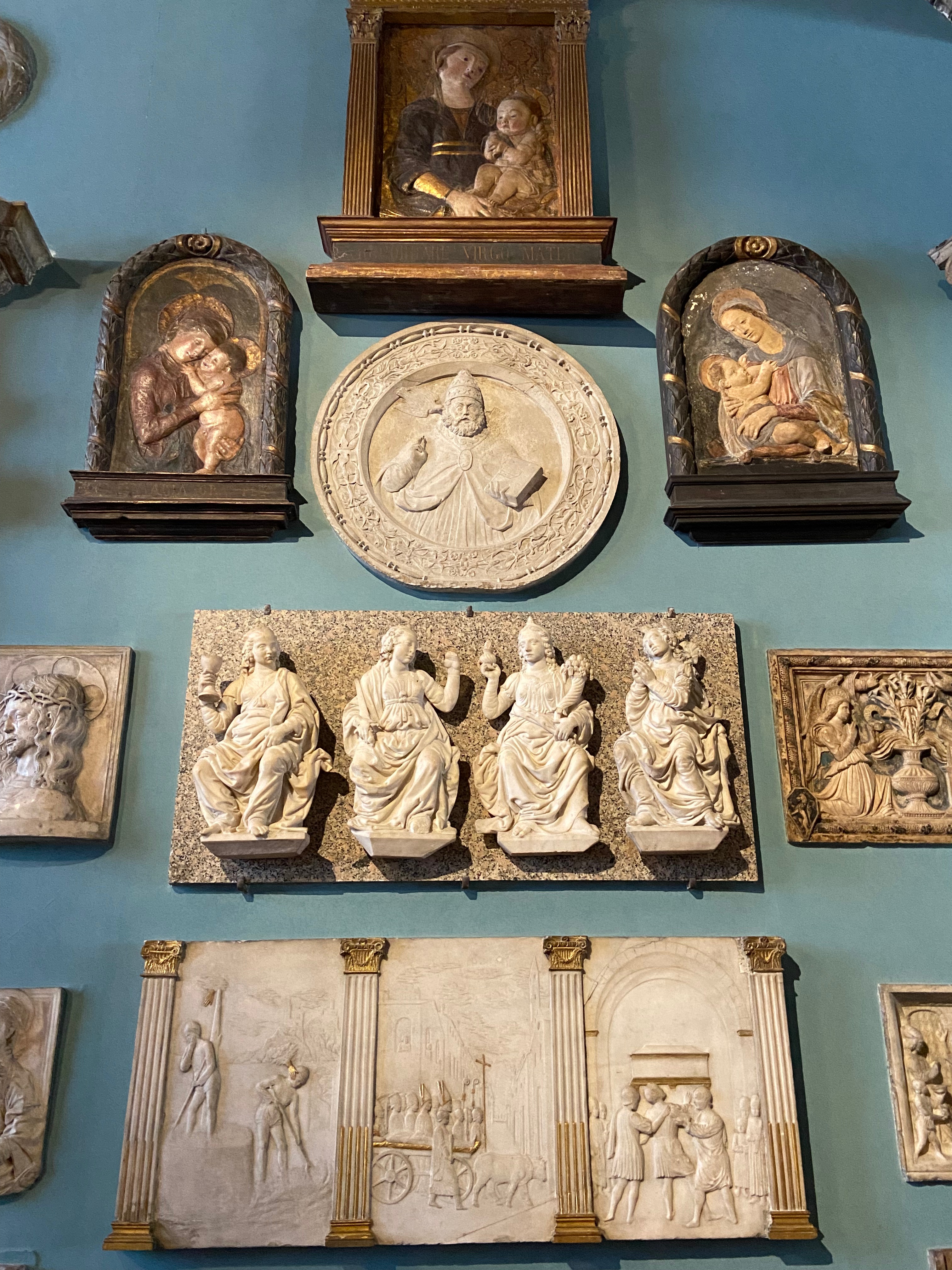
The Italian galleries – the Venetian and the Florentine – are crammed with treasures: 15th century sculptures, bas-reliefs and paintings by the likes of Uccello and Botticelli.  I had a little break at lunchtime and managed to get a spot in the Salon de Nélie, in the annex overlooking the courtyard.
After lunch, I enjoyed browsing some of the 40 Georges de la Tour paintings. He focused on portraits of saints and people on the margins of society – blind musicians, beggars, old men and women, capturing them in a moment in time, his subjects imbued with grace and dignity, and often illuminated by a single candle flame or a shaft of light. I could have spent longer but it was getting towards mid-afternoon and I was due to meet friends from Oxford for drinks at 4.45pm. Time waits for no man not even Georges de la Tour, so I ran back to Miromesmil, sped-walked along the long passageways (if you want to get your steps up, travel on the Paris Metro!) connecting with the M1 line back to the Gare de Lyon. From there I dashed to the hotel to change and then, with a swipe of lippy, was back underground on my way to Châtelet where I changed line to get to Cité and to our meeting place near Notre Dame. I just made it.

It was pure chance that I overlapped with Hilary and John for one night in Paris and pure joy to see them and catch up on two year’s chat over drinks and pommes frites. To add to the fun, my niece, Georgie, a wonderful conversationalist and all-round bright spark, joined us just as the heavens opened and the wind picked up. We were sitting outdoors so we huddled under the awning but were soon rewarded with exquisite light and a double rainbow. From there, Georgie and I walked back to the Gare de Lyon and to Ground Control, a warehouse space behind the station with food stalls, bars, vintage fashion, a book stall and alive with the buzz of chatter from children, families, the lot. We drank a Hugo cocktail and tucked into a tasty and generous Greek share platter.

The next morning, Sunday, I was back at the Gare de Lyon, now my second home, and took a train out towards Fontainebleu to spend a day with Georgie, her husband Manu and the three boys. She met me at the station in Moret-Veneux with three-year-old Ralphie in tow. From there, it was a short drive to Veneux -les-Sablons, where we walked across an arched suspension bridge at the confluence of the Seine and the Loing over to the town of Saint-Mammès, which has a vibrant Sunday market with lots of local and organic produce and an entire stall devoted to goat’s cheese – heaven!

The rest of the day was spent with the family in Thomery, a wonderful spot on the Seine, known for its history of viticulture and use of walled vineyards. It’s forty-five minutes on the train from Paris but a hundred times more peaceful. No suitcases, sirens or heavy ‘circulation’! Georgie and Manu are renovating their house bit by bit – it’s full of character – and they live a very eco-oriented life.  

The long garden complete with Granny Flat (la dépendance), veggie patch, walnut trees and mown paths slopes down in the direction of the river.  It’s a bucolic idyll and the three boys – Ralphie’s twin brothers are now six – charge around the garden, their playground. So far, they are living a screen-free life (not even a TV), which I so admire, their imaginations free to roam, their attention unshackled by technology.

We all did a bit of drawing after lunch. Even I, who can’t draw a stick man, managed a decent flamingo thanks to a book that steps you through the process. A delightfully bonding family day – good for the soul – and I have bagged a spot in the dépendance for future trips. And next time I’m eager to try the walnut wine which was still at the macerating stage when I visited.

Monday, my last day in Paris, I explored Le Grand Mosquée, which is in the Latin Quarter near the Jardin des Plantes, the Botanic Garden.  It was built to honour the African, mostly Muslim, soldiers who fought in the First World War and was inaugurated in July 1926.   
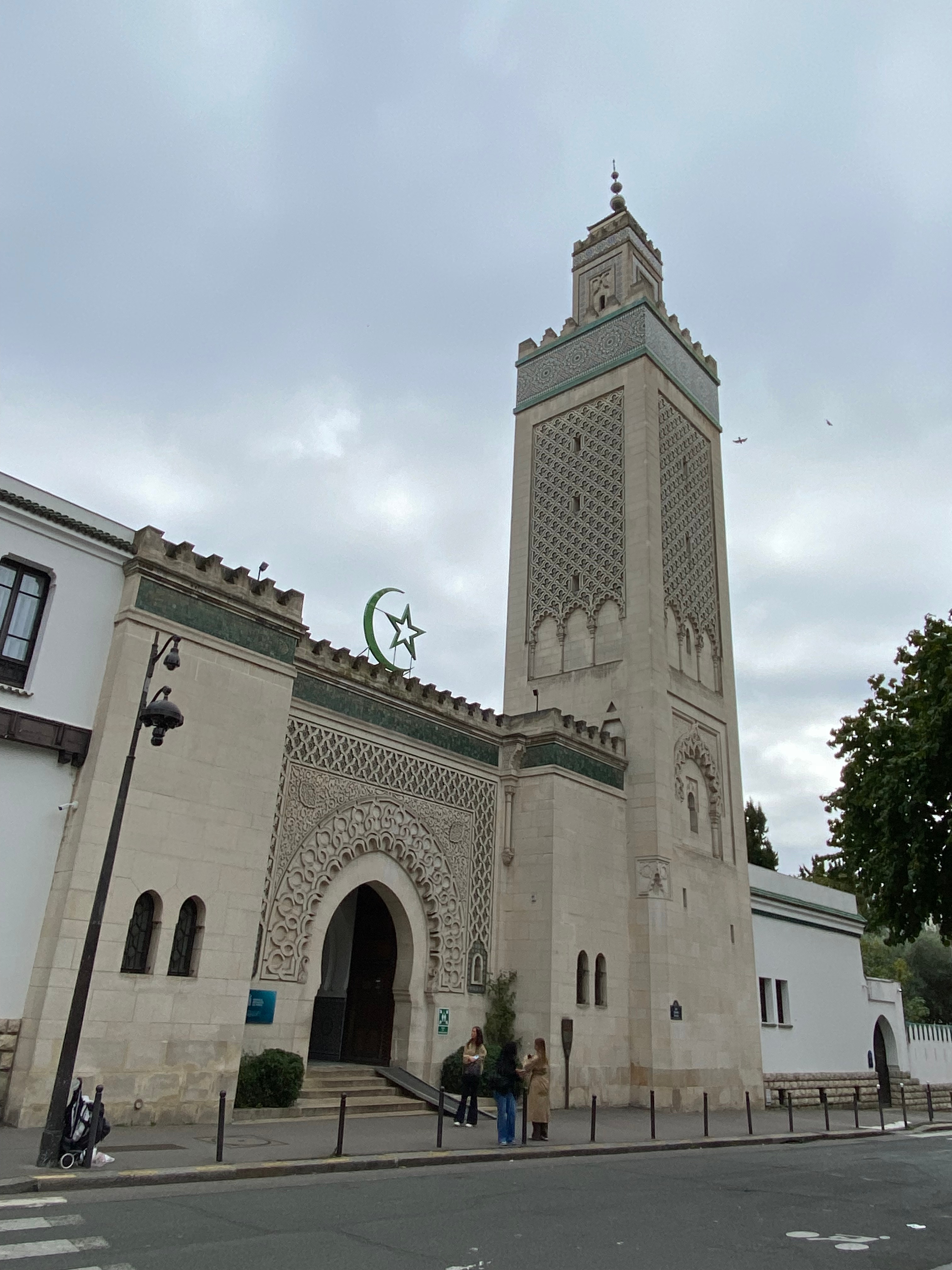
Reminding me of my March trip to Malaga and visit to the Alcazaba, the Grand Mosque is built in the Hispano-Moorish style with the familiar arches, decorative tiles, Arabic calligraphy, intricate geometric patterns, Mahgrebin carved cedar wood and lush courtyard garden with fountains. It’s wonderfully peaceful, a place for quiet contemplation and, unlike the museums, not crowded. I was flagging by lunchtime – jetlag maybe – so rather than have lunch at the mosque’s café, where you can get a full meal – tajines, couscous etc., – or mint tea and Arabic sweet treats, I decided to visit the ladies only hammam (steam bath).

In keeping with the mosque, the hammam is a tranquil space with detailed mosaics, arches and ornate plasterwork. Years ago, I was scrubbed to smithereens in a Moroccan hammam so this time I opted for a simple steam bath without the ‘gommage’ option (exfoliation).  The dress code is bathers or a bikini – topless is fine but you need some form of ‘bottoms’. I hadn’t planned to go to the hammam so didn’t have either – spontaneity has its drawbacks! So here I was topless in a Turkish bath trying – in faltering French – to navigate how it all worked and in what order – from the difficult-to-shut 1 Euro lockers to the wrist tag, plastic slippers and showering protocol.

I got myself into the main room which has a long marble ledge running down each side, divided into three alcoves for sitting or lying in and furnished with buckets and water taps. I lay down and semi-relaxed but it would have been better to have a friend to lounge about and laugh with. After a while I graduated to the furthest room, which is more like a sauna with stepped ledges – the higher you go the hotter it gets – and a cold-water dipping pool. This is where my M & S undies got the full immersion treatment!

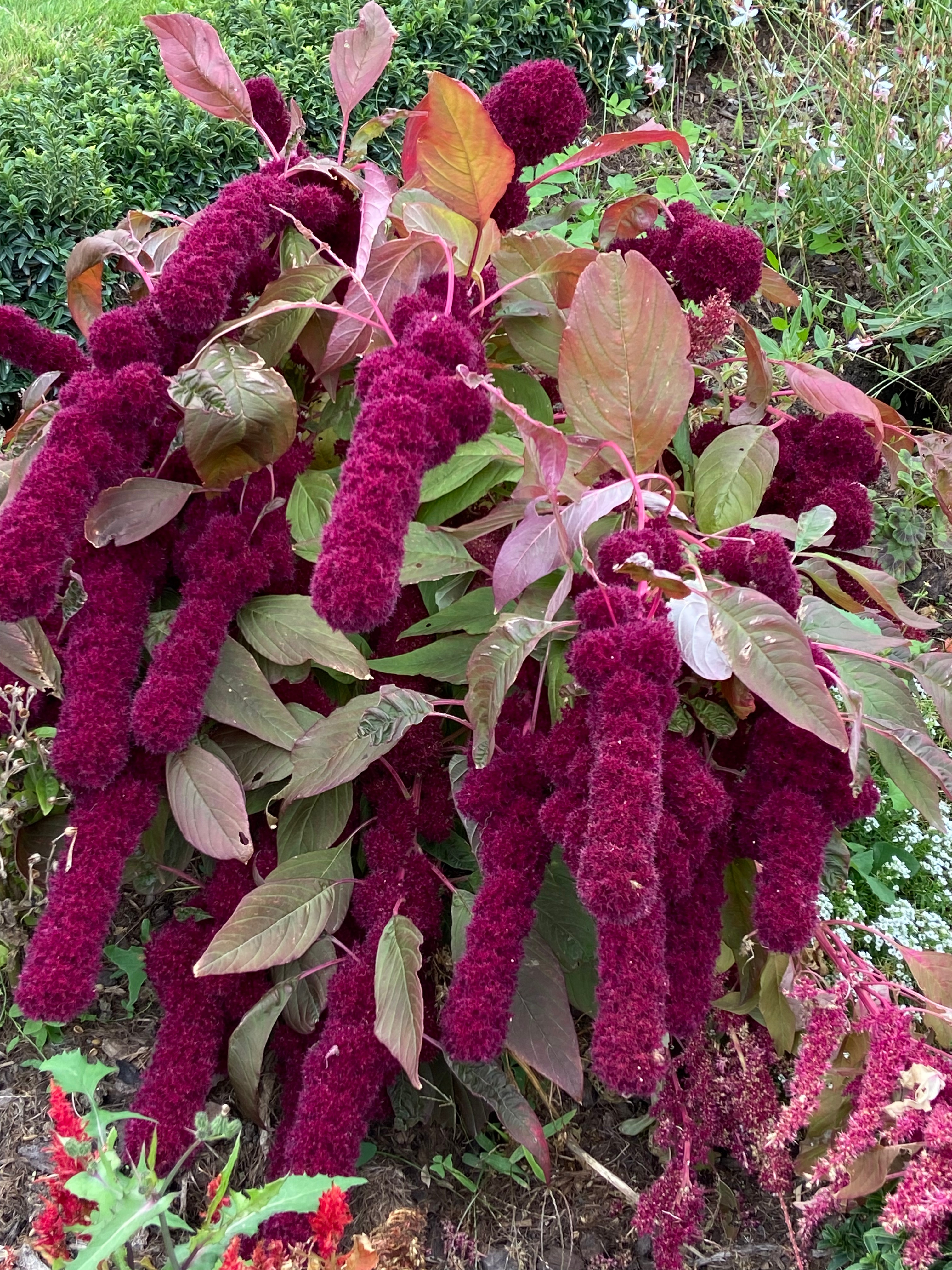
Once I was fully steamed and cooked, I progressed to an anteroom, where they bring you mint tea, which, although teeth-squeakingly sweet, is refreshing. I emerged feeling rejuvenated but, with damp knickers and damp hair, I soon lost the glow and warmth of the steam room as I was walking around the nearby Jardin des Plantes. On went the fingerless gloves and then I found a small café where I had a very overpriced but warming cup of tea, enough for me to enjoy all the autumn colours, pumpkin displays and curious woolly plants while I dried out!

Vale Connie – a tribute from Charlottie

I’ve already written about how I first met Connie in 1995 when I was travelling in Australia – I was in my 30s and Connie in her 60s (see https://thisquirkylife.com/2017/09/12/how-spiders-got-me-writing/). In summary, I was taking time out between jobs and had been offered the use of a cottage in Noojee in Gippsland. Picturing a quaint, rose-covered dwelling where I’d have time to do my own thing, write poetry, meditate and relax, I had eagerly accepted.

It didn’t turn out like that – the cottage was more of a shack. And as I got ready for bed on night one, I noticed a large black shape on my bed. I now know it was a huntsman but back then I thought all Australian spiders were deadly. And this one, large, rubbery and hairy, was unlikely to be an exception. After dispatching the spider to the afterlife, I lay tensely on my mattress on the floor flinching every time the loose spidery threads of the coverless duvet brushed against with my face and arms. And looking around the room, I noticed spider webs decorating the windowsills and skirting boards like a dusting of snow.  Suffice it to say I had no sleep, not a wink. And stepping into the shower the next morning, there was a spider dangling from the bare light bulb. It started to feel positively Hitchcockian.

I decided flight was the only option. Rather than return to the safety and comfort of suburbia, and my brother’s house and pool in Bayside, I got out my notebook with phone numbers of friends of friends and rang Connie from a phone booth. My dear friend Helen in the UK had met Connie and Norman in a camp site in Darwin in the late ‘80s and given me their contact details.

Hearing the high-pitched hysteria in my voice and my garbled tale about killer spiders, Connie gently said: “Would you like to come and stay?”  And so it was that I was soon on a train to Kyneton (Central Victoria) where Connie met me off the train with a big hug as if we’d know each other for years. And we never looked back.

I was embraced by Connie and her husband Norman as one of the family from the get-go and joined in the rhythm of their daily life, mainstays of which included porridge and poached eggs for breakfast, drinks and nibbles in the evening and roasts for dinner. I am indebted to Connie, an excellent (and published) writer herself, for encouraging me to write my first short story, and for believing in me as a writer. It was winter and she set me up with a table and typewriter with an oil-filled radiator for warmth. I still have the story – The Swim – typed up on now-yellowing paper.

And in 2009 when I was making a living, albeit a modest one, from writing travel and lifestyle articles, she helped me edit my article about fishing on the UK’s River Test entitled Duffer’s Day Out for the travel section of The Australian.

I’ve never forgotten my stay with Connie and Norman in Kyneton. It was where I first tuned into Australian birds; they had a bird bath in the drive outside the kitchen window, and Connie identified the lorikeets, crimson rosellas, Australian magpies, wattle birds and pied currawongs. I learnt that the Australian magpie is not of the crow family like its Eurasian counterpart. And I grew to love its melodic warbling song, so unlike the cackling of the magpies I had grown up with. To do this day, I always think of Connie and tap into something grounding and quintessentially Australian when I hear the magpie’s song.  

After moving to Australia in 2004 I visited Connie and Norman several times in their new home in Shoalhaven Heads in NSW. And once again I slipped into their way of life, comforted by the unchanging routine of porridge and poached eggs for breakfast– often on the balcony in the early morning sun. Connie and I talked about family, books and writing, Norman tinkered with his boat, and I went for walks to the beach armed with a stick that Norman made for me to scare off any snakes that might be dozing nearby. Connie and I also went into Sydney to the Art Gallery of New South Wales.  I don’t remember exactly what we saw – it may have been paintings in the permanent collection – but it was a treat as Connie knew her art and helped me view the pictures from a more informed perspective.   

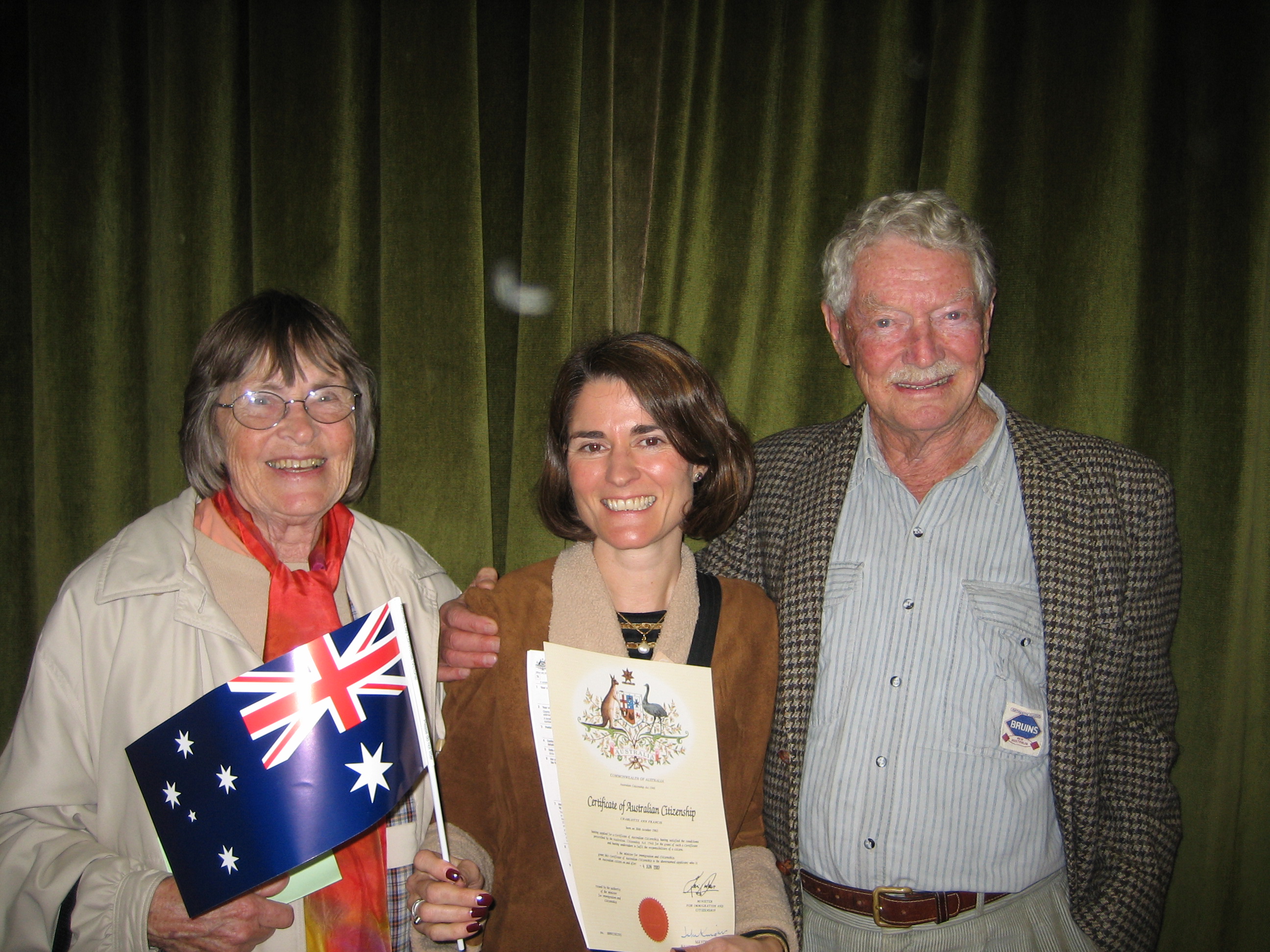
It was entirely fitting that Connie and Norman, such an integral part of my Australian ‘journey’, attended my Australian Citizenship Ceremony in June 2007. Other shared milestone celebrations included Norman’s 90th birthday party in Melbourne – a wonderful gathering of the family and extended family clan. And, over time, I can’t pinpoint exactly when, Connie began to call me Charlottie, a fitting hybrid name used exclusively by the Tout-Smith family. We also had fun and a lot of giggles playing with various English regional dialects and came up with Noite Loite, which is night light spoken with a West Country accent! Noite Loite became something of a recurring refrain in our conversations.

I last saw Connie in March 2024 in Adelaide where she had moved to live with her daughter Lynda. She was frail and suffering from cancer, and I knew it might be the last time I would see her. We played the game Bananagrams – Connie still a woman of letters and a dab hand at building words. At the same time, I felt that in Connie’s memory Helen and I may have become one and the same person – there was an element of confusion, one that presented an elegant closure of the circle. “I always did love you,” said Connie, and I, biting my lip not to cry, accepted her heartfelt words for both of us. Helen had her own formative experiences with Connie during an extended stay in Kyneton. Under Connie’s care and guidance, she encouraged Helen to join the local writer’s group and also to practise her art – one of her works was shown at an outdoor exhibition in Melbourne.

When her daughter Deb rang to tell me in late February that Connie had died peacefully in the early morning surrounded by her family, I recalled how I’d been spellbound on my dog walk that morning at the sight of several hot air balloons silhouetted against the rose-pink sky. Looking back, it feels like it was Connie’s spirit soaring home. I won’t say heavenwards as, although Connie was the daughter of a Reverend who served as a missionary in Fiji and Rotuman, she wasn’t religious.  

I was deeply saddened by the news of her death, but I was thrilled to be invited to Connie’s Celebration of Life event in mid-May. The event was held in Campbelltown, NSW, in the aged care facility where Connie’s 93-year-old sister lives.

With photographs from Connie’s life rotating on the screen – wonderful shots of her as a girl and beautiful young woman that I had never seen before – family and friends came together to celebrate all that she was and all that she contributed to the world.

I already knew Connie as an accomplished writer, a regular diarist, a keen reader, a cryptic crossword solver, a connoisseur of art, a good cook, a wife, mother, grandmother, sister, aunt and friend, a generous spirit with the warmest of smiles and biggest of hearts, but I hadn’t realised the depth of her creative life. And that’s, I suspect, because Connie was extremely modest. In Deb’s beautiful tribute I discovered that Connie was a talented piano player and received a diploma from the Associate in Music, Australia (AMusA), an award for outstanding candidates. And in later life she embarked on a Master of Fine Art at Melbourne University. While illness prevented her from completing it, she was able to use her expertise as a volunteer guide at Melbourne’s National Gallery of Art.

When her nephew reminisced about visits to Connie and Norman and mentioned the pattern of their lives – morning poached eggs and all – I reflected just how lucky I was that I had known Connie and Norman and been part of the family. Vale Connie.  I dedicate this blog to you as my dear friend, writing muse and inspiration. May you rest in peace.

Back in England: family, fine art, an old flame, a (very) old tree and teeth on the table

A highlight of this trip was meeting up with an old flame for the first time in over 25 years. We met in the ‘80s in London when I was his lodger and the world was a very different place. After years of communicating via Christmas cards between America and Australia, we were, at last, going to be in London at the same time. The anticipation and getting ready were half the fun. Limited to a travel wardrobe and my hair out of shape, my beloved sister came to the rescue. Despite our combined age of just over 130, we were like teenagers again. She helped me get ready, backcombed my hair, lent me a coat and scarf and some jazzy earrings. It was wonderfully bonding.

Lance and I met at the Cavalry and Guards Club in Piccadilly. Honouring the Club’s formal dress code, he was wearing an elegant blue suit and orange silk tie – the word dashing comes to mind. He’d hardly changed at all, and we effortlessly took up where we left off in what proved to be a fun and fond evening. Dining on the best of British at the wonderfully-named Noble Rot in Mayfair, we reminisced, caught up on all the years in between and shared unrealistic ex-pat dreams – he and his family now live in San Francisco – about how nice it’d be to own a pad in London and to stay for three months every year.

He remains a stalwart drinker, a bon viveur, a keen golfer and, while politically poles apart from me, he’s stylish, has artistic sensitivity and impeccable taste. He always did have a dry sense of humour. Quote of the evening had to be “Well, Cha (he’s the only person in the world who calls me Cha) it’s good to know, as a former lover, that you have found happiness with a dog.”

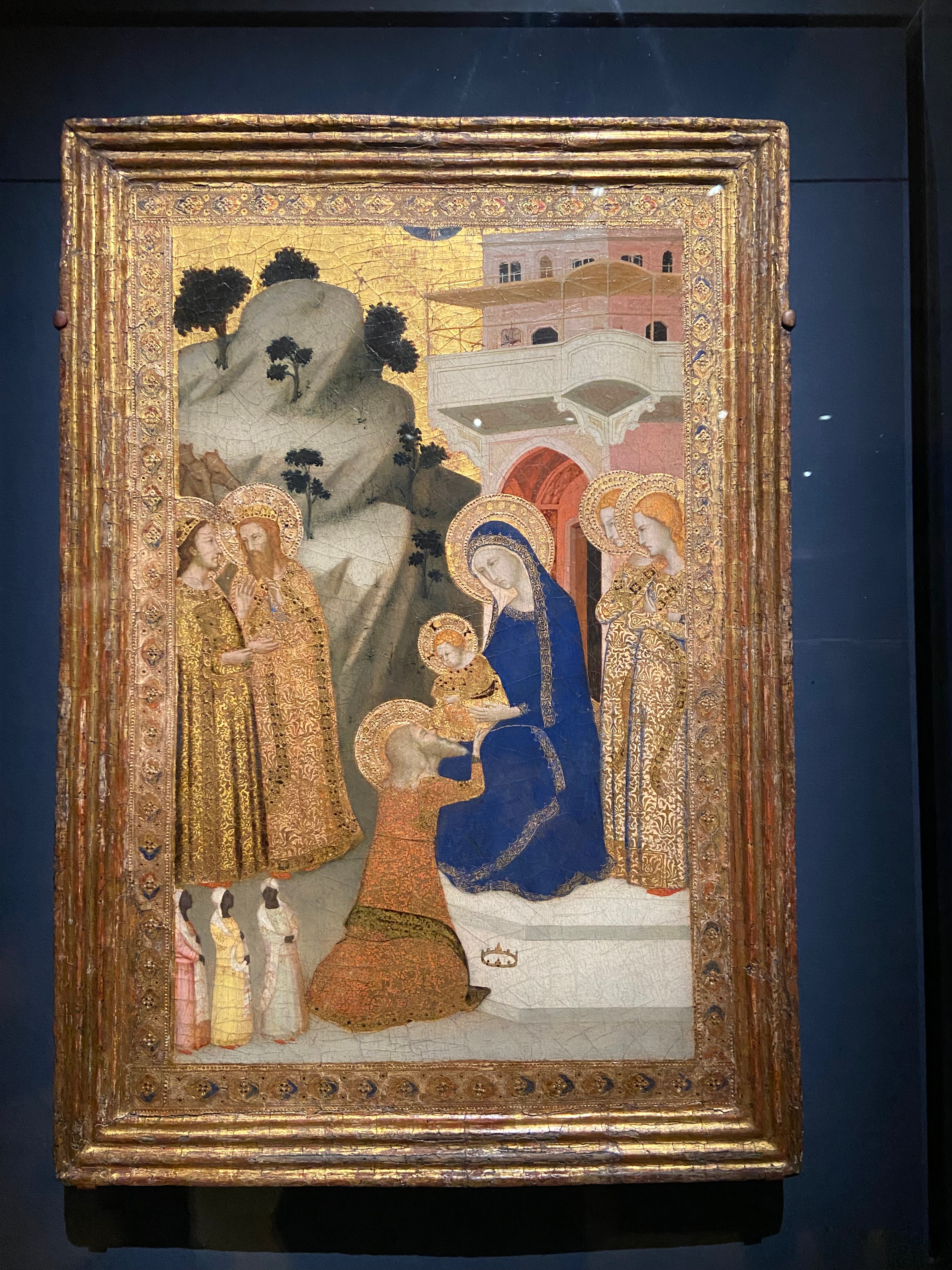
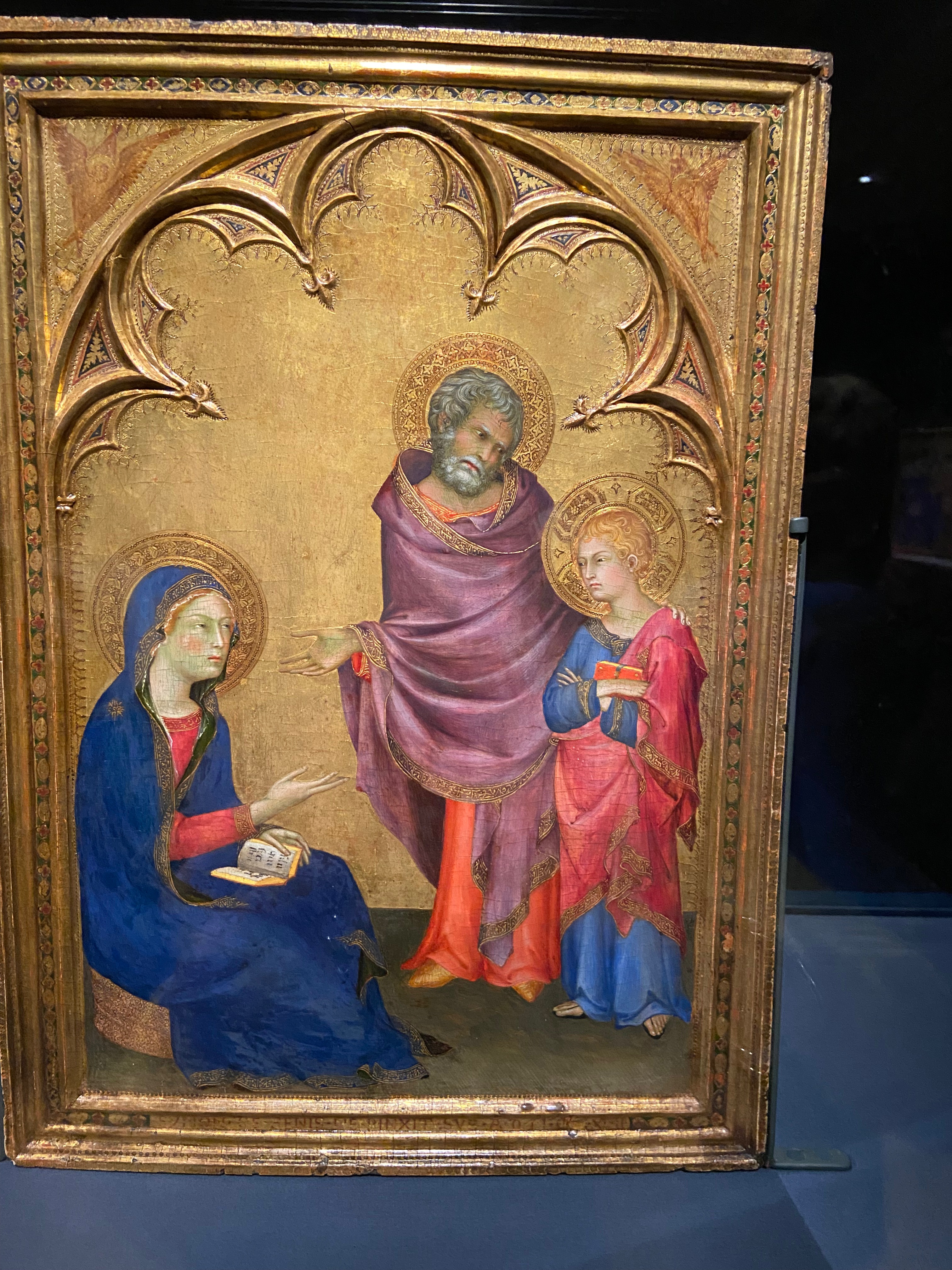
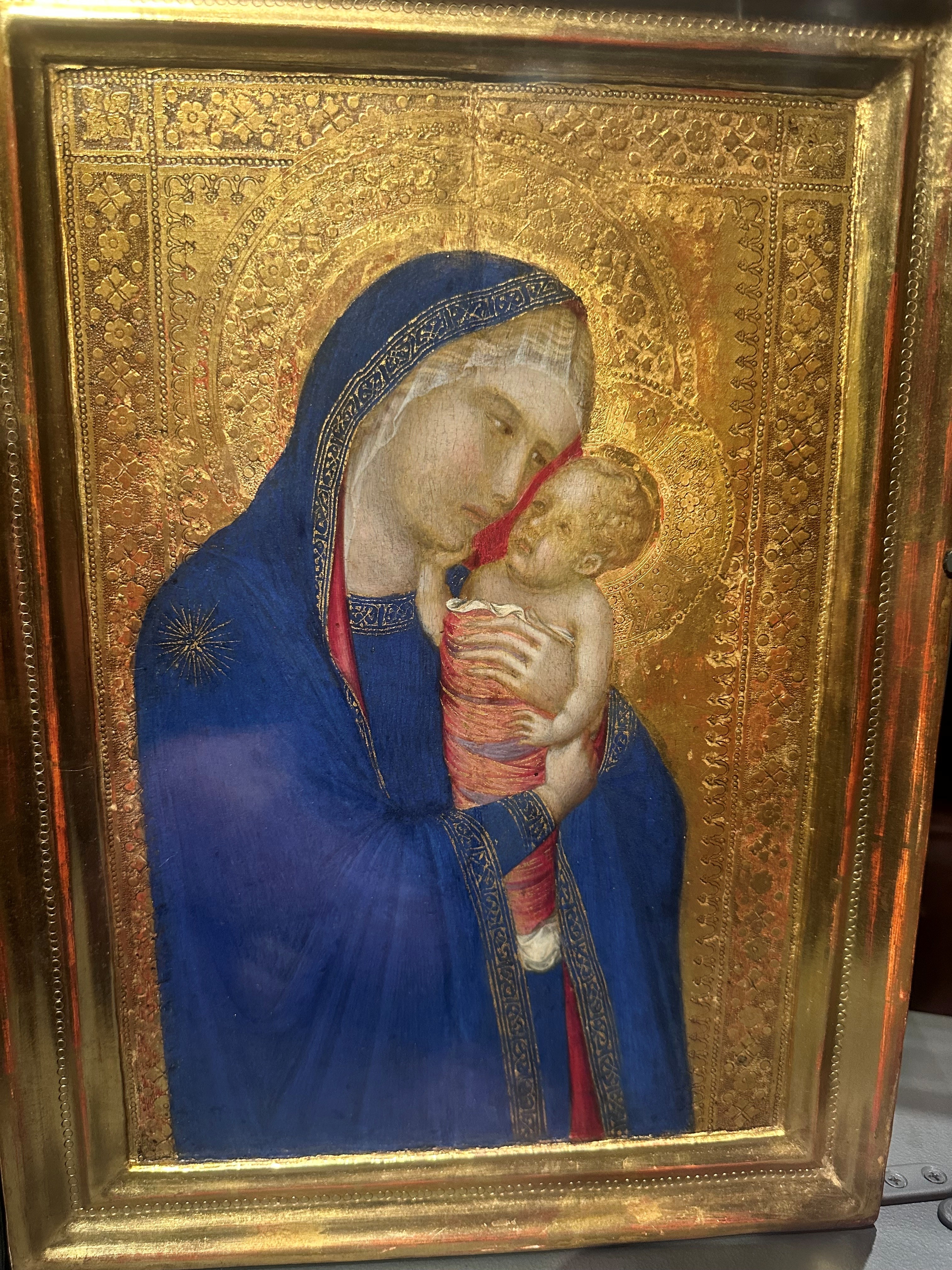
In a small world moment, Lance had seen the exhibition Siena: The Rise of Painting 1300-1350 at the Met that I was about to see at the National Gallery. In fact, some of the photos I am sharing are his.  It was an exquisite exhibition, and an extraordinary one with many of the works reassembled for the first time in centuries.

To quote from the National Gallery:

Simone Martini’s Orsini polyptych, split between Antwerp, Paris and Berlin is together again. His panels for the Siena’s Palazzo Pubblico altarpiece are reunited. 

Panels from Duccio’s Maestà, one of the largest and most complex altarpieces ever produced, on loan from Madrid, Fort Worth, New York and Washington and his ‘Virgin and Child’ and ‘Crucifixion’ triptychs come together.

Siena, I learnt, was one of the world’s richest cities and a major centre for artistic innovation and experimentation before the Italian Renaissance and up till the outbreak of the Black Death in 1348.  

What I loved was the sweep of the exhibition from the large, commissioned altarpieces, shimmering gold, to smaller paintings as well as ivory carvings, intricate enamelled boxes, reliquaries with fragments of bones, silks and textiles from Iran and Turkey, marble and wooden sculptures and illustrated manuscripts. The level of detail and the vividness of the colours – particularly the  blues, oranges, reds, purples and pinks – pulled me in as did the emotion and humanity in many of the pictures; the tender face of Mary, baby Jesus reaching up to pull aside the veil from his mother’s face and, my favourite, a picture of Jesus as a boy being told off by his parents and sporting a sulky teenage face and crossed arms.

Seeing great nephews and nieces is always a joy on my UK trips, the catch being that it’s all or nothing, and I miss out on many of their milestones from trip to trip. I enjoyed reading Hairy Maclary to Dougie, who is now coming up for two, walking, talking and being schooled in the art of calling me Lot-Lot.

Up in Nottinghamshire with Mum, I caught up with my great nieces – Millie and Imogen from Yorkshire. Millie at 14 months was too young to recognise me but I got a great welcome Imogen, who is nearly five. I’d decorated the dining room with bunting and balloons, but much more exciting was doing the washing up standing on the step and playing peek-a-boo through the (rather old-fashioned) serving hatch between kitchen and dining room. That and ragging around with my eldest brother, the most devoted grand-father ever.

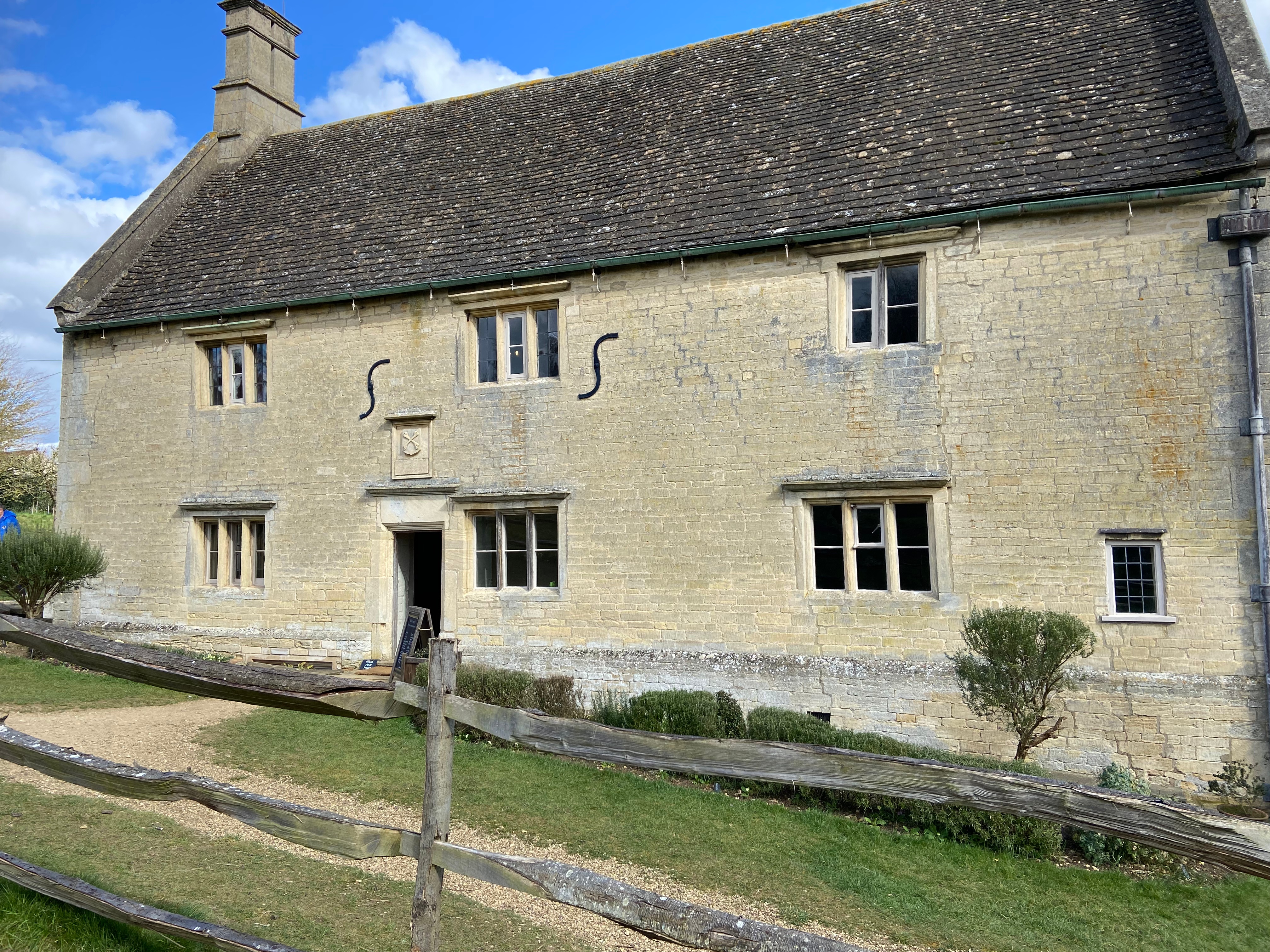
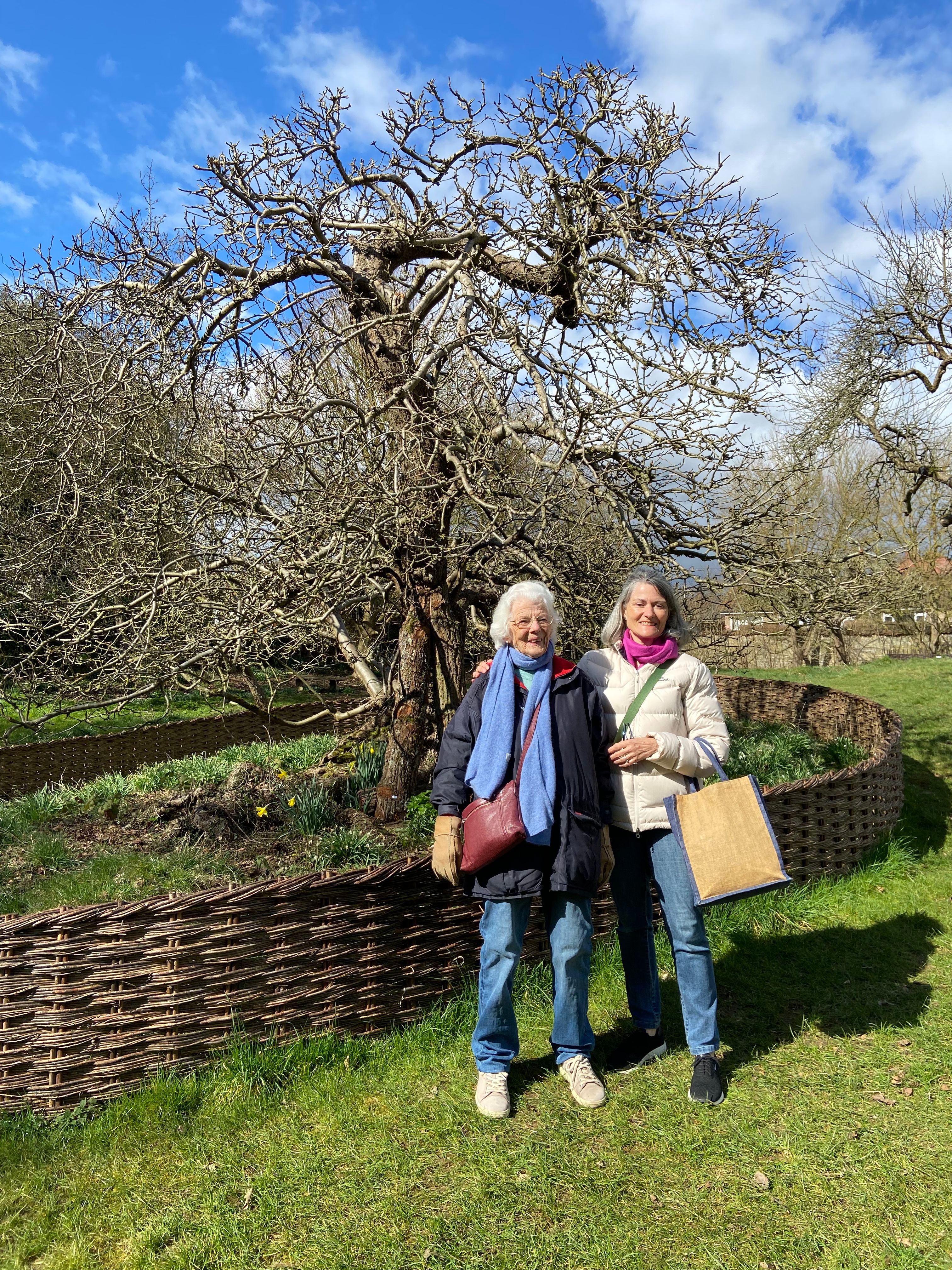
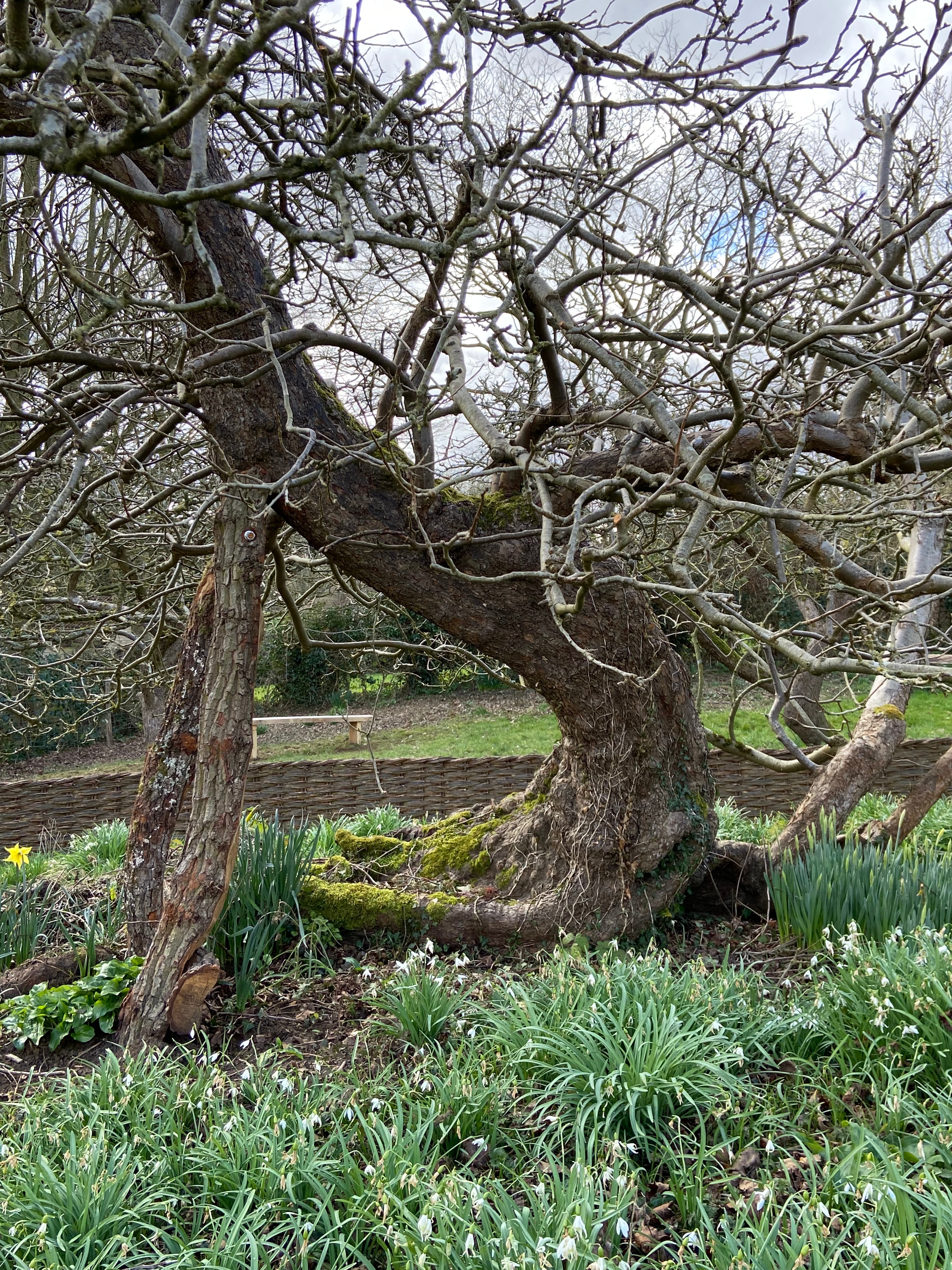
Mum had a rocky start to the year but has fought back amazingly well. So it was a triumph to manage a fun day out together and lay down new memories. At 93 it’s a case of carpe diem. We went down the A1 to Lincolnshire to see a heritage-listed tree – not just any old tree but possibly the oldest known apple tree in the world. The tree where Isaac Newton had his aha gravity moment.

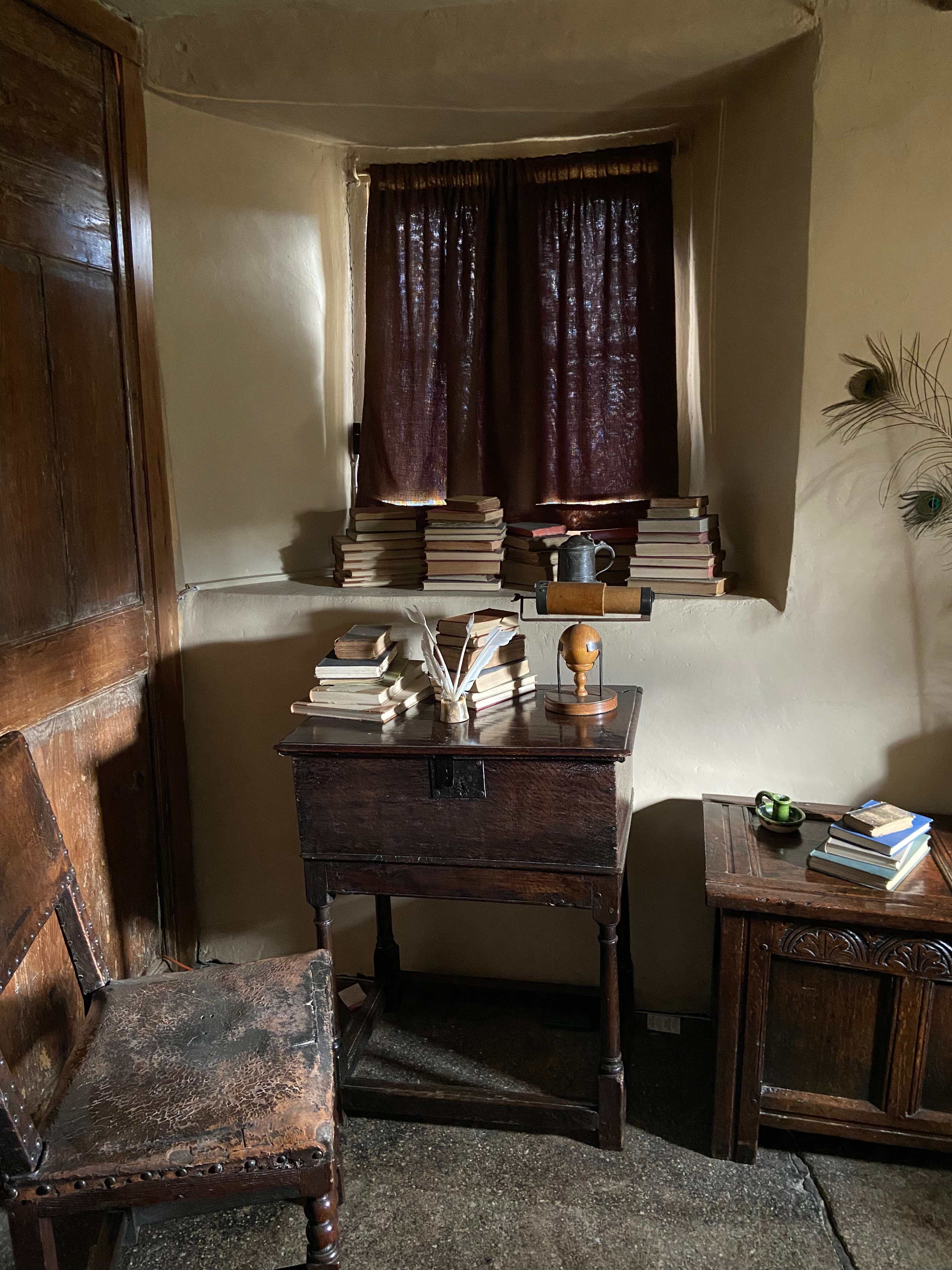
The tree is in the garden of the Woolsthorpe Manor (now a National Trust property) where Newton was born in 1643. Inside the house is the room where he conducted his experiments on light using a prism, a recreated dining room, kitchen and bedroom with lots of heavy oak furniture, and exhibition on the 17th Century uses of urine. These ranged from mouth wash, skin softening, reducing wrinkles (I’m not up for trying it on the crow’s feet!) and stain removal to making gunpowder and warding off witches. It was also prized as a valuable side-hustle commodity you could sell to soap-makers and tanners – there was no Airbnb and Uber back then.

The apple tree, somewhat gnarled and bent, has proved amazingly resilient and survived being felled by a major storm in 1820. And, even better, the tree has offshoots all around the world including in Canada, the US, Argentina, Germany, South Africa, Korea, Japan and Australia. And the tree’s Australian descendants are not far from where I live.  

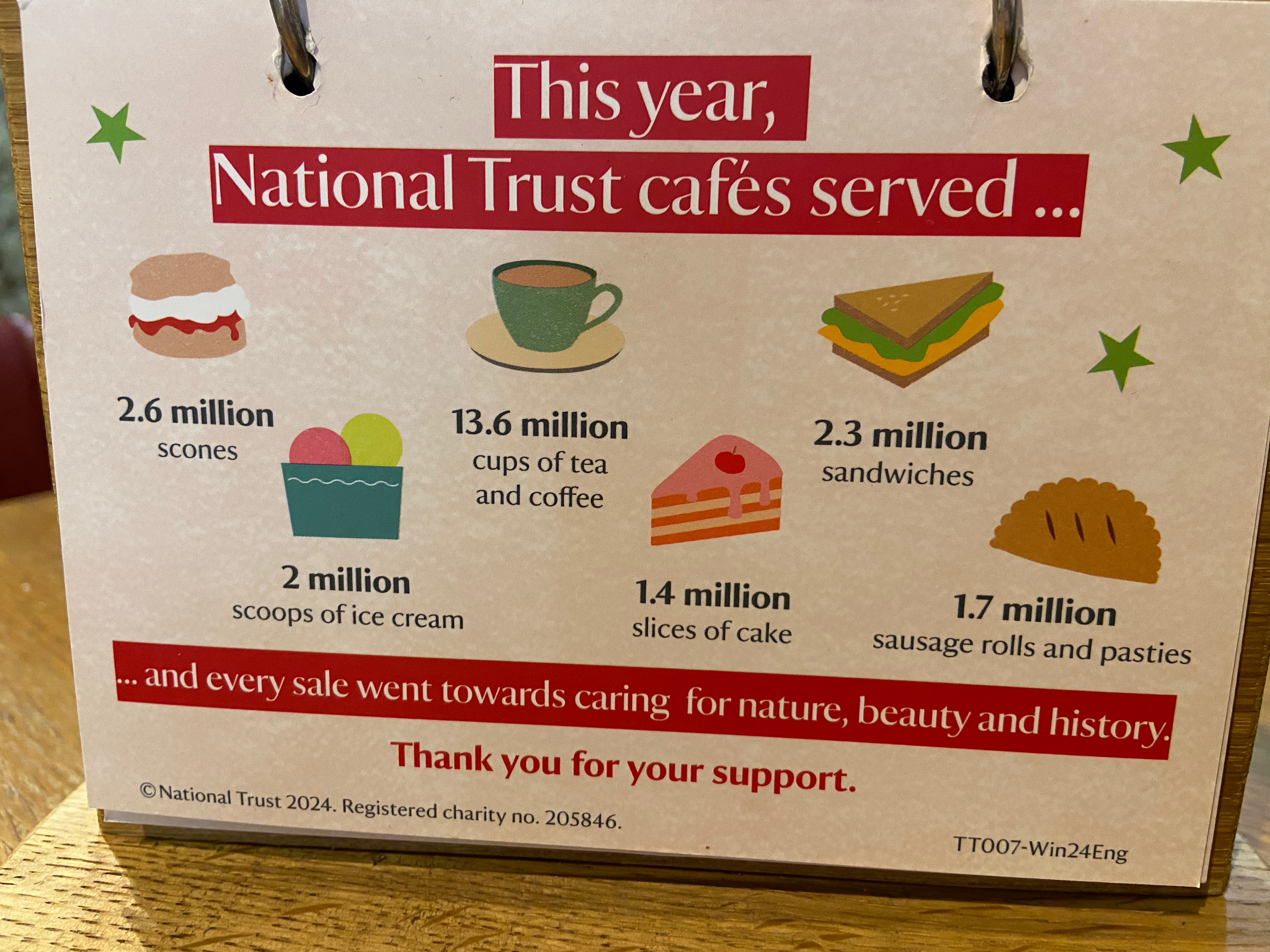
We enjoyed the spring sun but there was a biting wind, so we warmed up with a sandwich lunch in the barn and I enjoyed a nice British cuppa, one of 13.6 million served in National Trust cafés annually!

The weeks with Mum in her village near Retford in Nottinghamshire had some surprisingly busy days whether it was medical appointments, relatives coming over, neighbours popping in and out, the window cleaner appearing at the top windows early one morning when we were only half dressed, the boiler being serviced, supermarket shop-ups, a trip to the tip to get rid of rubbish from the garage – and managing all the things old age throws at you.

Mum and I had a few fraught moments due to an unholy alliance of old age irritations – hearing, digestion, eyes, poor sleep and anxiety topped off with a very nasty cold which we both succumbed to. Mum had two macular eye injections in one week, and for one of them I managed to leave all forms of payment behind on the kitchen table. Emerging from the injection feeling wobbly and seeing black dots, Mum wasn’t best pleased that I had no means of paying for the parking, which would likely result in a written penalty. You’re never too old to get a good ticking-off.  Luckily a kind-hearted woman gave us the £1.75.

However, that evening dinner was a disaster. I’d managed to make the sausage skins tough and the broccoli too crunchy (Goldilocks would have had a field day). Mum, cross and tired and unable to chew adequately, took out her dental plate and put it on the table where it sat accusingly. Mum’s teeth were out, and mine were firmly clenched. A bit of a Swords at Dawn moment!

Needless to say, we’d moved on by the next morning and, girls together, we both had 10.30am hair appointments – nothing like a haircut to make you feel better. Adjacent basins wondered my brother? Not quite but that’d be a good title for an Alan Bennett play!

I timed my trip to include Mother’s Day on my last weekend, and my sister came up from London to join us. Flowers, chocolates, coffee by the canal in Retford and roast chicken in the Aga. And time to read Mum a few more stories from Craig Brown’s A Voyage around the Queen, an entertaining biography with a difference. I bought it on the strength of this review from The Times:  “An unconventional tribute that offers a snapshot of almost a century of social history with a mix of royal insanity, and superior anecdotes, from farts and corgis to Paul McCartney and poets laureate.” And it absolutely delivered; Mum, I’ll be back to read you more extraordinary Royal tales (and tails) before you know it.

Back in Blighty 2: Village Life

Although I grew up in various English villages, both in the North and South, I never really thought about the nature of small communities. I just took it from granted. On my recent trip to the UK, I was reminded how delightfully timeless and whimsical village life can be, and looked at it with fresh eyes.

In Devon I stayed with my friends Monica and Jonathan in Chawleigh in the heart of Devon. It’s a small village with two pubs and a shop surrounded by tiny lanes with high hedges; I am glad I wasn’t driving – all that reversing to a passing spot requires a very flexible neck! I didn’t explore the village as such – we only had one fine day in three (the UK experienced its wettest July for years!), and that was spent doing a glorious circular walk on Dartmoor.

But their house is a voyage of discovery in itself. The Grade II listed farmhouse, with its smart thatched roof,  dates from the 17th century – some of the house possibly earlier – and, atop the front door, is the crest of the Earl of Portsmouth – the house would once have been part of his estate. Walking into the house you get a visceral sense of the palimpsest of history: flagstones worn by footsteps over the ages; the sloping and uneven floors; the heft of the of the cob walls (walls made from mud, chopped straw and horse hair, a common practice before 1850); the elegant 12- and 8- pane sash windows; the 19th century glazing evident in the whorls and imperfections and the thin glass (modern sashes have thicker glass); and the early 17th Century plank-and-muntin screens.

Now I don’t know about you, but I’d never heard of these screens. The name alone is fascinating – Google informs me that muntin is a corruption of montant and, in some early spellings, mountain, a word applied to various upright dividers. That makes sense, these screens are an early form of partition wall. The screens in Monica and Jonathan’s house are made of oak and full of holes – and, to add to the intrigue, on the screen by the front door there are initials carved into the wood dated 1941 – most likely by some evacuees.

Then there’s the outdoor privy with an adult-sized seat and a child-sized one – that made me smile – a barn, a well and a former piggery. The apertures carved into the cob wall under the thatch were for pigeons to nest, and are known as pigeon boles. Back in the day, pigeon meat and eggs featured on the dining tables of the gentry.

What an experience it was staying there. It’s the kind of place where things could go bump in the night. Unfortunately, Monica was chatting to me about a podcast about ghosts and mentioned something about a ghost cat and the study door slamming shut. That was enough to fire my fertile imagination. Lying in bed, I kept bobbing up and and down like a meerkat, craning my neck around as if to challenge any spectral forms!

A country fair has taken place in the neighbouring village of Chulmleigh every year following King Henry III’s approval in 1253. What luck that this year’s fair coincided with my visit. We arrived in time to see the procession of vintage tractors and cars filing through the bunting-lined streets. Modern tractors just don’t have the same class as the old ones, their sputtering, chugging engines evoking days of yore. And the cars, among them, Austin Healeys, Triumph Heralds and Stags, Wolseleys, Hillmans and Morgans all belong to an era of fine craftmanship before the production line and robots took over.  Wonderful stuff.

As the rain advanced, we headed out of the village to the cricket field where all the tractors and vintage cars were lined up for closer inspection, and a DJ was playing Golden oldie hits – I couldn’t resist singing along to the Beatles Ob-La-Di, Ob-La-Da. I got cornered by a farmer telling me how much his badger-faced breeding sheep cost – alas, I was not in the market, but I enjoyed watching them being assessed by the judges. I felt I’d walked onto the set of All Creatures Great and Small...

Given the wet conditions we grabbed some lunch from one of the food vans and sheltered in the main tent where all sorts of home-grown, home-bottled and home-baked produce was on display to be judged – from rhubarb vodka to heritage tomatoes, Victoria sponge cakes and scones. In the crepe queue, I got talking to a local, a woman probably in her mid to late 60s, who has lived in Switzerland and Australia but now calls Chulmleigh home. She was waxing lyrical about the activities on offer in the village – the historical society, keep-fit and line-dancing, you name it!

While I’d probably love all the activities and goings-on, there’s nowhere to hide in a small village, everyone knows your business, and there are not that many people to go round. Good boundaries would be essential. Even so, you could quite quickly get Cabin Fever.

That can be the drawback. In my mother’s village in Nottinghamshire there is a village hall but no shop or pub and there’s not much going on. Mum’s house is down a lane leading to the surrounding fields, and she notes the various comings and goings and who’s who. Her running commentary, while not scripted, brings to mind Alan Bennett’s TV Monologues, Talking Heads, which all all feature single women – one a vicar’s wife (that one is quite dark), one a poison pen letter-writer, and one recently widowed woman – you get the drift. Thankfully Mum’s narratives, while full of conjecture and a bit curtain twitchy, tend to be highly amusing.

Evening view over the fields

There’s the man over the road who lovingly cleans his car daily, and takes an elderly relative out for trips, an immediate neighbour who endlessly practises his golf strokes in the garden (the ball making an irritating click noise) while his wife sunbakes on garishly coloured plastic sun loungers in between putting out the washing. The absence of washing on the line usually means they’ve taken off to somewhere in the Mediterranean in search of more reliable sun. That and the dust gathering on their car bonnets in the driveway. Similarly, Mum works out when the people behind her house are away as there’s no noise from the kids and their searchlight doesn’t beam into her bedroom at night. As it happens, she was convinced the light was some kind of special heat lamp on a timer for their chickens, but it turns out it’s just a very sensitive sensor light triggered by a gust of wind or a bird. Then if the lovely neighbours on the other side don’t draw back their hall curtains, she worries one of them must be ill. What again? I say, incredulous. You thought they were ill last week too – maybe they are just feeling private!

But curtains have their uses. Mum always draws the curtains on her top landing which faces the street. Three very kind neighbours know that if those curtains ever remain drawn during the day there’s a problem. It’s a very simple form of Neighbourhood Watch, the kind you only get in small, tight-knit communities. I find it comforting to know they are looking out for her.

This post is dedicated – with great love and affection – to Mum who turns 92 today, 12th September, 2023. Despite battling the frustrations and degenerative effects of old age, she’s going strong and living independently. She doesn’t even have a cleaner! And two weeks ago she was in London helping out with my sister’s grandsons, Mum’s great-grandsons, bathing them and reading stories etc. Go Mum! Go Granny! Go Great Granny! We love you.

Back in Blighty Part 1

It’s always an adventure of sorts returning from Australia to family and friends in the UK! Due to the long, snaking passport queue and luggage delays, it took three hours to get from the plane to my sister’s front door in London. I had hoped to fly straight into my brother-in-law’s 70th birthday party and had rested as much as possible on the plane so I’d be in sparkling form on arrival. As it turned out the only sparkle was on the glasses I helped wash up; I arrived just as the last guests were leaving! Never mind, I was still part of it and happy to muck in and help clear up. And the wonderful consolation prize was meeting – and cuddling – my newest grandchild aka great-nephew, Douglas Finlay, aged just over two weeks.  I was- and remain – totally smitten!

A couple of days later my nearly 92-year-old mother met me at her local train station in Nottinghamshire. She’s still doing short local drives – just…We had an eventful first week together what with her malfunctioning hearing aids, a pesky bladder infection popping up (every time I come over, I seem to troop to the surgery with a urine sample!), and an outbreak of mice.  Mice are canny and opportunistic little blighters; we first detected them feasting on bird food in the garage, then suddenly they seemed to be everywhere, reminding me of that song about a mouse living in a windmill in Old Amsterdam. Like their Dutch forbears these mice must have been wearing clogs – judging from the scrabbling in the roof space – and the clip-clippety-clop on the stairs.  Not only did we spot one dashing under the grandfather clock in the hall, another one had clearly been upstairs to the spare bedroom and into my suitcase where it had snacked on a (wrapped and sealed) muesli bar. All a bit too close for comfort!

Among the highlights at Mum’s were having my Yorkshire-based brother and sister-in-law overnight and preparing lunch for them and my Australian nephew and his wife. While that entailed a fair bit of shopping and catering for Mum to plan (flap and worry about!), it all went brilliantly and no rodents were in evidence. I also enjoyed watching the Wimbledon Men’s Singles Final with Mum – in real time. AND I got her to sit still for more than 20 minutes – we were both gripped by the long and hard-fought match with the 20-year-old Spaniard Alcaraz beating four-time defending champion Dubrovnik (Mum does a very good line in Spoonerisms).

Back in London the big treat was a trip to Covent Garden with my sister and brother-in-law to see one of my favourite operas, The Marriage of Figaro. I first got into opera as a 17-year-old in Vienna where I was an au pair girl to a stuffy family with minor aristocratic leanings. Back then, I would purchase a standing place at the back for a few Austrian Schillings. My ticket to Figaro was a very generous early ‘milestone’ birthday present from my sister. There’s something hallowed about the Royal Opera House with all that plush red velvet, gold and gilt edging. The music is sublime, the sets beautifully crafted and the staff attentive and gracious. And, always a rebel despite outward appearances, I love that we smuggled in our Sainsbury’s sandwiches and surreptitiously ate them at the bar with our pre-ordered dinks during the interval. While we all know and love Il Nozze di Figaro, numb bum did start to set in during Act Four. You can’t help wondering if there’s one too many layers of subterfuge, hiding in the bushes and letters falling into the wrong hands!

A few days later I went with other friends to an open-air opera at Holland Park in Kensington. Itch is a modern opera about science, adapted from a book about chemistry written by DJ Simon Mayo for his son –  and we attended was the world premiere. Against the backdrop of a brilliant set comprising 118 cubes – as in the periodic table – the plot involves the discovery of a new undiscovered element, a radioactive rock that has the power to solve the global energy crisis but also destroy humanity. Referencing climate change and the Gaia Theory and greedy corporations, it becomes a battle between the chemistry-obsessed schoolboy, Itchingham Lofte, and a bunch of corporate baddies.  I really enjoyed it and the soaring arias – accompanied by the City of London Sinfonia –wouldn’t have been out of place in a classical opera. The only drawback was the lashing rain – while the Holland Park Opera auditorium is under a canopy, the sides are open and it was none too warm! As I write this, it’s now August – but the UK has had the wettest July for years. Just my luck.

After the opera, I stayed with my friends at the Army and Navy Club in Pall Mall. It wasn’t as formal as I had imagined, and it was a treat staying in central London. My room reminded me of a cabin on a cruise ship and had everything I needed. The club has a rich history; the founder and First President was wounded in the Battle of Waterloo and – and here I’m missing the detail – there is some connection with the Entente Cordiale signed between Britain and France in 1904. The walls are lined with prints and pictures from wars, battles and country pursuits from the 1800s onwards – ranging from WWI cartoons and fox hunting scenes to portraits of members of the Royal Family across the ages including one of the young Queen Victoria. And then, as you might imagine, there are various trophies of the stuffed variety – from a greater kudu head to an emperor penguin from Scott’s Antarctic Expedition.

I book-ended this second London visit with an after party for my brother-in-law’s 70th to make up for missing the first one. It was just about warm enough to sit outside and I loved catching up with friends over drinks and nibbles. The following morning, I was off to Devon to sample rural village life. More next time.

Getting my Brit Fix and Bridging the Divide

If you had told me when I moved to Melbourne in the early 2000s that a pandemic in 2020 would see Australia close its borders, pull up the drawbridge and ban international travel, I would probably have hightailed it back to the UK (I can hear my Mum saying she wishes I had!). Never did I imagine having to face enforced separation from my family and a country I love dearly with an indulgent rose-tinted, nostalgic fondness.

But I/we’ve managed magnificently: we’ve been suitably British and stoic – and even a bit Buddhist (well, I have; ‘this too shall pass’) – and made the best of it. And, as one with strong Luddite tendencies (yes, I still have a paper diary and LOVE it!) I acknowledge that technology and video calling has given us a lifeline and a rich sense of connectedness; in fact, as a family we’re more up to date with each other’s news than we used to be. I am one of four: there’s two of us here, and two of us there and we have a sibling video call every Friday.

And, thanks to the perseverance of my eldest brother Charlie, Mum uses an iPad and is FaceTime literate. Mum and I started out chatting twice a week, then – as COVID dragged on – I suggested a new way to bridge the divide. When Melbourne is nine hours ahead of the UK, I drop in at Mum’s at noon her time on a Sunday, and we listen (via her radio and our respective iPads), to her favourite programme on Radio 3, Private Passions. Each week presenter (and composer) Michael Berkeley explores the musical passions and lives of his guests. Sometimes we’re riveted by the subject and their musical choices, other times we drift off into chit chat, easy kitchen table tittle-tattle.  Quite often, Mum gives me an update on the birds on her birdfeeder, the state of her garden, what she is having for lunch or who has just walked past the window. It’s as if I am there in the room with her, and we treasure these special interactions.

Tuning into Private Passions with Mum

I’ve also had regular Brit Fixes thanks to plugging into BBC Sounds and listening to abridged versions of classic favourites such as Middlemarch – how did Dorothea stick it out with the GHASTLY Rev. Edward Casaubon? – Desert Island Discs, a Victoria Wood retrospective and, just recently, a reading of a beautifully nostalgic and touching story, written in 1931, of a family on their annual holiday to the seaside. There’s something wondrous about my physical self strolling along banksia- and wattle-fringed coastal paths with my dog Bertie, my headspace transported to Bognor Regis on Britain’s South-East coast, following the Stevens family strolling along the Promenade. Escaping the humdrum of everyday life, excitements back then included freedom from wearing ties, tight collars and stockings, and securing a bathing box with a balcony!

Other wonderful Brit Fix moments have included TV programme Secrets of the Museum – a behind the scenes tour of London’s V & A – looking at the extraordinarily detailed and delicate work of the curators and conservators. What joy to sit on my sofa, getting up close and personal with exquisite treasures, without the slow shoe shuffle past glass display cases, peering in at the small font captions. Another highlight was an episode of Rob Bell’s Walking the Lost Railways of Britain which took in the now disused railway station in Great Longstone, the Derbyshire village where my mother was born in 1931.

So far, so good. But as the months rolled on, I realised, with great sadness and a very heavy heart, that I was going to miss my niece Annabel’s wedding in July this year (it had already been postponed from July 2020) and Mum’s 90th in mid-September.

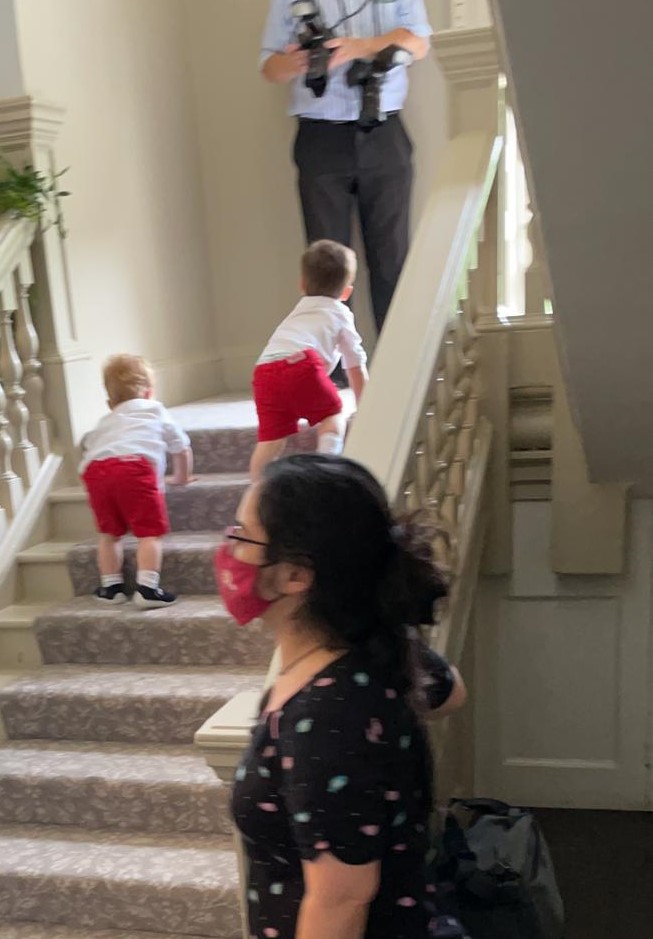
Once again, technology came to the rescue. My sister’s friend John gave me the most splendid (and I use that very British word deliberately) guided tour of Annabel and Jonny’s wedding in South London. We kicked off early and I had a bird’s eye view of the cake, the flowers, the cheeky bridesmaids and the page boys scampering about, the latter my nearly 2-year-old great-nephew twins, like little princes in their red shorts, white shirts and tartan bow ties.  I was there ‘live’ for the service, witnessed the exchange of vows, my niece radiantly happy and elegant, and Jonny resplendent in his kilt, cape and full tartan regalia, both brimming over with love. As they filed out, I had a quick chat with the just-married couple (making me the first person to address them as Mr and Mrs) and then stayed online while they were strewn with rose petal confetti, posed for photographs and then mixed and mingled. I had chats with many of the guests – from friends to family – until it got to 1am here and I had to remind them I was in my PJs and ready for bed!

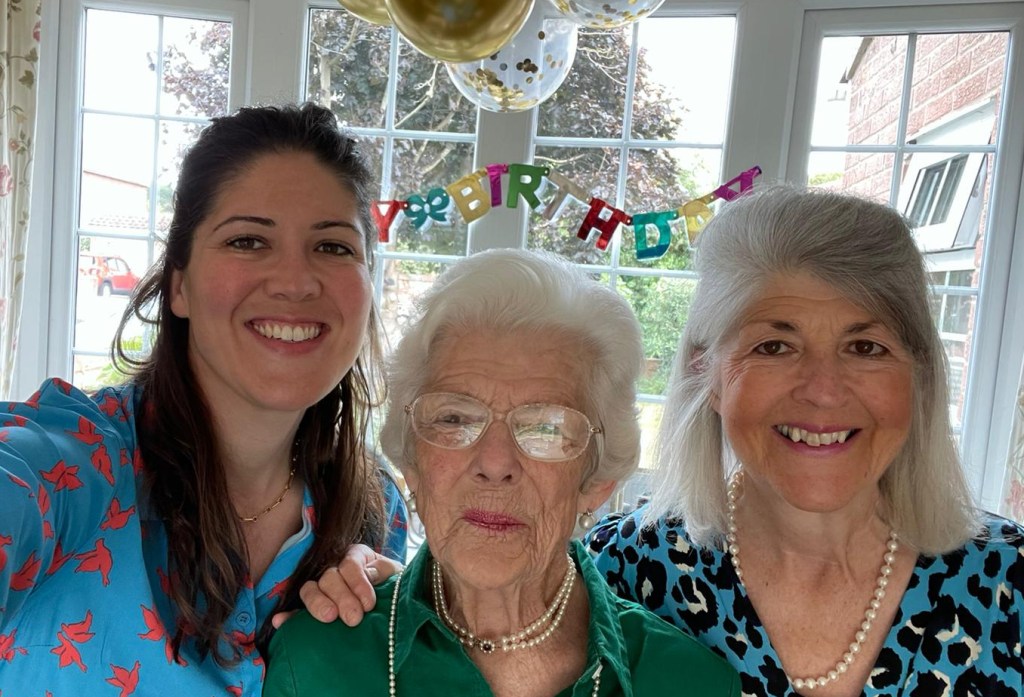
And then, the weekend before last, my brother Tim and I video-called into Mum’s 90th birthday celebrations – in fact, it was a four generation, three-country call from Mum’s breakfast table in Nottinghamshire to Tim and me tuning in from Melbourne, and my niece Georgie and the twins (the page boys) in suburban Paris! On the first call we watched Mum – in the swing and bright as a button from the get-go – open some of her cards and presents.

Four Way International Call

We tuned in again closer to her lunchtime party. This time, the newly-married Annabel, now Mrs Recaldin, was emcee. As bubbles and copious canapes were served, Annabel waltzed us around pointing out Mum’s many cards (35 and counting), the birthday banners and balloons and the assembled guests.  “Which of the grey-haired old dears do you mean?’ enquired Annabel as I asked to speak to some of Mum’s friends, “there are a few in the room!”

My brother, Charlie, toasted Mum with some heartfelt and touching words, acknowledging, too, the extraordinary kindness of her neighbours, George and Annette, who have been her rock and strength throughout the pandemic. “I’ve made it to 90,” replied Mum triumphantly, “and it doesn’t feel so bad!” Then, after thanking friends, family and neighbours for celebrating with her, she added: “I know I can be difficult sometimes…”  Thank Goodness for gin, piped up Charlie.

Having felt weepy on and off all weekend about missing Mum’s party, I went to bed with my heart aglow. I felt the love through the screen and across the divide, and was thrilled to see Mum, the belle of the ball, in her green linen dress and pearls. The word splendid comes to mind again. And next year I’ll be able to visit in person, catch up on hugs, lots of them, and kitchen table chat.