Paris Part 2: Musée Jacquemart-André, Le Grand Mosquée, Saint Mammes, the Seine and soggy knickers…

First of all a PS to those who subscribe by email – please click on the ‘Read on Blog’ link at the top of the email to enjoy the benefit of the formatted blog rather than the WordPress newsletter version.

Picking up where I left off in my last post, I started off slowly on day two in Paris. After a bit of unpacking and general faffing, I enjoyed a good breakfast at my hotel, the Holiday Inn, Gare de Lyon. Others might not get excited about apple compote, but I love it (especially when I haven’t had to peel and stew the apples) and it’s not something you often find on breakfast bars! Combined with creamy yoghurt dispensed from a machine by pulling on a lever – which reminded me of Mr Whippy ice cream – and topped with nuts and seeds, it was a winner.  I also enjoyed one of the best gluten-free bread rolls I’ve had in a while with some fresh figs and goat’s cheese.

It was a fine morning, and once again I set off for the Jacquemart-André Museum, this time by metro, criss-crossing my way to Miromesmil.  I arrived to find there was a queue to get in unless you had already reserved tickets. The wait time was advertised as at least an hour thanks to a once-in-thirty-year retrospective of paintings by Georges de la Tour (1593-1652), a chiaroscuro painter influenced by Caravaggio.  Thank Goodness I hadn’t slogged my way there the night before only to be turned away – no room at the inn – and refused entry.  

In just under an hour, I had a ticket in my hand and was inside. The Jacquemart-André Museum is a sumptuous Belle Époque private mansion built at the end of the 19th century by wealthy banker Edouard André and his wife society portraitist Nélie Jacquemart. They married in 1888, did not have children and were avid collectors of fine art and treasures from around the world.  The museum is described as the finest private collection of artworks in Paris – and that’s no exaggeration.  

The place is full of big name artists from across the centuries. Right at the start of the tour in the Picture Gallery are two Canaletto paintings of Venice, in Nélie’s boudoir there are paintings by Gainsborough and Reynolds, and the library walls are hung with paintings by Dutch masters including Rembrandt, Franz Hals and Van Dyck.

Paintings in Nelie’s boudoir reflected in a mirror

There are no less than three works by Tiepolo:  a fresco at the top of the double marble staircase and a ceiling painting on the roof the mansion’s dining room, the Salon de Nélie. Both were transposed from a Venetian villa. The third Tiepolo is a ceiling painting in the study, a room furnished with chairs covered with Aubusson tapestries, a Japanese lacquer writing desk and a Louis XV desk stamped by the king’s favourite cabinetmaker.

Tiepolo ceiling painting in the Salon de Nelie

Edouard and Nélie loved to entertain – the picture gallery leads into the Grand Salon where the partition walls could be lowered into the ground via a hydraulic system that converted the Picture Gallery, the Grand Salon and the adjacent Music Room (and musician’s gallery above) into a single space – catering for up to a thousand guests. You can almost hear the frou frou of opulent gowns, lace and silk, the hum of chatter and the clink of champagne flutes.  And you can picture the men retiring to the smoking room which is furnished in the ‘Oriental’ style with treasures from Persia.

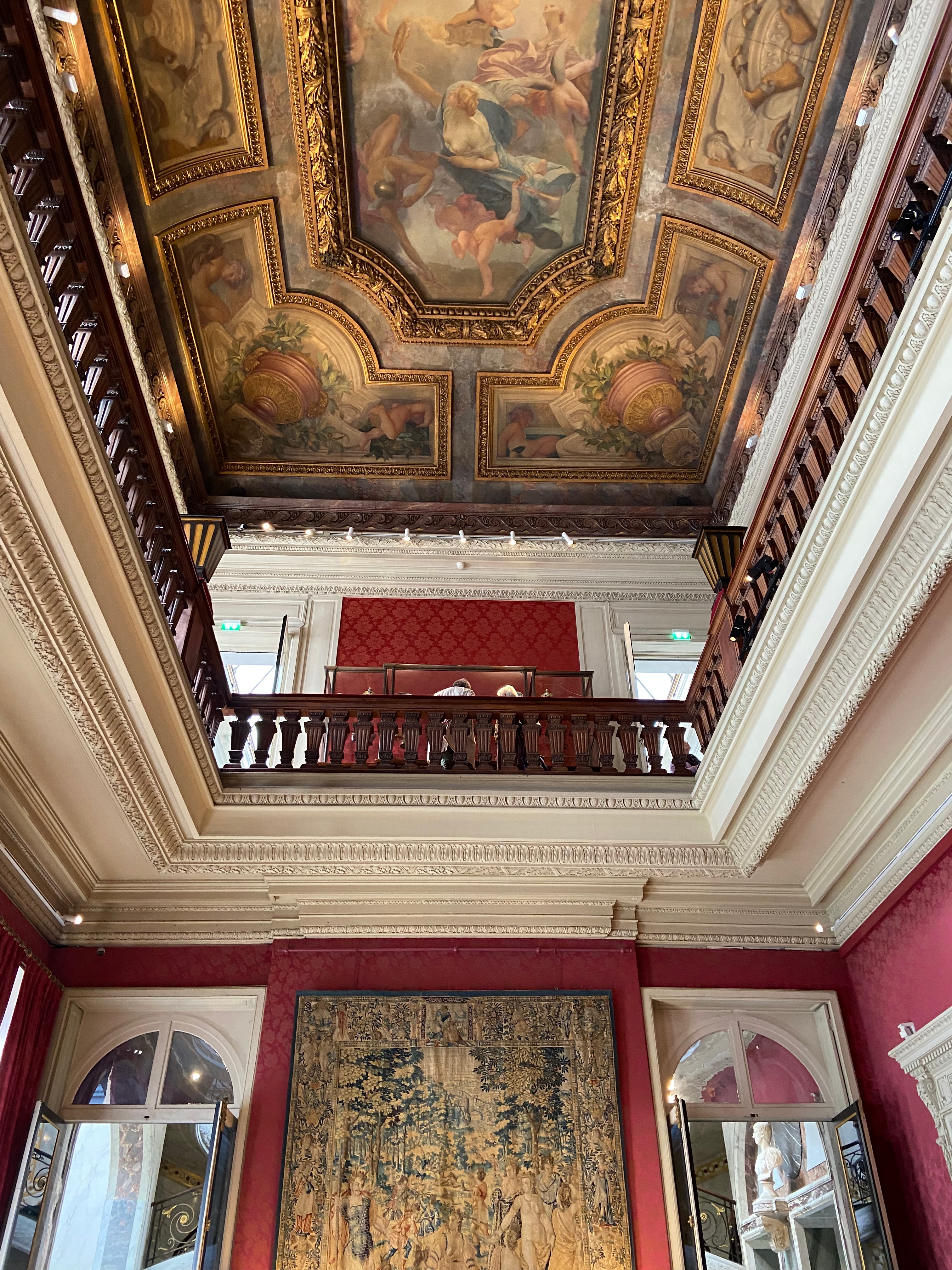
To keep their entertaining space unimpeded, Nélie and Edouard departed from the norm of having a centrally situated staircase – the double marble staircase is no less magnificent, but it’s located to the side of the building. To the left of the staircase is the Winter Garden, a status symbol at the time, a place to showcase plants from around the world.

The Italian galleries – the Venetian and the Florentine – are crammed with treasures: 15th century sculptures, bas-reliefs and paintings by the likes of Uccello and Botticelli.  I had a little break at lunchtime and managed to get a spot in the Salon de Nélie, in the annex overlooking the courtyard.
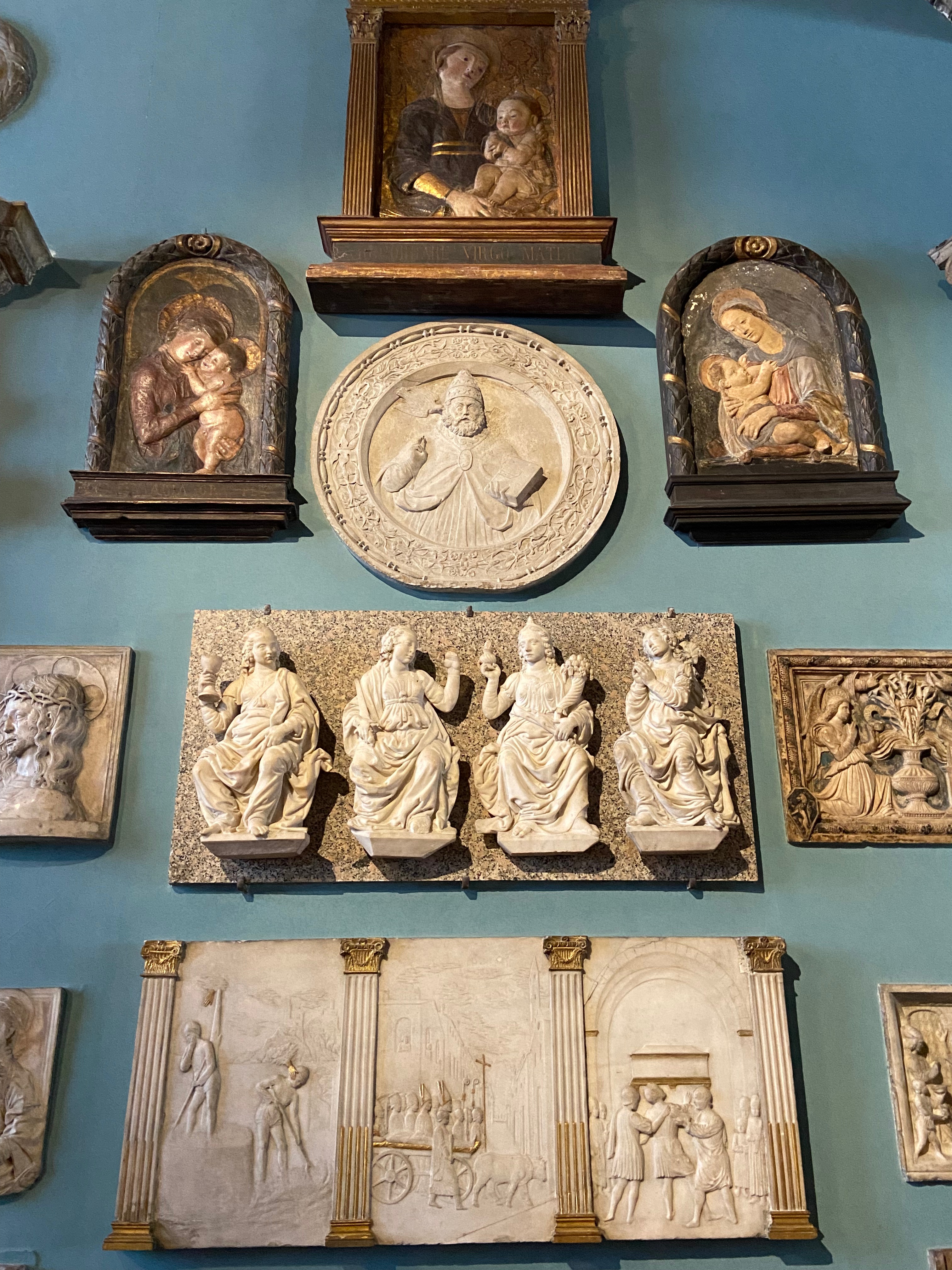
After lunch, I enjoyed browsing some of the 40 Georges de la Tour paintings. He focused on portraits of saints and people on the margins of society – blind musicians, beggars, old men and women, capturing them in a moment in time, his subjects imbued with grace and dignity, and often illuminated by a single candle flame or a shaft of light. I could have spent longer but it was getting towards mid-afternoon and I was due to meet friends from Oxford for drinks at 4.45pm. Time waits for no man not even Georges de la Tour, so I ran back to Miromesmil, sped-walked along the long passageways (if you want to get your steps up, travel on the Paris Metro!) connecting with the M1 line back to the Gare de Lyon. From there I dashed to the hotel to change and then, with a swipe of lippy, was back underground on my way to Châtelet where I changed line to get to Cité and to our meeting place near Notre Dame. I just made it.

It was pure chance that I overlapped with Hilary and John for one night in Paris and pure joy to see them and catch up on two year’s chat over drinks and pommes frites. To add to the fun, my niece, Georgie, a wonderful conversationalist and all-round bright spark, joined us just as the heavens opened and the wind picked up. We were sitting outdoors so we huddled under the awning but were soon rewarded with exquisite light and a double rainbow. From there, Georgie and I walked back to the Gare de Lyon and to Ground Control, a warehouse space behind the station with food stalls, bars, vintage fashion, a book stall and alive with the buzz of chatter from children, families, the lot. We drank a Hugo cocktail and tucked into a tasty and generous Greek share platter.

The next morning, Sunday, I was back at the Gare de Lyon, now my second home, and took a train out towards Fontainebleu to spend a day with Georgie, her husband Manu and the three boys. She met me at the station in Moret-Veneux with three-year-old Ralphie in tow. From there, it was a short drive to Veneux -les-Sablons, where we walked across an arched suspension bridge at the confluence of the Seine and the Loing over to the town of Saint-Mammès, which has a vibrant Sunday market with lots of local and organic produce and an entire stall devoted to goat’s cheese – heaven!

The rest of the day was spent with the family in Thomery, a wonderful spot on the Seine, known for its history of viticulture and use of walled vineyards. It’s forty-five minutes on the train from Paris but a hundred times more peaceful. No suitcases, sirens or heavy ‘circulation’! Georgie and Manu are renovating their house bit by bit – it’s full of character – and they live a very eco-oriented life.  

The long garden complete with Granny Flat (la dépendance), veggie patch, walnut trees and mown paths slopes down in the direction of the river.  It’s a bucolic idyll and the three boys – Ralphie’s twin brothers are now six – charge around the garden, their playground. So far, they are living a screen-free life (not even a TV), which I so admire, their imaginations free to roam, their attention unshackled by technology.

We all did a bit of drawing after lunch. Even I, who can’t draw a stick man, managed a decent flamingo thanks to a book that steps you through the process. A delightfully bonding family day – good for the soul – and I have bagged a spot in the dépendance for future trips. And next time I’m eager to try the walnut wine which was still at the macerating stage when I visited.

Monday, my last day in Paris, I explored Le Grand Mosquée, which is in the Latin Quarter near the Jardin des Plantes, the Botanic Garden.  It was built to honour the African, mostly Muslim, soldiers who fought in the First World War and was inaugurated in July 1926.   
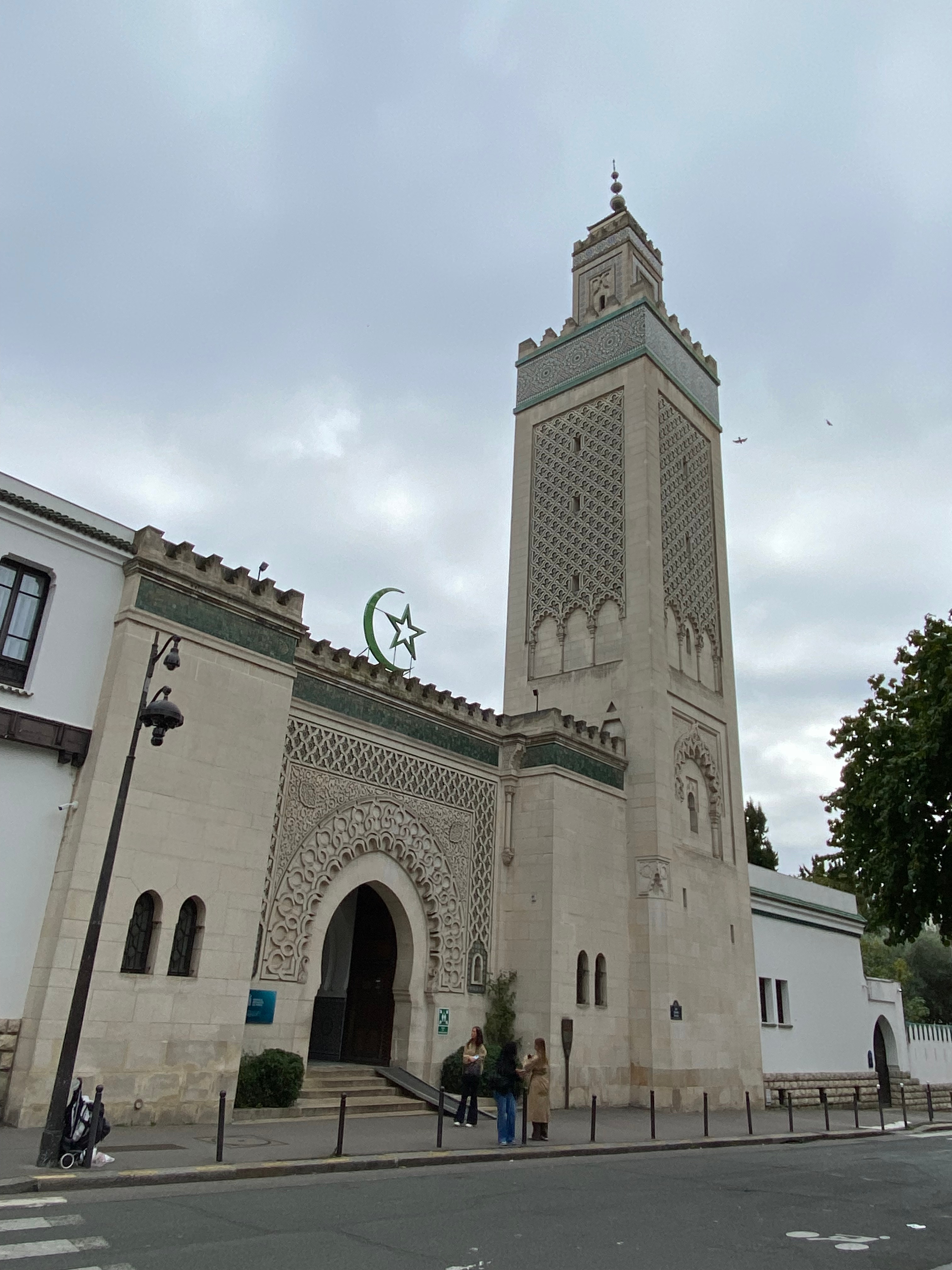
Reminding me of my March trip to Malaga and visit to the Alcazaba, the Grand Mosque is built in the Hispano-Moorish style with the familiar arches, decorative tiles, Arabic calligraphy, intricate geometric patterns, Mahgrebin carved cedar wood and lush courtyard garden with fountains. It’s wonderfully peaceful, a place for quiet contemplation and, unlike the museums, not crowded. I was flagging by lunchtime – jetlag maybe – so rather than have lunch at the mosque’s café, where you can get a full meal – tajines, couscous etc., – or mint tea and Arabic sweet treats, I decided to visit the ladies only hammam (steam bath).

In keeping with the mosque, the hammam is a tranquil space with detailed mosaics, arches and ornate plasterwork. Years ago, I was scrubbed to smithereens in a Moroccan hammam so this time I opted for a simple steam bath without the ‘gommage’ option (exfoliation).  The dress code is bathers or a bikini – topless is fine but you need some form of ‘bottoms’. I hadn’t planned to go to the hammam so didn’t have either – spontaneity has its drawbacks! So here I was topless in a Turkish bath trying – in faltering French – to navigate how it all worked and in what order – from the difficult-to-shut 1 Euro lockers to the wrist tag, plastic slippers and showering protocol.

I got myself into the main room which has a long marble ledge running down each side, divided into three alcoves for sitting or lying in and furnished with buckets and water taps. I lay down and semi-relaxed but it would have been better to have a friend to lounge about and laugh with. After a while I graduated to the furthest room, which is more like a sauna with stepped ledges – the higher you go the hotter it gets – and a cold-water dipping pool. This is where my M & S undies got the full immersion treatment!

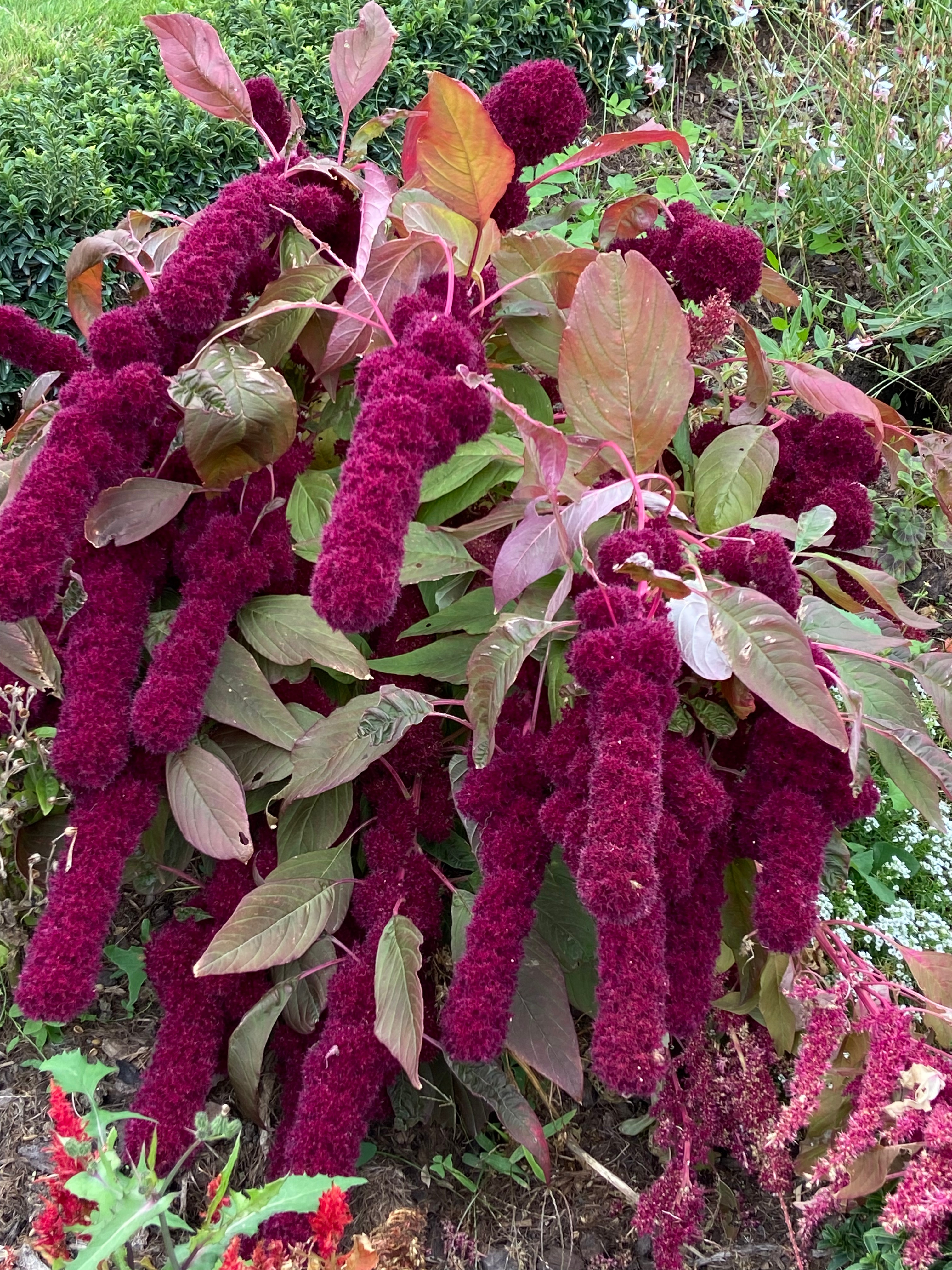
Once I was fully steamed and cooked, I progressed to an anteroom, where they bring you mint tea, which, although teeth-squeakingly sweet, is refreshing. I emerged feeling rejuvenated but, with damp knickers and damp hair, I soon lost the glow and warmth of the steam room as I was walking around the nearby Jardin des Plantes. On went the fingerless gloves and then I found a small café where I had a very overpriced but warming cup of tea, enough for me to enjoy all the autumn colours, pumpkin displays and curious woolly plants while I dried out!

Within three and a half hours of stepping off the plane from Australia via Hong Kong to Paris, I was shuffling along in the queue (which moved surprisingly fast) outside Notre Dame. Time-travel at its best, I had left Melbourne on a Thursday afternoon in the spring to arrive in Paris on a Friday morning, a warmish autumn day, shifting culture, language and centuries as I gazed up at the façade of one of the world’s most famous gothic cathedrals, the first stone of which was laid in 1163 during the reign of Louis VII.

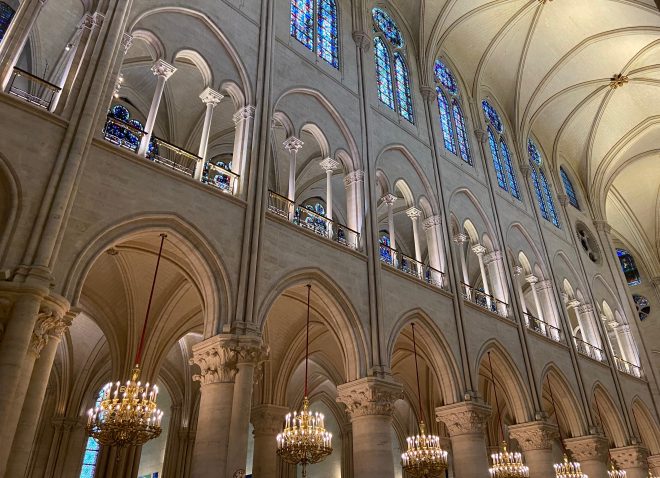
What a way to ‘land’ in Europe! Stepping through one of the intricately carved portals, the first thing I noticed was the quality of light – the resplendent nave and vaulted ceiling, the whiteness of the newly cleaned stone, the sparkling stained-glass windows – the reds and blues standing out in particular.  Reading up on Notre Dame, purists argue that it’s now too squeaky clean without centuries of accumulated candle smoke and grime, but I disagree. The restoration is – and continues to be – a triumph thanks to the craftmanship and expertise of the many artisans, conservationists, sculptors, stonemasons, stained-glass artists, carpenters and experts involved, not to mention the sourcing of 1,000 oak trees from approximately 200 forests across France for the roof and spire. The restoration is due to be completed in 2026.

I’m straying into cliché now but arriving during a service, the organ playing – incidentally all 8000 pipes were individually cleaned – and following along to the Lord’s Prayer in English – was a beacon of light moment, of hopefulness, in our ever more troubled and conflict-ridden world. The restoration of Notre Dame following the 2019 fire is an encouraging reminder of what can be achieved when political will combined with public, private and business funding unite around a single vision. And the fire has served as a reminder for us all – witness the queues to get in – how precious these ancient monuments are. I don’t know about you, but I took Notre Dame for granted – I certainly didn’t visit it last time I went to Paris in 2019.

Being a bit of a swot, I rented an audio guide covering Notre Dame’s history. I discovered that the north rose window with its central image of Mary with the Christ Child still has most of the 13th century glass intact – extraordinary. The original Crown of Thorns is believed to reside at Notre Dame, brought to Paris from Jerusalem in 1263. The Crown of Thorns survived the fire, but its glass case was broken. The new reliquary designed by French artist Sylvain Dubuisson is stunning. I could have stayed for the monthly veneration service of the Holy Crown of Thorns but the jetlag was beginning to bite so I carried on with my tour admiring the contemporary tapestries hanging in the side chapels in the north aisle – my favourite Polynesia, the Sky and Polynesia, the Sea, woven in 1972 after the cut papers by Henri Matisse,  before moving onto the 14th century sculpted wall scenes from the life of Christ in the choir enclosure.

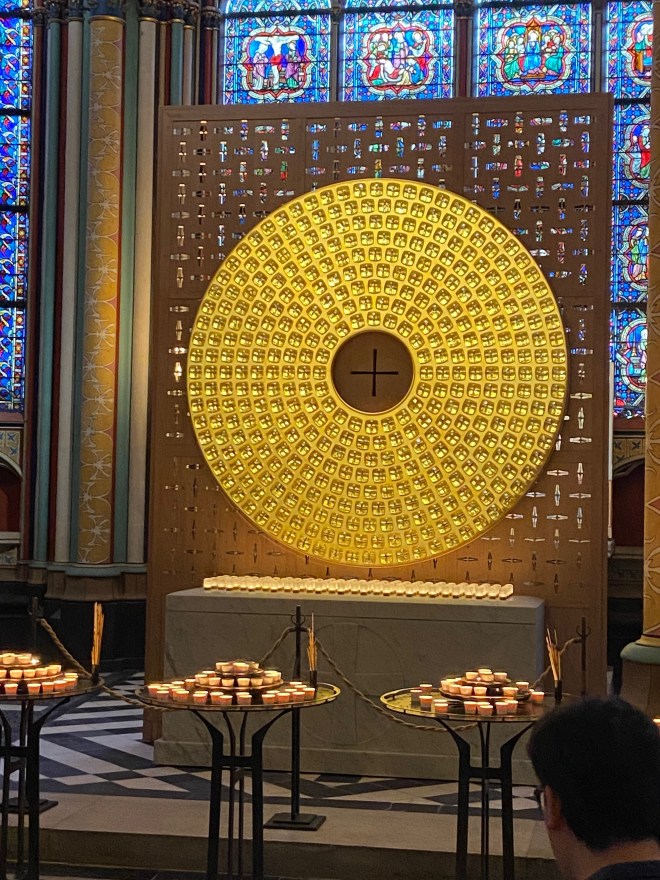
I was drawn to the newly created chapel for Eastern Christians (this was not included in my audio guide, but I have since learnt it was inaugurated in May 2025) displaying the eight icons that pay tribute to the founding figures of the great Eastern Churches. But I have to admit to not being sure about the new modern altar – a bronze bowl-like structure which looked more like a bath to me and had nothing of the sacred about it.

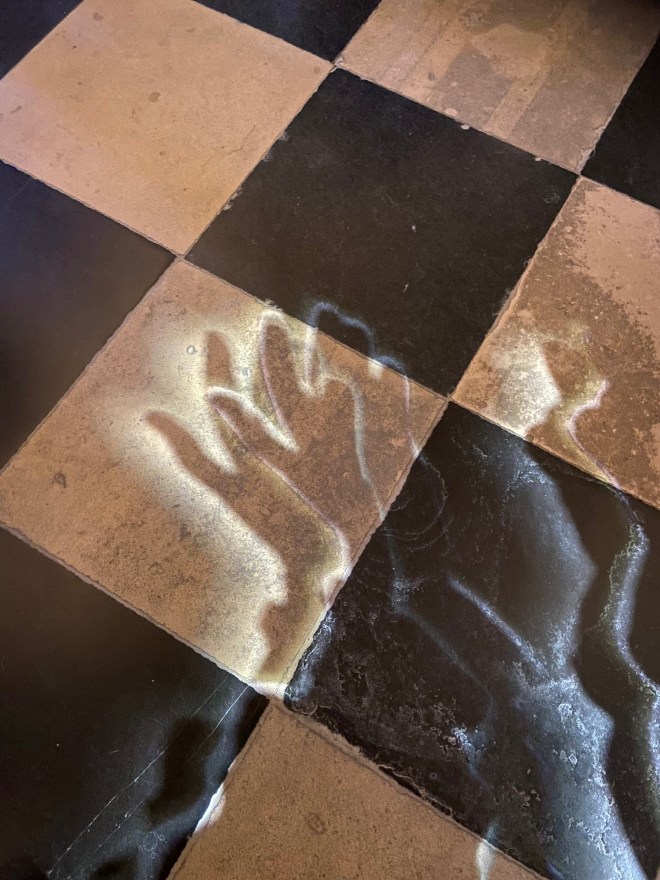
Much more mysterious was the how the play of light around the sculpture of the Virgin Mary holding the dead body of Jesus in her lap at the High Altar cast an almost spectral silhouette of Mary’s hands onto the black and white flagstones.  Similarly, the statue of Joan of Arc and the statue of the Virgin Mary, both of which avoided the fire, seemed to be ringed with an auric kind of white light. Quite magical.

After a pitstop in a café near Notre Dame – where a local told me I had to shut my menu to signal I had made my choice before anyone would take my order (great intel!) – I had a bit of a rest back at the Holiday Inn Gare de Lyons, where I was staying gratis thanks to my brother generously donating his points.

My plan for the evening was to visit the Jacquemart-André Museum in the Boulevard Haussman in the 8th arrondissement.  They have late night openings on Fridays with drinks and platters on offer at Le Nélie, the salon de thé.  I had it all mapped out, except I didn’t…

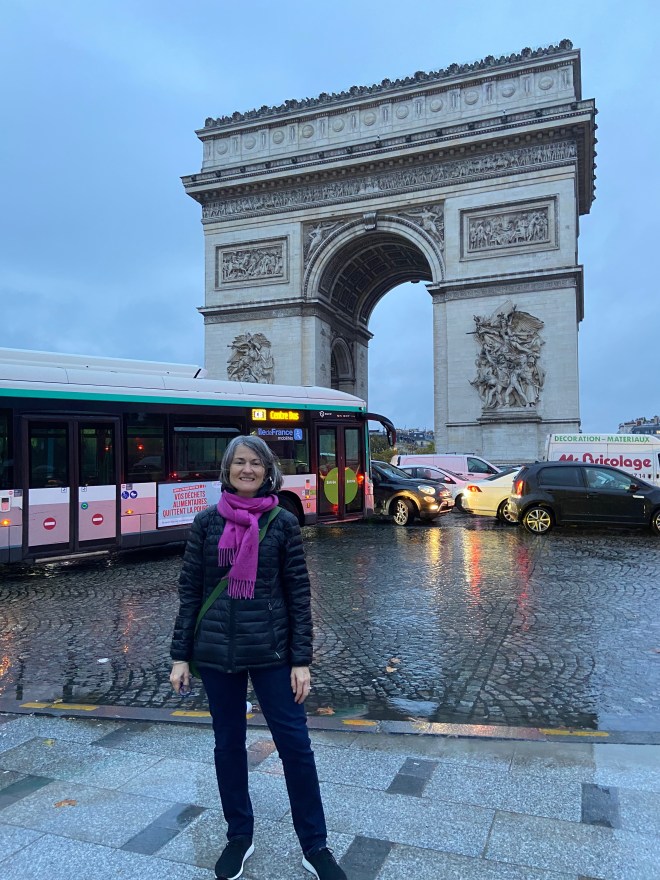
I had read that the nearest RER station was Charles de Gaulle-Étoile, which is true, but there’s a much closer metro stop. The best laid plans and all that… A transport volunteer at Charles de Gaulle-Étoile told me the museum was a good half-hour’s walk, or I could take the 22 bus. It was pouring with rain but, determined to get there, I went on up to street level and discovered I was at the Champs-Élysées, which was gridlocked with rush hour traffic. I found the 22 bus and jumped aboard only to find I needed to be ‘de l’autre côté’ but which autre côté? The Champs-Élysées roundabout is hectic at the best of times, and amid the cacophony of coups de klaxon (cue a smug moment remembering the words for car horn from my schoolgirl French), I felt I couldn’t distract the driver by asking which side he meant.

I got off the bus and back into the sheeting rain, where I took an “I woz ‘ere” photo for some fellow tourists and asked them to do the same for me. Then I took a deep breath and thought through my options. It was now getting towards 7.30pm – even if I found the right bus, the traffic was at a standstill and I’d be unlikely to get there till after 8pm. This was overly ambitious for my straight-off-the-plane day one.  Too hard basket was the conclusion. I retraced my steps and went back to the Gare de Lyon area where I indulged in a spot of people-watching over a simple but delicious dinner and a glass of rosé at a local bistro. A good decision move as it turns out. You’ll find out why in Part 2.

(more…)

A short sojourn in Paris Part 1: Notre Dame resplendent and risen from the ashes

Rediscovering Spain Part 2/2: Picasso, paella, pajarete and more

It was Michael Portillo, he of the brightly coloured jackets and train journeys, who inspired me to choose Malaga as my stop-off place on the way to the UK. There’s a lot more to Malaga than being a gateway to the Costa del Sol.

Another reason I chose Malaga is that it’s very walkable, its compact city centre perfect for meandering, mooching about and soaking up the vibe. In the past I’ve tended to cram too much into my European trips – partly because living on the other side of the world engenders terrible FOMO.  

I stayed in a small Airbnb studio in a quiet residential area about ten minutes’ walk from the city centre. It was nothing fancy, but I felt completely at home and enjoyed watching the comings and goings in the street below from my narrow window balcony.

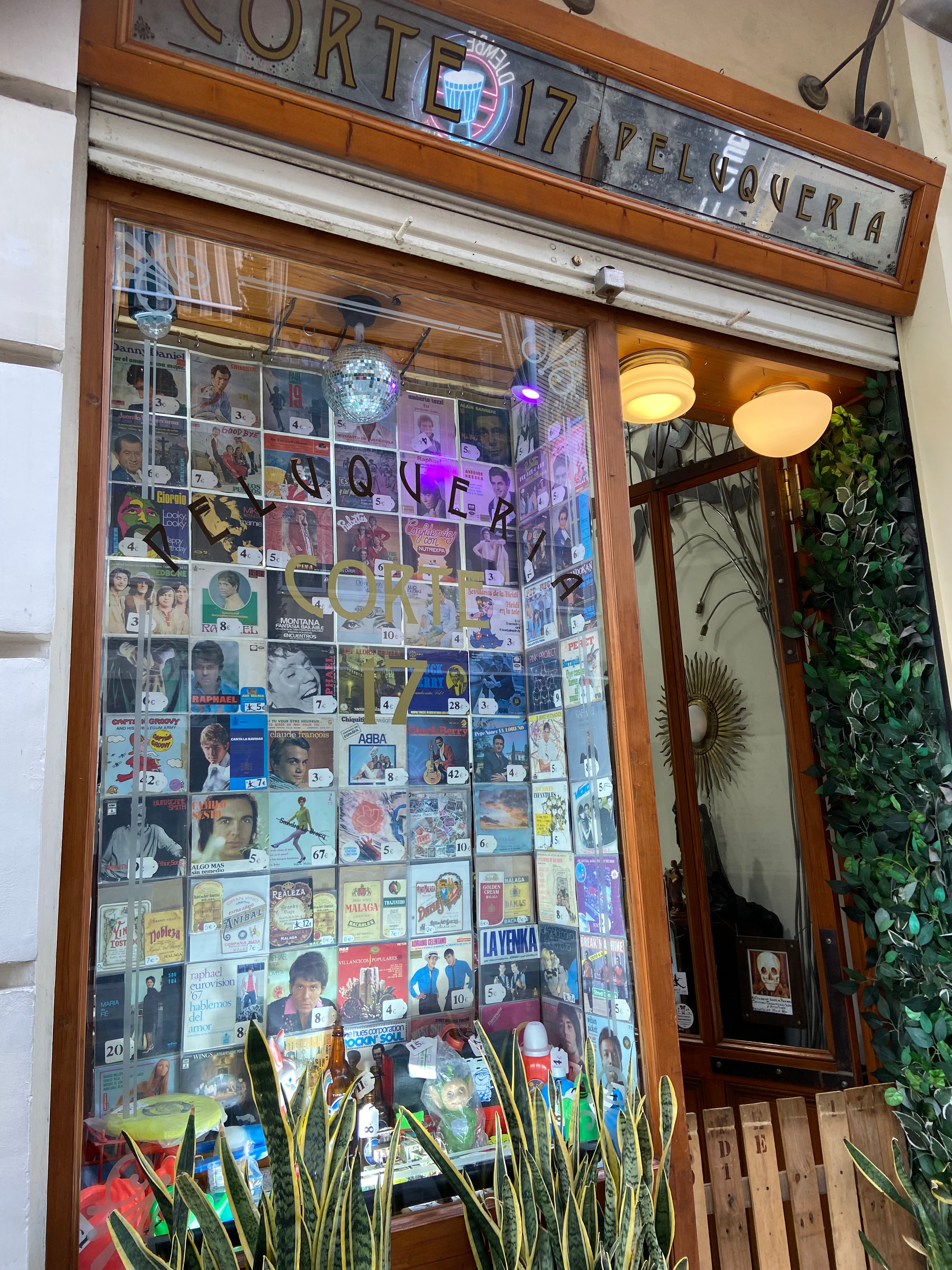
Walking to and from the centre I tapped into timelessness again (see Rediscovering Spain Part 1) noticing something new every time – a few hole-in-the-wall shops, seemingly unchanged over decades, selling salami, processed cheese, tulipán margarine (Spain’s version of Flora), bottled water, olive oil and packets of this and that. I spotted lots of traditional barber shops, one with a window artfully decorated with 45 vinyl record sleeves. Then there were the glass-fronted balconies, the lantern-style streetlamps and decorative tiles on house fronts depicting religious scenes (lots of those) or various trades or symbols related to the original homeowners. And crowded tapas bars at lunchtime, the scruffier, the more authentic.

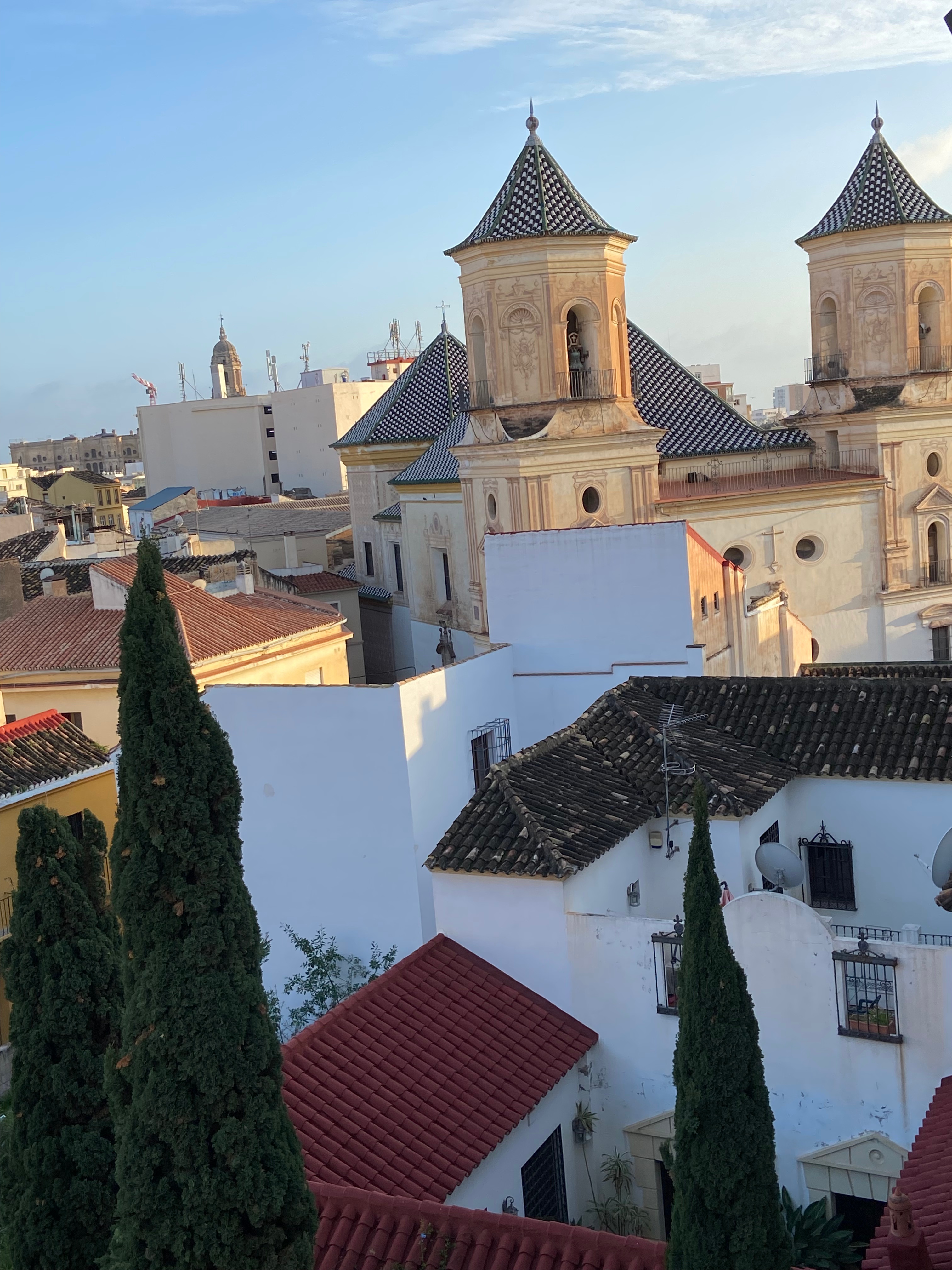
From the roof terrace of my Airbnb, I looked over to the church of San Felipe Neri, a baroque church with distinctive green and white tiles on the bell towers. Listening to the bells ring out several times a day, a pure and undiluted sound, I felt a great sense of serenity and groundedness. I’ve always loved church bells.  Although I didn’t do a tour of Malaga Cathedral, I did go into another church, Santo Cristo de La Salud, in the centre. Drawn in by its terracotta exterior and circular stained-glass window, I went and in sat for a few minutes looking up at the domed ceiling, feeling into the sanctity, time stopping still.

Thwarted in my attempt to visit the Picasso Museum (sold out even in low season!) on day one, I joined a tour of the Moorish fortress, The Alcazaba. I am somewhat spoilt having lived and studied for nearly five months in Granada in the ‘80s with the Alhambra Palace and the Generalife Gardens a half-hour climb up the hill from where I was living.  Given today’s mass and over-tourism issues, I realise how extraordinarily lucky I was to have had unfettered access to a UNESCO World Heritage site, and one of the most magnificent examples of Islamic art in Spain.

Like the Alhambra, the Alcazaba sits on a strategic hilltop and was previously a Roman settlement. The tour started at the Roman theatre and the site of sunken pits which housed fermented fish sauce called garum, the Roman equivalent of umami flavouring.

The glory days of the Alhambra and Alcazaba ended with the Catholic conquest – the Reconquista – which culminated in 1492 when Granda, the final Moorish stronghold, surrendered to King Ferdinand II and Queen Isabella I. The Alcazaba was largely abandoned by the 18th century, damaged during the Napoleonic wars and, again, during the Spanish civil war.

Restoration started in the 1930s – our guide pointed out some of the remaining Moorish parts: the double walls, one inside the other, making the fortress harder to attack along with the bent entrances, the cobbled paths that double back on themselves, another defensive feature to slow down potential attackers; the carved caliphal-style horseshoe-shaped arches at the entrance to the main hall, the Taifa Palace; the 8-point star in the paving stones; a number of carved wooden ceilings with their intricate geometric patterns from the Mudejar tradition, a style blending Islamic and Christian artistic traditions, and a decorative arched niche set into the wall that would have housed water, perfume or flowers.

To my mind nothing comes up to the Patio de Las Arrayanes (the Courtyard of the Myrtles) at the Alhambra, but the Alcazaba’s restored gardens and series of courtyards and patios with tiled pools nonetheless have charm and offer a tranquil place for reflection.  

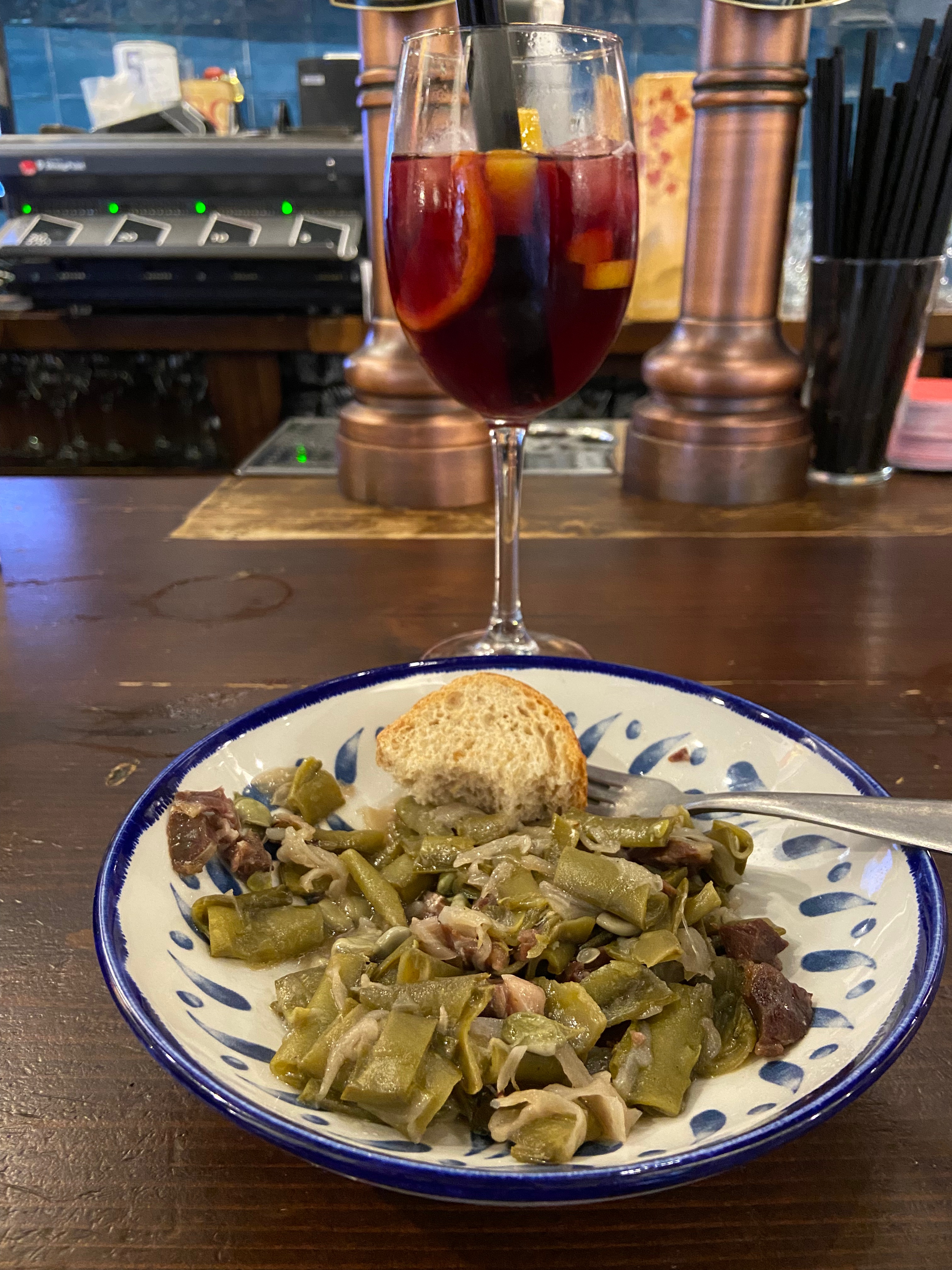
I was hungry and thirsty after all the hill climbing so I repaired to Bar El Pimpi at lunchtime, another Michael Portillo recommendation. Something of a Malaga institution since the 1970s, El Pimpi is a wine cellar with lots of different patios and rooms. I found a stool at the bar and ordered sangria, tortilla espaňola (Spanish omelette) and habas con jamón (a stew of jamón serrano and broad beans). The omelette came doorstep-size and was disappointingly dry, but the beans and sangria were excellent. I got chatting to a couple Chris and Kat, from Ireland and West Virginia respectively. They are in their 50s, have sold their businesses and are enjoying the freedom to travel. They were heading to a spa after lunch and hadn’t bothered with any of the museums or sights. No FOMO there!

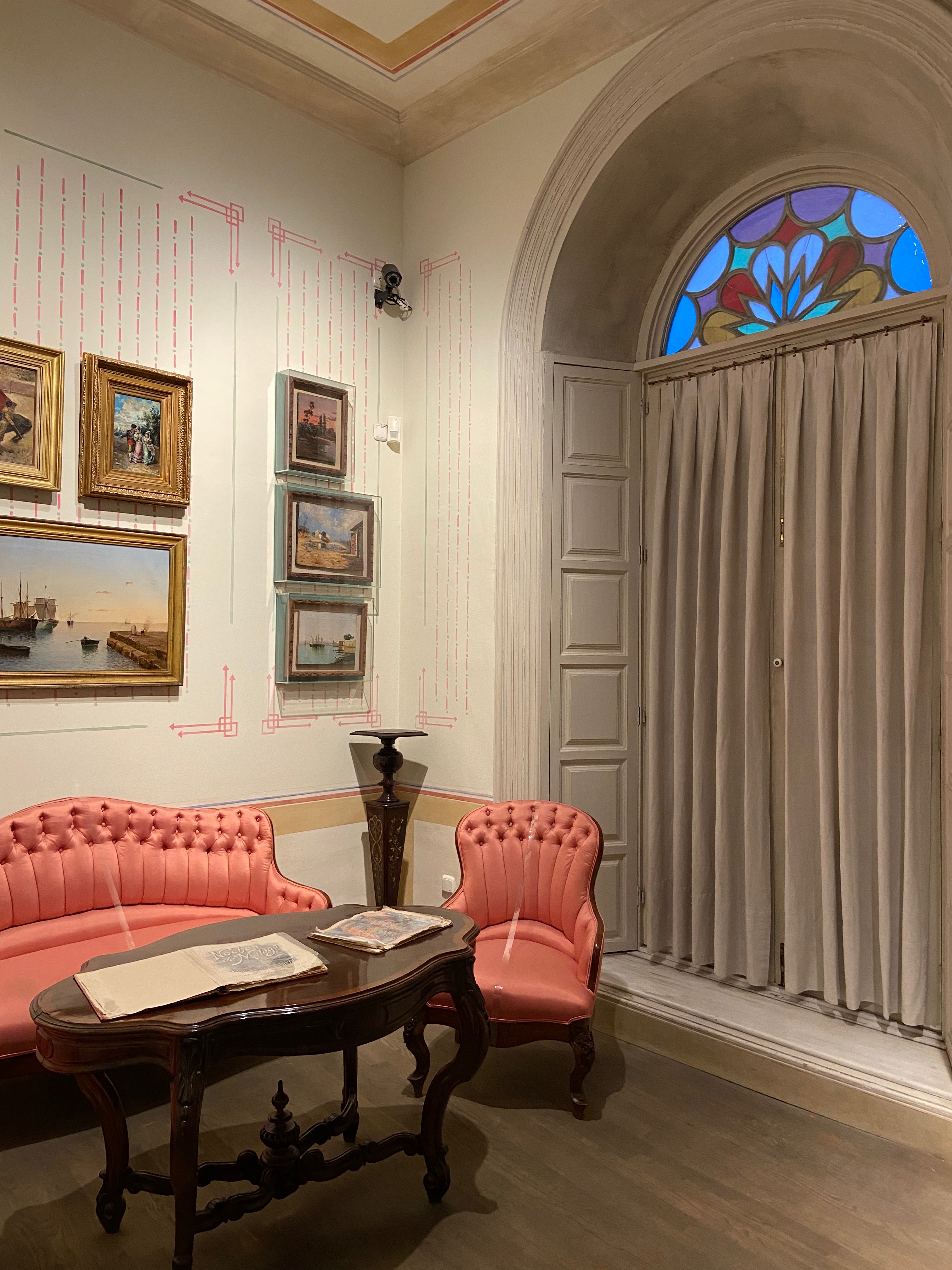
After a much-needed siesta – take a pinch of jetlag and a glass of sangria – I popped out again in the early evening. Not quite ready to do a Chris and Kat and eschew all museums, I was keen to check out Picasso’s birthplace – a house with beautiful stained-glass fan lights overlooking the Plaza de la Merced, a five-minute walk from where I was staying. Open till 8pm, it was perfect for the post-siesta, pre-dinner slot.

Picasso came from a wealthy bourgeois family and lived in Malaga until he was nine. The Museo Casa Natal de Picasso documents his early artistic influences, including his painter father, and his classical training. Despite spending most of his life in France, Malaga and Spain stayed in his blood. His father took him to the bullring as a child and bulls, bullfighting and the mythical minotaur all feature prominently in his work. Much has been written about Picasso and his representation of the bull and the bull as his alter ego. I am no fan of the bullfight, but I admired the elegant simplicity of his line drawings and painted ceramics featuring bulls and the bullring.

I went to the Picasso Museum the next morning. It’s housed in a traditional house with a courtyard and decorated with Mudejar wooden ceilings and rooftiles. A timeline on the wall describes the key events in Picasso’s life including two World Wars, the Russian Revolution, the 1949 First International Peace Congress in Paris (featuring Picasso’s “Dove of Peace” lithograph on the poster) the Vietnam War, JFK’s assassination and the advent of TV.

From the classical – a tender picture of his sister, Lola, with a doll dated 1896 –  to African masks, vases and pitchers to his cubist works and some of the more distorted surrealist pieces – the museum takes you through the stages of his artistic life, the extraordinary diversity of his work and all the different media he used – wood, plaster, bronze, linocuts, line drawings, metal, cigar boxes, clay etc.  It’s an understatement to say that Picasso was/is a complex and controversial figure, but I came away understanding a little more about his approach to art, his blurring the lines between classicism and cubism, and his exploration of what he considered the artifice of all artistic practice.

The café at the Picasso Museum is in a quiet courtyard lined with pots of bright red geraniums and orange kumquats. Scarred by ordering tea with milk at El Pimpi and receiving a pot of frothed slightly sweetened milk and a tea bag – an aberration – I chose coffee! I discovered that a weak coffee is a nube, a cloud, and the next strength up is a sombra, shade. Useful things for the traveller to know! And I enjoyed another moment of calm and quiet in a spot overlooked by a church.

On my last day, I had a slow morning – packing, stretching and doing admin. Then after a long walk along the Paseo del Parque, a park running alongside the harbour and planted with tropical and sub-tropical species, I looped back into the centre for some lunch, enjoying the views back towards the Alcazaba and adjoining Gilbralfaro Castle.

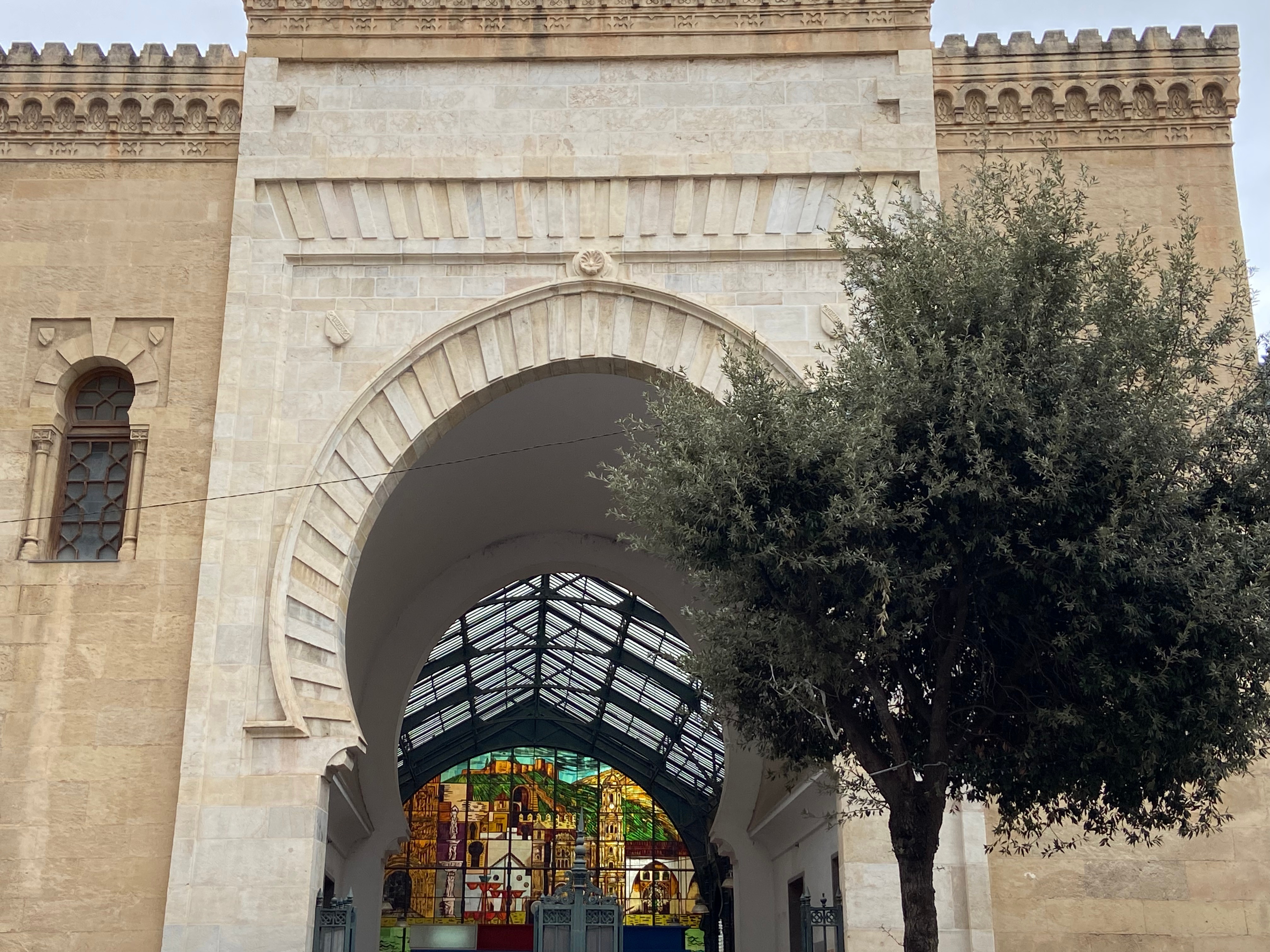
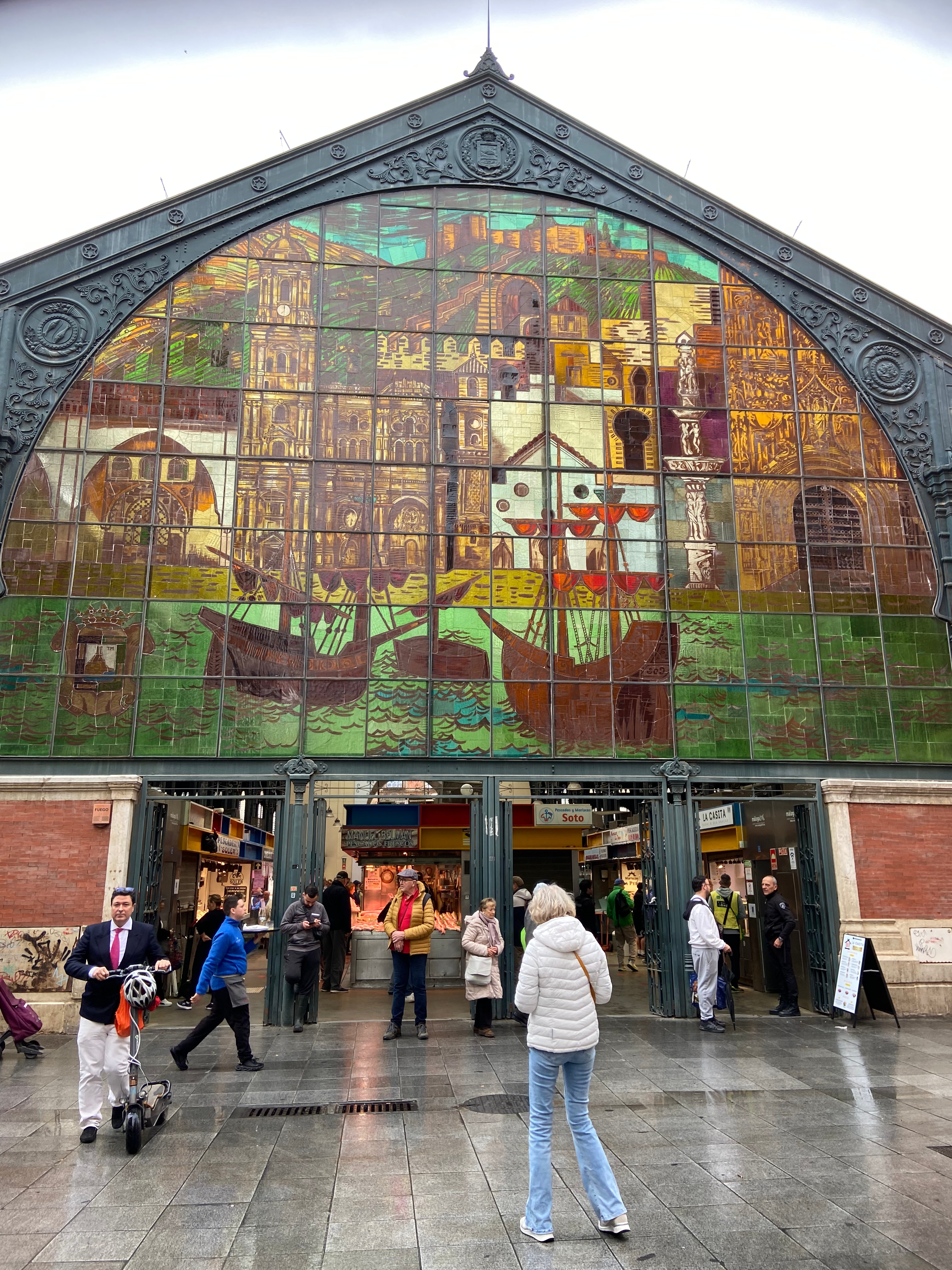
Following Chris and Kat’s recommendation, I headed for the Mercado de Atarazanas. The market was a boatyard during the Islamic period, the Moorish archway at the main entrance still part of the design today, and on the other side an impressive stained glass arched window depicts Malaga’s city scape.  It’s busy, bustling and bursting with fresh produce, tapas and aperitif stalls. I was a bit late but just made it in time to feast on paella for lunch, and to discuss with the stallholders how to get that toasted crusty layer of rice on the bottom and the layering of textures and flavours over that. What a treat!  

And to round off my afternoon, I visited another Chris and Kat recommendation, the Antigua Casa de Guardia, a bodega founded in 1840. Once again it was like going back in time. Lined with oak barrels, you choose which sherry or wine you want, and they chalk up the price on the wooden bar. I chose pajarete, a fortified wine aged for five years. A delicious and sweet note to end my stay in Malaga.

Rediscovering Spain (Part 1 of 2) – Madrid to Malaga

It had been a long time since I last visited Spain – probably back in the ‘90s when I made a couple of brief visits for work during my publishing days. Many moons ago I studied Spanish (and German) at university, and even tuning into the children’s cartoons playing above the luggage carousel at Madrid airport was exciting; just as well as my case took nearly an hour to appear!

Despite the bracing early March weather, eight degrees and wet and windy (it was mid-20s when I left Melbourne), I was off and out the minute I’d checked into my hotel, keen to make the most of my afternoon and evening in Madrid.

I was staying in the Barrio de las Letras, the literary quarter, home to many of Spain’s writers from the 17th-century Golden Age, a deliberate choice as my degree was largely literature-based. All the names came flooding back, Cervantes (Don Quixote), Lope de Vega and Tirso de Molina who, in his play El Burlador (seducer) de Sevilla), introduced the world to Don Juan, the charming hero-villain, a character with folk legend status made famous by Mozart’s opera Don Giovanni and the subject of many books, plays and films since.  I was in my element walking along elegant, cobbled streets dotted with early spring blossoms in the company of these literary greats who were variously honoured in colourful tiled mosaics, street signs, cafés, Metro Station names and quotations engraved on the pavements.  

I barely noticed the cold and that my feet were soaked through to my socks. Such was the excitement and cultural immersion. I had a few pit stops – an arty café where I dipped into a slim novella, Réquiem Por Un Campesino Español, one of my university books, first published in 1950, and a few tapas in a thronging and lively covered market.

Further on I stumbled on a rehearsal for Semana Santa (Holy Week) which will be in full flow as I write this over Easter.  14 men from a cofradía (a fraternity/brotherhood) were bearing a float weighed down with suitcases in preparation for the Holy Week processions. All wearing white runners, they performed a kind of slow-shoe-shuffle in time to the recorded music, their heads covered in a white cloth, a stand-in for the capirote, a hood with a conical tip, a symbol of penance, that conceals the face. I admired their dedication turning out on a cold and wet Saturday afternoon!

A few days later in Malaga, I peeked through the heavy wooden doors of a cofradía and saw the bulky shapes of sculptures (most likely Christ, the Virgin Mary and various saints) covered in cloth and mounted on a float, awaiting the Easter processions. These brotherhoods are Catholic organisations made up of lay people (men and women) who carry out charitable and religious works and events in the community. They play a key role during Semana Santa.

This was just one of many examples of timelessness and enduring tradition that I was delighted – and reassured – to find still in existence in Spain today. It’s 40 years since I spent four or so months in Granada as part of my Spanish degree – way before the distracted digital age of everything being available at the swipe of a screen.

I took the train to Malaga from Madrid’s Atocha Station the next morning. Atocha is a destination in itself with its glass and iron-clad domed roof – an old trainshed – complete with tropical garden. I was on a no-frills ticket, and it’s a three-and-a-half-hour journey from the centre of Spain down to Andalucia in the South. There wasn’t much to look at on the way but I got chatting to a young female student and soon realised how rusty my Spanish was!

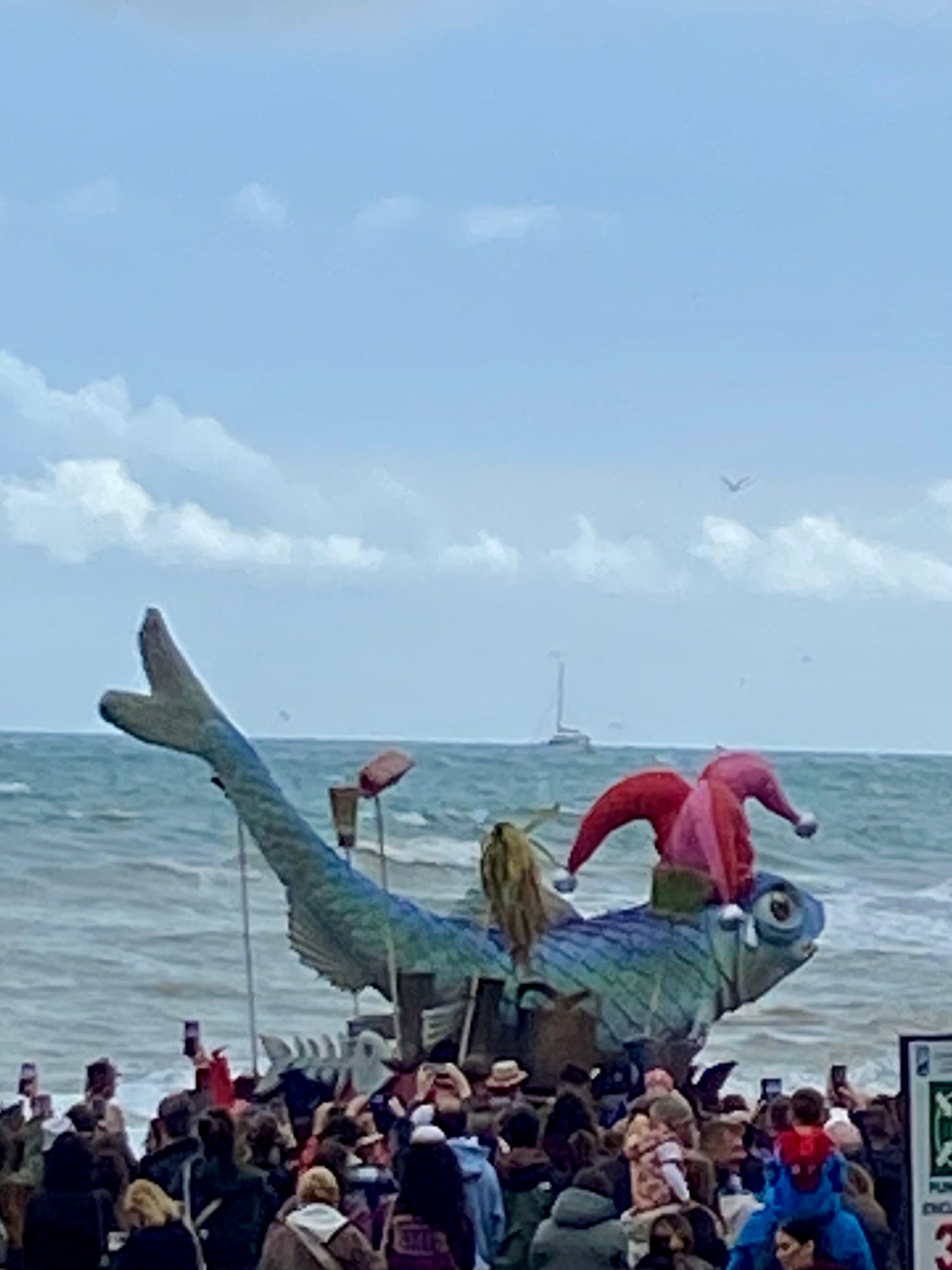
My goal was to get to Malaga in time for the Entierro del Boquerón (burial of the sardine), an annual ritual on the last Sunday of Carnaval, when festivalgoers mark the end of Carnaval. I had missed the midday jamboree of music in Calle Lario (I was still on the train) but got down to Malagueta Beach by 5pm and was surrounded by revellers in their costumes, tears painted on their faces, marking sorrow that the fun was ending and the sobriety of Lent fast approaching. Nobody quite knows how the sardine tradition came about – maybe it’s a nod to Malaga’s maritime heritage – but the message is clear, it’s about closure.  

I stood on the wall overlooking the beach to get a better look. Delightfully irreverent, the sardine sat atop a float, flashed its blue and green-glinting scales and sported a jester’s hat. From what I could see the fish was made of metal and layers of fabric and paper – perfect combustible material. Although the weather was squally, the fish was set alight, and clouds of black smoke blew back towards the city. In no time at all, all that remained were the spines of the fish.  Buried indeed. What joy to be part of the action. I felt as if I had time-travelled to another world.

Just back from Malagueta Beach is Malaga’s Pompidou Centre. I had no idea that the Paris Museum has a Spanish branch. But you can’t miss it with its Mondrian-style brightly coloured squares. It was open till 8pm so I drifted in and went to an excellent exhibition called Place-ness: Inhabiting Space, that explored how humans relate to (and ruin!) their environment. There were many references to exploiting the natural environment for productivity and profit, and a section with paintings and photographs exploring the impact of industrialisation including ‘non-places’ such as shopping malls, motorway interchanges, abandoned shipyards and airports. Some of my favourite pieces include an idyllic Alpine landscape with a shower and tap attached like an elephant’s trunk in the centre of the painting reminding city dwellers of the source of their water supply, and a pair of Armani suit trousers hanging on a clothesline, the pockets filled with plants and earth, an allegory by the Romanian artist about the immigrant experience in Italy and being uprooted.

For dinner, I found a delightful restaurant with earthy home-cooked food near to where I was staying and away from the city centre. Reminding me of carpet sellers in a souk, the more touristy restaurants have hawkers stationed outside brandishing menus printed in three languages. It’s all too pushy for me.

Small and cosy with the menu on the blackboard and small chalk-painted wooden tables and retro chairs, restaurant Oliva was a great find. The welcome tapa- served with a drink – was an exquisite flavoursome stew of chickpeas made with a hint of chorizo and lots of vegetables and cooked slowly for hours. Other delicacies included roasted padrón peppers, eggs with asparagus and jamón and a cheesecake made with Queso Manchego. Delicioso!

Such richness on all levels, a feast for body, mind and soul – and I was only just over 24 hours into my Spanish sojourn en route to the UK. Spain Part 2 coming next week.  

Dresden: Part 3/3 – Final reflections and scorecard: Culture 8/10, Food 5/10, Historical interest 10/10, Livability 7/10

If you’ve slogged through my last two blogs on Dresden, well done!! Apologies if I lost you in all the detail; such was my fascination with its history that I did lots of research on my return to Australia making my blog posts rather information heavy!  “You really have to concentrate,” commented my sister… This final Dresden post is more personal and less driven by facts and figures.

You’ll notice I didn’t mention food in my previous posts. To be honest, neither food nor drink were highlights of my Dresden trip. Not to stereotype German food, but I’m not so into bread, beer and sausage. I was wandering round the various stalls and wooden huts of the Spring Market one evening and felt my stomach turn at the fatty-looking potato cakes and greasy Currywurst bubbling away in a large pot.

And eating out in the Old Town – close to my hotel – was very expensive; I was paying a premium for the location. Interestingly, though, the meals with a view were somewhat marred by surly and, in some cases, outright bossy service; no frills or niceties whatsoever. After my long day visiting Loschwitz, the castles on the Elbe and the Stasi Detention Centre (see blog post 2), I stopped off for dinner in the Neustadt – the ‘new town’ on the opposite bank of the Elbe from the Old Town.

Here the vibe was quite different: trendy, younger, student-y and ethnically diverse as evidenced by the different cuisine offerings – from Turkish, Greek and Middle Eastern to French, Vietnamese and more. And the shops! I window-shopped my way past some of the most fun and original retro, vintage and niche interest shops I’ve seen in a while. Just as well I had zero room in my case, and it was anyway approaching closing time.  

However, my chief mission was to find the Kunsthofpassage (KHP)– a series of funky interlinked courtyards in Görlitzerstrasse that were jazzed up about 20 years ago with art and wall sculptures. The one I loved best was the building with the musical drainpipes set against a turquoise painted façade. I’d love to be there when it rains and the water plays through the trumpet-shaped pipes. The courtyard of the animals is fun too with monkey, giraffe and bird bas-reliefs on a lime green wall.  Elsewhere there’s a floating sculpture made of woody stems and climbing red geraniums set off a blue front door.

Among the KHP’s arty shops, chocolaterie and other offerings I found a restaurant called Lila Sosse (Lilac Sauce) that drew me in with its wooden tables, menu on the blackboard and desserts in glass jars. Away from all the Old Town Baroque bling, the wait staff were friendly and down to earth, and I had the best meal of my stay – an asparagus, beetroot and feta risotto – and at a reasonable price. Still recovering from the Stasi Museum experience earlier in the day, I also treated myself to a stiff vodka and tonic. Chin up and all that.

Keeping on the food theme, I opted for the hotel breakfast the next morning – my last full day in Dresden. The previous mornings I’d gone for the cheapskate option and made tea in my room (I had to request a kettle as there was only a coffee machine) and eaten yoghurt and fruit purchased at REWE. And I am glad I did.

Having looked forward to my 29 Euro breakfast, I was disappointed! I’ve come to the conclusion that buffet breakfasts are not all they are cracked up to be – no egg pun intended! In fact, they are the supermarket of breakfasts: it’s self-service, involves queueing and you have to wander around to find everything you want in a mass-produced environment. You find the fruit but not the yoghurt and granola – they are at a different ‘station’, then you line up at the coffee machine looking for the hot water button to pour onto a tea bag in a cup. And, if you’re like me, you stuff it up and the hot water spills over or, even better, you press the wrong button and get cappuccino on your Earl Grey. But if you do manage a cup of tea, you take it back to the table with your fruit only to realise you forgot the milk. Up you get again and around you go.  

After the fruit and yoghurt, you venture off to the hot food station where eggs and bacon sweat over bain-maries. By the time you get back to the table, the tea is stewed and cold. And then there’s the toast to organise… And that involves waiting for it to cook on one of those cake-walk-type toasters (all the while your hot food is congealing on the plate) that spits out the toast at the end. All far too much juggling and faffing.

However, there were a few silver linings. I stocked up on Sunday papers which I am still reading (the Frankfurter Allgemeiner is quite dense!), I made myself some rolls for lunch, and I got chatting to the (German) couple sitting at the table next door.  We got into conversation because I mistook the guy for a waiter (he was wearing black trousers and a black shirt) and I asked him to bring me a pot of tea. A short but sweet friendship forged over laughter.

My final destination was Pillnitz Castle. You may recall that Andreas from the Antique Shop in Loschwitz recommended that, given my interest in East/West Politics, I should visit a special exhibition about chairs made in the GDR in the 1970s and 1980s.

I got a tram and a bus out to Schloss Pillnitz, which once housed one of August the Strong’s (remember him from the first blog?) mistresses. It has three main buildings, two of them Baroque with Chinoiserie elements and the Neues Palais, in the Neoclassical style.

The furniture exhibition was in the Wasserpalais, the Riverside Palace, and there was something wonderfully mismatched about staging an exhibition about polyurethane chairs in a Baroque castle. The brightly coloured “Känguruh-Stuhl” (Kangaroo chair) and the “Garten-Ei” the Garden Egg chair are thought to be icons of East German design. But it turns out that the East Germans had a bit of help from their frenemies.

Part of a worldwide boom after the second world war, cheap to make and mass-produce, plastics were attractive to the GDR, but production in the East lagged behind the West, where production and innovation were supported by private sector investment.  A bit of a When Harry Met Sally situation, the East wanted what the West had. The exhibition documented the subterfuge and political machinations that lay behind the GDR becoming a major centre for polyurethane plastic (PUR) furniture.

Unbeknown to the citizens of East Germany, their government was involved in clandestine trade with West German companies from whom they purchased know-how, machines, foam moulds and design licenses.  In the 1970/80s more PUR furniture was made in the GDR than anywhere else in the world, and this widescale production was outwardly hailed as a sign of socialist progress. The cross-border skulduggery was well covered up. Fascinating stuff.

Pillnitz is surrounded by lush green parkland – Englisher Garten-style – has a glass house (complete with Australian natives!) an orangery, several pavilions and a camellia tree that is more than 230 years old. Reputedly brought out from London’s Kew Gardens in the 1770s, the tree is protected during the winter months by a movable glass house that sits on rails. The tree is MASSIVE and the hexagonal glass house structure is a stunning piece of modern design.  I was lucky enough to catch the azaleas and rhododendrons in flower and ate my breakfast rolls sitting in the sun on a park bench surrounded by reds, purples and pinks.

One place I hadn’t managed to visit while in Dresden was the nearby town of Meissen, famous – since the 1700s – for the manufacture of porcelain.  Anyone who has visited my house will know I am a seasoned collector of china, particularly cups and saucers. And so it was with FOMO-assuaging delight that I got to see some fine examples of Meissen figurines and tableware wandering through the state rooms of one of the other Pillnitz palace buildings.

On the way back to Dresden I got a ferry over the Elbe, cutting off a corner, and linking to a tram back into the city. The ferryman was a jovial kind of guy with a big smile and twinkle (of the right kind) in his eye. He complemented me on my German detecting only a light English accent – which was flattering, (who doesn’t love a bit of encouragement?!) – and let me cross for free. And into the bargain I got a great view of the riverfront side of Schloss Pillnitz. A good end to a richly varied and fascinating four days.

As a postscript, I play a ‘could I live here?’ game whenever I travel. On the downside, there are still post-war political tensions, and quite a significant neo-Nazi and far right faction in Dresden. The week I was there an SPD politician was attacked and badly injured by a group of men, and shortly before this incident, a member of the Green Party had been attacked putting up posters. Dresden also feels a bit off the beaten track – the kind of place where opinions can harden. However, I reckon I’d enjoy hanging out there for a few months, especially in the summer months doing artsy things and speaking German. When I am less engaged in working for a living, Dresden might be one of my house-sit destinations.

Delightful Dresden: Florence on the Elbe (Part 1 of 3)

Dresden had been on my Bucket List for a while – I’d read good things about it. But I also wanted to go somewhere I could practise my German with the added interest of heading to a city that was part of the German Democratic Republic (GDR) – and behind the ‘Iron Curtain’ for 41 years. I found it fascinating on many levels – lots to interest me – so much so that this is the first of three blog posts on Dresden.

My hotel was right in the centre of the Altstadt, the old town, which made navigation very easy. Feeling somewhat under the weather on day one, I opted for the Hop On, Hop off Bus. And what a good choice that was. Purchasing a 20 Euro ticket at the hotel gave me three days of unlimited travel. I understood most of the German commentary but the bus rattles, rocks and rolls along so it was hard to hear it all. But if there’s only one thing you take away from Dresden it’s that Augustus der Starke, Augustus the Strong, Elector of Saxony and Poland (1670-1733), made a huge contribution to the cultural, artistic and scientific landscape of the place. In fact, I was first introduced to him in the taxi on the way from the airport as we drove past a gleaming gold statue of him atop a horse in full body armour.

He might have been the Donald Trump of his day – he certainly liked surrounding himself with power, riches, wealth and women. Indeed, he was rumoured to have up to 365 illegitimate children.  But I was more interested in his cultural legacy.  It was short walk from my hotel to the Historisches Grünes Gewölbe (Historic Green Vault), which he built to store some of the many treasures he collected.

Dresden, particularly the old town, was very heavily bombed by the British in the Second World War. Amazingly however, the Grünes Gewölbe, remained mostly intact with only three rooms going up in flames.  Treasures from the vault – and many of the city’s precious objects and art collections – were removed to castles and fortresses outside the city during the war. And I learned that many valuable items were taken by the Soviets as booty after the war but were returned in the 1950s.

Entry to the Green Vault is by timed ticket, and only two people can enter and exit at a time through double-layered automated glass doors. And, needless to say, no phones or photographs are allowed. The tight security is not surprising; in 2019 thieves broke into the vault and stole precious items from the Jewel Room – some of which were recovered but not all.

The eight rooms of the Green Vault all have a different theme such as the Amber Room, The Ivory Room, the Silver Gilt Room etc. Building to a crescendo of Baroque opulence, each room has more mirrors than the previous one – there’s almost too much splendour, detail and intricate craftsmanship to take in! Variously crafted from amber, mother-of-pearl, coconuts, ostrich eggs, enamel, gemstones, gold, brass, silver, jade and more there were drinking vessels, carved figurines, clocks, sculptures, animals, birds, swords, platters and decorative boxes. And in the Jewel Room, rows of rings with knuckleduster-size gemstones – diamonds, rubies and sapphires as well as shoe buckles, swords, hat pins and a breast star of the Polish Order of the White Eagle.

Much of the Altstadt has been rebuilt and restored to its former Baroque glory since the fall of the wall in 1989. There is still building work going on at the Zwinger Palace which was never designed as a dwelling but as an orangery and a setting for court festivities and celebrations.

Just across from the Zwinger is the Semper Oper (opera), which was rebuilt earlier, in the ‘80s, and reopened in 1985. Although it was advertised as sold out, I managed to get a return ticket and attended a matinee performance of the Magic Flute, Mozart’s only opera written and sung in German. Included in my all-time operatic favourites are the arias by Papageno and the Queen of the Night so it was a magical afternoon.

A few days later I tagged onto a Night Watchman tour, and discovered there is an Opera Ball every January for the rich and famous. A glitzy ritzy event, previous guests include Vladimir Putin, who lived in Dresden for five years. I wonder if Trump ever attended or was on the guest list?

Augustus was also behind the construction of the Frauenkirche in the mid-1700s. After the war in 1945, the church remained a pile of blackened rubble and melted iron for 60 years. Archive photos from 1957 show sheep grazing around the ruins.  Then in the ‘90s, driven by the citizens of Dresden and funded by donations from all over the world, the reconstruction started. An extraordinary feat of engineering, each brick was catalogued and mapped and 40 per cent of the original materials were used. And, in a symbol of reconciliation between the UK and Germany, the orb and cross on top of the church were constructed by a team of British craftsmen including a London-based silversmith whose father was a pilot during the bombings over Dresden.  And, lest we forget, the cast-iron cross that originally crowned the dome is now displayed – molten and warped – inside the church. 

Climbing up to the dome was a good work-out, and I was rewarded with magnificent views over Dresden and the River Elbe, over spires and domes to the hills in the distance. You can see why Dresden used to be called the Florence of the Elbe.

But Dresden is not all columns, cupolas, crowns, carvings, chariots, cherubs and classical statues with fig leaves in strategic spots. It also has a history as an industrial centre – back in Augustus’ time Dresden’s wealth came from mining ore, silver and other metals from the Erzgebirge Mountains. Pre-war industries included car manufacture, medical equipment, optics and cigarettes.  Another stop on the bus tour is the eye-catching Yenidze Tobacco Factory, one of the few Altstadt buildings to survive the war. Now used as offices, the factory was built in 1909 in the style of a mosque, the minaret serving as the factory chimney, referencing the origins of the Turkish tobacco processed there. It was also a clever ruse by the architect to get round planning restrictions. I was tempted to go to the panoramic roof-top restaurant one night during my stay but didn’t get to it – next time!

Cars, optics and cigarettes (so many people smoke in Germany!) still feature today as well as IT, electronics and micro-chip manufacture.  It’s well worth taking a look at the state-of-the-art Gläserne Fabrik, the ‘transparent’ factory, home of the Volkswagen ID. ID standing for: “intelligent design, identity, and visionary technologies”. My timings didn’t work in with a tour but stepping into the glass atrium you can see the latest e-cars on display as well as cars moving along a self-driven assembly line. It’s all highly automated and futuristic, and the carbon-neutral building, which cost 86m Euros to build, is certainly impressive with its 27,500 square metres of glass.

Not everyone is a fan of the reconstructed Baroque city centre.  Some of those who grew up with a different cityscape – these ‘old new’ buildings including some with historically remodelled facades weren’t, of course, there in the 1980s – find the new Dresden homogenous and somewhat fake. And, there’s still some lingering Ostalgie (Nostalgia for the East) across the former GDR. But Dresden’s socialist past has not been completely erased. There are still some remaining Plattenbauen, prefabricated  blocks of flats,  that were common to much of the former East Germany.  And, in stark contrast to all the Baroque bling, stands the Kulturpalast (Cultural Palace) in the Altmarkt (Old Market Square ), a modernist building in the International Style which opened in 1969, and was used for concerts, dances and other events.

Kulturpalast

After heated debate, the people of Dresden voted not to demolish the Cultural Palace and deny their history but to keep a key building from the GDR period. The newly refurbished building, now protected by a preservation order, includes a concert hall, home to the Dresden Philharmonic, a library and a cabaret theatre, and was reopened in 2017.  You can’t fail to miss the large mural on the west side of the building titled Der Weg der roten Fahne (the Way of the Red Flag) with its socialist narrative. Quite a different story from that of the Electors and Kings of Saxony as shown in the pictures below.

In part 2 I will take you up to the wealthy suburb of Loschwitz, to the Elbschlösser, the castles along the Elbe, and to a stunning cheese/dairy shop dating back to the 1880s, which was voted the world’s “Most Beautiful Milk Shop,” by the Guinness Book of World Records. I also visit a former Soviet prison and Stasi remand centre.

Feeding my inner European

When I got back from Europe in September last year, I went through my usual grieving process: one minute I was walking round Goethe’s house and sipping tea in a chandelier-bedecked café in Frankfurt and, seemingly the next, I was in a yellow cab in Melbourne on my way home, Dave Hughes’ unmistakeably strident tones issuing forth from the radio, the front page of the Herald Sun screaming all things footy and, outside, Beach Road fringed with palm trees.

It’s always a bit of a wrench going from one world to the other, from my former, still parallel life in England were I ever to reclaim it, to my ‘new’ life here. A bit like those early settlers I read about in the Tasmanian Museum and Art Gallery, I have held onto bits and pieces from my original home and country as part of the re-settling process here. But at what stage does the new life cease to be new?

I think, in my case, it’s probably already happened. And any newness is simply a figure of speech and a way of distinguishing my life before and after my move to Australia. I’ve now lived in my Bayside suburb for twelve years – the longest I have ever lived in one place – and it does feel like home. Apart from putting my own stamp on my house and garden, getting a dog really helped me to put down roots. I’ve got to know many people and their pooches on our daily walks on the beach or in the park, and that has created a sense of community and belonging. Bertie and I are part of the local landscape and we blend in. And we’re getting used to summer being in winter and winter being in summer.

Last time I got back to Australia and was still battling the pull-push of Europe versus the Antipodes, a friend suggested I found ways to honour my inner Brit and European. Because it doesn’t have to be an either-or situation. I have, after all, chosen to live in the most European of Australia’s cities. Since then, whether consciously or subconsciously, I’ve been finding ways to stay tuned – literally – to Europe and, as a modern language graduate, to rediscover my languages. I started by joining a German Meetup Group. So far I’ve been to a fascinating film about Techno Music in Berlin in the 80s and to a Stammtisch (an informal gathering at a bar) at the Bavarian-styled Hophaus on the Southbank. And I’ve found German cuisine in the most unlikely places. Das Kaffeehaus in Castlemaine is a Viennese café complete with red leather banquettes, gilt-framed mirrors and chandeliers housed in a former carpet factory. I spent five months in Vienna as an au-pair girl when I was 18, and I can vouch for the authenticity of the food – think Wiener sausages, schnitzel, goulash and sweet favourites such as Linzer Torte and apple strudel.

IMG_3376

Then there’s SBS Radio and Television, a hotline to all things multicultural and multilingual. I have downloaded the Radio App and sometimes listen to Spanish news or I download the German Radio podcasts which deliver newsy and interesting items in easily digested 10-minute bites. Listening to the spoken language, its rhythms and cadences awakens dormant neural pathways and I start to remember words, phrases and expressions. Like old friends they flood back with a welcome familiarity. Tunein Radio has been another wonderful discovery; the app allows you to listen live to different talk shows and music stations from all over the world.

I love foreign language films and letting myself be transported to wherever it is. This past weekend I saw two excellent Spanish films (a rom-com set in Madrid and a quirky Mexican road movie) as part of the Spanish Film Festival. We have an embarrassment of riches when it comes to foreign language film festivals in Melbourne – French, Spanish, German, Greek, Turkish, Israeli, Russian and Latin American to name but a few, and even, last year, a BBC First British film festival showing golden oldies as well as new releases.

And that’s not all. Palace Cinemas screen productions filmed live in HD from London’s Royal Opera House, La Scala, Opera Roma and the Opéra National de Paris as well as some of the best performances from the British Stage as part of the National Theatre Live program. Whoever first thought of sharing these live-filmed productions globally is a genius.

So far I’ve seen heartthrob Benedict Cumberbatch in Hamlet and Royal Opera House productions of the Marriage of Figaro and La Bohème. The joy of these performances is that you get the equivalent of front row seats for a mere $20 or so and, in the case of the operas, you can read the subtitles and follow the plot with ease. Not only that, each performance is introduced by a well-known actor and he or she goes backstage and interviews the director and actors or singers. My favourite so far has been John Copley’s production of La Bohème. Originally intended to run for a few seasons in 1947, it stayed in the repertoire for forty years, the 2015 filmed performance being the last ever.

The weekend before last a friend treated me to a surprise night out. It turned out to be the BBC Proms – the Last Night no less. Echoing the UK’s Albert Hall tradition, the program on the last night includes sea shanties and jingoistic numbers such as Rule Britannia and Elgar’s Jerusalem. It felt a bit strange sitting in an auditorium in Melbourne waving a dual English/Australian flag and belting out songs about Britain ruling the waves. I reflected that there are certain things you can’t export – it all becomes a bit ersatz. There’s a time and a place to celebrate your heritage and a time and a place to adhere to the old saying: When in Rome, do as the Romans.

IMG_3888

A bit of fun – the Liebster Award

My grateful thanks to Chloe who writes a fascinating blog about life in Georgia (https://itstartedinoxford.wordpress.com/one), for nominating me for the Liebster Award, an initiative started by the blogging community to promote and share favourite blogs, giving them increased exposure. Chloe’s blog is a great read and gives a very visceral feel for living in a country that was once part of Soviet Russia. I highly recommend it.

liebster-award

Please see the last section of this post for how the Liebster Award works if you are a fellow blogger. In nutshell, the person who nominates you asks you 11 questions and also asks you to provide 11 random facts about yourself. I thought 11 ‘About Me’ questions was quite enough so cheated and didn’t provide the random facts! As the nominee I, in turn, nominate 5-10 of my favourite blogs and ask them 11 questions. And so it goes on.

So here, dear readers, are my answers.

1: Where is your dream travel destination?

Europe, Europe, Europe – plonk me in just about any city in Europe and I’ll be happy. OK, so maybe not somewhere like Preston in Lancashire (sorry Lancastrians, no offence meant)… Although I live in Australia, I love to visit Europe whenever I get the chance. I aim to explore a new city every time I return to see relatives in the UK. In recent years I’ve visited Krakow, Copenhagen and Zurich. Give me cobbled streets, cafes with newspapers on racks, church spires, Royal palaces, Baroque, Rococo, Art Nouveau and more. I love the history, culture and elegance of everything European.

2: Dogs or cats?
Dogs every time! Just ask Bertie. In fact, we’ve just got in from a walk and he barked like mad at a couple of cats who had the ‘temerity’ to remain on the pavement as we approached.
IMG_2352

3: Do you have any hidden talent?
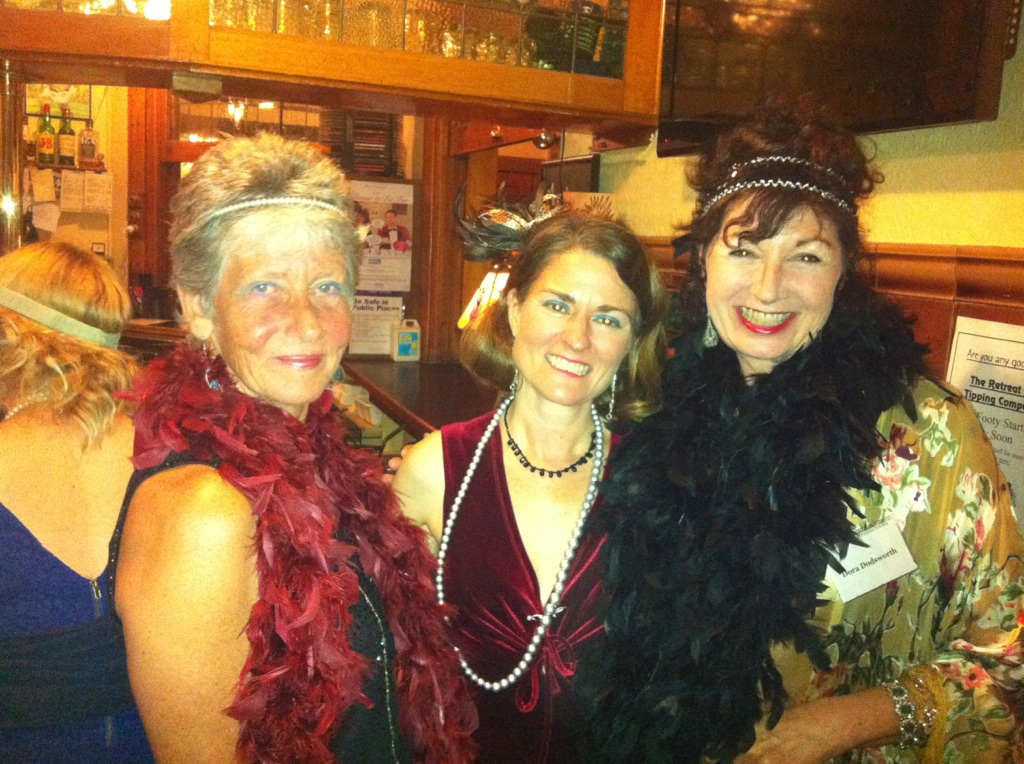
I think I’m a frustrated actor. I recently went to an interactive Murder Mystery dinner – see the picture below – and had a lot of fun playing a character called Ursula Eades-Jones who was big in the suffragette movement – the play is set in the 1920s!

That's me in the middle

That’s me in the middle

4: Can you speak any foreign languages?
I speak passable French and I did a degree in German and Spanish, both of which are a bit rusty nowadays! However, I try to keep them going by watching foreign language news on SBS and going to the French, German and Spanish film festivals.

5: What is your favourite type of flower?
I adore roses!

6: Where do you see yourself in 10 years?
Ooh, well. Perhaps retired from the formal side of work with a published book or two under my belt…

7: How would you describe yourself in 3 words?

A one hundred and ten percenter, funny (as in ha-ha, not peculiar) and all heart (when my busy head is not running the show, that is).

8: Tea or coffee?
Tea – there are so many wonderful teas to enjoy from caffeinated ones to herbal infusions. But you can’t beat a good English Breakfast!
9: What are you currently reading?
Autumn Laing by Alex Miller which is (and I quote from the ABC website) “loosely based on painter Sidney Nolan’s formative years with his patron, muse and lover, Sunday Reed, and explores the doomed affair between an artist and the woman who aspires to change his life”. It’s beautifully written and an engrossing read.

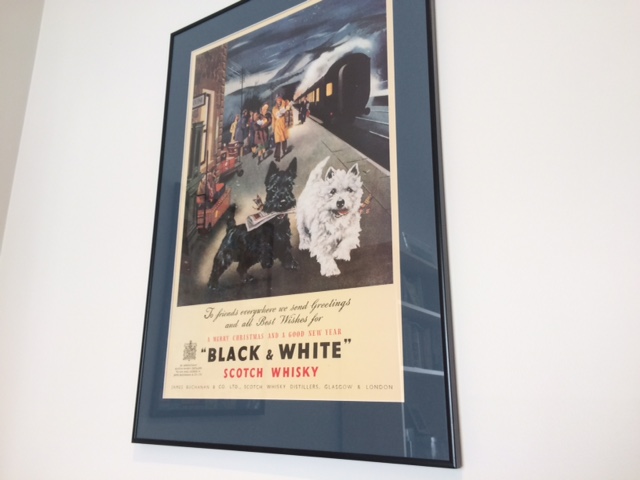
10: What’s the first thing you see if you turn your head right?
A framed poster featuring two Scottie dogs and advertising ‘Black and White’ Scotch Whisky.
IMG_2428

11: If you have any pets, what are their names?
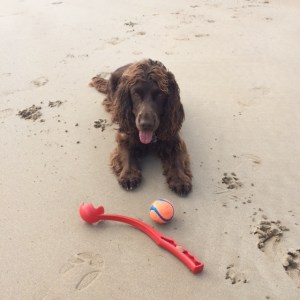
Bertie is my two-year old spaniel. Love him to bits!!
Now, that’s quite enough of me!

I am nominating the following blogs for the Liebster Award. No offence taken if any of my nominees don’t wish to take part. I hope that you are anyway happy to be nominated!

http://annemadelinedesigns.com – Anne marie
http://ryanlanz.com/ – A writers’ path
https://serinssphere.wordpress.com/
Kiwi Bee at https://kiwibeeblogger.wordpress.com
http://dailyinspirationblog.com
https://kelzbelzphotography.wordpress.com
http://freshfieldgrove.com.au/category/blog – Farmer Fi
http://whattohavefordinnertonight.com/ – Harriet
https://paintintoacorner.wordpress.com/ – Sara
http://markbialczak.com/ – Mark

The Official Rules Of The Liebster Award (non-bloggers do not need to read on..)

If you have been nominated for The Liebster Award AND YOU CHOOSE TO ACCEPT IT, write a blog post about the Liebster award in which you:

1. thank the person who nominated you, and post a link to their blog on your blog.

2. display the award on your blog — by including it in your post and/or displaying it using a “widget” or a “gadget”. (Note that the best way to do this is to save the image to your own computer and then upload it to your blog post.)

3. answer 11 questions about yourself, which will be provided to you by the person who nominated you.

These are:

1. What is your all-time favourite film
2. What does your ideal Sunday morning look like?
3. Town or country or both?
4. What is your favourite meal – feel free to share your recipe!
5. What would you do if you won the lottery?
6. Arts or Science?
7. How would you feel if you had no TV, phone or internet access for a week?
8. Most memorable travel adventure to date
9. Favourite drink – alcoholic or otherwise
10. What world issue most concerns you today?
11. If your fairy godmother could grant you one wish, what would it be?

4. provide 11 random facts about yourself.

5. nominate 5 – 11 blogs that you feel deserve the award, who have a less than 1000 followers. (Note that you can always ask the blog owner this since not all blogs display a widget that lets the readers know this information!)

6. create a new list of questions for the blogger to answer.

7. list these rules in your post (You can copy and paste from here.) Once you have written and published it, you then have to:

8. Inform the people/blogs that you nominated that they have been nominated for the Liebster award and provide a link for them to your post so that they can learn about it (they might not have ever heard of it!)