First of all a PS to those who subscribe by email – please click on the ‘Read on Blog’ link at the top of the email to enjoy the benefit of the formatted blog rather than the WordPress newsletter version.
Picking up where I left off in my last post, I started off slowly on day two in Paris. After a bit of unpacking and general faffing, I enjoyed a good breakfast at my hotel, the Holiday Inn, Gare de Lyon. Others might not get excited about apple compote, but I love it (especially when I haven’t had to peel and stew the apples) and it’s not something you often find on breakfast bars! Combined with creamy yoghurt dispensed from a machine by pulling on a lever – which reminded me of Mr Whippy ice cream – and topped with nuts and seeds, it was a winner. I also enjoyed one of the best gluten-free bread rolls I’ve had in a while with some fresh figs and goat’s cheese.
It was a fine morning, and once again I set off for the Jacquemart-André Museum, this time by metro, criss-crossing my way to Miromesmil. I arrived to find there was a queue to get in unless you had already reserved tickets. The wait time was advertised as at least an hour thanks to a once-in-thirty-year retrospective of paintings by Georges de la Tour (1593-1652), a chiaroscuro painter influenced by Caravaggio. Thank Goodness I hadn’t slogged my way there the night before only to be turned away – no room at the inn – and refused entry.
In just under an hour, I had a ticket in my hand and was inside. The Jacquemart-André Museum is a sumptuous Belle Époque private mansion built at the end of the 19th century by wealthy banker Edouard André and his wife society portraitist Nélie Jacquemart. They married in 1888, did not have children and were avid collectors of fine art and treasures from around the world. The museum is described as the finest private collection of artworks in Paris – and that’s no exaggeration.

The place is full of big name artists from across the centuries. Right at the start of the tour in the Picture Gallery are two Canaletto paintings of Venice, in Nélie’s boudoir there are paintings by Gainsborough and Reynolds, and the library walls are hung with paintings by Dutch masters including Rembrandt, Franz Hals and Van Dyck.

There are no less than three works by Tiepolo: a fresco at the top of the double marble staircase and a ceiling painting on the roof the mansion’s dining room, the Salon de Nélie. Both were transposed from a Venetian villa. The third Tiepolo is a ceiling painting in the study, a room furnished with chairs covered with Aubusson tapestries, a Japanese lacquer writing desk and a Louis XV desk stamped by the king’s favourite cabinetmaker.

Edouard and Nélie loved to entertain – the picture gallery leads into the Grand Salon where the partition walls could be lowered into the ground via a hydraulic system that converted the Picture Gallery, the Grand Salon and the adjacent Music Room (and musician’s gallery above) into a single space – catering for up to a thousand guests. You can almost hear the frou frou of opulent gowns, lace and silk, the hum of chatter and the clink of champagne flutes. And you can picture the men retiring to the smoking room which is furnished in the ‘Oriental’ style with treasures from Persia.

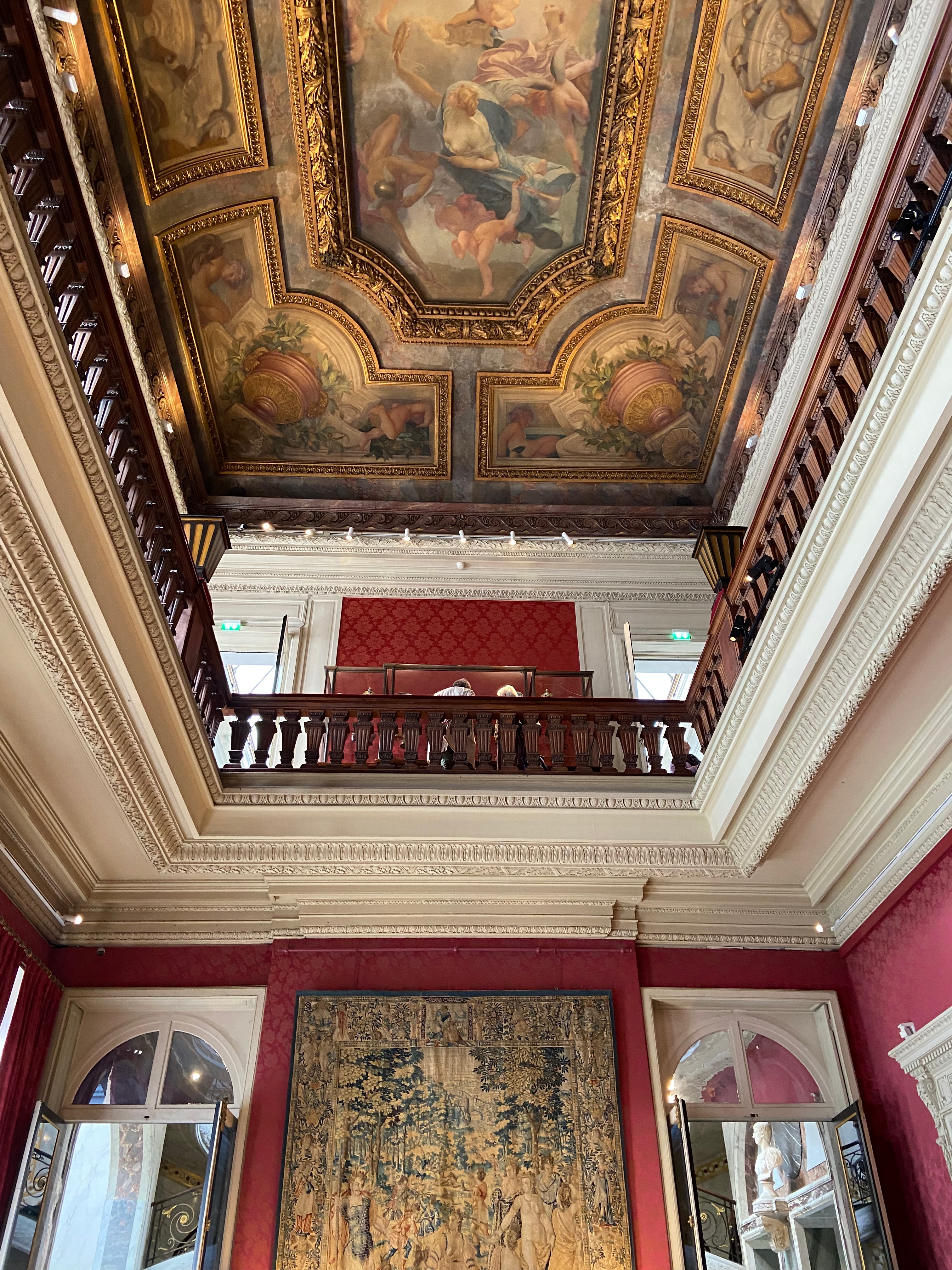

To keep their entertaining space unimpeded, Nélie and Edouard departed from the norm of having a centrally situated staircase – the double marble staircase is no less magnificent, but it’s located to the side of the building. To the left of the staircase is the Winter Garden, a status symbol at the time, a place to showcase plants from around the world.


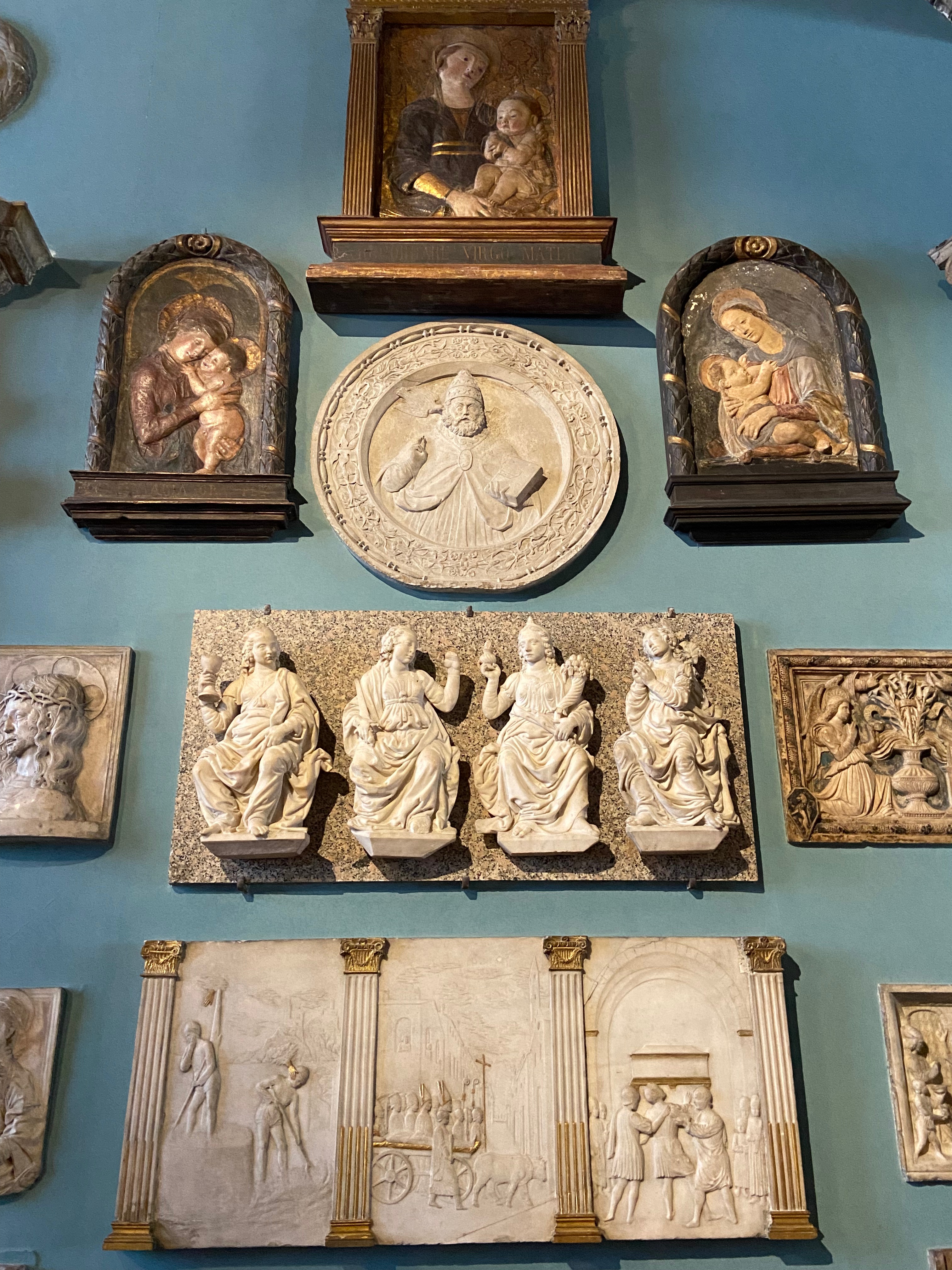
The Italian galleries – the Venetian and the Florentine – are crammed with treasures: 15th century sculptures, bas-reliefs and paintings by the likes of Uccello and Botticelli. I had a little break at lunchtime and managed to get a spot in the Salon de Nélie, in the annex overlooking the courtyard.


After lunch, I enjoyed browsing some of the 40 Georges de la Tour paintings. He focused on portraits of saints and people on the margins of society – blind musicians, beggars, old men and women, capturing them in a moment in time, his subjects imbued with grace and dignity, and often illuminated by a single candle flame or a shaft of light. I could have spent longer but it was getting towards mid-afternoon and I was due to meet friends from Oxford for drinks at 4.45pm. Time waits for no man not even Georges de la Tour, so I ran back to Miromesmil, sped-walked along the long passageways (if you want to get your steps up, travel on the Paris Metro!) connecting with the M1 line back to the Gare de Lyon. From there I dashed to the hotel to change and then, with a swipe of lippy, was back underground on my way to Châtelet where I changed line to get to Cité and to our meeting place near Notre Dame. I just made it.
It was pure chance that I overlapped with Hilary and John for one night in Paris and pure joy to see them and catch up on two year’s chat over drinks and pommes frites. To add to the fun, my niece, Georgie, a wonderful conversationalist and all-round bright spark, joined us just as the heavens opened and the wind picked up. We were sitting outdoors so we huddled under the awning but were soon rewarded with exquisite light and a double rainbow. From there, Georgie and I walked back to the Gare de Lyon and to Ground Control, a warehouse space behind the station with food stalls, bars, vintage fashion, a book stall and alive with the buzz of chatter from children, families, the lot. We drank a Hugo cocktail and tucked into a tasty and generous Greek share platter.


The next morning, Sunday, I was back at the Gare de Lyon, now my second home, and took a train out towards Fontainebleu to spend a day with Georgie, her husband Manu and the three boys. She met me at the station in Moret-Veneux with three-year-old Ralphie in tow. From there, it was a short drive to Veneux -les-Sablons, where we walked across an arched suspension bridge at the confluence of the Seine and the Loing over to the town of Saint-Mammès, which has a vibrant Sunday market with lots of local and organic produce and an entire stall devoted to goat’s cheese – heaven!


The rest of the day was spent with the family in Thomery, a wonderful spot on the Seine, known for its history of viticulture and use of walled vineyards. It’s forty-five minutes on the train from Paris but a hundred times more peaceful. No suitcases, sirens or heavy ‘circulation’! Georgie and Manu are renovating their house bit by bit – it’s full of character – and they live a very eco-oriented life.
The long garden complete with Granny Flat (la dépendance), veggie patch, walnut trees and mown paths slopes down in the direction of the river. It’s a bucolic idyll and the three boys – Ralphie’s twin brothers are now six – charge around the garden, their playground. So far, they are living a screen-free life (not even a TV), which I so admire, their imaginations free to roam, their attention unshackled by technology.


We all did a bit of drawing after lunch. Even I, who can’t draw a stick man, managed a decent flamingo thanks to a book that steps you through the process. A delightfully bonding family day – good for the soul – and I have bagged a spot in the dépendance for future trips. And next time I’m eager to try the walnut wine which was still at the macerating stage when I visited.

Monday, my last day in Paris, I explored Le Grand Mosquée, which is in the Latin Quarter near the Jardin des Plantes, the Botanic Garden. It was built to honour the African, mostly Muslim, soldiers who fought in the First World War and was inaugurated in July 1926.
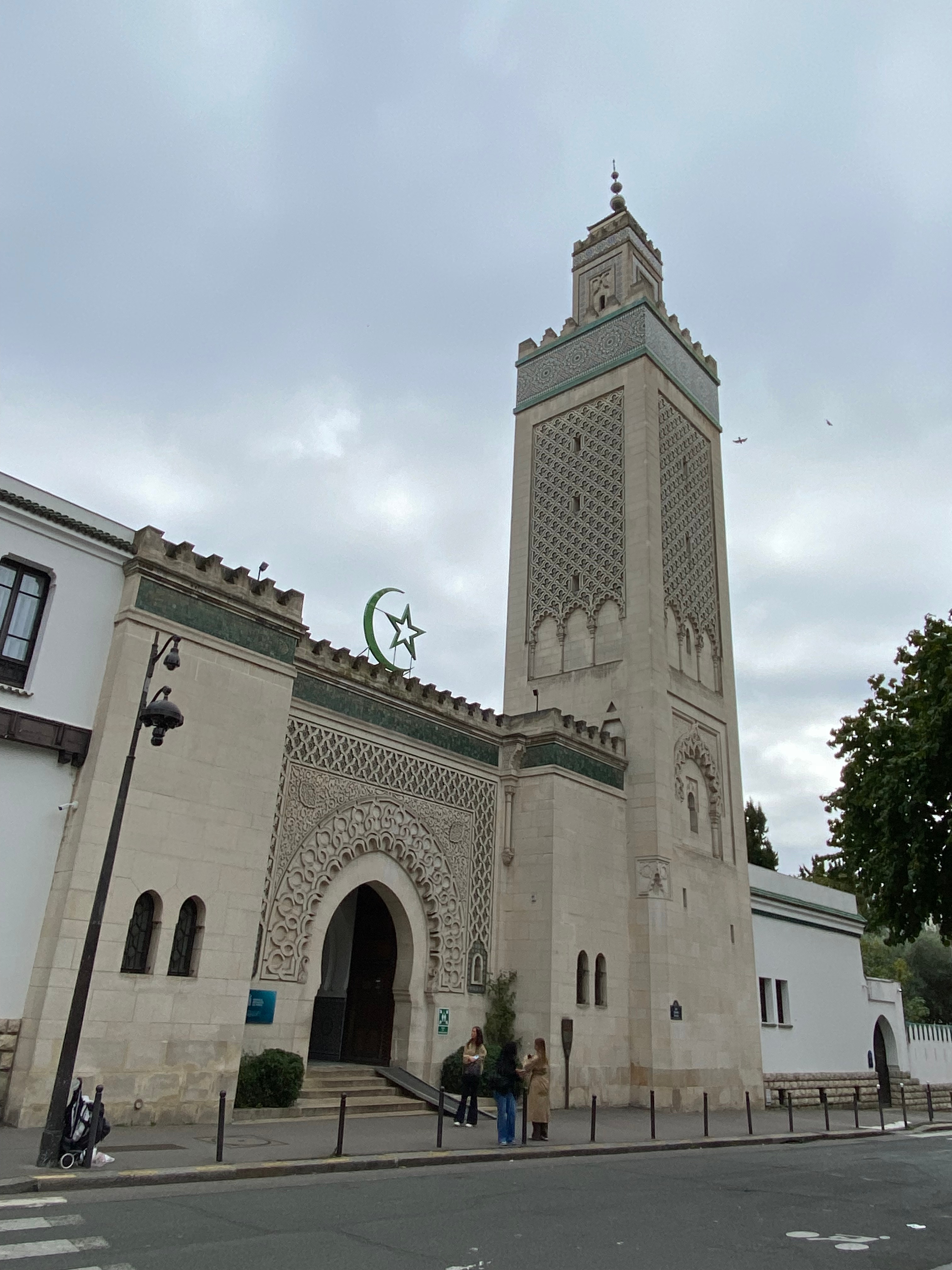
Reminding me of my March trip to Malaga and visit to the Alcazaba, the Grand Mosque is built in the Hispano-Moorish style with the familiar arches, decorative tiles, Arabic calligraphy, intricate geometric patterns, Mahgrebin carved cedar wood and lush courtyard garden with fountains. It’s wonderfully peaceful, a place for quiet contemplation and, unlike the museums, not crowded. I was flagging by lunchtime – jetlag maybe – so rather than have lunch at the mosque’s café, where you can get a full meal – tajines, couscous etc., – or mint tea and Arabic sweet treats, I decided to visit the ladies only hammam (steam bath).


In keeping with the mosque, the hammam is a tranquil space with detailed mosaics, arches and ornate plasterwork. Years ago, I was scrubbed to smithereens in a Moroccan hammam so this time I opted for a simple steam bath without the ‘gommage’ option (exfoliation). The dress code is bathers or a bikini – topless is fine but you need some form of ‘bottoms’. I hadn’t planned to go to the hammam so didn’t have either – spontaneity has its drawbacks! So here I was topless in a Turkish bath trying – in faltering French – to navigate how it all worked and in what order – from the difficult-to-shut 1 Euro lockers to the wrist tag, plastic slippers and showering protocol.
I got myself into the main room which has a long marble ledge running down each side, divided into three alcoves for sitting or lying in and furnished with buckets and water taps. I lay down and semi-relaxed but it would have been better to have a friend to lounge about and laugh with. After a while I graduated to the furthest room, which is more like a sauna with stepped ledges – the higher you go the hotter it gets – and a cold-water dipping pool. This is where my M & S undies got the full immersion treatment!
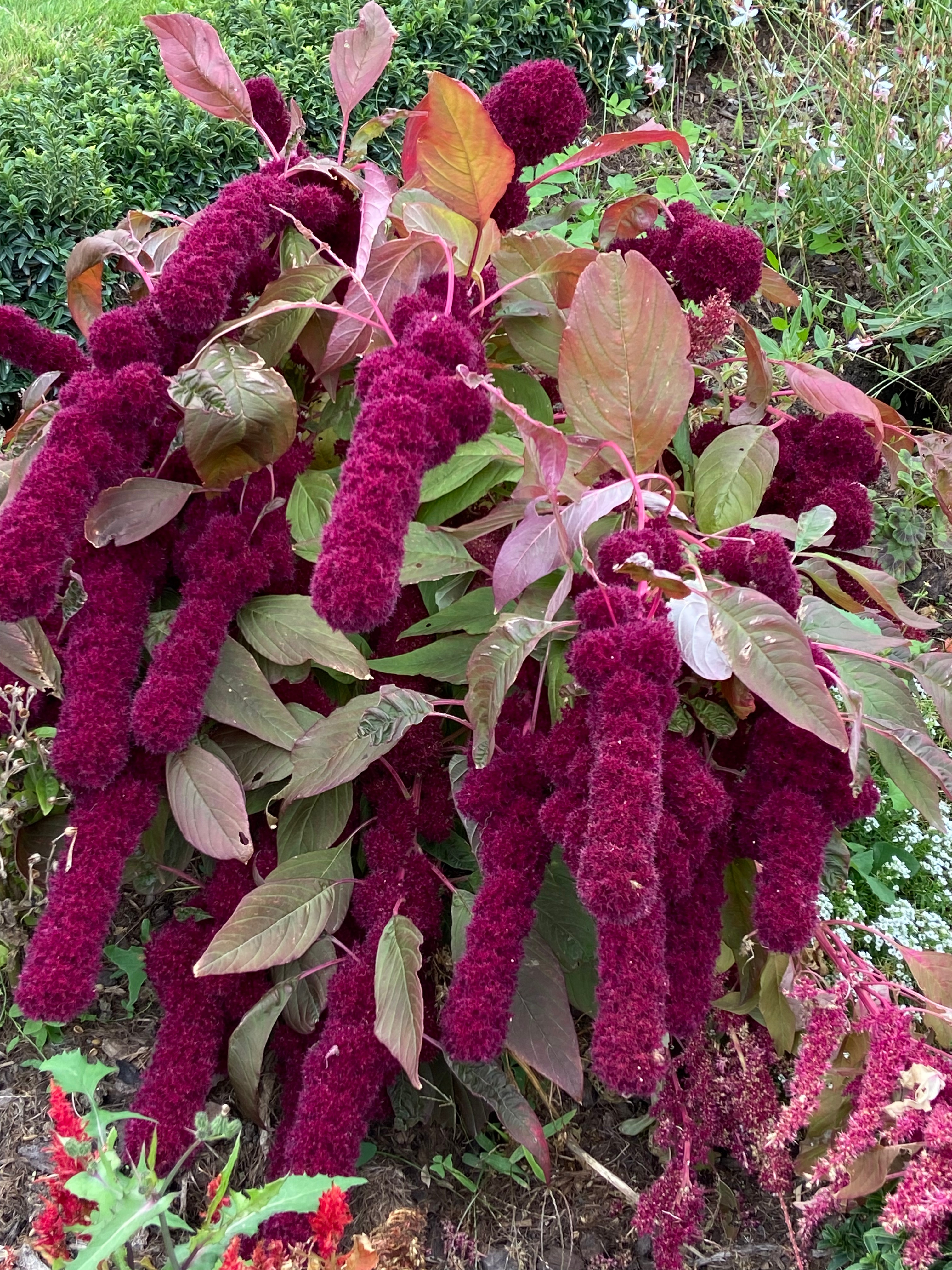
Once I was fully steamed and cooked, I progressed to an anteroom, where they bring you mint tea, which, although teeth-squeakingly sweet, is refreshing. I emerged feeling rejuvenated but, with damp knickers and damp hair, I soon lost the glow and warmth of the steam room as I was walking around the nearby Jardin des Plantes. On went the fingerless gloves and then I found a small café where I had a very overpriced but warming cup of tea, enough for me to enjoy all the autumn colours, pumpkin displays and curious woolly plants while I dried out!







![images[8]](https://thisquirkylife.com/wp-content/uploads/2013/07/images8.jpg)
 This Quirky Life