Rediscovering Spain Part 2/2: Picasso, paella, pajarete and more

It was Michael Portillo, he of the brightly coloured jackets and train journeys, who inspired me to choose Malaga as my stop-off place on the way to the UK. There’s a lot more to Malaga than being a gateway to the Costa del Sol.

Another reason I chose Malaga is that it’s very walkable, its compact city centre perfect for meandering, mooching about and soaking up the vibe. In the past I’ve tended to cram too much into my European trips – partly because living on the other side of the world engenders terrible FOMO.  

I stayed in a small Airbnb studio in a quiet residential area about ten minutes’ walk from the city centre. It was nothing fancy, but I felt completely at home and enjoyed watching the comings and goings in the street below from my narrow window balcony.

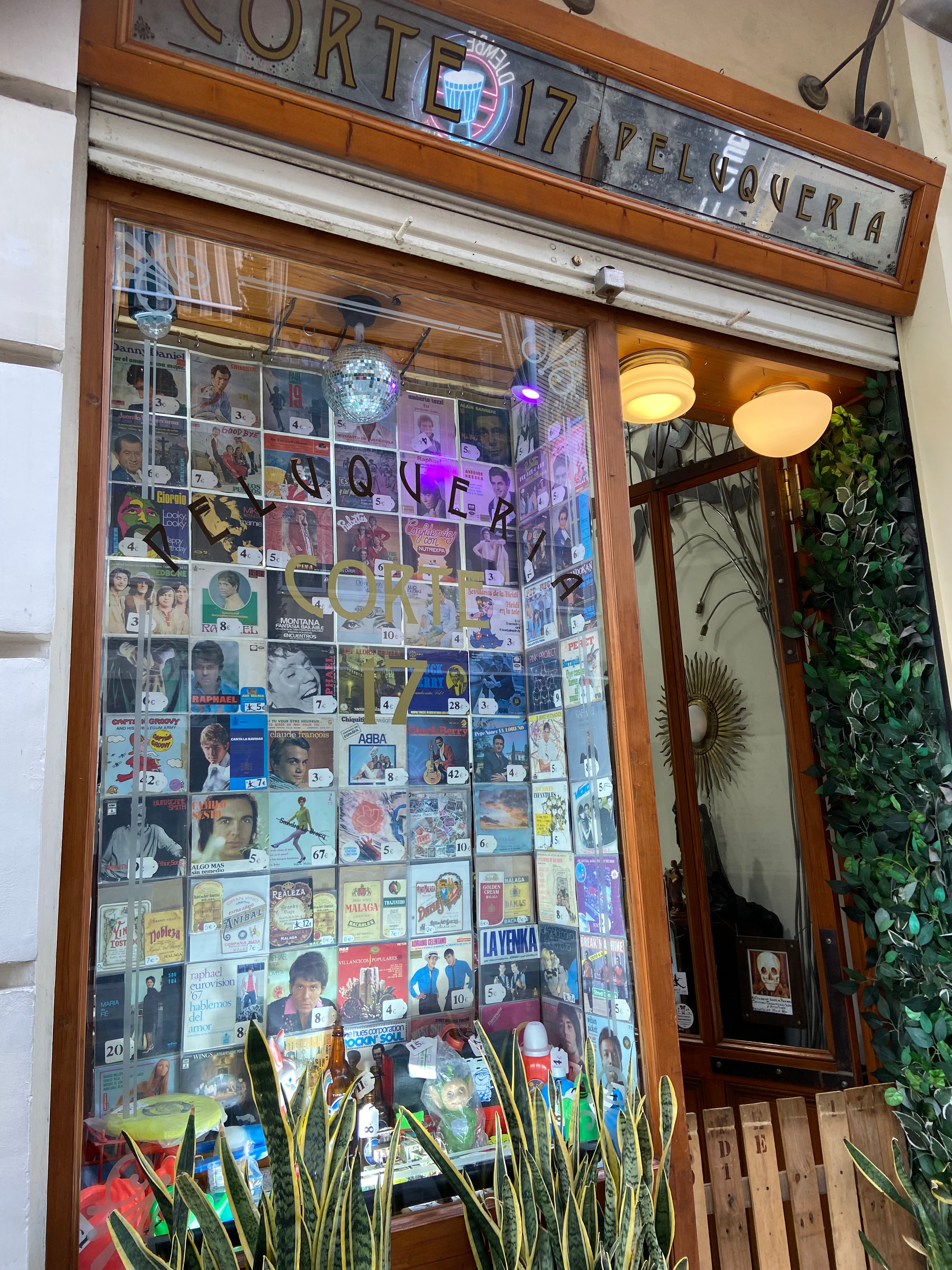
Walking to and from the centre I tapped into timelessness again (see Rediscovering Spain Part 1) noticing something new every time – a few hole-in-the-wall shops, seemingly unchanged over decades, selling salami, processed cheese, tulipán margarine (Spain’s version of Flora), bottled water, olive oil and packets of this and that. I spotted lots of traditional barber shops, one with a window artfully decorated with 45 vinyl record sleeves. Then there were the glass-fronted balconies, the lantern-style streetlamps and decorative tiles on house fronts depicting religious scenes (lots of those) or various trades or symbols related to the original homeowners. And crowded tapas bars at lunchtime, the scruffier, the more authentic.

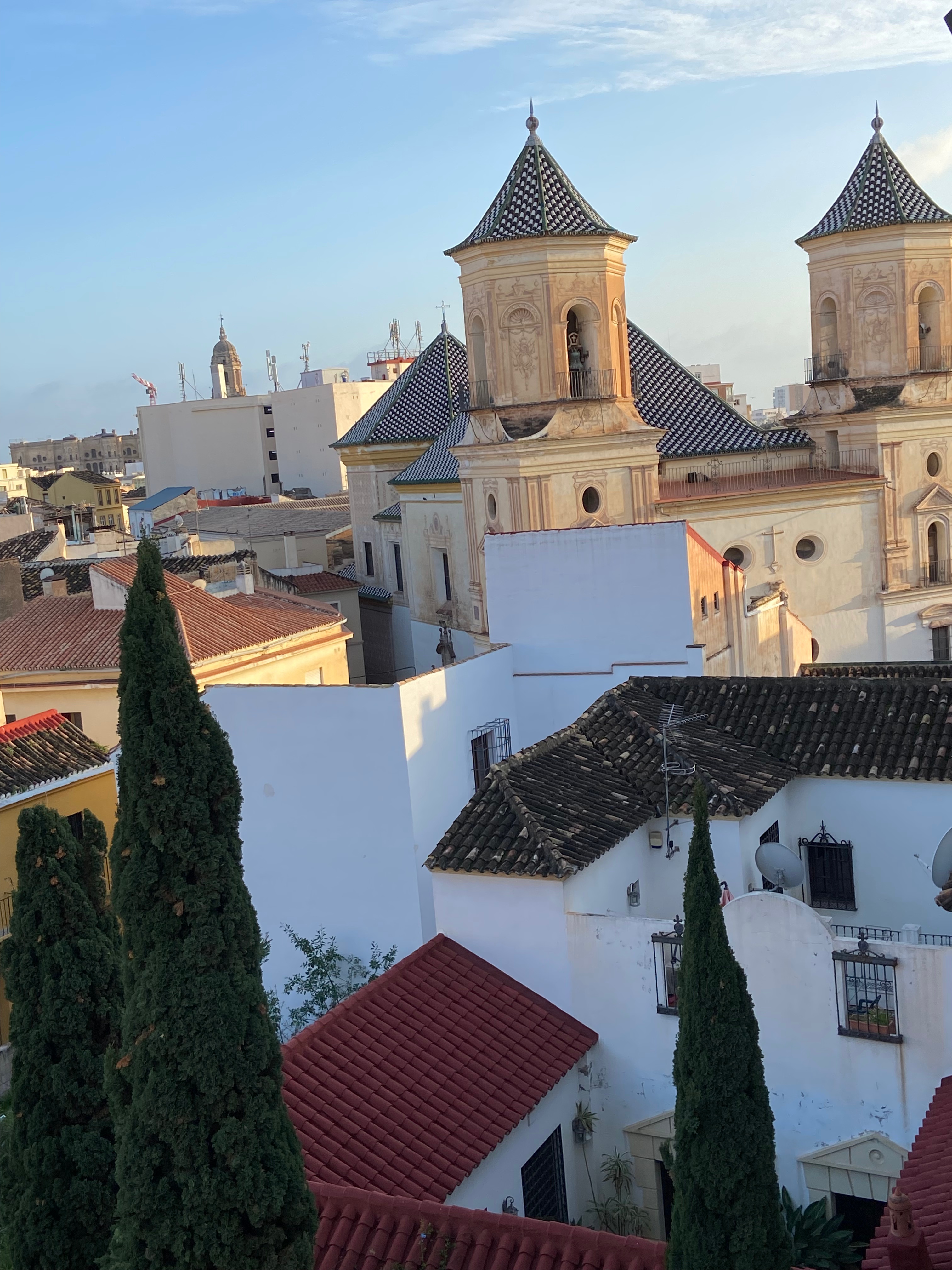
From the roof terrace of my Airbnb, I looked over to the church of San Felipe Neri, a baroque church with distinctive green and white tiles on the bell towers. Listening to the bells ring out several times a day, a pure and undiluted sound, I felt a great sense of serenity and groundedness. I’ve always loved church bells.  Although I didn’t do a tour of Malaga Cathedral, I did go into another church, Santo Cristo de La Salud, in the centre. Drawn in by its terracotta exterior and circular stained-glass window, I went and in sat for a few minutes looking up at the domed ceiling, feeling into the sanctity, time stopping still.
Thwarted in my attempt to visit the Picasso Museum (sold out even in low season!) on day one, I joined a tour of the Moorish fortress, The Alcazaba. I am somewhat spoilt having lived and studied for nearly five months in Granada in the ‘80s with the Alhambra Palace and the Generalife Gardens a half-hour climb up the hill from where I was living.  Given today’s mass and over-tourism issues, I realise how extraordinarily lucky I was to have had unfettered access to a UNESCO World Heritage site, and one of the most magnificent examples of Islamic art in Spain.

Like the Alhambra, the Alcazaba sits on a strategic hilltop and was previously a Roman settlement. The tour started at the Roman theatre and the site of sunken pits which housed fermented fish sauce called garum, the Roman equivalent of umami flavouring.

The glory days of the Alhambra and Alcazaba ended with the Catholic conquest – the Reconquista – which culminated in 1492 when Granda, the final Moorish stronghold, surrendered to King Ferdinand II and Queen Isabella I. The Alcazaba was largely abandoned by the 18th century, damaged during the Napoleonic wars and, again, during the Spanish civil war.

Restoration started in the 1930s – our guide pointed out some of the remaining Moorish parts: the double walls, one inside the other, making the fortress harder to attack along with the bent entrances, the cobbled paths that double back on themselves, another defensive feature to slow down potential attackers; the carved caliphal-style horseshoe-shaped arches at the entrance to the main hall, the Taifa Palace; the 8-point star in the paving stones; a number of carved wooden ceilings with their intricate geometric patterns from the Mudejar tradition, a style blending Islamic and Christian artistic traditions, and a decorative arched niche set into the wall that would have housed water, perfume or flowers.

To my mind nothing comes up to the Patio de Las Arrayanes (the Courtyard of the Myrtles) at the Alhambra, but the Alcazaba’s restored gardens and series of courtyards and patios with tiled pools nonetheless have charm and offer a tranquil place for reflection.  

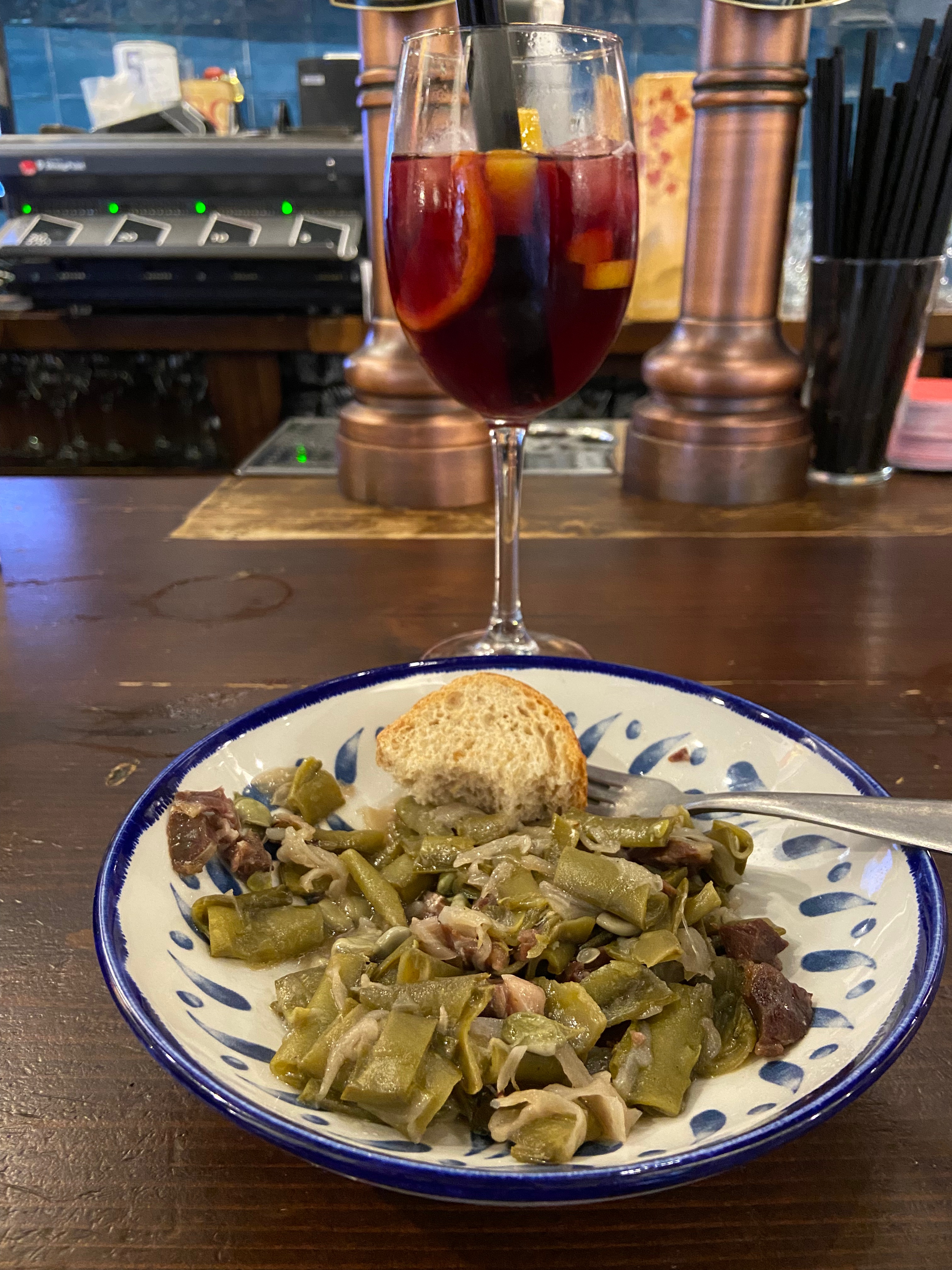
I was hungry and thirsty after all the hill climbing so I repaired to Bar El Pimpi at lunchtime, another Michael Portillo recommendation. Something of a Malaga institution since the 1970s, El Pimpi is a wine cellar with lots of different patios and rooms. I found a stool at the bar and ordered sangria, tortilla espaňola (Spanish omelette) and habas con jamón (a stew of jamón serrano and broad beans). The omelette came doorstep-size and was disappointingly dry, but the beans and sangria were excellent. I got chatting to a couple Chris and Kat, from Ireland and West Virginia respectively. They are in their 50s, have sold their businesses and are enjoying the freedom to travel. They were heading to a spa after lunch and hadn’t bothered with any of the museums or sights. No FOMO there!

After a much-needed siesta – take a pinch of jetlag and a glass of sangria – I popped out again in the early evening. Not quite ready to do a Chris and Kat and eschew all museums, I was keen to check out Picasso’s birthplace – a house with beautiful stained-glass fan lights overlooking the Plaza de la Merced, a five-minute walk from where I was staying. Open till 8pm, it was perfect for the post-siesta, pre-dinner slot.

Picasso came from a wealthy bourgeois family and lived in Malaga until he was nine. The Museo Casa Natal de Picasso documents his early artistic influences, including his painter father, and his classical training. Despite spending most of his life in France, Malaga and Spain stayed in his blood. His father took him to the bullring as a child and bulls, bullfighting and the mythical minotaur all feature prominently in his work. Much has been written about Picasso and his representation of the bull and the bull as his alter ego. I am no fan of the bullfight, but I admired the elegant simplicity of his line drawings and painted ceramics featuring bulls and the bullring.
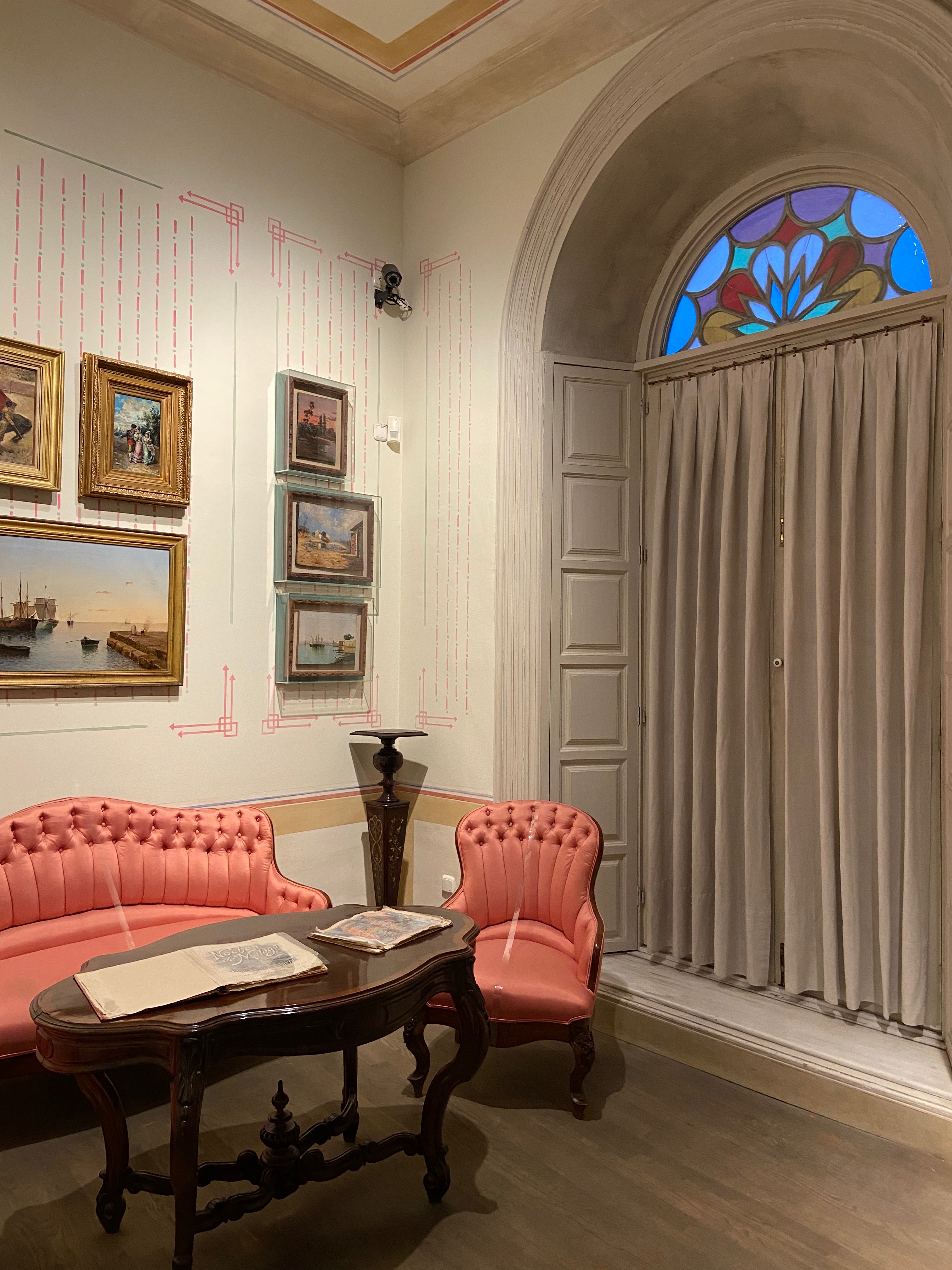
I went to the Picasso Museum the next morning. It’s housed in a traditional house with a courtyard and decorated with Mudejar wooden ceilings and rooftiles. A timeline on the wall describes the key events in Picasso’s life including two World Wars, the Russian Revolution, the 1949 First International Peace Congress in Paris (featuring Picasso’s “Dove of Peace” lithograph on the poster) the Vietnam War, JFK’s assassination and the advent of TV.

From the classical – a tender picture of his sister, Lola, with a doll dated 1896 –  to African masks, vases and pitchers to his cubist works and some of the more distorted surrealist pieces – the museum takes you through the stages of his artistic life, the extraordinary diversity of his work and all the different media he used – wood, plaster, bronze, linocuts, line drawings, metal, cigar boxes, clay etc.  It’s an understatement to say that Picasso was/is a complex and controversial figure, but I came away understanding a little more about his approach to art, his blurring the lines between classicism and cubism, and his exploration of what he considered the artifice of all artistic practice.

The café at the Picasso Museum is in a quiet courtyard lined with pots of bright red geraniums and orange kumquats. Scarred by ordering tea with milk at El Pimpi and receiving a pot of frothed slightly sweetened milk and a tea bag – an aberration – I chose coffee! I discovered that a weak coffee is a nube, a cloud, and the next strength up is a sombra, shade. Useful things for the traveller to know! And I enjoyed another moment of calm and quiet in a spot overlooked by a church.

On my last day, I had a slow morning – packing, stretching and doing admin. Then after a long walk along the Paseo del Parque, a park running alongside the harbour and planted with tropical and sub-tropical species, I looped back into the centre for some lunch, enjoying the views back towards the Alcazaba and adjoining Gilbralfaro Castle.

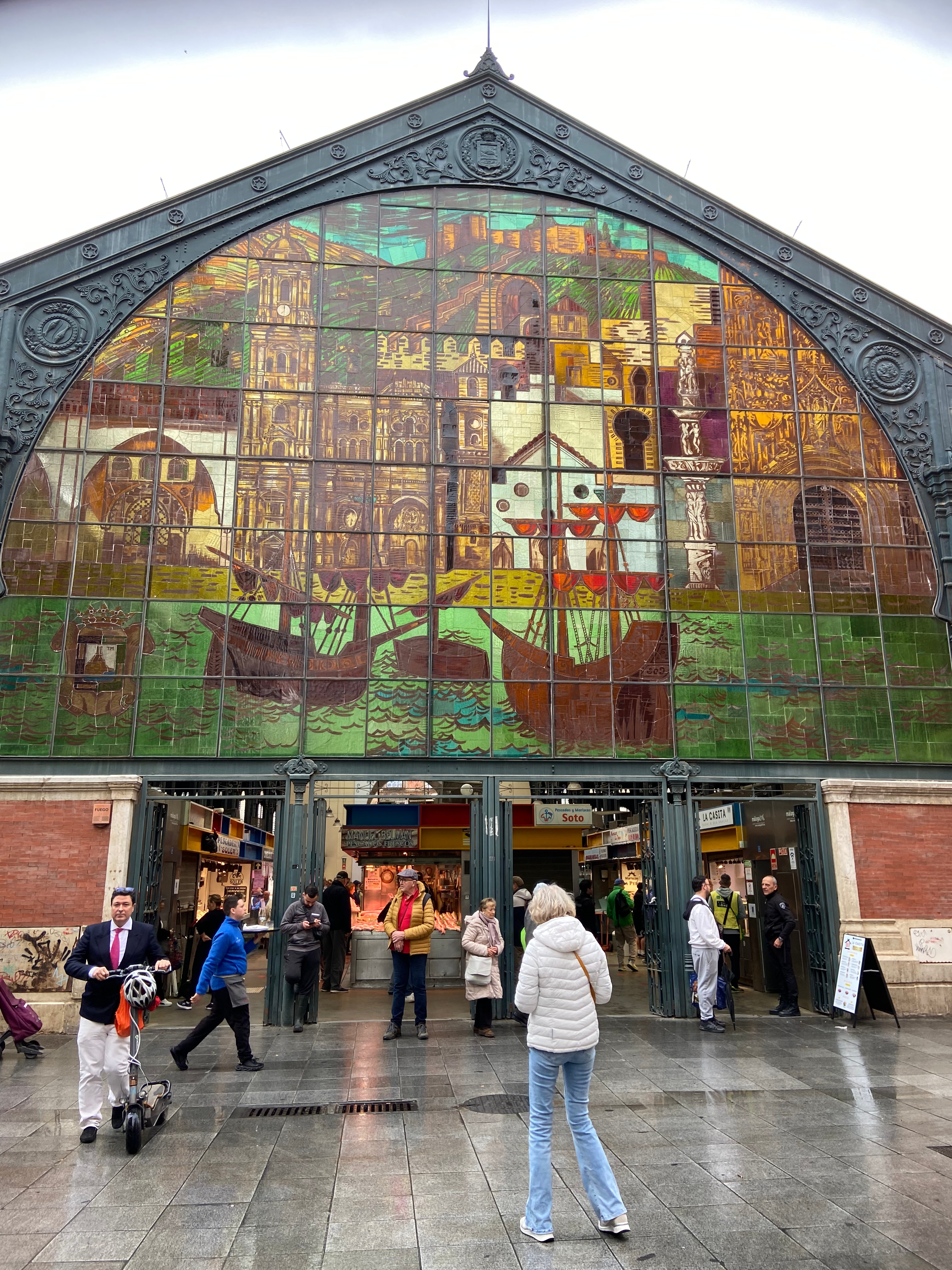
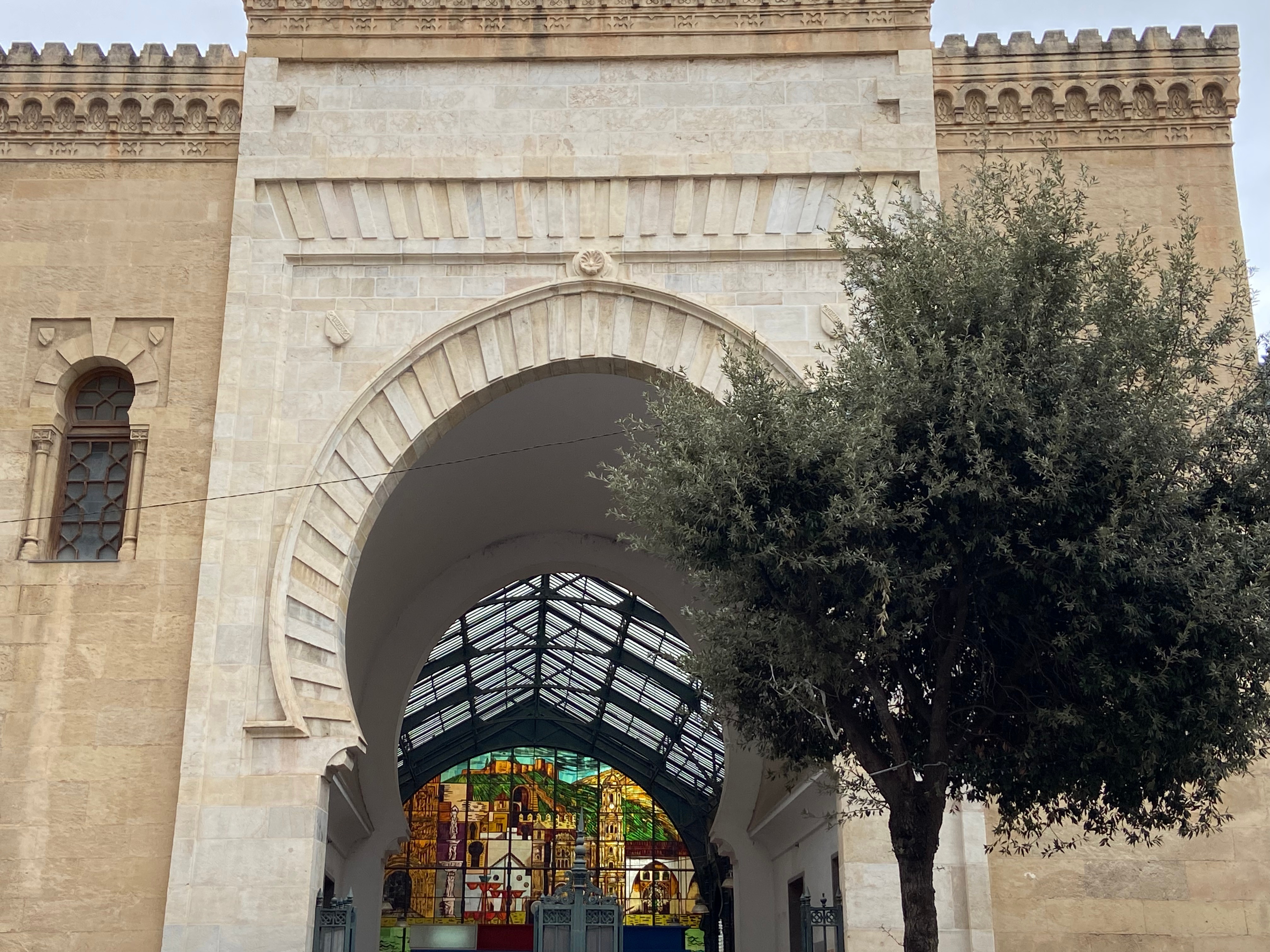
Following Chris and Kat’s recommendation, I headed for the Mercado de Atarazanas. The market was a boatyard during the Islamic period, the Moorish archway at the main entrance still part of the design today, and on the other side an impressive stained glass arched window depicts Malaga’s city scape.  It’s busy, bustling and bursting with fresh produce, tapas and aperitif stalls. I was a bit late but just made it in time to feast on paella for lunch, and to discuss with the stallholders how to get that toasted crusty layer of rice on the bottom and the layering of textures and flavours over that. What a treat!  
And to round off my afternoon, I visited another Chris and Kat recommendation, the Antigua Casa de Guardia, a bodega founded in 1840. Once again it was like going back in time. Lined with oak barrels, you choose which sherry or wine you want, and they chalk up the price on the wooden bar. I chose pajarete, a fortified wine aged for five years. A delicious and sweet note to end my stay in Malaga.

Rediscovering Spain (Part 1 of 2) – Madrid to Malaga

It had been a long time since I last visited Spain – probably back in the ‘90s when I made a couple of brief visits for work during my publishing days. Many moons ago I studied Spanish (and German) at university, and even tuning into the children’s cartoons playing above the luggage carousel at Madrid airport was exciting; just as well as my case took nearly an hour to appear!

Despite the bracing early March weather, eight degrees and wet and windy (it was mid-20s when I left Melbourne), I was off and out the minute I’d checked into my hotel, keen to make the most of my afternoon and evening in Madrid.

I was staying in the Barrio de las Letras, the literary quarter, home to many of Spain’s writers from the 17th-century Golden Age, a deliberate choice as my degree was largely literature-based. All the names came flooding back, Cervantes (Don Quixote), Lope de Vega and Tirso de Molina who, in his play El Burlador (seducer) de Sevilla), introduced the world to Don Juan, the charming hero-villain, a character with folk legend status made famous by Mozart’s opera Don Giovanni and the subject of many books, plays and films since.  I was in my element walking along elegant, cobbled streets dotted with early spring blossoms in the company of these literary greats who were variously honoured in colourful tiled mosaics, street signs, cafés, Metro Station names and quotations engraved on the pavements.  

I barely noticed the cold and that my feet were soaked through to my socks. Such was the excitement and cultural immersion. I had a few pit stops – an arty café where I dipped into a slim novella, Réquiem Por Un Campesino Español, one of my university books, first published in 1950, and a few tapas in a thronging and lively covered market.

Further on I stumbled on a rehearsal for Semana Santa (Holy Week) which will be in full flow as I write this over Easter.  14 men from a cofradía (a fraternity/brotherhood) were bearing a float weighed down with suitcases in preparation for the Holy Week processions. All wearing white runners, they performed a kind of slow-shoe-shuffle in time to the recorded music, their heads covered in a white cloth, a stand-in for the capirote, a hood with a conical tip, a symbol of penance, that conceals the face. I admired their dedication turning out on a cold and wet Saturday afternoon!

A few days later in Malaga, I peeked through the heavy wooden doors of a cofradía and saw the bulky shapes of sculptures (most likely Christ, the Virgin Mary and various saints) covered in cloth and mounted on a float, awaiting the Easter processions. These brotherhoods are Catholic organisations made up of lay people (men and women) who carry out charitable and religious works and events in the community. They play a key role during Semana Santa.

This was just one of many examples of timelessness and enduring tradition that I was delighted – and reassured – to find still in existence in Spain today. It’s 40 years since I spent four or so months in Granada as part of my Spanish degree – way before the distracted digital age of everything being available at the swipe of a screen.

I took the train to Malaga from Madrid’s Atocha Station the next morning. Atocha is a destination in itself with its glass and iron-clad domed roof – an old trainshed – complete with tropical garden. I was on a no-frills ticket, and it’s a three-and-a-half-hour journey from the centre of Spain down to Andalucia in the South. There wasn’t much to look at on the way but I got chatting to a young female student and soon realised how rusty my Spanish was!

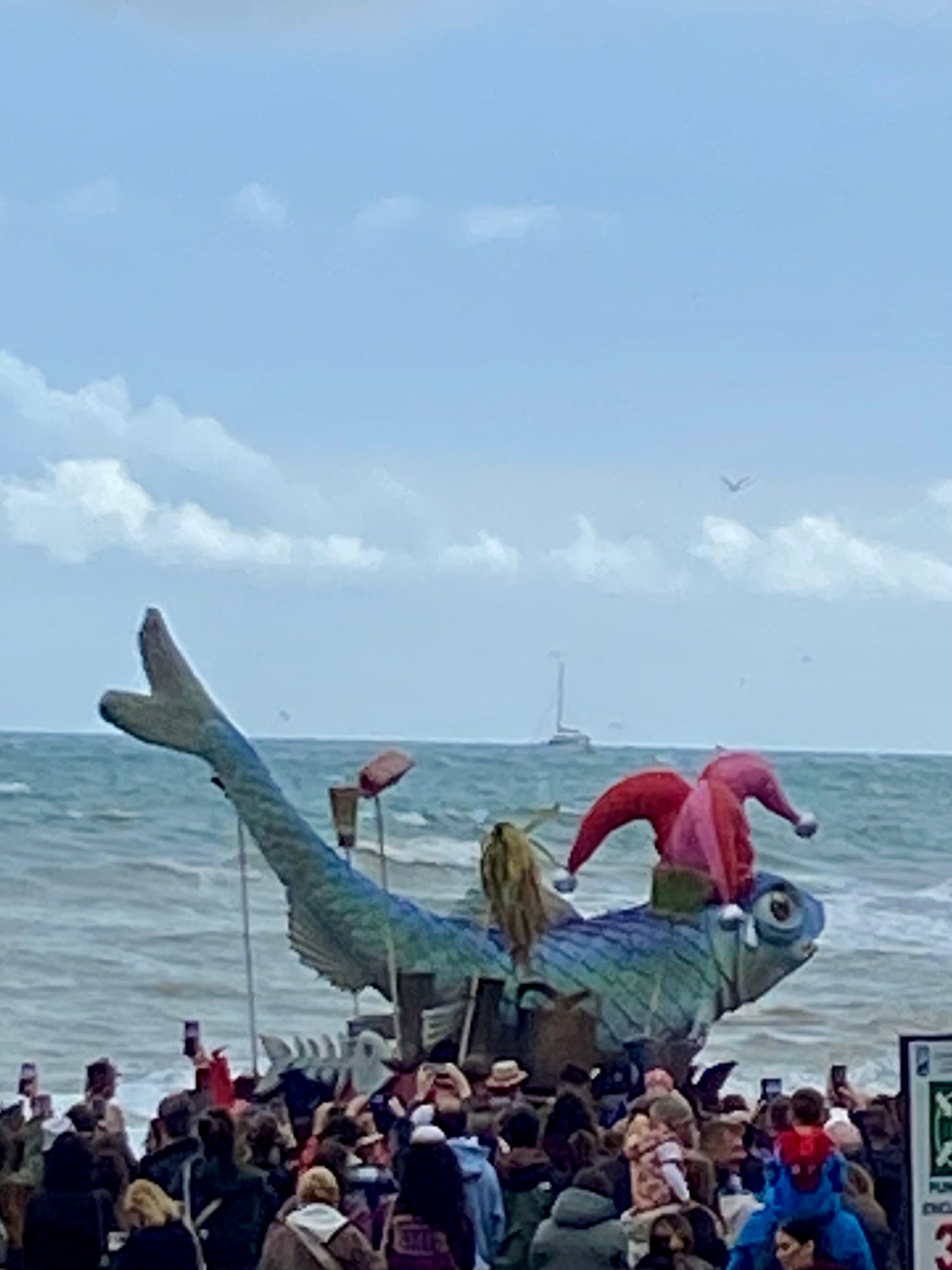
My goal was to get to Malaga in time for the Entierro del Boquerón (burial of the sardine), an annual ritual on the last Sunday of Carnaval, when festivalgoers mark the end of Carnaval. I had missed the midday jamboree of music in Calle Lario (I was still on the train) but got down to Malagueta Beach by 5pm and was surrounded by revellers in their costumes, tears painted on their faces, marking sorrow that the fun was ending and the sobriety of Lent fast approaching. Nobody quite knows how the sardine tradition came about – maybe it’s a nod to Malaga’s maritime heritage – but the message is clear, it’s about closure.  

I stood on the wall overlooking the beach to get a better look. Delightfully irreverent, the sardine sat atop a float, flashed its blue and green-glinting scales and sported a jester’s hat. From what I could see the fish was made of metal and layers of fabric and paper – perfect combustible material. Although the weather was squally, the fish was set alight, and clouds of black smoke blew back towards the city. In no time at all, all that remained were the spines of the fish.  Buried indeed. What joy to be part of the action. I felt as if I had time-travelled to another world.

Just back from Malagueta Beach is Malaga’s Pompidou Centre. I had no idea that the Paris Museum has a Spanish branch. But you can’t miss it with its Mondrian-style brightly coloured squares. It was open till 8pm so I drifted in and went to an excellent exhibition called Place-ness: Inhabiting Space, that explored how humans relate to (and ruin!) their environment. There were many references to exploiting the natural environment for productivity and profit, and a section with paintings and photographs exploring the impact of industrialisation including ‘non-places’ such as shopping malls, motorway interchanges, abandoned shipyards and airports. Some of my favourite pieces include an idyllic Alpine landscape with a shower and tap attached like an elephant’s trunk in the centre of the painting reminding city dwellers of the source of their water supply, and a pair of Armani suit trousers hanging on a clothesline, the pockets filled with plants and earth, an allegory by the Romanian artist about the immigrant experience in Italy and being uprooted.

For dinner, I found a delightful restaurant with earthy home-cooked food near to where I was staying and away from the city centre. Reminding me of carpet sellers in a souk, the more touristy restaurants have hawkers stationed outside brandishing menus printed in three languages. It’s all too pushy for me.

Small and cosy with the menu on the blackboard and small chalk-painted wooden tables and retro chairs, restaurant Oliva was a great find. The welcome tapa- served with a drink – was an exquisite flavoursome stew of chickpeas made with a hint of chorizo and lots of vegetables and cooked slowly for hours. Other delicacies included roasted padrón peppers, eggs with asparagus and jamón and a cheesecake made with Queso Manchego. Delicioso!

Such richness on all levels, a feast for body, mind and soul – and I was only just over 24 hours into my Spanish sojourn en route to the UK. Spain Part 2 coming next week.  

Virtual travel to Spain and down memory lane

The week before last I went to one of the Cities of Architecture series at ACCA – (the Australian Centre for Contemporary Art) here in Melbourne. This one was on Madrid and was presented by Qianyi Lim, Director of architectural practice Sibling.

Australia may be geographically isolated, but I find numerous opportunities to connect with other  countries, cultures, ideas and foods; I never feel cut off. On the contrary, I celebrate the accessibility of multiple art forms on my door step. Highlights this year so far include attending a flip book film show show by an itinerant German photographer at the Adelaide Festival, spending a day at Womadelaide listening to everything from Jewish chanting, Korean drumming, Chilean pop and Spanish funk to reunited 80s UK band The Specials. Recently I’ve enjoyed taking in Van Gogh and the Seasons at the NGV, and catching the UK theatre production of 1984 with an Australian cast at the Comedy Theatre. Virtual travel at its best.

In a bizarre echo of 1984, the virtual experience morphed into something slightly surreal recently when I got stuck in a lift in the CBD. After a few jolting stops and starts, the lift  jammed on the third floor and an automated voice advised me to press the Emergency Button, which I duly did, only for another voice – this time a human one coming through the speaker – to take the necessary details and call out a technician.  A bit spooky, but I did get out after an hour.

But back to ACCA. The event was supported by local whisky distillers Starward (Port Melbourne) and we were greeted with tumblers of spiced Spanish hot chocolate made with dark chocolate, cloves, nutmeg, vanilla (an underestimated subtle flavouring), cayenne pepper, a bit of honey and a shot of delightful Starward Wine Cask Single Malt Whisky. Deliciously smooth, it was warming, peppery and altogether a bit decadent for a Monday night.

The drink was inspired by the thick Spanish hot chocolate dipping sauce that traditionally accompanies churros – the deep-fried doughnut-like spiral snacks. I last had churros in Spain when I was a third-year Modern Language undergraduate doing ‘my year abroad’ (in my case, half in Granada in Southern Spain and half in Augsburg in Southern Germany) in 1984. Fortunately, Big Brother wasn’t much in evidence back then when CCTV cameras and constant surveillance weren’t part of the backdrop of our lives.

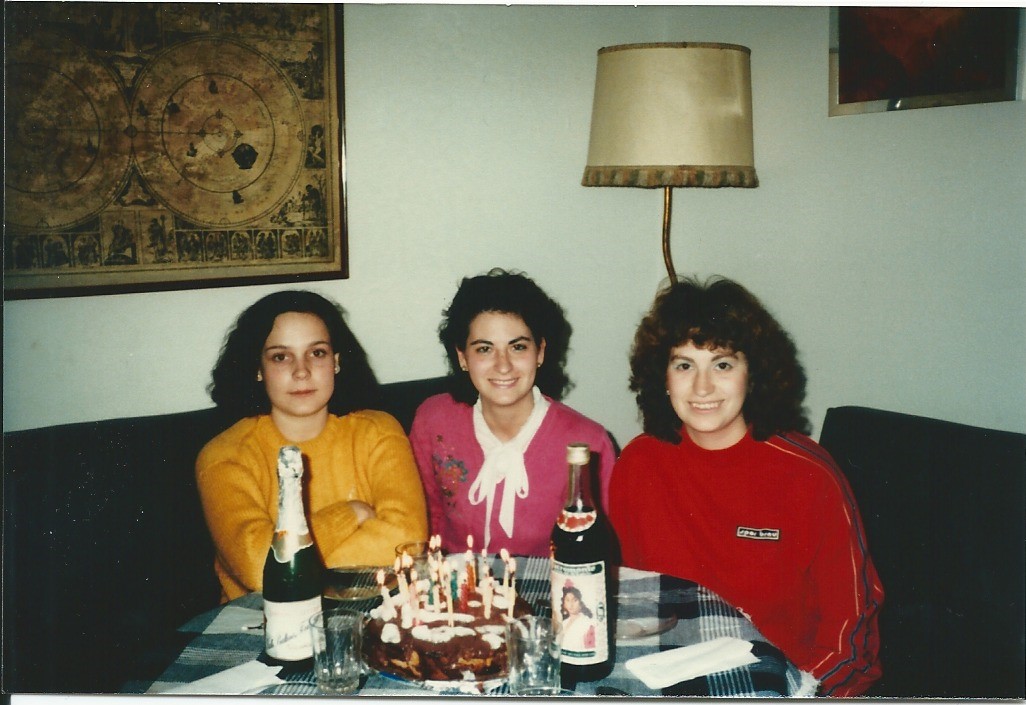
Talking of brothers,  a fellow Bristol University student (Danielle) and I became friends with a couple of boys, Paco and Pedro, who, contrary to the hot-blooded Don Juan stereotypes one might associate with Spain and all things Latin, were in fact sweet, dependable and, it seemed to us, asexual. Whatever their sexual preferences, they were ideal companions and extremely generous with their time in taking us out on day trips to the country, rustic meals, Flamenco dancing, and a couple of times up to the Sierra Nevada to ski. I wonder where they are now and what they are doing? I’d love to find them and thank them.

Left to Right: Paco, Danielle and Pedro

At the other end of the scale was Sarah, also studying at Bristol, who had three men on the go, one at home and two in Granada. I was wide-eyed and agog at her stories and her appetite (a rather splendid euphemism for libido that I heard recently in the film My Cousin Rachel based on Daphne Du Maurier’s 1951 novel). How Sarah juggled them all – one a market seller from Senegal – and, moreover, smuggled them into the boarding house where she lodged with two crochet-knitting widows beats me.

The churros in Granada were drenched in very strong extra virgin olive oil unlike the finer, crispier version with fluted edges I sampled on a visit to Madrid. The pattern was to go out ‘de marcha’ or ‘de juerga’ meaning to live it up and have a good time until the early hours of the morning. That’s when we’d repair to a bar – probably at 5 a.m. to sop up the alcohol with churros and chocolate. Never a night owl, the combination of going through the night – trasnochar in Spanish – topped off with chowing down artery-clogging churros often meant I climbed into bed about 6.30 a.m. feeling a bit heavy and undigested!

I have no doubt that the urban landscape in Granada will have altered somewhat since I was there. From Qianyi Lim’s talk and slideshow, it’s clear that Madrid has changed hugely. I don’t recall who I went to Madrid with – perhaps one of my flatmates from the stuffy little apartment – my room looked onto an internal courtyard (think laundry lines and cooking smells) – in ‘Pilchard’ Street (Calle Darro del Boquerón – the Darro being the local river). Two of the girls – Lucia and Marie were staunch Catholics and when Mari’s boyfriend Pedro came over, he had Mari’s bed, while Marie bunked up with Lucia, the cross hanging above the bed seemingly warding off sin. I reckon it was the more liberated Pilar, a zoologist,  who had a lovely boyfriend and took the pill, who accompanied me to Madrid.

From Left to Right: Pilar, Lucia and Marie

What I do recall –- as well as trips to the Prado and boating on the lake in the Retiro Park – is visiting a selection of bars at lunchtime on the Sunday – all crowded, noisy and with sawdust-scattered floors –  where we drank beer and ate tapas – not the fancy shmancy offerings you might find on a trendy urban menu now – but simple offerings such as a slice of hot roast pork or some salted almonds.


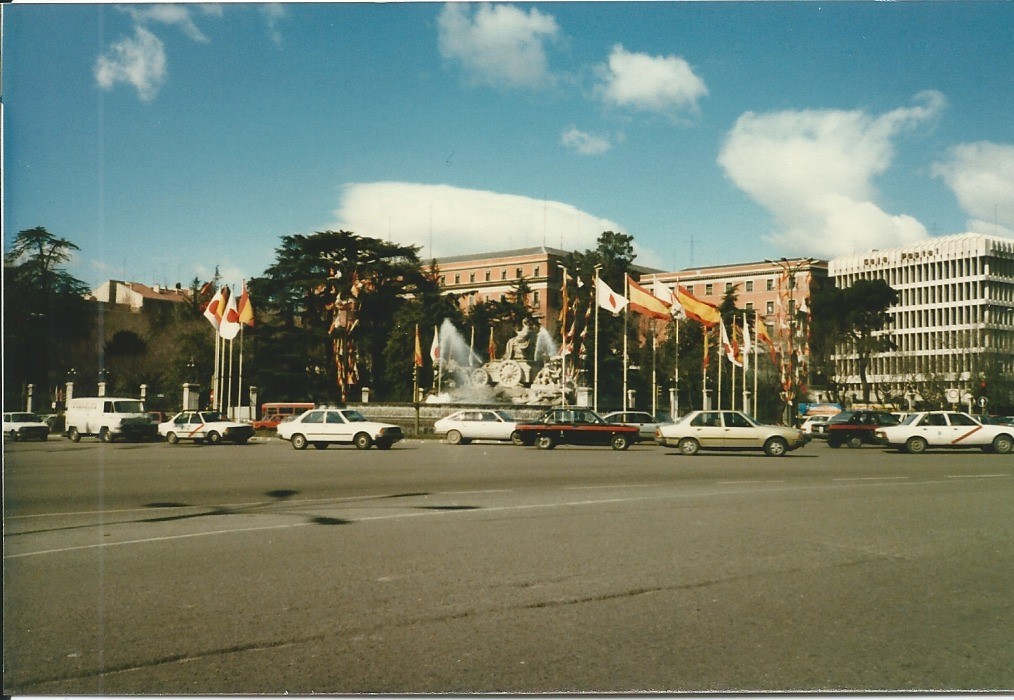
Spot the 1980 car models…

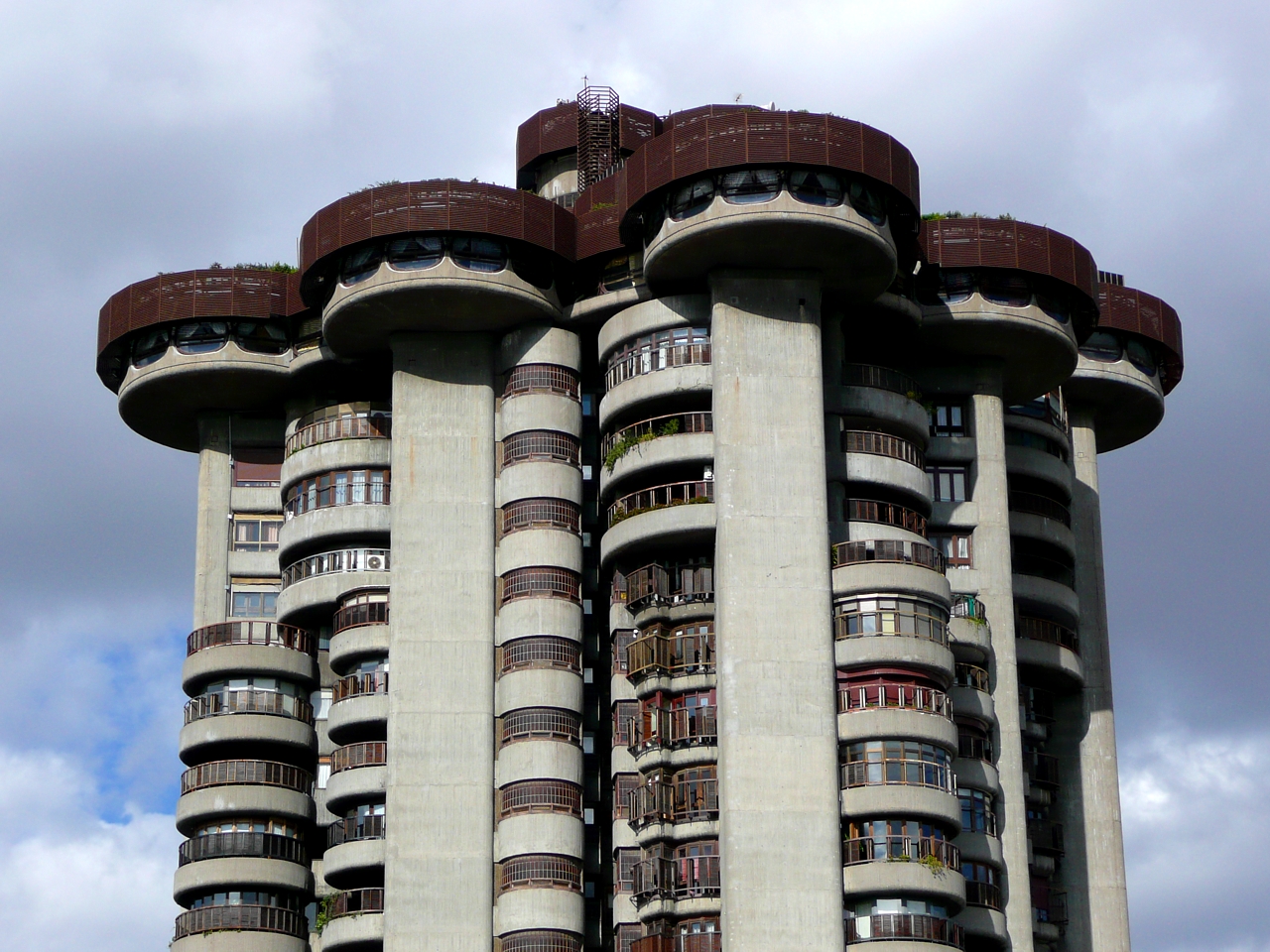
Going on a virtual architectural tour of Madrid gave me an interesting update – and a yearning to go back at some stage. The Puerto de Europa twin towers straddling the Paseo de Castellano built in 1996 by Philip Johnson are like modern day symmetrical towers of Pisa leaning in towards each other. Also built in 1996 are the Girasol apartments designed by the Catalan architect Corderch, their five separate towers with undulating walls designed to maximise light and regulate cooling and warming. And, most surprising of all, the Torres Blancas, which were designed by Francisco Saenz de Oiza during the repressive Franco era (another echo of Big Brother). Tall, cylindrical, curved towers with landscaping at the top, the forward-thinking design represented a covert anti-regime sentiment; architects having more freedom than writers to express their opposition.

Torres Blancas

Other major changes include the newish Reina Sofia Museum building, expanded in 2005, which is part of the Golden Triangle of Art in the Prado Complex. The triangular roof of the Reina Sofia Museum almost dips down to touch the classical Prado in an elegant fusion of old and new.

Qianyi told us that 70% of architectural practices in Spain closed during the Global Financial Crisis – Spain was particularly hard hit. So it was heartening to learn about the post-GFC multi-million dollar Rio Madrid development, a new area on the banks of the Manzanares River. Once a polluted river with a highway running alongside it, the traffic has now been diverted into underground tunnels and it has been transformed into a cultural and recreational zone complete with beaches. With a focus on liveability, air quality and sustainability, it reflects some of the best trends in contemporary urban design.

Taking off and unplugging

I’m about to take off back to Blighty and I’m nearly – but not quite – ready. However much I plan in advance, it always builds up to a pre-trip devil-in –the-detail whirl. I tend to sweat the small stuff first – decanting lotions and potions into small bottles, loading up my Kindle, wrapping presents, buying and packing my favourite herbal teas which, ironically, are made in England. Yes, it’s definitely a case of ‘Coals to Newcastle’ but my mother’s local (rural) town definitely won’t have them. I’ve taken some recipes to try out so I can cook for friends and relatives, loaded up my USB stick with photos, documents and work-related stuff, sorted all my hard copy travel documents into folders, made up my regulation plastic bag of toiletries for the plane, cleaned out the fridge, given my indoor plants to a friend, measured out 72 cups of Bertie’s food (he’s off to a homestay place and I’m already welling up about the thought of saying goodbye to him), and tried to fix my garden sprinklers so my pots don’t dry out and die. I’m flying out tonight so better get some clothes in the suitcase sometime soon. ..

At a time of heightened fear in the media and amid all the rhetoric being spouted by our politicians, It’d be easy to succumb to worrying about security on the flight, Ebola, terrorism, mechanical failure – or even losing my luggage. Who hasn’t had troubled dreams about losing their luggage?! But I refuse to be infected by all the negativity and am planning to get on the plane and RELAX. Long haul fights can be mini holidays in themselves if you can get into the right headspace.

It may be the most unnatural thing for the body to be cooped up in a pressurised cabin full of recycled air, in uncomfortably close proximity to other people, with limited opportunity for movement and far too many rounds of heated-up food and stewed tea, BUT when else do we get the opportunity to do NOTHING but read, doze, watch films and doodle? Well,that used to be the case. What bliss when you couldn’t use your electronic devices during the flight. You could well and truly SWITCH OFF. That’s all changed now. I am not flying Qantas but have just checked their website, which states:
“There are plenty of ways to keep in touch while you are flying with Qantas. You can now use your personal electronic devices such as smart phones, tablets and music players in flight mode, for the duration of each flight, providing uninterrupted access to work and entertainment. On all A380, B747-400 and A330-300 aircraft you can send and receive text messages, make inflight telephone calls and perform seat to seat calls all from the comfort of your seat.”

What a shame! Is there no respite from the frenetic round of communicating, commenting, chatting, texting and tweeting? I’m happy to have uninterrupted down time and to enjoy the freedom that comes with being in a cyber-free cocoon.

My mother’s house is a technology free zone, which again, is no bad thing. I’m going over to spend time with her and Dad, not to be glued to electronic devices. I’ll have to ration my time online for blogging and emails as I’ll be hot-spotting via my phone. Mind you, however much I rant and rave about the joys of unplugging, I also recognise that access to the internet is vital for researching new destinations and travel arrangements. In 1985 – or thereabouts – I spent half a year in Spain during the third year of my language degree at Bristol. I had phoned ahead to book into a three-star hotel for my first few nights, there being no email or online bookings in those days. I arrived in Granada in mid-October about ten o’clock at night, loaded up with four months of luggage. The hotel claimed to know nothing about my booking – they were fully booked as it was a fiesta weekend – so they turned me away.

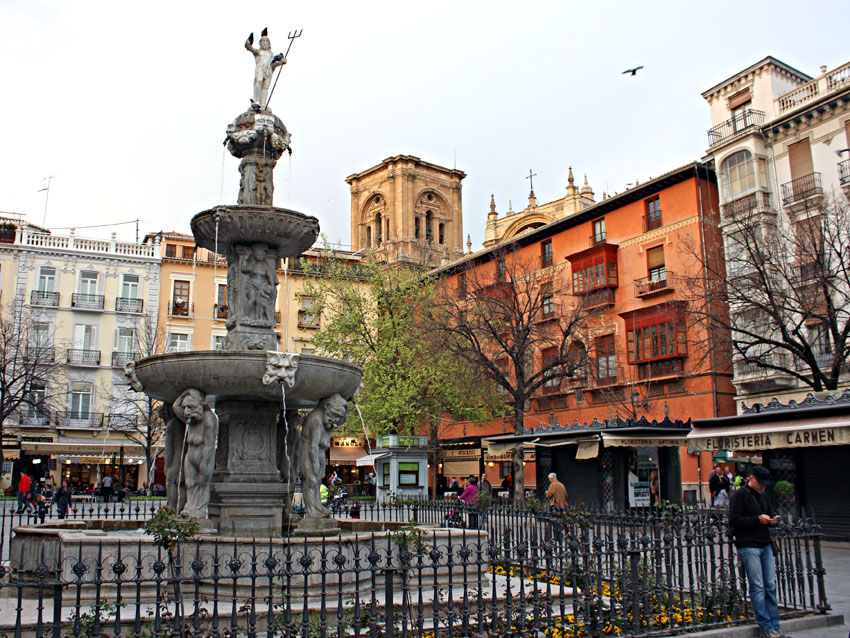
The Plaza Bibarrambla, Granada

The Plaza Bibarrambla, Granada

I met a fellow student, who had also just arrived from England, and we lugged our suitcases around knocking on hotel doors getting the same response everywhere. It was now getting towards midnight and a park bench was looking like our only option. Finally we found a cheap hostal residencia in the Plaza Bibarrambla. Run by a woman who seemed to spend all day in her dressing gown sweeping the steps, the beds sagged in a well worn banana shape, a bare light bulb in the ceiling flickered and crackled, and the communal bathrooms had chilly concrete floors and strict rules about not putting paper down the loo. It was super basic and the other guests could have stepped straight out of a Picaresque novel, but the place nevertheless had some charm, and offered fabulous views over the square. I wonder if it’s still there?