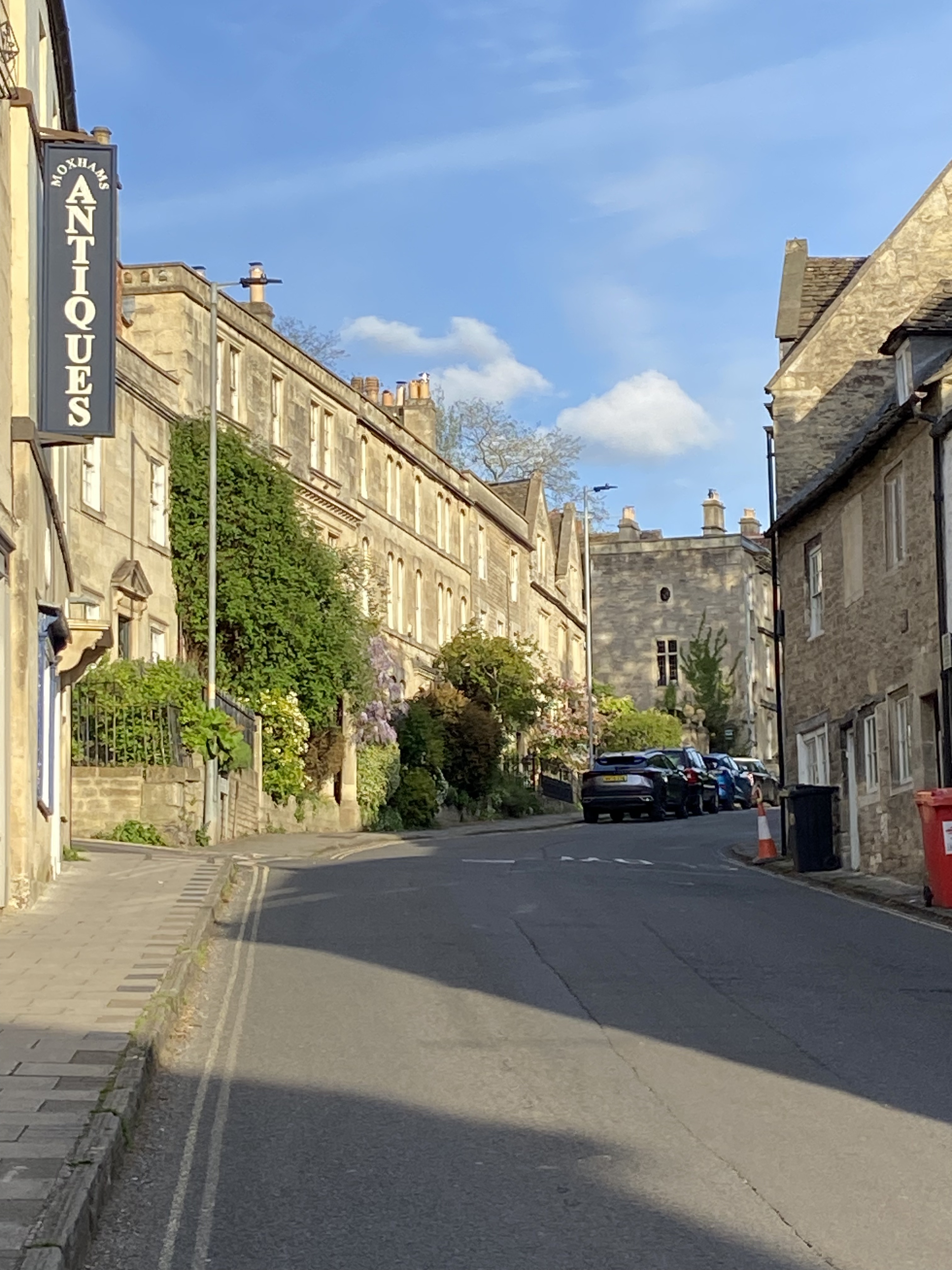
En route to Bristol in April, I stopped off in Bradford-on-Avon to visit my cousin Kate. The scenery on the approach to this historic Wiltshire town is gloriously bucolic, the River Avon snaking through farmland and woodland, with cattle and sheep grazing here and there.
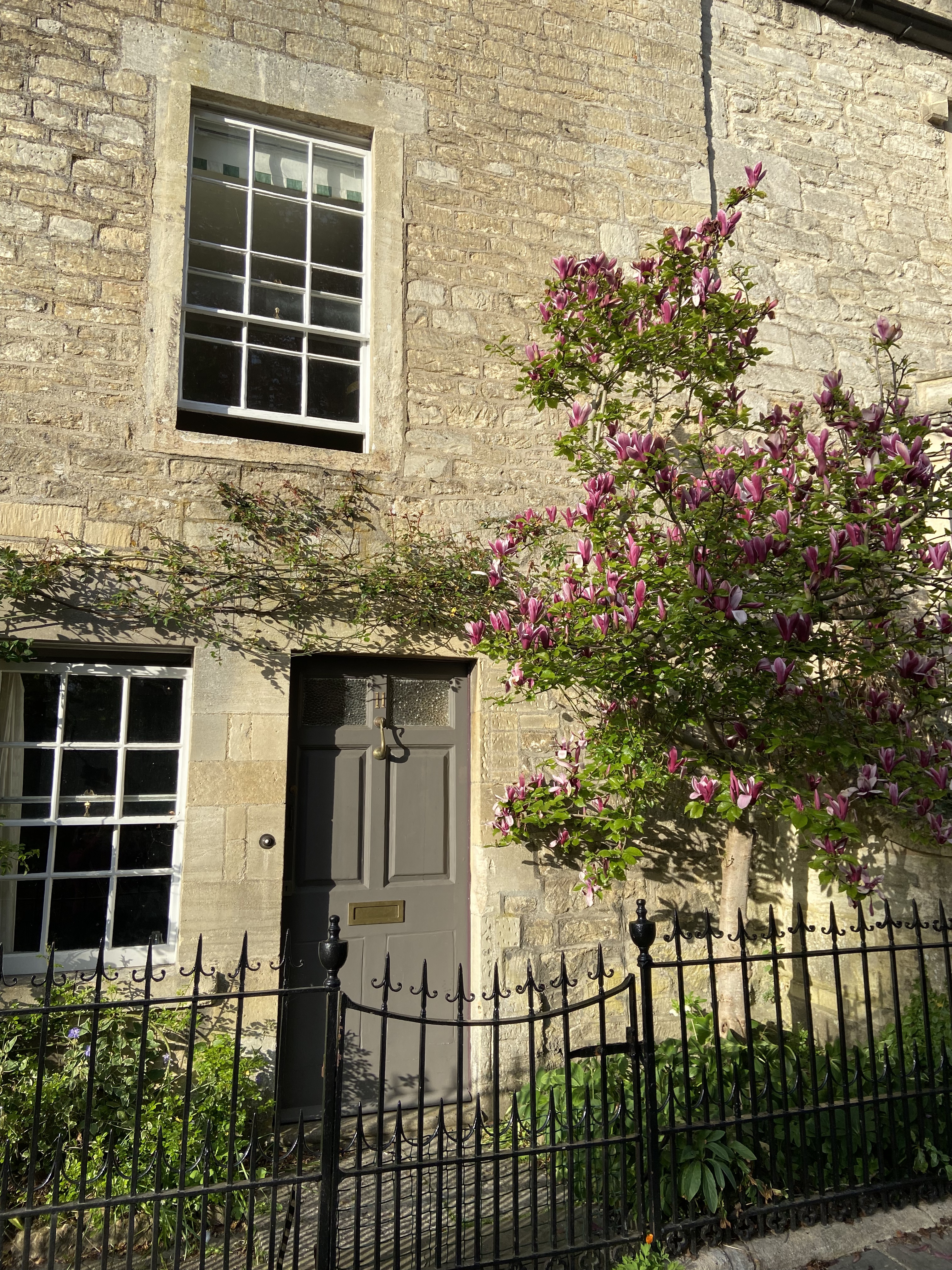
Kate is a talented textile designer, so it seems entirely fitting she now lives in Bradford-on-Avon whose wealth and expansion in the 17th century were built on profits from the textile industry, the river powering the woollen mills. I stayed a night with Kate and her family in her charming stone cottage, the grey-painted front door perfectly offset by the plum-coloured flowers of a magnolia tree. In the morning we went for a walk through the town passing through the Shambles, connecting Market and Silver Street, past gift and coffee shops, a fabulous cheese shop and a small, but very choice, fruit and veg shop.
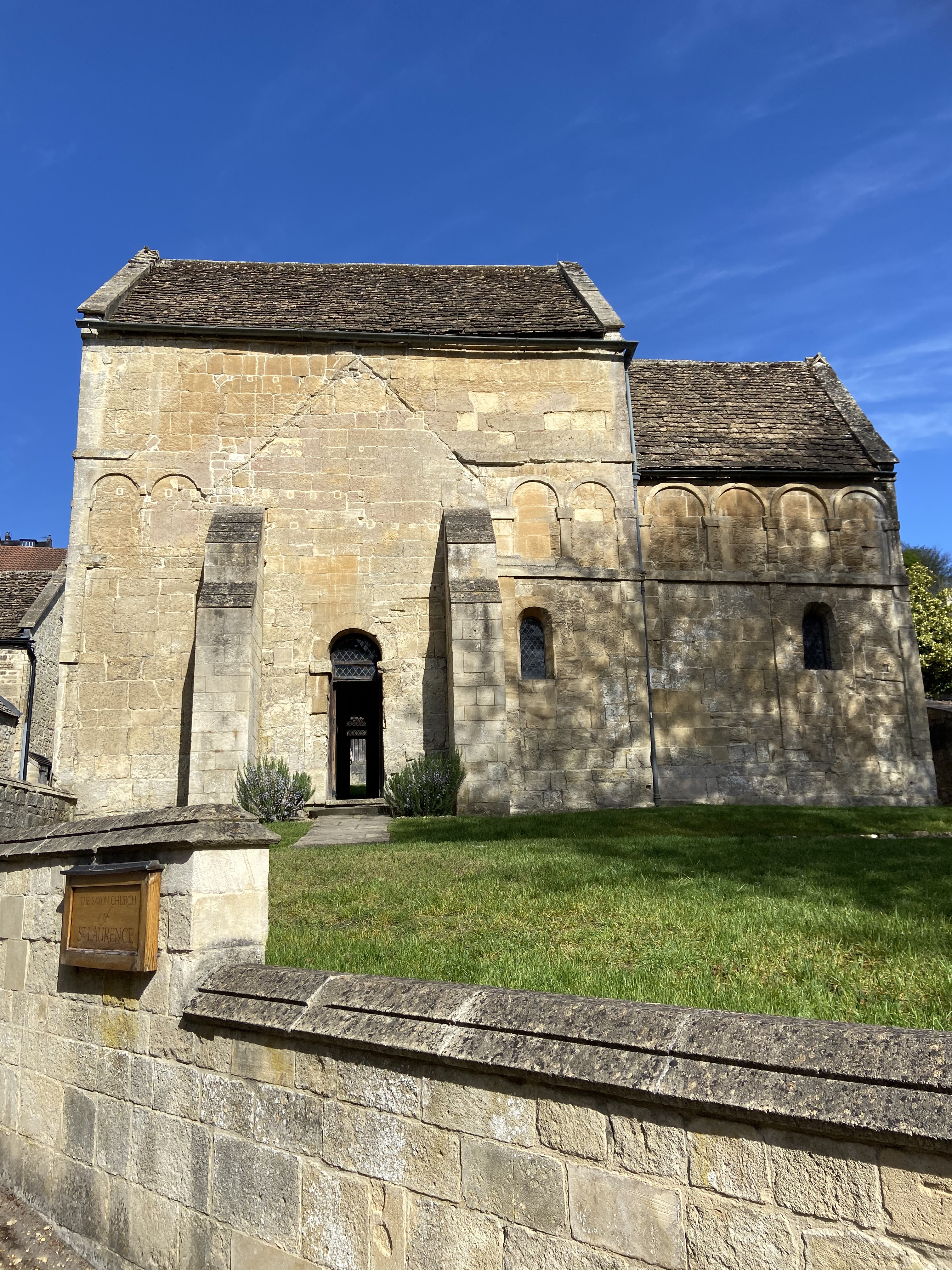
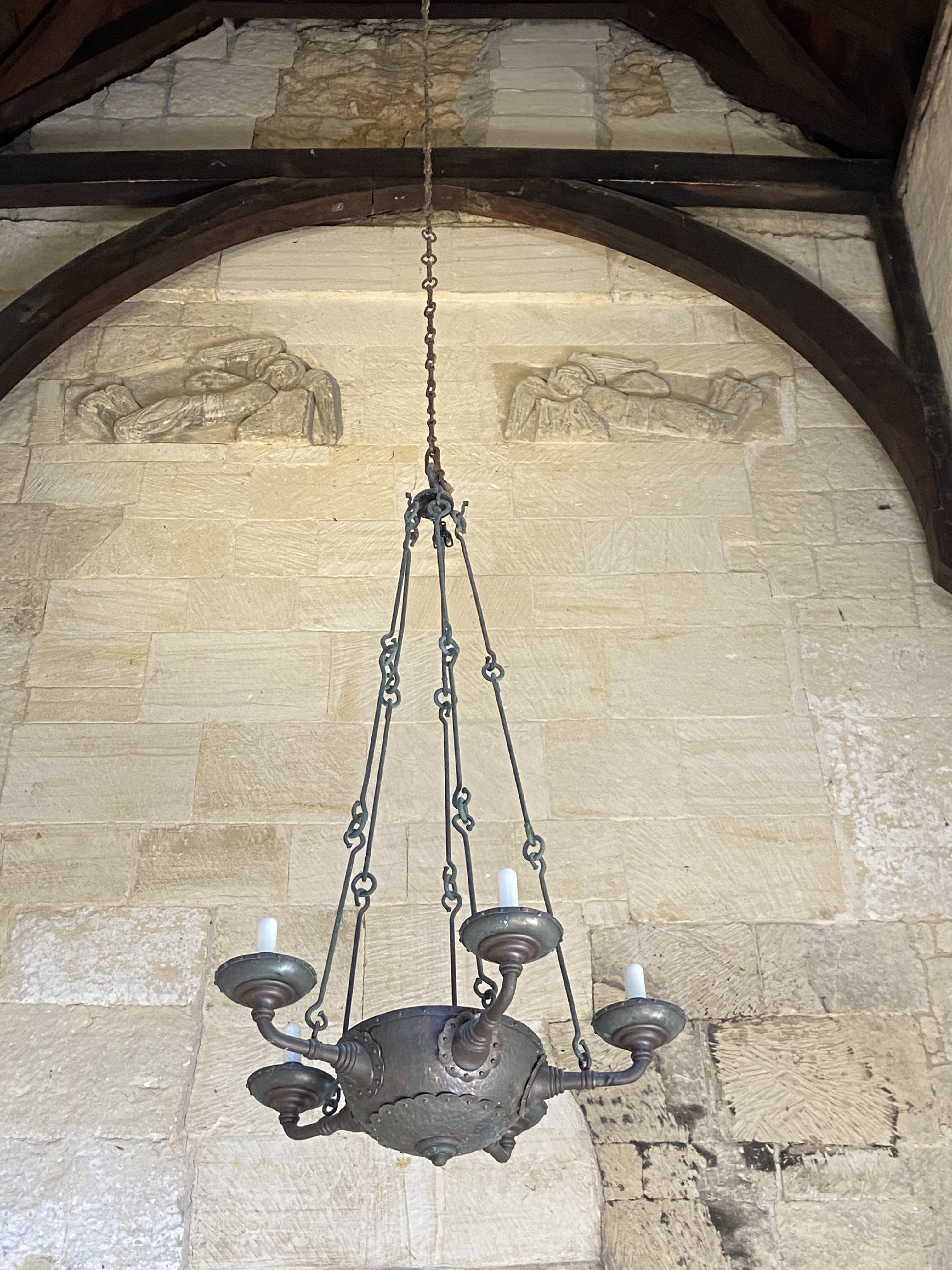
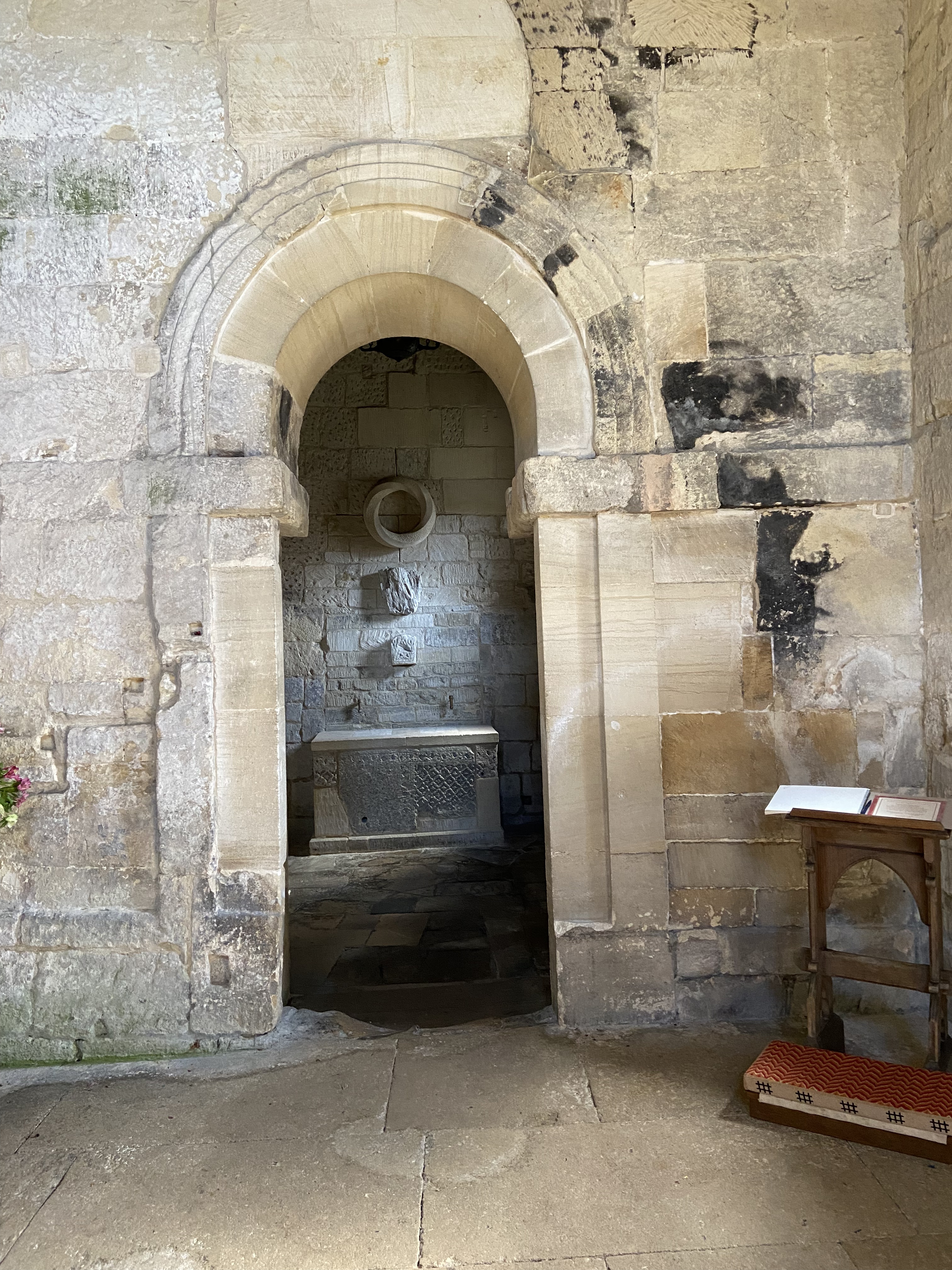
Our first stop was St Laurence’s Church, one of the few surviving Saxon churches in England. A 12th century historian thought the church was founded by Saint Adhelm around 700, but the architectural style suggests it was built in the 10th or 11th century. Either way, it’s extraordinary to find it still standing! It’s solid and you can feel the span of centuries in the thick stone walls and the narrow windows. There’s evidence of decoration – a pair of flying angels, in relief, high up on the east wall of the nave, facing each other across the chancel arch. Blowing up my photo, I marvelled at the detail on the angels’ wings. I was also interested to learn that the church served as an ossuary in 1715, becoming a free &nb sp;school for boys in the 1800s. You can still see black smudges on the nave walls from the kitchen fire.
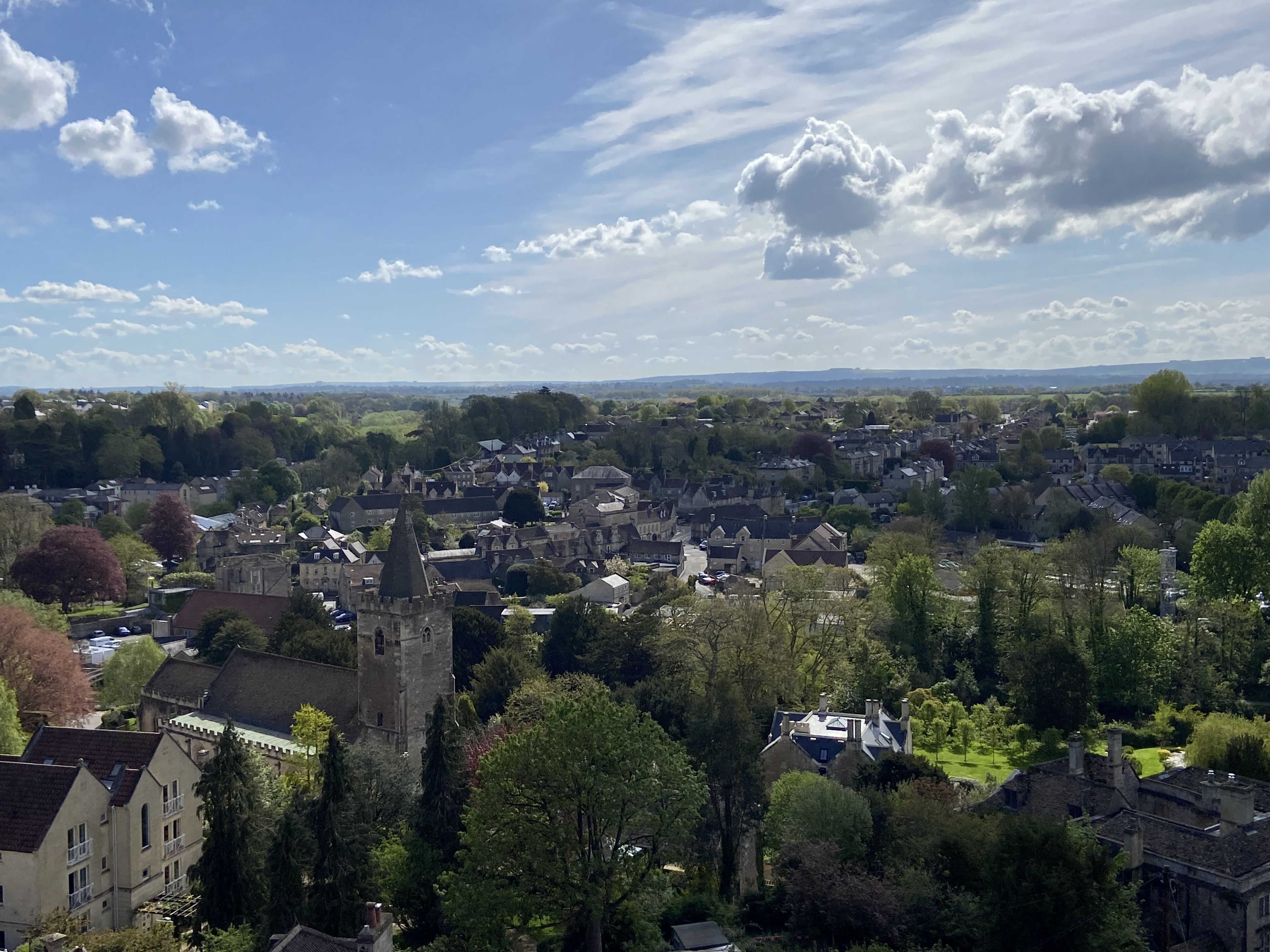
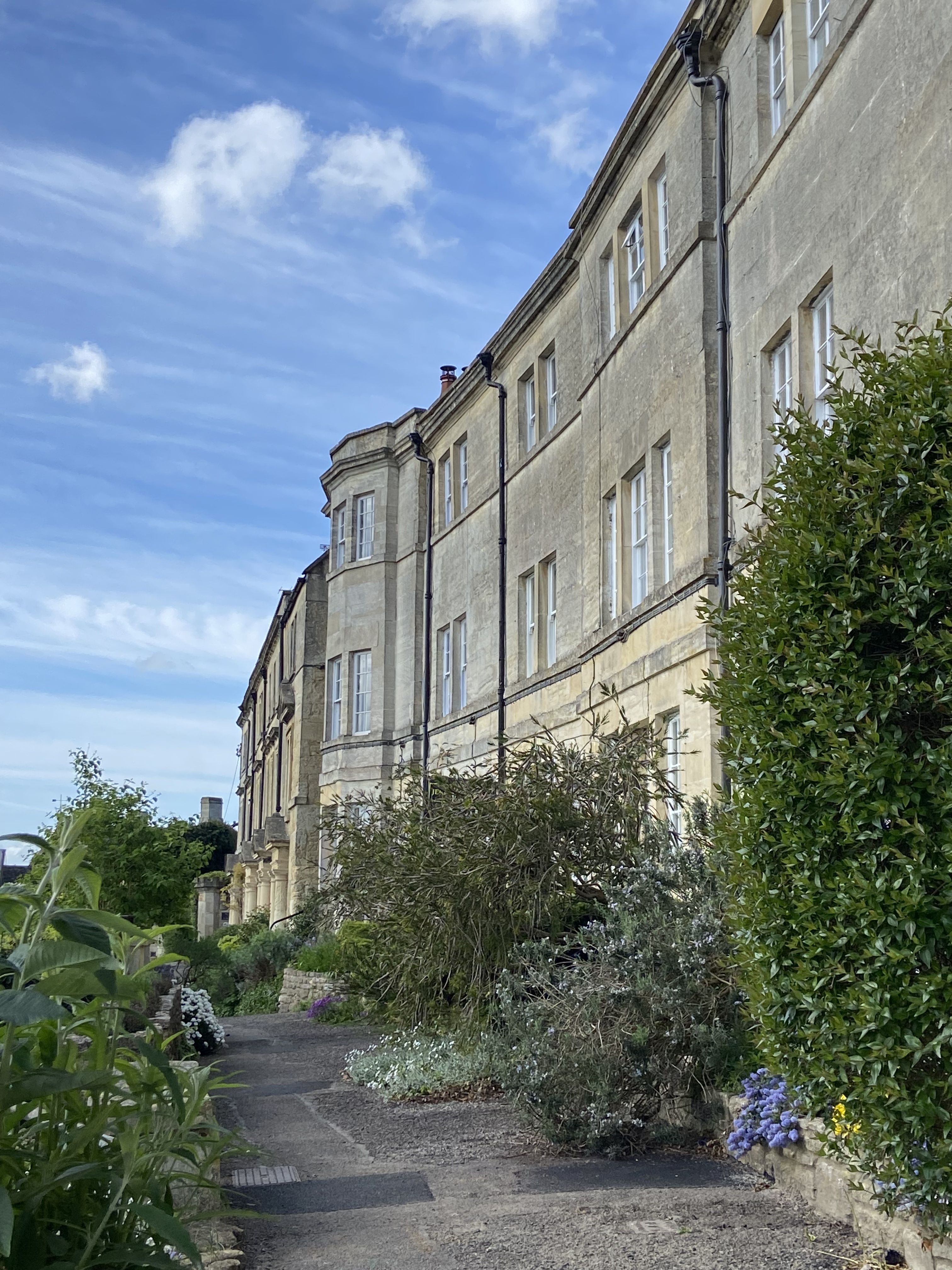
Carrying on up the hill we came to the Tory Terraces, Tory (or Top Rank) denoting the upper level of three terraces of houses, which were weavers’ cottages. From here there are magnificent views over the town across to the Salisbury Plain. On a bit further and we came to St Mary’s Chapel, which dates from the 15th Century and was originally a pilgrim hostel on the way to Canterbury. A typewritten note for visitors explains that the church fell into disrepair at one point but was renovated in the 1970s and returned to its original use as a pilgrim chapel and haven of peace for travellers. It continues with: PEACE BE WITH YOU!! the capital letters and exclamation marks making me smile.
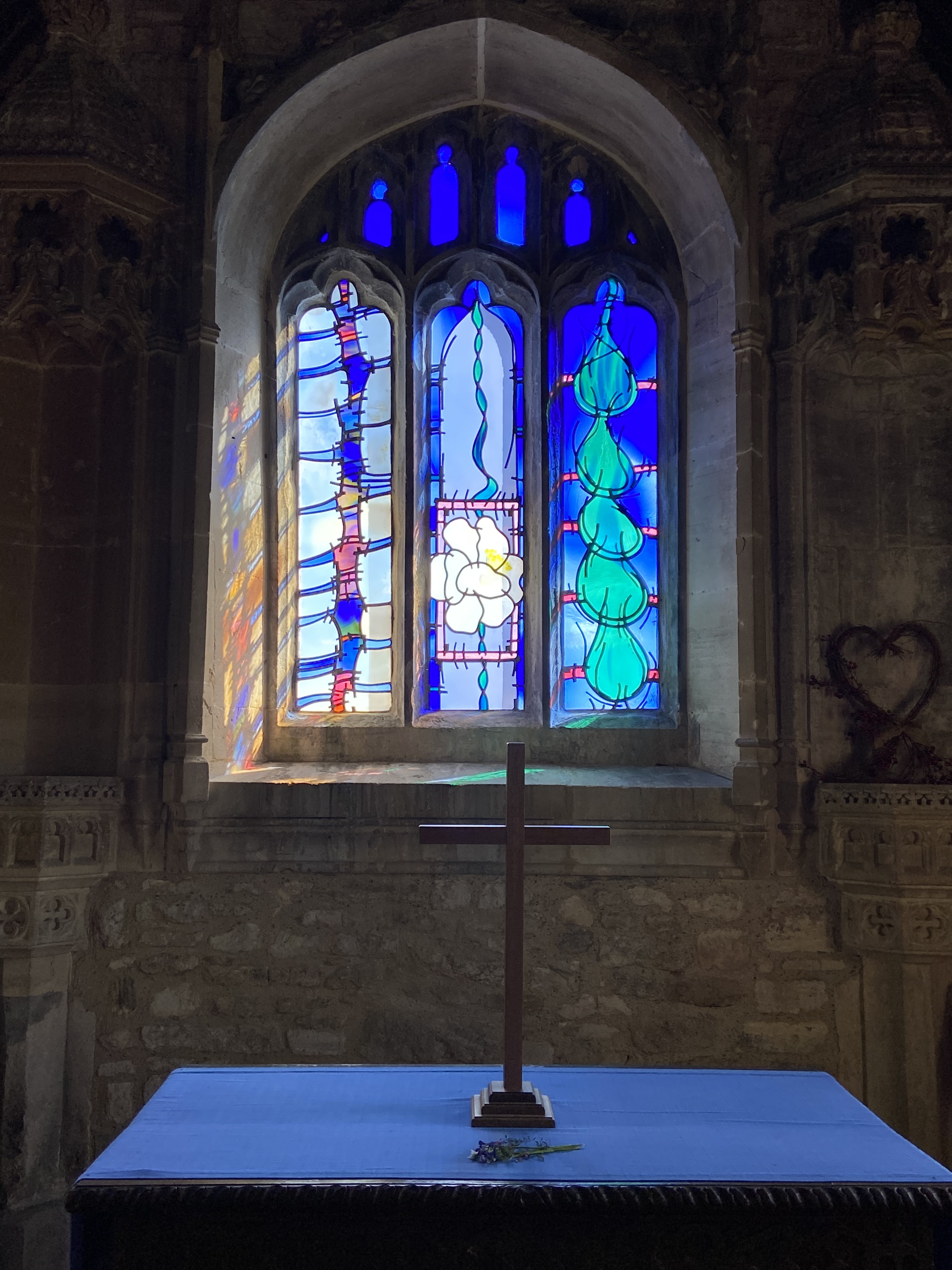
But what most caught my eye was the modern (1999) stained glass in the East Window which was commissioned by an anonymous donor. The &n bsp;blues and greens reminded me of a Matisse painting. A caption explained that: the central motif is a rosa alba, with white the traditional colour of purity and virginity, and the blue in the background is a colour traditionally associated with the Virgin Mary.
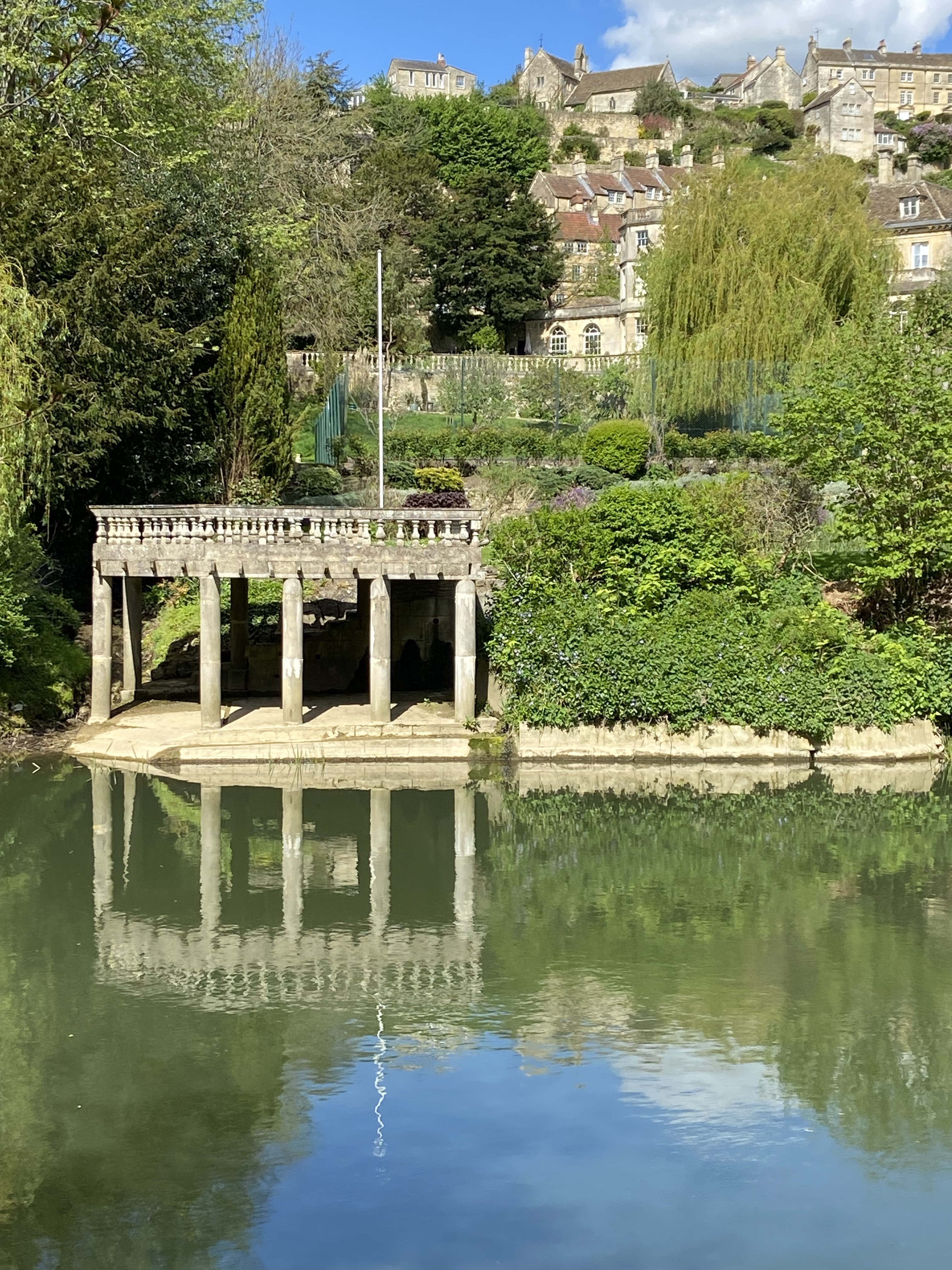
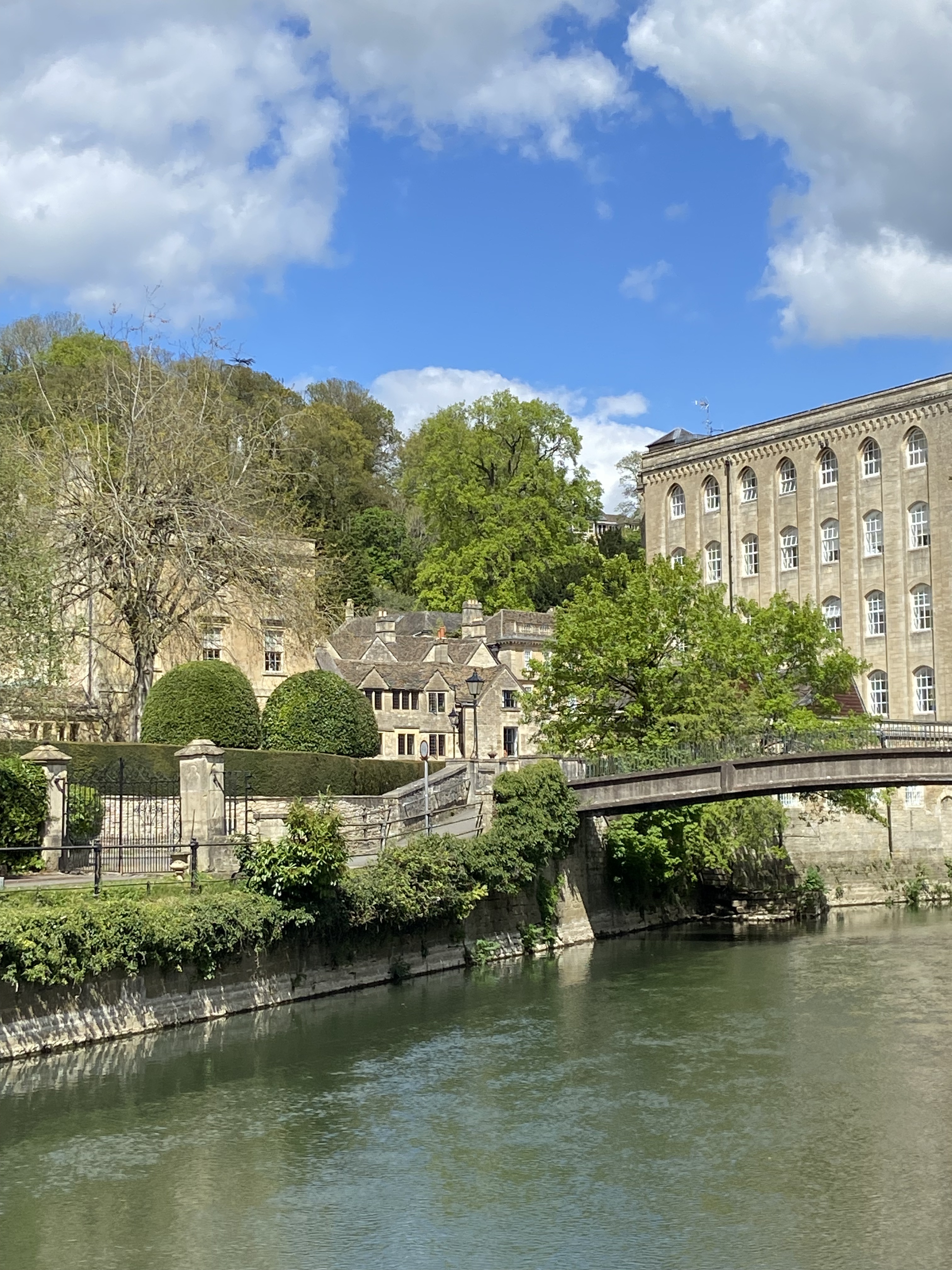
We stopped for coffee at the grade 1-listed tithe barn which, at 180 feet long and 30 feet wide, was constructed in the 14th century and used for collecting taxes in the form of goods to fund the church. We walked back into town along the river past old textile factories now converted into flats and via several excellent charity shops.
My other West Country Cousin, Matthew, lives just outside Bristol in Failand, where he and his son-in-law, Sean, run Wild West Cider and Wine. Swapping office life for farming, Matthew and his wife Philipa, embarked on their farming adventure in 2016, planting a vineyard, as well as hedgerows, orchards, woodlands and managing a flock of sheep.
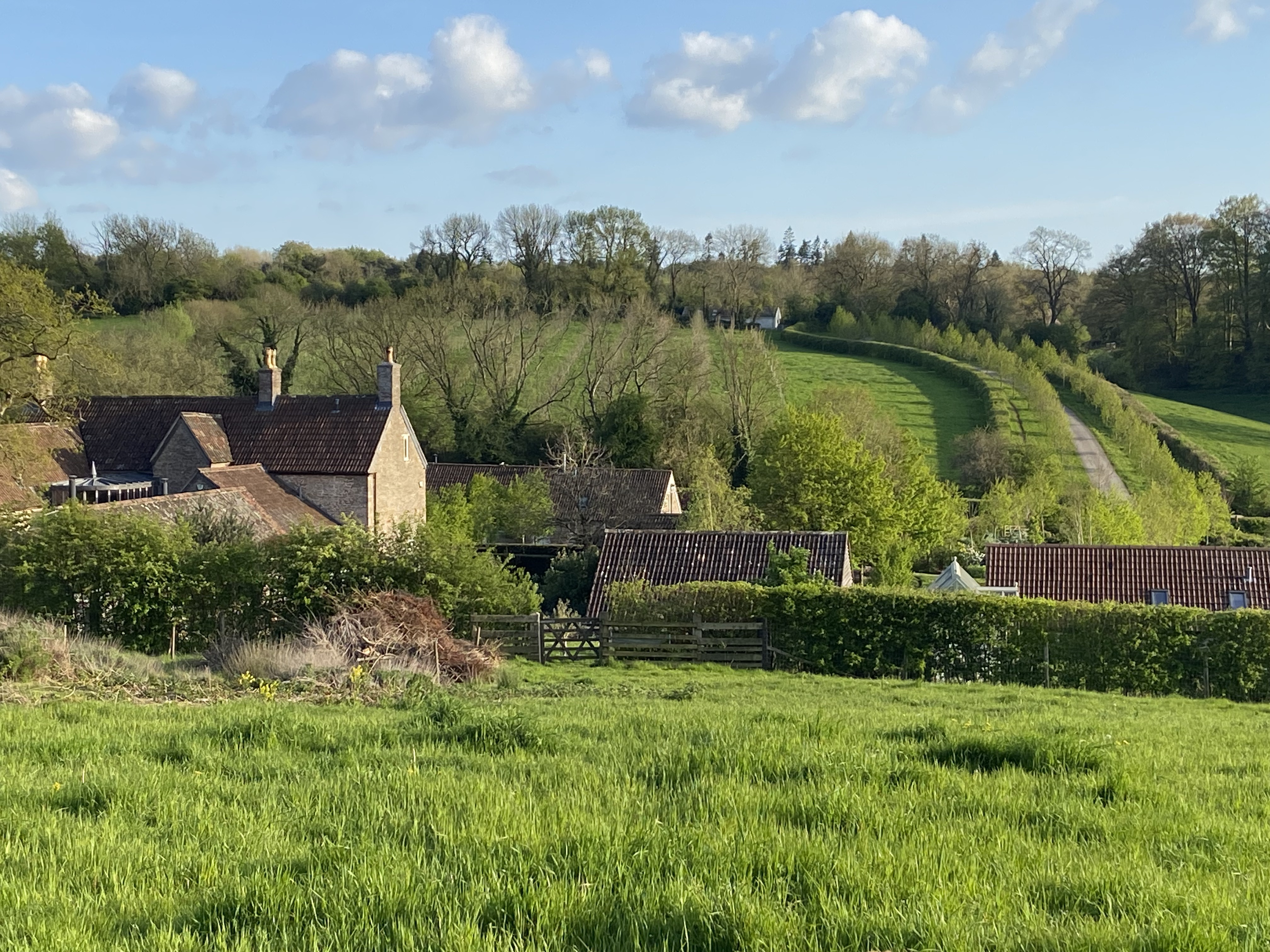
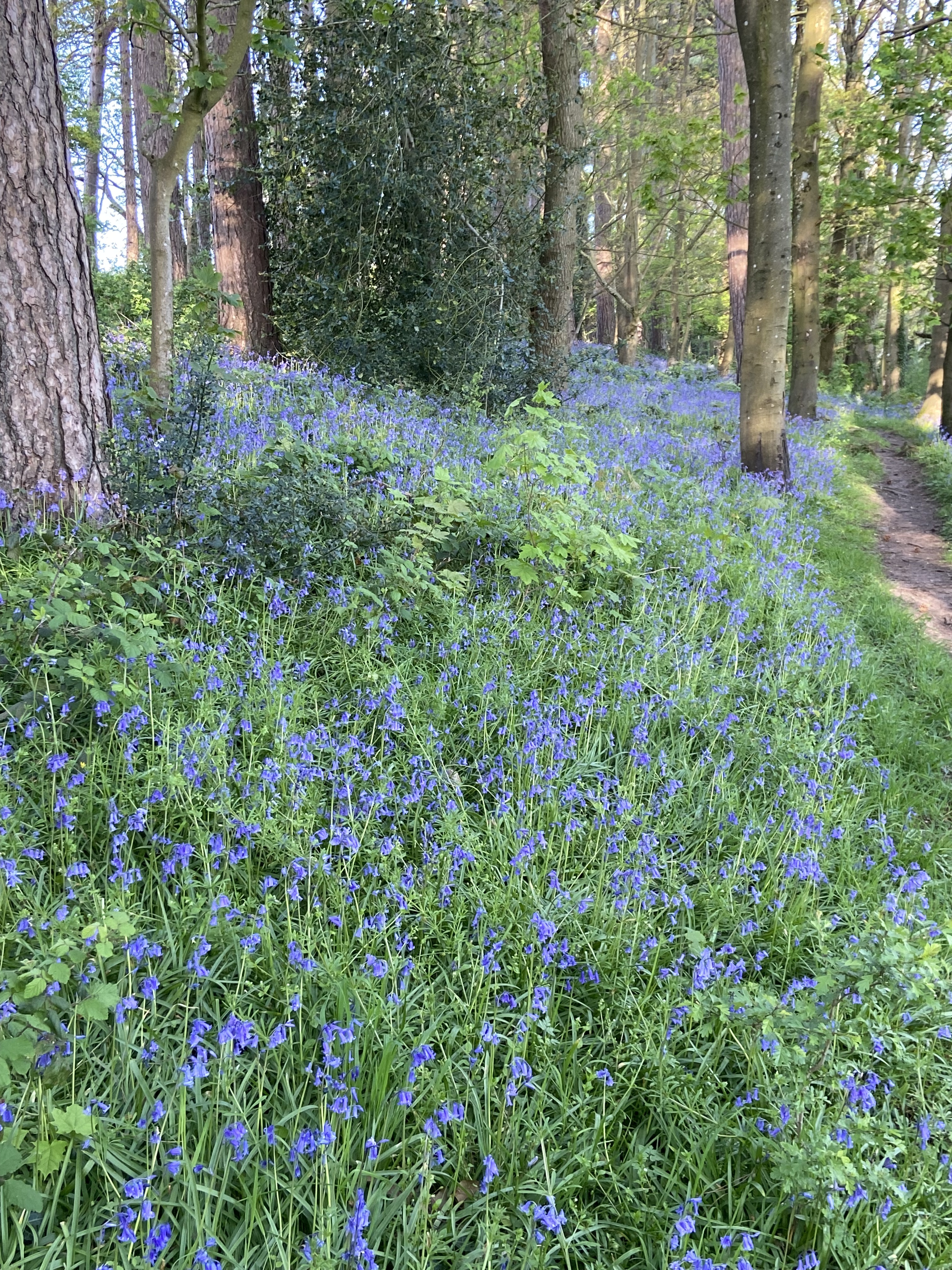
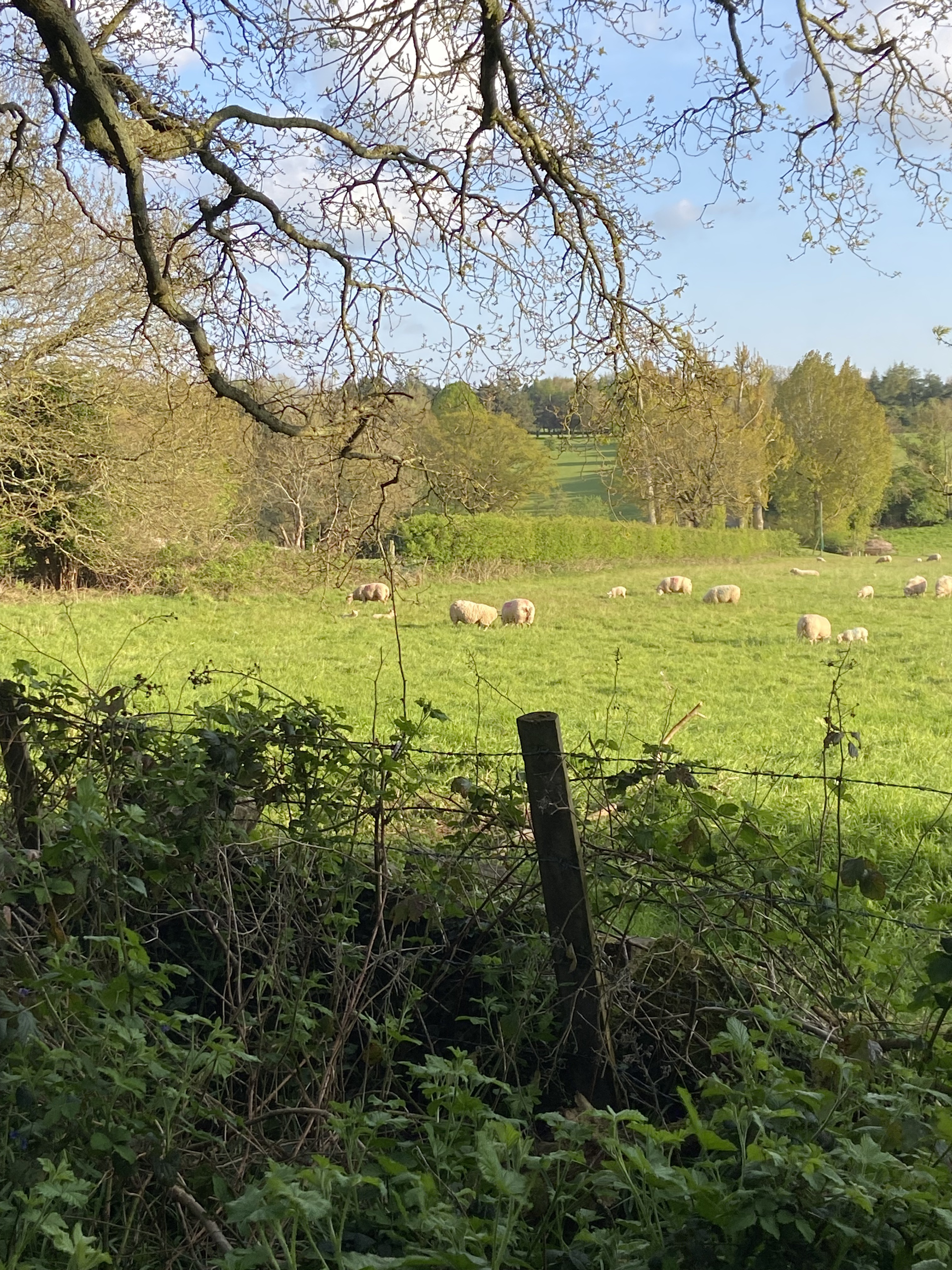
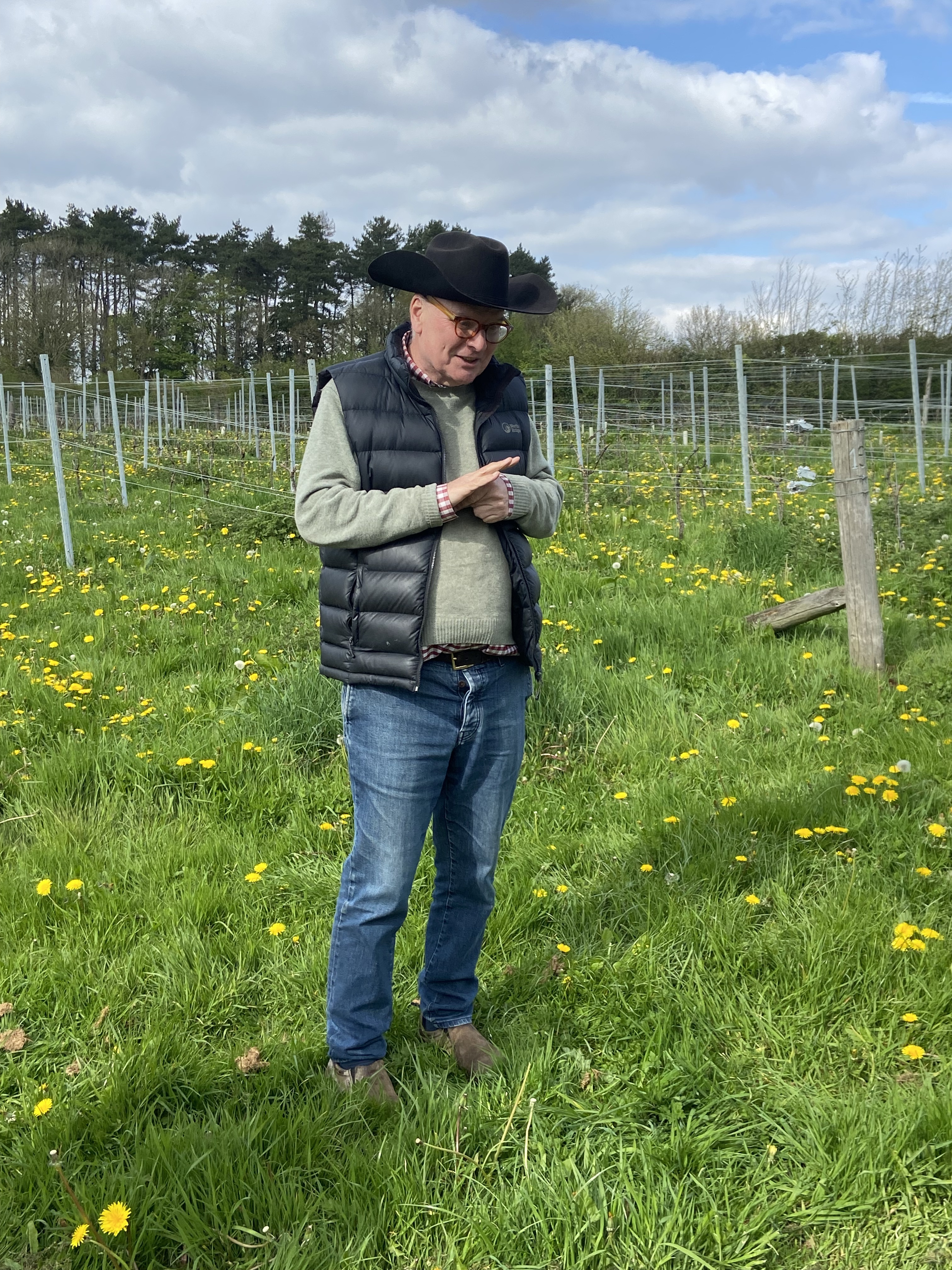
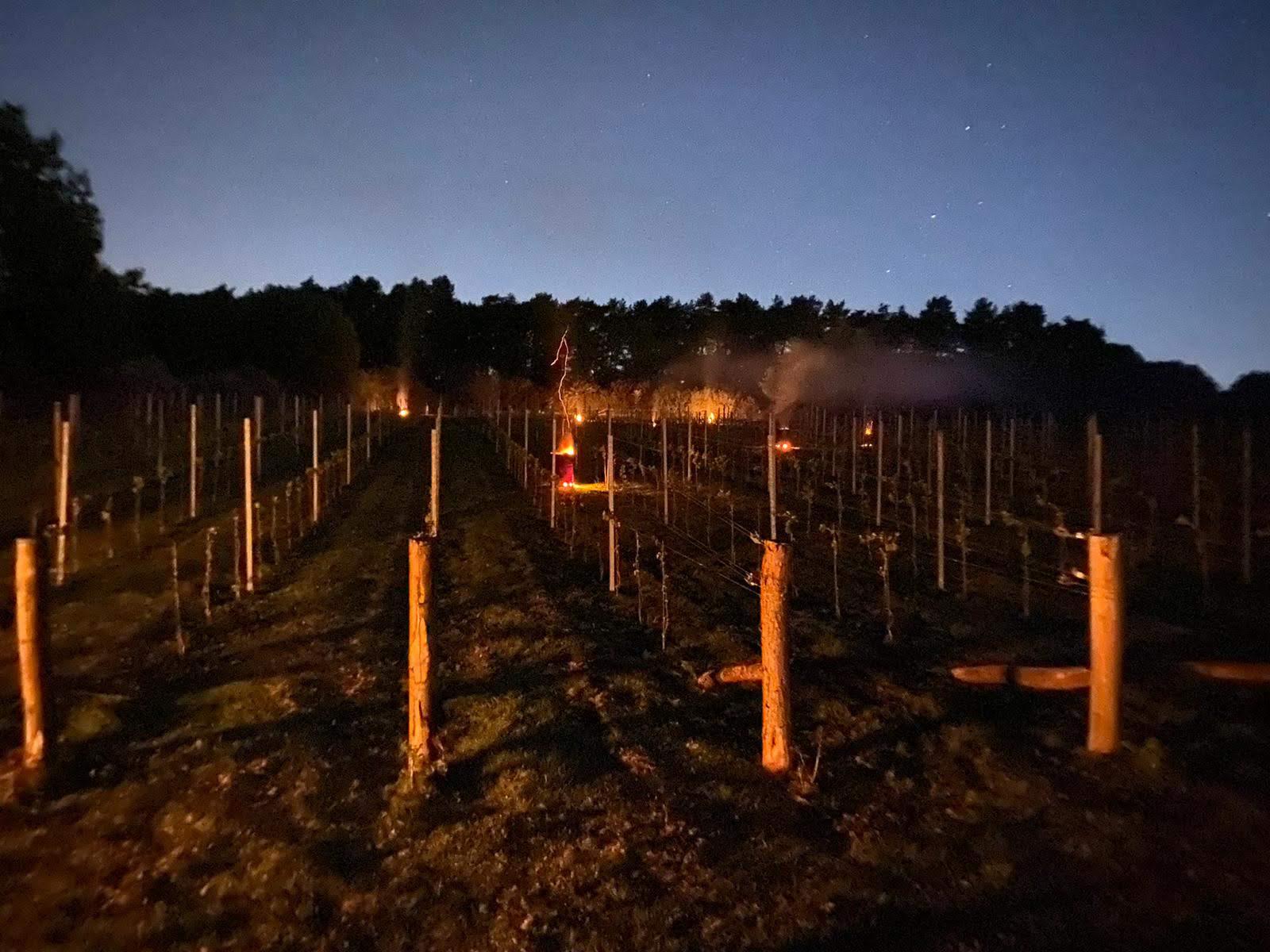
How lucky was I to visit in the spring – the fields lusciously green, the sheep gently grazing, the skies alive with birdsong and the woods behind the farm ablaze with bluebells. But, joining one of Wild West’s client tours, I was here to learn about wine and cider production. We started in the vineyard, Matt in full flow and sporting a cowboy hat. They planted 3,200 vines in 2017 and 2018 but, despite their best efforts, their first harvest in 2020 was killed off by a massive frost. Reminding me of a scene from the film the Widow Clicquot, where they lit fires to prevent the vines succumbing to frost, Matt describes how he and Sean stayed up all night, lighting fires in old oil drums and dotting them around the vineyard but, alas, to no avail.
There’s nothing easy about viticulture. Roses planted at the end of each row of vines act like the canary in the coal mine – if the roses get mildew, then the vines are next in line. Pests that need managing include greedy pigeons, bugs, aphids, scale and mites – you name it. Wild West has gained organic certification from the Soil Association – a huge achievement in itself – and so the focus is on low-intervention and environmentally friendly inputs. They use foliar feeds and seaweed and the only sprays they employ follow a strict schedule recommended by an agronomist, and contain small amounts of copper and sulphur for disease control.
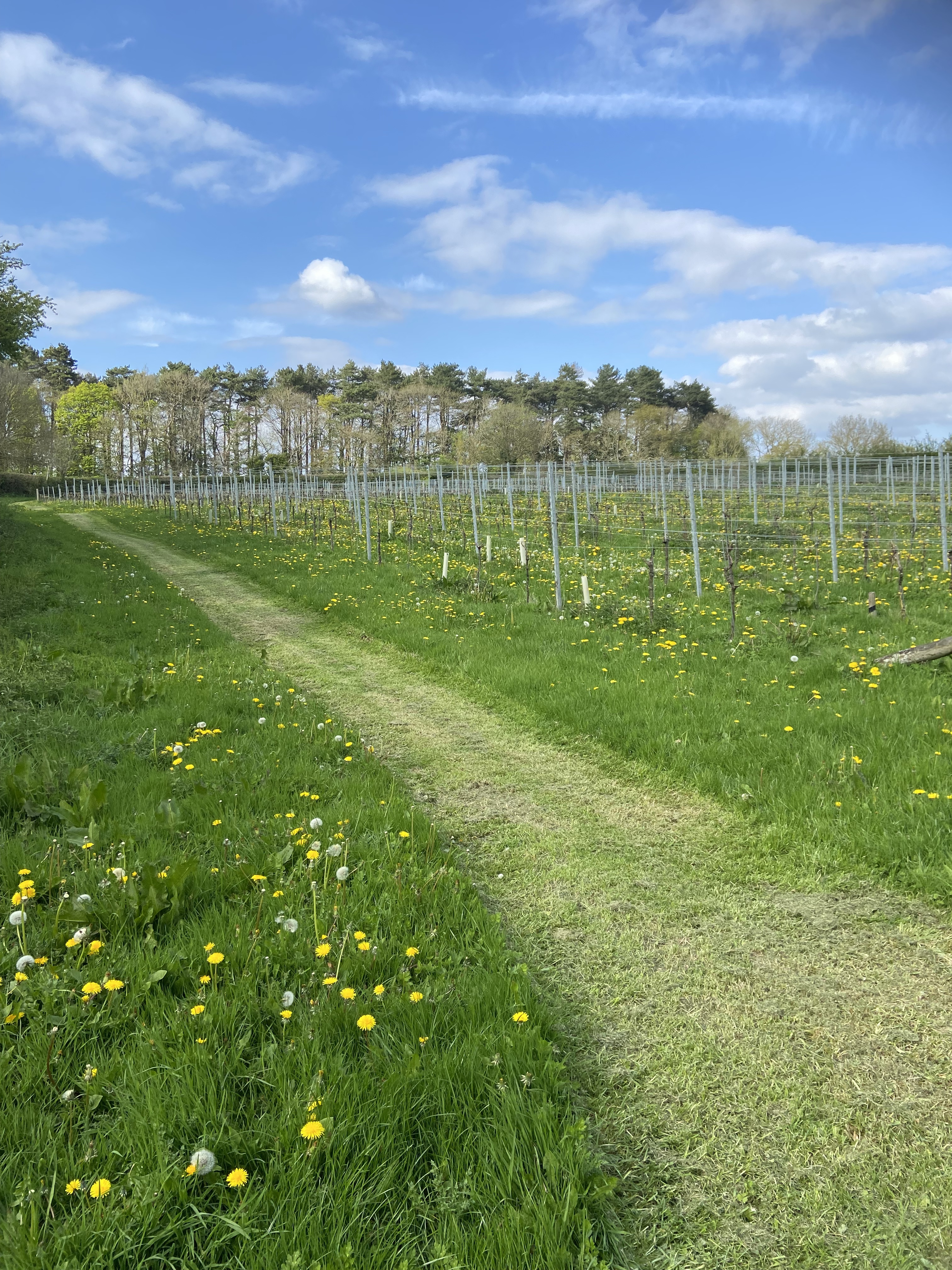
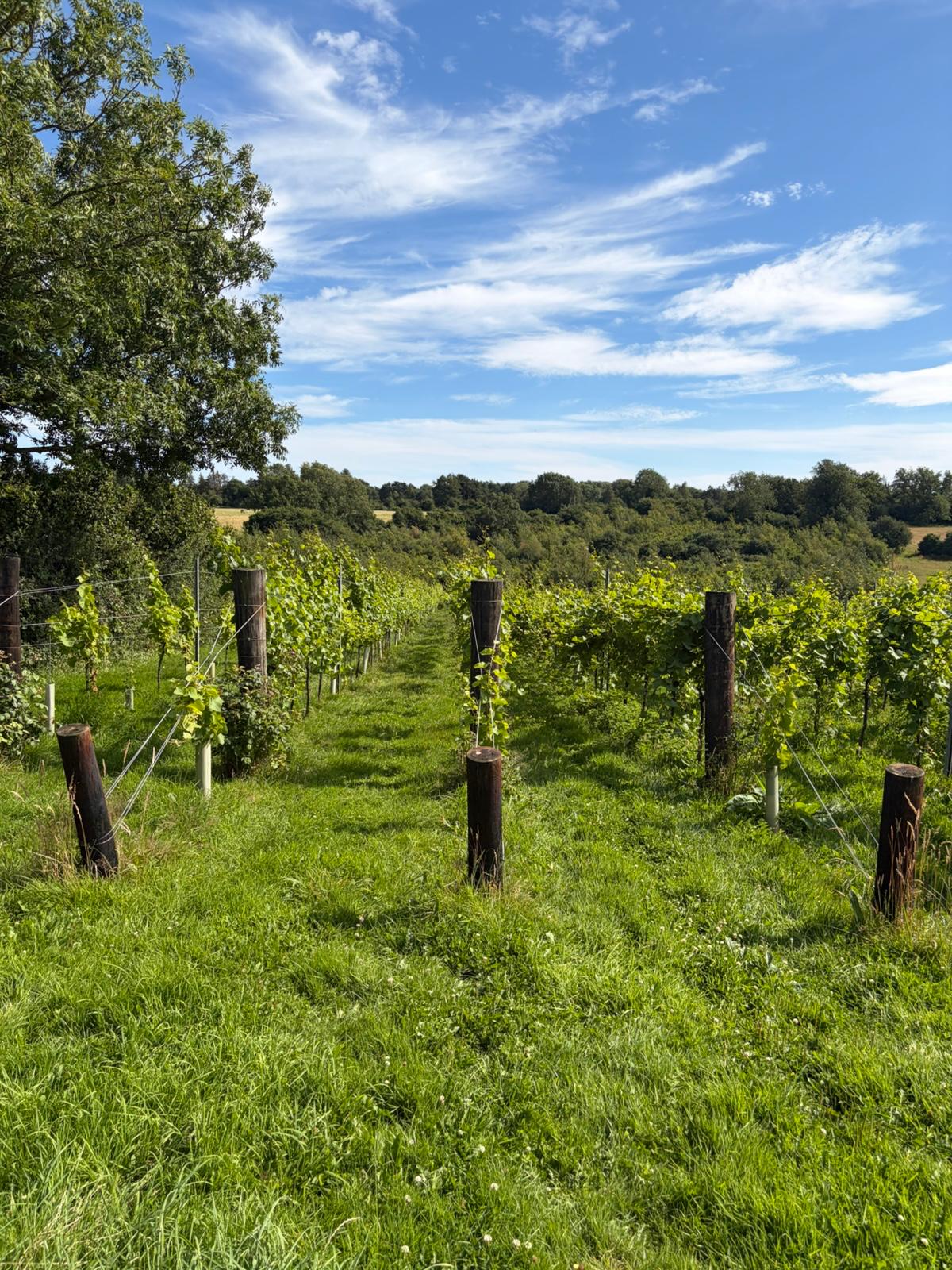
And then there’s mowing and weeding between the vines. They experimented with a specialised inter-vine mower towed behind a tractor. With a retractable arm on each side, it’s meant to sense the vines and avoid damaging them. Sadly, it wasn’t a fit for the terrain and didn’t do the trick. So now they rely on good old-fashioned scything, which, while labour intensive, works!
We sampled two wines – the first one, a Seyval Pet Nat (pétillant naturel – naturally sparkling), which, unlike a traditional méthode champenoise wine, is bottledbefore the fermentation has finished. While this one wasn’t quite ready for bottling, it was nevertheless delicious, light, not too sharp nor too sweet with an ABV – alcohol by volume to you and me – of 8%. Perfect!
Gauging the fermentation – too early and the bottle might explode and too late, you won’t get any fizz – is something of a skill and not something you can schedule. Matt and Sean use a hydrometer to track the fermentation and see how much sugar is left so they bottle at the right time. Matt explained that the fermentation moves so fast that it might all kick off at 2am. It’s really not for the faint-hearted this wine business!
The other wine we tasted was an orange wine which is made from white grapes but follows the red wine method which means the skins are left on and lots of skin contact is encouraged, which gives the wine its colour. This one was a bit sharp to my taste, but I am no connoisseur!
When the frost kyboshed their first harvest in 2020, a local farmer offered them some surplus apples, and they turned their hand to making cider. Every frost has a silver lining…We walked from the vineyard to their cider orchard. Timing is more relaxed with cider and pest control less intensive. You can keep picking the apples, with their thick protective skins, until just before Christmas and the fermentation is a much slower business, taking five to six months. In the fermentation room, we could hear the cider vats bubbling merrily away.
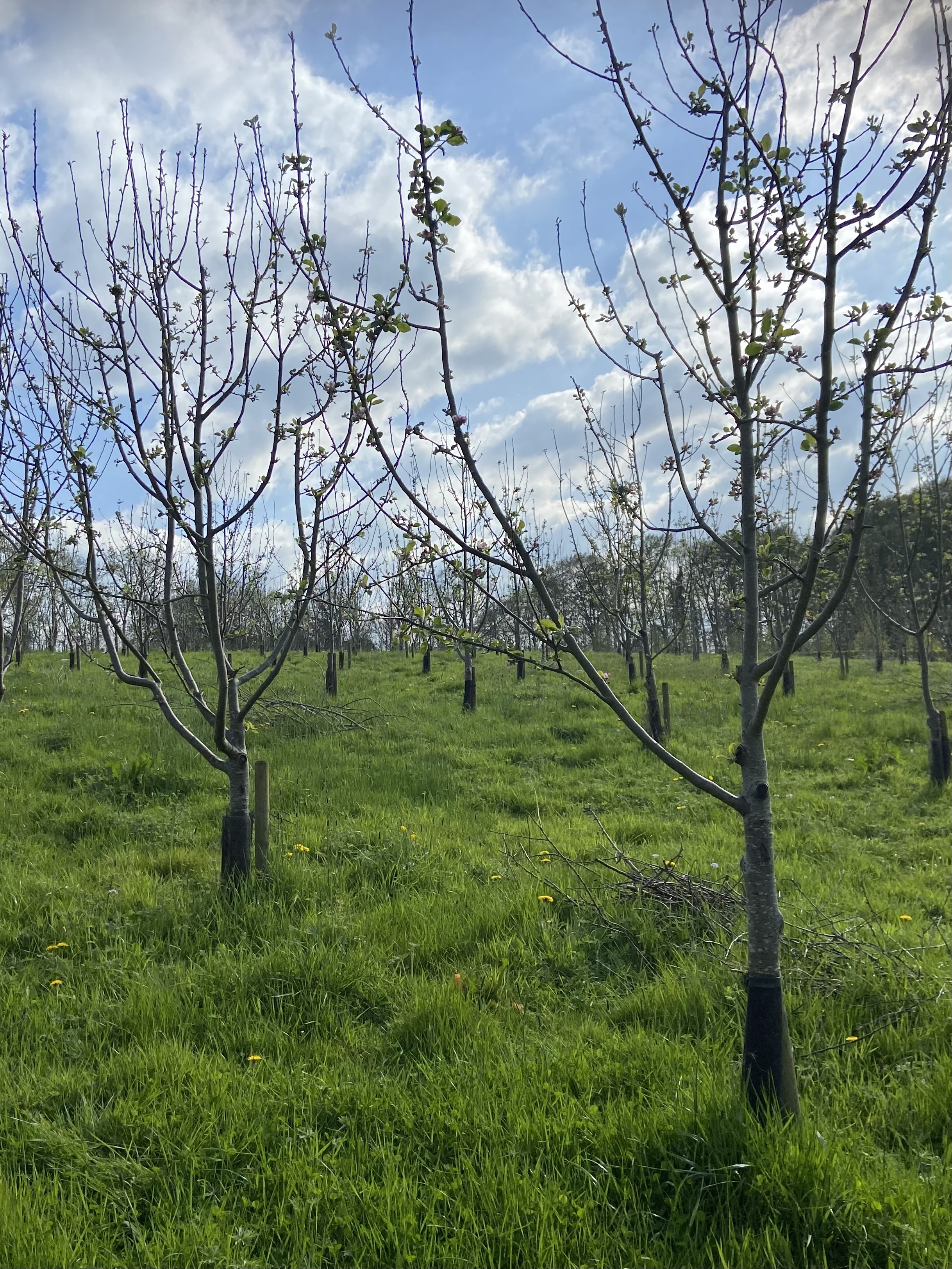
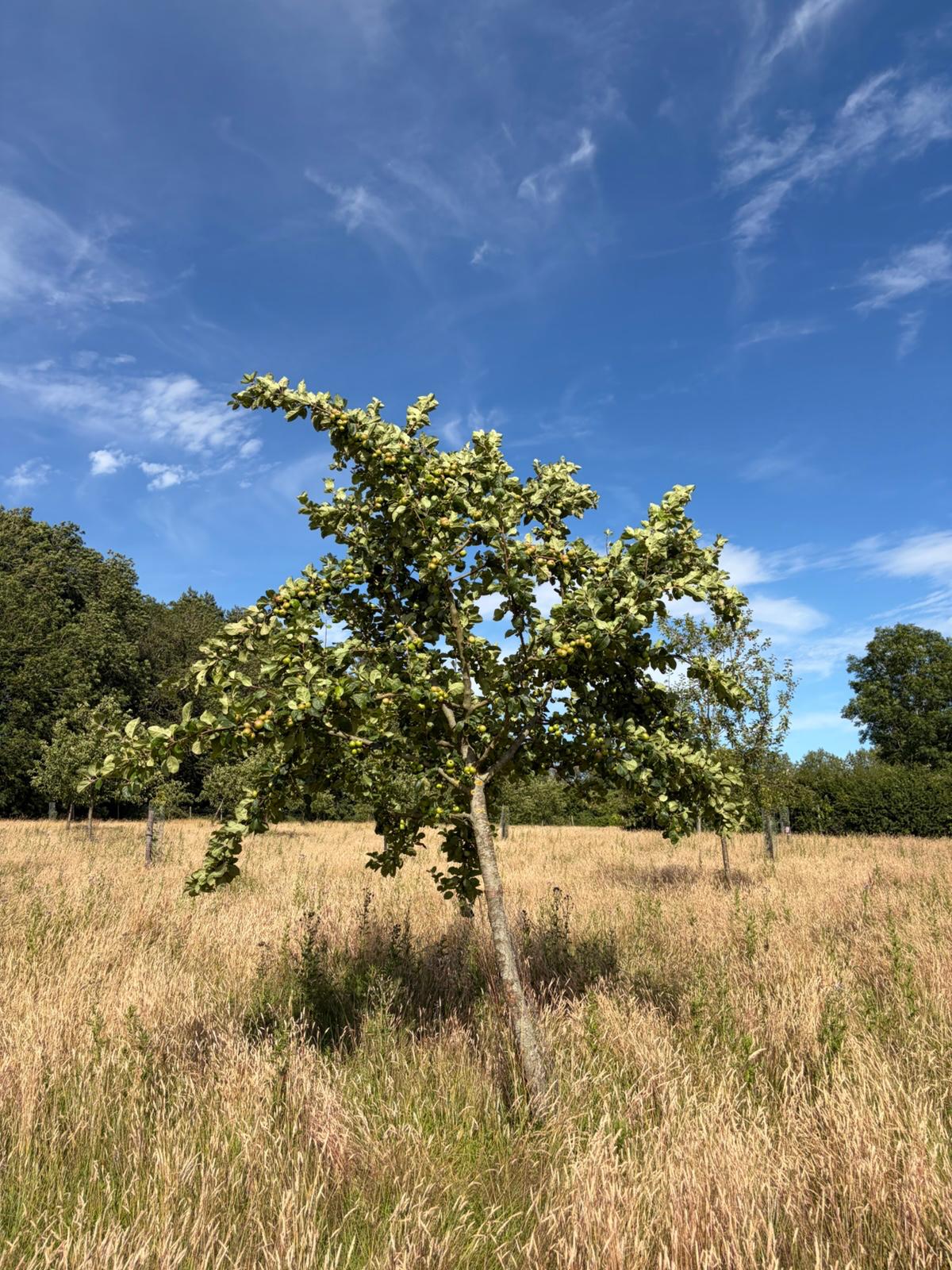
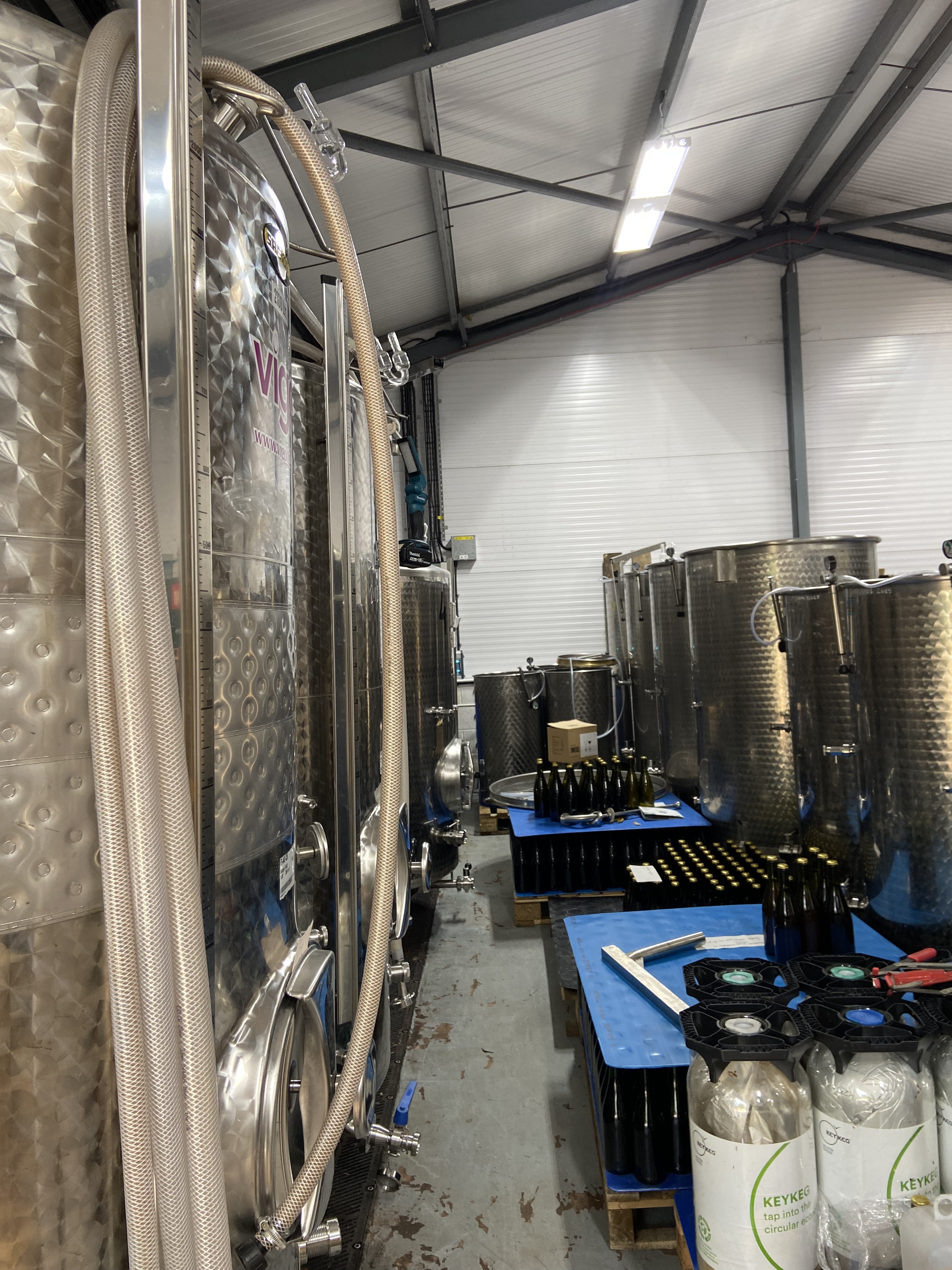
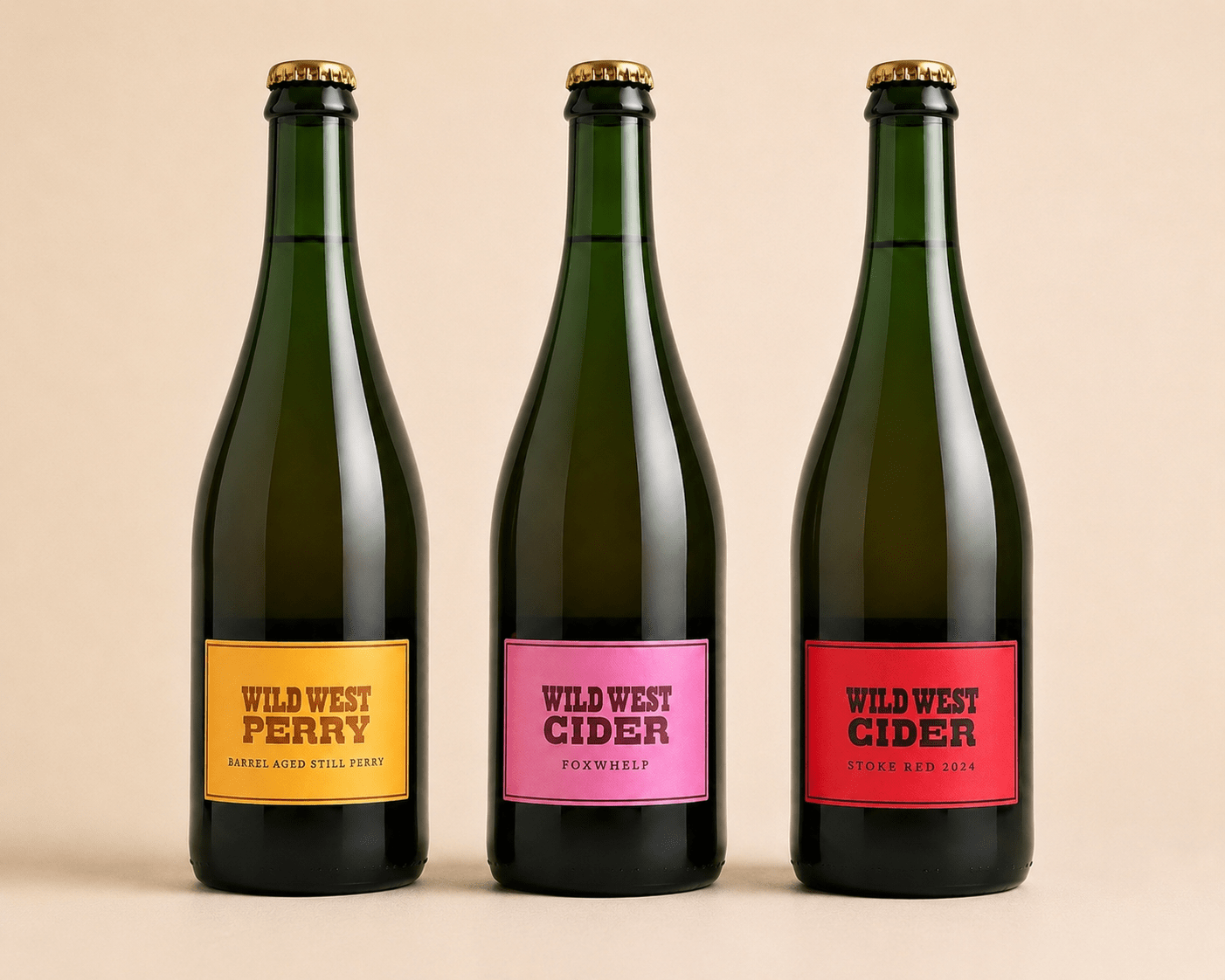
We tasted two ciders, none of that insipid, mass-produced and force-carbonated stuff, these were the real deal. They had great depth of flavour and colour – all that tannin from the hand-picked apples – and oodles of character from their quirky names to the artisanal labels on the bottles. We tried Rusty Buckle and Fox Whelp, the latter an old English apple cider cultivar.
To find out more about Kate’s fabulous interior design textiles go to: https://kateloudounshand.com/
And for more on Wild West and to see their range and online shop go to: https://www.wildwestcider.co.uk/
Discover more from This Quirky Life
Subscribe to get the latest posts sent to your email.


Loved reading this, was there with you! And now I want a cider… 😊
LikeLiked by 1 person
Thank you!!!
LikeLike
Another fascinating read with a wealth of information, fun and fizz! I so enjoyed it.
LikeLiked by 1 person
So glad! Thank you! Xxx
LikeLike