Giving My House an Airing

One of the reasons I renovated was to make my house more guest-friendly; that’s why I made a second bathroom out of a laundry cupboard and a ‘powder room,’ and created an ensuite bathroom to my room. Having two bathrooms avoids awkward nocturnal meetings in the corridor or having to queue up in your own house to brush your teeth. It’s nice to have left all that behind along with exams, backpacking and dormitories.

I’m now getting my house ship-shape for the Airbnb photo shoot, a free service offered by the hugely successful online accommodation business, which connects travellers with people in over 190 countries who have a spare room or entire property to rent out. Airbnb launched in 2008 and by 2012 had reached five million bookings. In 2014 Airbnb was valued at $10 billion, making it worth more than the worldwide portfolio of Hyatt Hotels. Impressive stuff! According to the webinar I tuned into, it’s all about building ‘virality’ (not to be confused with virility) into the DNA of your product. But that’s another story.

My Airbnb symbol - spot the beach huts!

My Airbnb symbol – spot the beach huts!

What I love about Airbnb is that you can escape the stuffy sameness of hotel accommodation and find a place that has character, is homely and enables you to meet and share stories with local residents. In December 2012 I stayed in a spacious and stylish flat in a trendy district of Copenhagen. Although I didn’t see her much (she had just met a new man), I got on really well with my host, a freelance photographer. She was great fun, helped me with my onward travel arrangements, offered me home-made marinated herring (you can’t go to Denmark and NOT try herring) on my last night and let me cuddle her pet rabbit. Although I fancy myself as something of an animal whisperer, (not counting the belligerent donkey in Greece who deliberately nudged a boulder in my direction), the rabbit took fright and shot into its burrow-like enclosure. Never mind.

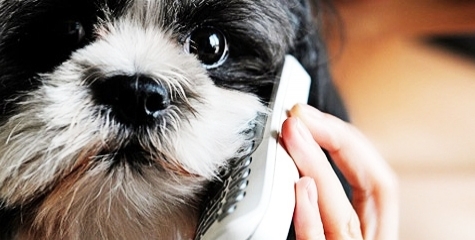
That’s why I’ve decided to ask the Airbnb photographers to include a picture of Bertie in one of the shots, so prospective visitors know that this house has a resident hound, one who loves to be part of the action. I was initially worried that Bertie’s excitable nature was going to make it difficult with guests coming and going. But, thanks to a recent one on one training session, the boy is beginning to understand that jumping up is not cool but that sitting down definitely is, and earns him a few edible treats. He does still bark in tandem with the neighbours’ dogs (they don’t seem to understand that dogs, especially those designed to herd sheep need regular exercise, ARGH!) but if I catch him and shake the jar of coins before he flies out the laundry door flap and barks up a storm, he stays by my side ever hopeful that a biscuit will magically drop out of my pocket. I never go anywhere nowadays without dog poo bags and treats…

He does still bark furiously at the possums and gets so worked up that he tries to climb the fence, so I only let him out a couple of times before bed. I’m hoping that my guests will be so enchanted by Australia’s nocturnal native animals that they will overlook the occasionally canine cacophony. I can always offer earplugs as part of the package.

Barking at possums - who me?!

Barking at possums – who me?!

P.S. on the Tyranny of Lists

It seems I was rushing so much to tell you about how much I had been rushing that I made some excellent typos! Which were kindly and gently pointed out to me by a lovely friend and loyal reader. Even though I printed off my post and read it aloud before sending, they still slipped through the net. Moral of the story for me is never to work on a post before dinner time when the working day is over, my stomach is rumbling and I am thinking about food!

But, of course, I meant I was ringing the AUSTRIAN railways, not the Australian ones, where speaking German wouldn’t get me very far, however much I got the grammar right! There were a couple of other clangers, but the main other change is that my friend in Japan tells me that WWOOF actually means Willing Workers on Organic Farms not that long-winded explanation I found on Google!

Over and out it’s time for breakfast and Bertie’s walk! Until next time.

The tryanny of lists

I’m really no good at DIY but I am good at lists and ticking them off. Although there’s always a list forming in my head, I have been a bit less ‘listy’ of late, so it was with renewed fervour that I raced through a to-do list this week, so much so that I couldn’t stop.

Life always gets a bit intense before I go overseas – I’ve got about 12 sleeps to go – and the devil is definitely in the detail. Today I tried to print off my train ticket from Vienna to Zurich (a bargain 49 Euros for a seven and a half hour scenic journey – if you can work out how to print off the ticket…). So drawing on my (rusty) university German, I called the OBB, the Austrian railway, and got through to a most charming woman. I managed to explain the problem and found out that I had chosen the pick up at the counter option rather than online printing. Everything was going swimmingly until I realised I didn’t know how to end the conversation. Luckily the woman got in before me and I remembered it’s Auf Wiederhoeren – meaning until we hear each other again – rather than Auf Wiedersehen (as in pet, anyone remember the British comedy?) – until we meet again. Another thing for the list: brush up my Deutsch!

Back to the DIY: one of my jobs has been to re-paint a couple of shelves in the bathroom as the paint had peeled off in two sections where a bottle of essential oil had spilt. I duly went into the shed for the vile oil-based enamel paint that the rip-off painters (see https://thisquirkylife.com/2014/06/24/renovations-stopped-play/) had used back in July. Then I put on some really old clothes, set up the dust sheets, did a bit of light sanding, pulled on a pair of special gloves (last time I got paint all over my hands and even my nose!) and did a reasonable job only spilling a bit of paint on the glass shower screen. Once completed, I felt proud to have done the job and celebrated by taking Bertie to the park. I met a fellow dog walker and apologised for smelling of turps. She said she couldn’t smell anything but noticed I had quite a bit of paint in my hair… It never ceases to amaze me that I am perfectly competent in many areas of my life but develop Mr Bean-like tendencies when it comes to home maintenance.

In between the freelance writing, I’ve also done some cooking (got my former (elderly) neighbours for morning tea this weekend), cleaned my high maintenance black and white bathroom floors, went to ALDI, op shops, second-hand furniture shops, prepared my spare room for next week’s Airbnb photo shoot, cleaned up my garden and leaf-strewn carport and took photos of my house to show folks back home. I also put up three small pictures in my guest bathroom (a few holes short of precise but my bodged attempts were easily covered) and then zipped off to JB HI-FI for new back-up drive (the old one died) and an HDMI cable so I can watch films playing on my computer on the TV screen. All very satisfying stuff but rather helter skelter, achievement-driven and rushed. So I’ve been delighted by the series of beautifully written and well observed blog posts from a friend who is a WWOOFER (Willing Workers On Organic Farms) in Japan. She’s living with a very eco-minded family who have a deep connection to the land, observe rituals and live with precision, total attention and mindfulness, qualities that are uncommon in today’s ego-driven materialist world. Her blog is called A Man, A Woman and Four Languages, and I thoroughly recommend it.

“Yesterday evening I was given a lethal hatchet knife to slice up spring onions. But my 3mm slices weren’t good enough; 1mm was what was required. Not for the first time I felt very uncivilised. So, this morning, when Rie asked me to arrange some umeboshi plums from the bin where they’d been soaking in brine, to a flat basket, to dry, I made sure that they were arranged exactly as briefed. Which meant really slowing down, and concentrating. It’s the same with the gardening, because of the approach to weed control

How do they get anything done when it all takes so long? I asked her over email. She replied “most of their life centres on the basics of growing, cooking, cleaning, washing, heating, maintaining. And these tasks aren’t chores to be completed as fast as possible; they are the stuff of life, i.e. the end as much as the means. ….doing jobs as quickly as possible isn’t the point.

I really must hurry up and look at self-publishing my book titled, SLOWING Down in the Fast Lane: From Adventure to Zen and Everything in Between.

I’ve had a win!

I am very excited to share that my short story ‘A Brief Encounter’- adapted from my book Slowing in the Fast Lane: From Adventure to Zen and Everything in Between has been published on the Radio National website as part of their ‘Pocketdocs’ competition. The guidelines were that it had to be a story on the theme “I met a stranger” and be less than 500 words. The story I sent in was adapted from my D is for Dogs chapter, and, like all the stories in my humorous, memoir-style collection, is true and unembellished in any way.

You can read it here:

http://www.abc.net.au/radionational/programs/360/projects/pocketdocs-2014/5768322

Like many writers I spend hours tapping away into the silence, into the void, racked with self-doubt so successes like this really encourage me to keep going and to honour my voice and way of writing. The RN editor commented on my strong voice.

What’s more, a good fried of mine, Felicity, herself a published author (mentioned in an earlier post on bee-keeping), recently read my book from beginning to end and really loved it. Armed with these two pieces of positive feedback, I am inspired to have another go at getting it published or to self-publish. Watch this space!

A meeting of hearts


“The best and most beautiful things in this world cannot be seen or even heard, but must be felt with the heart.” Helen Keller

I aim to live as much from my heart – feeling my way through life – as from my (very busy) head . But, inevitably, living in such a mind-dominant world, my head often wins out. And I’m definitely with the Ancient Greeks who thought that the heart was the seat of intelligence and organ closest to the soul. On a physical level, our hearts are one of the most important organs in the body beating approximately 72 times per minute moving blood, oxygen, nutrients and waste materials in and out of our cells. But how many of us take our hearts for granted? I know I do.

So you can imagine how humbling it was to meet a young boy not yet six years old, let’s call him Tom, who recently had a heart transplant at the Royal Melbourne Children’s Hospital. Tom was born with what’s known as a TGA heart, TGA meaning transposition of the great arteries. In other words the right side of his heart was doing what the left side should have been doing and vice versa.

This brave little heart warrior (that’s what HeartKids call children with congenital heart defects) underwent major open heart surgery just a few weeks after being born. His young life has been filled with trips to doctors, specialists and hospitals in a constant round of check-ups, cardiographs, echocardiograms, radiography and blood tests. By 2013 he had undergone four lots of surgery, the last one to replace a smaller pacemaker with a larger one.

But earlier this year his heart was showing signs of failure and Tom and his family moved into Ronald McDonald House in Melbourne to wait for a donor heart to come up. I am happy to report that a heart did become available and the operation was successful. Tom has now had two clear biopsies and might soon be able to go home and start school.

I met Tom’s grandmother, Susie, when visiting mutual friends at the end of last year. So when she called and asked to come and stay for a few weeks during Tom’s recovery phase I was only too happy to help out. In fact, she was my first post-renovation guest and so my small but perfectly formed spare bathroom came into play. And, this last weekend Susie brought Tom to stay for a night. It was a short visit – and Bertie dog had to go for a sleepover with his cousin, my brother’s dog, Rocky – but one I will treasure for a long time.

I had seen pictures of Tom before his operation and he looked frail, pale and delicate. So how wonderful it was to see a strong young boy now weighing about eight more kilos and bursting with strength and energy. This little man is a solid mass of muscle and, I kid you not, could easily wrestle me to the ground. Not that we put it to the test.

Instead we got straight down to the important things in life and played games and ordered fish and chips for dinner. My mother laughed at me when I shipped over some of my childhood books and games from England: “What will you do with them?” she asked. “They’re for when little people come to visit, of course,” I replied rather impatiently. Tom loved my game Mousie-Mousie (vintage 1960s) even if half the counters were missing, the mice now have rather twisted tails and we made up the rules. Tom had his own games too, all packed in his Thomas the Tank Engine suitcase along with this Spiderman PJs, and so we played Snakes and Ladders and Monkeys before nipping out to the fish shop.

photo (6)
Before breakfast the next morning, I read to Tom and reconnected to some of the wonderful books published by Frances Lincoln Ltd, in London where I worked back in the 90s. Animal Parade is wonderful read-aloud animal alphabet book and The Leopard’s Drum, a stunningly illustrated African creation story.
photo (3)

Tom tucked into a cooked breakfast of bacon, eggs and mushrooms and was as bright as a button. He kept up a steady stream of questions – how old was I? (THAT old, he questioned, adding a nine for good measure), where did I work? (home? Why didn’t I work at Woollies? I think he must have been chatting to my family who don’t think freelance writing is a proper job!) and when would he see me again? Tom and his family had travelled to Melbourne from out of state, so it may be a while before I get to play Snakes and Ladders with him again.

He gave me a big kiss and a hug when he said goodbye and when I went back into my house, I shed a little tear (well quite big actually) for all that he’s gone through, for all that he is and for all that is growing up to be; a fabulous and spirited little boy.

Food for Thought

Further to yesterday’s post, I am sharing another blogger’s ‘three simple rules in life.” Perfect for a Tuesday nearly afternoon.

Life Lessons at the School of Life

“Lost for words, copywriter ditches job and calls it a day.”

I wrote this mock headline as part of a wonderful class – How to Stay Calm – at the School of Life in Melbourne. The exercise was to coin a headline summarising a situation where we lost our cool and did more than just feel our anger, we acted upon it.

For those who haven’t come across it before, the School of Life was started by philosopher, TV presenter and author Alan de Botton and has its headquarters in London. To quote from their website: The School of Life is devoted to developing emotional intelligence through the help of culture. We address such issues as how to find fulfilling work, how to master the art of relationships, how to understand one’s past, how to achieve calm and how better to understand and, where necessary change, the world.

Melbourne’s School of Life is located at the Spencer St end of Bourke St and has a small cafe framed by natural wood bookshelves stacked with everything from the classics and contemporary literature to self-help, philosophy and the humanities. The lecture-style classroom leads off the cafe and is also book-lined, intimate and inviting.

Copyright: School of Life

Copyright: School of Life

For three hours last Wednesday Elise Bialylew, founder of Mindful in May (www.mindfulinmay.org), led us in a wonderfully rich discussion drawing on the works of some of the great philosophers and thinkers from Kierkegaard to Buddha as well as contemporary thinkers, psychologists, neuroscientists, futurists and researchers.

I’ve explored all sorts of therapies, attended different types of retreats and experimented with various styles of meditation and ways to stay balanced, but there’s always more to learn and re-learn. It’s not as if we were taught how to manage or relate to our emotions at school or university, at least not when I was in the education system. Elise reminded us that emotional wellbeing is a skill and takes practice just like a sport. So, as well as going to the gym, we need to make time for training our minds.

OLYMPUS DIGITAL CAMERA

Emerging research shows that mindfulness – training our minds to focus on one thing at a time and staying in the present moment – can actually develop our pre-frontal cortex. This is heartening as our brains haven’t kept up with the pace of change and evolved to cope with the demands of modern life. But a little mind training can help update the software. Want to know more? Try reading Daniel Siegel’s The Mindful Brain or do what I did and download some guided meditations onto my phone. I love guided meditations as I find it much easier to still my mind and focus.

During the class we also reflected on what it is to be human, and the fears that we all share. According to Buddhism, mankind’s five greatest fears are: fear of death; fear of illness; fear of losing your mind; fear of loss of livelihood; and fear of public speaking. Who hasn’t experienced one or all of those at some stage in their life?

Given our inherent human vulnerability – it’s time we learnt to listen to the likes of researcher and author Brené Brown who writes that owning our vulnerability can be a strength and actually connects us to others – the last part of the class focused on five key prescriptions for living. (If you’ve not yet discovered Brené Brown, I highly recommend one of her TEDTalks http://www.ted.com/talks/brene_brown_listening_to_shame?language=en) –

The Five Prescriptions

1. Acceptance – survival stories – Elise recounted the story of a shipwreck survivor entitled the Sinking of the Trashman which is part of a collection of extraordinary stories called The Moth (more about the Moth in a future blog). What emerged from this tale of survival was a belief in a higher power, a conscious choice of focus (expressed as a sense of wonder at the sky, the stars etc), a talisman (she threw a black pearl into the sea as kind of offering), a determination to focus on positive memories even in the face of death (two crew members were eaten by sharks), a great deal of resilience and lots of common sense practicality; for example, she used seaweed for insulation.

2. Discernment – mindful awareness – a recent study showed that five hours of mindfulness actually changed the body’s genetic expression and can help with inflammation and chronic pain. What’s more, it can even boost production of an enzyme that protects against ageing. Forget botox and collagen…

3. Surrender to the Ascetic or Aesthetic – perhaps losing oneself in nature or becoming absorbed in a work of art.

4. Compassion – empathy and identifying with others – which can sometimes mean simply holding the space for another person rather than trying to fix them. But equally important – and it’s not valued in our culture – is self-compassion. How can be kind to others when we insist on beating ourselves up and criticising ourselves?

5. Communion and Connection –this is about connecting to others. I’m reminded of that famous John Donne poem – ‘No Man is an Island’. Where would we without friends and community?

No man is an island,
Entire of itself,
Every man is a piece of the continent,
A part of the main.

Talk to the animals

Further to my last blog about bees, I’m staying with the theme of the natural world. Incidentally, Felicity and Marc, my Surf Coast bee-keeping friends, returned home from holiday at the weekend to find their bees had swarmed. Although they only got in at two in the morning due to a delayed flight, they were up at five thirty to catch the bees and get them safely into a new hive. Interestingly, bees are at their most tame when they swarm. Basically, they are too drunk on honey to bother with us homo sapiens; they swarm either because all is well, the hive is overflowing and they need more room, or the queen is old or in poor health and needs replacing. In this case it was the former reason and a normal spring occurrence.

I find the interaction between humans and the natural world endlessly fascinating. How can we understand animals better and avoid the ‘them’ and ‘us’ dynamic where we impose our will on them and deny them their wisdom and role in maintaining a healthy planet? I sometimes get emails advertising animal communication courses and have been tempted to sign up and find out how to talk to the animals. Imagine how much it would help when training Bertie if I could reason with him without resorting to liver treats, a training leash, the occasional spray of a water pistol, hand signals and verbal commands. Wouldn’t it be wonderful if I could get into a still and meditative space and communicate energetically?

wiwe_185

If you think that sounds a bit airy fairy, then take a look at this wonderful documentary featuring the work of South African animal communicator Anna Breytenbach.

http://vimeo.com/94709579

Here is a synopsis of what it’s all about:

“Anna Breytenbach has dedicated her life to what she calls interspecies communication. She sends detailed messages to animals through pictures and thoughts. She then receives messages of remarkable clarity back from the animals.Anna can feel the scars hidden under a monkeys fur, she can understand the detailed story that is causing a bird’s trauma, she transforms a deadly snarling leopard into a relaxed content cat – the whole animal kingdom comes alive in a way never seen before – wild birds land on her shoulders, fish gather around her when she swims, and wild unfamiliar baboons lie on her body as if she is one of their own.
This is the first full length documentary film on the art of animal communication.”

At just under an hour long, this is not something to watch at your desk. But I urge you to grab your tablet or laptop and watch it at home one evening. It’s not only incredibly moving – I was in tears (of wonder) by the end but also really interesting. It looks at the origins of animal communication in animal tracking and how indigenous communities still retain a special connection to, and respect for, the animal kingdom. Anna’s work is grounded in truth and integrity. There’s no hocus pocus, hyperbole, mystique or magic. She simply puts herself into a calm and grounded space, edits out the white noise and connects with nature.

It’s inspired me to interact with Bertie in a different way. If I still my mind and body and tune in, perhaps I’ll learn to talk canine with him. Then I can explain that he doesn’t have to copy the neighbours’ dog and bark at the fence or get all feisty when people come to the door… But, even if I could chat to him about the possum problem (he likes to bark at them every night or go looking for them), I think he would say: “Mum, get over it. It’s in my nature. I’m a hunter. That’s the way I am.” And he’d be right. However much we anthropomorphize our pets (think doggie yoga, puppy chinos, clothing, birthday parties and worse), they are animals and we need to remember that. Time for us to woof off for a walk…

Bee Amazed

I always used to be terrified of yellow and black insects that buzzed and had a sting. Growing up in England, wasps were a constant menace in the summer invading picnics, walks, sunbathing sessions or flying through an open window and buzzing angrily around the house.

I still have vivid memories of unlocking the door to a hotel room in France and finding three hornets (and they can really sting, and multiple times) flying around. Even after the concierge had dispatched them to the next life with several applications of spray, I felt compelled to check there weren’t more of them hiding under the bed, under the pillow, in the cupboard or down the loo. And on holiday in France in 2003, there was a swarm of wild bees in the attic above my room. Although it was unlikely they would drop through the beams and descend on me in the night, I found it hard to relax with the intense humming-kind of sound going on above me. It was all a bit too reminiscent of one of Roald Dahl’s Tales of Unexpected.

I’ve got much less hysterical about wasps which is just as well as I get as many in my Melbourne garden as I did in London or Oxford. And I’ve recently learnt a lot about bees and developed a great respect for these magnificent creatures – thanks to my friends Felicity and Marc in Anglesea. Felicity is a writer and illustrator and she is currently working on a marvellous children’s book, Bye Bye Honey Bee. Check out her website at http://www.felicitymarshall.com.

I returned to Anglesea last weekend and visited Felicity and Marc’s beehive for the second time. What a deeply humbling experience it is to get up close and personal with bees and to observe how they work as a community, every member doing their bit for the whole. And, needless to say, it’s the girls who do all the work. In a typical colony there’s one queen bee, approximately one thousand male drones whose only job is to inseminate the queen, and about 60,000 female workers who are responsible for all the feeding, cleaning and nursing jobs and for defending the hive – unlike the boys, the girls do have stingers. Go girls…

Before I visited the hive for the first time back in May, I underwent an induction into the world of all things bee-related. Incidentally, there isn’t an adjective that describes or relates to bees. There’s apiary meaning a collection of beehives or apiarist meaning a beekeeper but no handy world like apian to sit alongside feline (beeline being already taken), canine, leonine, avian etc. Anyway, back to the story. Felicity and Marc lent me two fabulous documentaries: Queen of the Sun by Taggart Siegel (the director of the Real Dirt on Farmer John) and More than Honey by Markus Imhoof. There’s so much to learn about bees and their role in food production and the health of our environment. Sadly, the bottom line is that bees are the canary in the coal mine when it comes to environmental Armageddon. But before I get too bogged in the problems of industrialised farming, let me take a minute to wow you with some amazing bee facts.


Yours Truly in a bee suit

Yours Truly in a bee suit

Did you know that:

  •  One third of all food wouldn’t exist without bees
  •  Correctly stored, honey never goes off. Sealed honey vats found in Tutankhmun’s tomb were STILL edible despite being buried under the     sand for over 2,000 years.
  •  Bees have to visit approximately 2 million flowers and fly 55,000 miles (approx 88,500 km) to make one pound of honey.
  •  Worker bees perform a waggle dance which is a figure-eight dance that indicates to other bees in the hive where and how far the best sources of nectar are. If I had to choose a favourite bee factoid it would be this one: it’s so clever, it’s like a ‘beeline’ GPS system.

Continue reading

Under Pressure

A bit of fun from a fellow blogger. Sometimes a pile of unread books can seem like another pressure. I was very lucky to receive a Kindle for my birthday last year. Having long resisted reading from a screen and letting more technology encroach on my life, I found the transition remarkably smooth. When I go overseas in October, it’ll be great to load up the Kindle rather than lug books around. And, owning a Kindle doesn’t stop me from reading ‘real’ books or buying them!

criticaldispatches's avatarCritical Dispatches

20140731-223317-81197560.jpg

The bookshelf above my bed is now beyond overloaded and I’m quite certain that it’s going to collapse any day now. We’re at breaking point. One of the screws on the bottom left corner is looking particularly dodgy, and despite my best efforts I can’t get the damn thing tightened back into the wall. I can only hope that if it’s to go then it goes while I’m out at work, otherwise I’m afraid it could kill me.

What a way to go. I wonder which book would do me in, who would be the publisher? Assassinated by Abacus; a Faber & Faber finishing; rubbed out by Random House; massacred by Pan MacMillan; ousted by the Oxford Press. Would it be a hardback that delivers the final blow? 1984 or Brave New World? One of those weighty paperbacks, the copy of Infinite Jest or the Hunter Thompson anthology, would definitely…

View original post 153 more words