I’ve been in a very quest-y phase, working on creating what comes next in my life. Other people get hooked on drugs, gambling, food, shopping – name your poison – but I find self-development can be quite addictive. I’ve always been very determined to steer my life forward, even more so when setbacks occur.
One of my goals this year is to build my finances, which, for me, equates to freedom of choice. I’m not interested in designer labels, handbags and luxury restaurants; it’s more that I don’t want to be doing a desk job at 75, or even 65 for that matter! But I do want to increase opportunity and decrease stress.
Earlier this year I signed up to a 27-day online course – I forget the exact title – but something about manifesting financial abundance. It involved creating a positive ‘attitude of gratitude’, re-framing limiting beliefs and writing affirmations. The values and mindsets we grow up with do play a part in our relationship around money – that bit rang true for me. But I found the affirmations written in quasi Biblical archaic language risible: ‘my lamps are now filled with the oil of faith and fulfilment.’ But, for sheer ridiculousness, nothing compared with the Feng Shui cures.
I’m pretty broad-minded when it comes to ‘alternative’ stuff whether it’s past lives, angel guardians, karma, soul contracts, tarot or the one-ness of all things, but I draw the line at these hocus pocus cures and the investment of time they require. For example, the cure that called for water collected from nine successful businesses between 11 a.m. and 1 p.m. Once collected, you had to put the water in an empty vase, rub a little over your hands and chant a mantra visualising the water turning into not just wine (Biblical scholars will pick up the reference), which was spelled as whine (ouch), but actual money. Then there was the instruction to collect soil from a rich person’s house – with their permission. There are plenty of wealthy people living in expensive real estate in my suburb, but I am not going to go round with a trowel and ask if I can dig up a bit of their garden so I can plant my seeds of wealth. Who knows, maybe they would think I was some kind of plant thief or worse! The crazier the cure, the longer the explanation; this one also required Chinese coins, silk or cotton in five different colours, money from nine different countries, dried foodstuffs and 100 coins of any denomination. Coins and foodstuffs combined have happy memories for me – Christmas pudding baked with sixpences inside, a tradition that harks back to ancient Yuletide customs. 
Talking of baking, another cure recommended fixing one or three convex mirrors above the stove in the kitchen. The aim being to energise your money luck and prevent your money going up in smoke. But my favourite was the one about bathing for precisely eight minutes in walnut juice (made from boiling whole walnuts that had been soaked overnight), making sure you immersed yourself fully – head included – seven times to wash away any feelings of unworthiness blocking your money luck. I don’t know about you but I prefer my walnuts in a piece of cake or encased in chocolate.
Interestingly although abundance did not manifest in 27 days (who knows what would have happened had I faffed around with vases of water, bowls of rice under my bed, jade plants with coins buried in the soil not to mention walnut baths), some useful financial tools and tips came my way. A friend recommended comedian Claire Hooper’s Pineapple Project on Radio National. To quote from the blurb: learn what rich people know, how poor people think, and how you can take control of your coin. From how to save smarter, to earning more, and setting yourself up for a secure future, it’s all the money skills no one ever taught you. Incidentally, did you know that a $50 dollar note in Australia is colloquially referred to as a pineapple? I didn’t.
The podcasts covered lots of ground from interviews with super rich retail giant Gerry Harvey to a mother feeding a family of four on $50 a week. But it was the episode on debt control – or lack of it – and low levels of financial literacy among women that made the greatest impression. Particularly the story of a woman in her 20s who had been through an acrimonious divorce and, keen to cease contact with her ex as soon as possible, settled for the investment property while he kept the apartment they had shared. She thought that sounded fair until she realised the investment property was heavily mortgaged. Alone and devastated by the divorce she sought refuge in spending with the help of four credit cards, and soon failed to keep up with the mortgage payments. It wasn’t until she received a letter from the bank re-possessing the property that she realised the gravity of her situation. But what I found most upsetting is that this woman, already up to her eye balls in debt, then invested $15,000 on ‘Get Rich Quick’ courses and workshops. It seems as if her ex-husband, the bank and so-called self-styled gurus were all out to manipulate her. At this point, I should say that my online dabble in financial self-helpery only cost me $30.
In a nice twist of synchronicity, the following week I received an invitation to a free local seminar – Inspiring Conversations for women: Empowering Your Finances. I reckon I will come away with some useful tips, none of which involve water or walnuts. And creating a budget and finishing reading The Barefoot Investor are on my list.
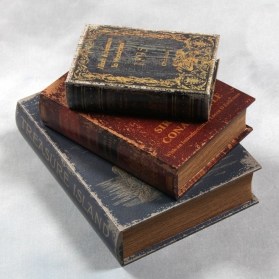
But I confess to still being a bit of a dreamer and, secretly, long to be part of a discovering a-million-dollar-Old-Master-in-the-attic story. A few weeks ago, I went on an Airbnb Experience, an Antique and Treasure Hunt. Darren used to be in insurance dealing with cyclone and bush fire-related claims, but got tired of ‘dealing with death’. He now has a portfolio career and plays in a couple of bands, is an Airbnb host and buys and sells antiques online. It’s all about having a keen eye and knowing what sells. We had a fun day out and I learnt about some of the things that command a good price such as antique book boxes (trinket boxes masquerading as old classics), Barsony lady table lamps (Barsony denoting matt black coloured ceramics named after Hungarian refugee George Barsony who came to Australia in 1949) and Kiss (the band) memorabilia. My purchase of the day was a $13 pair of jeans that fit me like a glove – nothing I can translate into retirement millions, but a good money-saving buy.

And last week I had two wins: a fine bottle of wine in a door price and $37 in the lottery. Maybe my cup will soon runneth over. Meanwhile I should have enough oil to keep my lamps of faith and fulfilment burning brightly!
For all Melbourne-based vintage and treasure hunters, check out Darren Trott’s Facebook page for some finds: https://www.facebook.com/antiqueandvintagemelbourne/





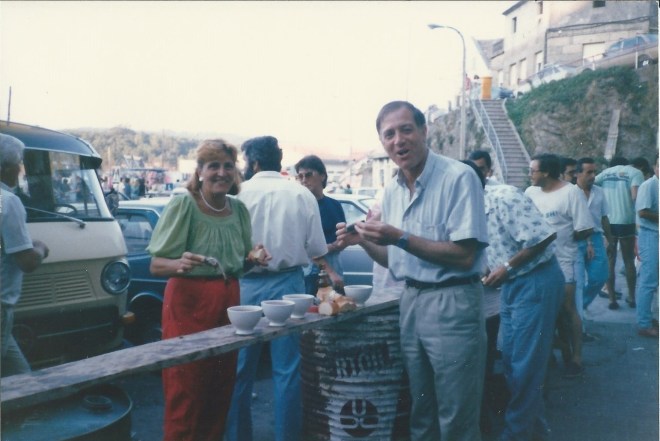 Later in the trip we travelled by overnight train in a sleeper compartment from La Coruña to Madrid. We’d come straight from the beach and our bikini bottoms were still gritty with sand. A man with a dark five o’clock shadow and reeking of garlic came into our compartment early in the night and claimed the third of four bunks. After a few station stops where, each time, travellers would slide open the door to our compartment in search of a bed, garlic man got up, swearing a very Spanish joder (Google it!) and locked the door. Terrified as to his motives, we whispered frantic contingency plans, but soon realised that he simply wanted to get a good night’s sleep without disturbance. Selfish maybe, but not a sexual deviant, his swearing was replaced by snores. No joder simply a bit of roncar!
 By Christmas Day I had undergone something of a 360-degree transformation. When I walked my dog in the morning, I felt my feet on the ground, listened to the rustling of the trees and the orange of the canna lilies and the purply blue of the agapanthus flowers jumped out at me. I spent a joyous day with my mother and my brother and his family celebrating in the traditional way.



 He bought the house in 1639 but didn’t manage to pay off the 13000 Gilder mortgage. The house was reconstructed from the inventory that was drawn up when he went bankrupt in 1656 and had to move out. As well as his box bed, I was fascinated by the collection of objects which he used as models for his paintings such as Venetian glassware, marble busts, seashells, dried animals and exotic weapons. Considered one of the great artists of all time, Rembrandt was, apparently, a moody man, and enjoyed a scandalous love life involving extra-marital affairs with his nanny and then a 20-year old girl.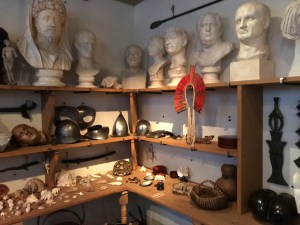
 From his famous Potato Eaters peasant painting through to his self-portraits, orchards in bloom, Sunflowers, and the emotionally-imbued landscapes of waving wheat, blue skies, gardens and rural scenes of his final days in Auvers-sur-Oise, this was the highlight of my trip. Getting up close and personal with his paintings was to experience their intensity of colour, depth of expression and extraordinary beauty. As Van Gogh himself said: “Paintings have a life of their own that derives from the painter’s soul.”