From the Dreamliner to the Dales

I decided to change things a bit this year and booked Qantas Flight QF9, the Dreamliner, flying non-stop from Perth to London. I loved it and am a convert! The door to door journey from one continent to another shifted my perception of the distance, reducing it to more of a hop than a long haul. And what joy to avoid the hassle of a stopover and getting off the plane – often at an antisocial hour when sleep beckons most – and shuffling back through security, belt off, laptop out, liquids in plastic bags.

Boarding at 3.15 p.m. in Melbourne, I enjoyed a celebratory whisky and light lunch on the way to Perth and read the papers cover to cover.  Getting out at Perth airport is a breeze and there’s an open-air lounge where you can re-oxygenate and even hear birds flocking.

The next 17 hours flew by – literally. A couple of hours’ reading and then dinner before settling down for the night. I am always frazzled by the time I get on a long-haul flight, job or no job, which makes me nicely tired. I slept on and off – am I the only one to get a stiff neck?! – and didn’t check my watch until we were six hours away from London – nearly there then, I thought to myself. A bit more snoozing then I foot-tapped to a video of a Coldplay concert filmed in Sao Paolo before the plane landed in London.

Cut to a few days later when I got whacked with a bit of delayed jet lag and wanted to crawl back to bed as soon as I got up. Instead I spent nearly all day cancelling a long-planned trip to Wales with Mum (just too far, too complex and too exhausting at Mum’s stage of life and for me as the driver) and booking an alternative, more local, trip to the Yorkshire Dales. Endless conferring with my brother who lives in Yorkshire, viewing accommodation on Booking.com at crazily slow internet speeds, and phone calls to see if we could get rooms next door to each other etc. We decided on two locations: one night in the spa town of Harrogate and then three nights in a more rural location in Nidderdale.

We went through more chopping and changing, booking and cancelling – but I won’t bore you with the details. Suffice it to say that we booked into a Premier Inn in Harrogate, one of those impersonal, functional places that lacks soul. Dinner – charred to a cinder chicken and chorizo skewers and gloopy, rubber cheese lasagne for Mum – was inedible. Perhaps as subconscious karmic revenge, I managed to set the toaster on fire the next morning with my gluten-free bread! Thankfully, we had been to Harrogate institution Betty’s Tearoom for lunch and enjoyed a succulent and tasty kedgeree. And somehow – without a Sat Nav or detailed map, I had managed (with a few wrong turns) to negotiate the one-way system and found my way to a dress shop I had read about that specialises in 1950s dresses. Purchasing the dress of my dreams – a full swing dress complete with net petticoat and turquoise silk jacket to match was one the trip highlights! And we managed to get Mum to Marks & Spencer, hard-to-find parking meter, slippery wet pavements, brollies and shopping bags notwithstanding.

Mum at Betty’s

There were a few lowlights too. Arriving at our second destination, a country pub in the small village of Wath – accessed by a tiny humpback bridge reminding me of the Three Billy Goats Gruff song – we both sensed the place had a strange vibe. There was no reception but we located someone in the kitchens and she led us through a labyrinth of ramps, steps, swing doors and passages to our rooms. Red Flag number one: this place was not Mum friendly! While our rooms looked comfortable with their four-poster beds and chest-of-drawers, the old-style bathrooms only had showers over the bath. I had requested and been re-assured there was a walk-in shower for Mum. They apologised for stuffing up the booking and we agreed to move on.

We made a few calls to other places only to get a ‘no room at the inn’ response. Rather than panic, I resolved to trust that we would find somewhere and we drove over the moors to the popular village of Grassington, where we secured two rooms at a nice country hotel overlooking the square. Mum’s room was small and full of hard edges – tea tray, wooden bedposts – and an unpredictable shower that propelled me into overprotective mode. We drove each other mad at times! However, by 5 p.m. we had made a pot of Earl Grey in our room and enjoyed an energy-boosting complementary mini chocolate brownie. Dinner – wild halibut – was excellent too even if Mum’s hearing aids magnified the other diners’ voices and the clatter of crockery…

Rested and refreshed by the next morning, we woke up to sunshine – at last – and had a memorable day. We drove through narrow, twisty lanes bordered by green, green fields, ancient churches and moss-clad stone walls to Parcevall Hall.

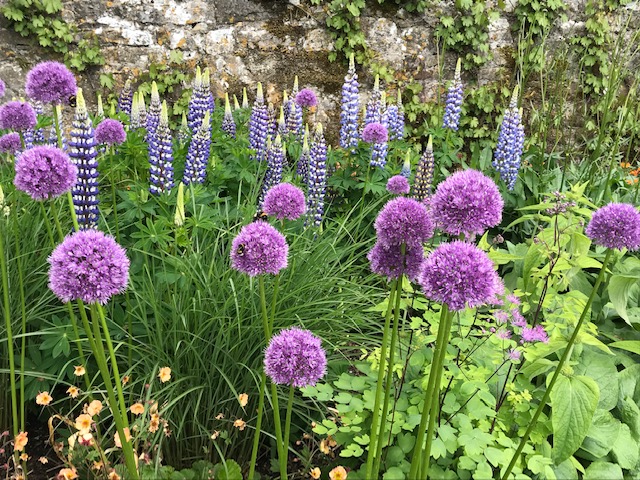
The oldest part of the hall dates back to 1600 but the garden was created by Sir William Milner, a refined gentleman of Arts and Crafts sensibility and strong religious faith, in 1927. A series of stone terraces, beds brimming with summer pinks and purples bordered by immaculately cut yew hedges looked over out the vast expanse of Wharfedale and beyond. We sat in the Chapel Garden and listened to the soundtrack of birdsong and bleating lambs. Glorious.
Lunch afterwards in Appletreewick’s historic Craven Arms pub, full of fascinating memorabilia and collectibles – from old miners’ lamps to postcards of the Queen and a sample 1910 menu – rounded off a wonderful morning.

Our last day was a bit of a wash-out as the rain came down inducing a feeling of Cabin Fever. We got accommodation in Skipton at one of the only places with vacancies on a Friday night, a canal-side 1980s hotel with lots of exposed brick and endless fire doors. Dinner in the conservatory overlooking the canal gave rise to a few giggles: the wine waiter confessed to not knowing about, or even liking, wine, and the waitress described the salmon as coming with avioli – I think she meant aioli – and ‘loadsa other stooof” in her thick Yorkshire accent. The food when it came wasn’t bad at all, and we loved watching the ducks, swans and occasional barge passing by.  Nevertheless, when we got home at lunchtime on Saturday, it was a case of home sweet home!

The Republic of Words 3 of 3: Writing, dogs and the meaning of life

The Friend by Sigrid Nunez, a book about writing and the relationship between animals and humans, was another perfect fit for me. It’s a novel but I thought it was a true story as it reads like a memoir and is, I discovered, the most autobiographical of Nunez’s book to date. It is a simple story but one that is multi-layered and full of literary allusions with an animal as the central character. It’s about a woman in New York – the narrator – who reluctantly inherits a dog – a Great Dane – when its owner, her friend, a womanising professor who has been married three times, commits suicide. Nunez, like the female narrator, both teaches and writes.  She has no social media accounts and leads a quiet life: “I became a writer because it was something I could do alone and hidden in my room.” She is an ‘old school’ writer who views the craft as a vocation and was surprised to find herself in the limelight as the winner of the 2018 National Book Award.

Nunez/the narrator has a dig at the proliferation of writers and quotes the deceased friend as agreeing with Garrison Keillor: “When everyone’s a writer, no one is,” a sentiment Nunez traces back to the pre-digital era: French critic Sainte-Beuve said in 1839: “To write and have something published is less and less special. Why not me too? everyone asks.” What would have Sainte-Beauve have made of self-publishing and blogging?

Anyone who has tried to write a book and bumped up against the self-doubt, angst and feeling of being a fraud will take comfort from learning that John Updike always felt he had got away with something when he saw his books in a store. For Virginia Woolf and Isak Dinesen the act of writing helped to ease pain and sorrow, whereas Philip Roth found writing frustrating and humiliating. And how surprising to learn that prolific writer Georges Simenon described writing as a vocation of unhappiness.  The most pertinent quote for me was from Rainer Maria Rilke: “If you were forbidden to write, would you die?”

I certainly don’t feel compelled to use my time out from work to write a novel, memoir or best seller – not at the moment anyway. For now, I am content to blog for the love of writing and to maintain the practice of crafting words. Although I do rather love the image of tapping away at a  book n a house by the beach with my dog at my feet…

The friend in the story refers not only to the deceased professor but to the Great Dane Apollo.  This is no saccharine story of puppy love, however. At first an unwelcome burden, the dog is a wise old soul who gradually becomes central to the narrator’s life – she even reads to him (something a holistic vet suggested I do to calm my dog Bertie!) – and manages to persuade her landlord to let her keep him in her tiny New York apartment. Much of the book is about the relationship between humans and animals: “They may know us better than we know them.” I also loved this: “I like that Aborigines say dogs make people human.” The Friend also references famous people who have owned dogs such as J. R. Ackerley (1896-1967) editor of BBC magazine The Listener. While he took a rather unhealthy interest in his dog’s heats and bodily functions (there’s a chapter in his book My Dog Tulip called Liquids and Solids), he spoke of his relationship with Tulip as a 15-year marriage, the happiest of his life. In similar vein the narrator in The Friend quotes a passer-by as saying: “Better a dog for a husband, than a husband who’s a dog.” Hear, hear, I say!

Although a fictionalised life lesson, I also enjoyed The Why Café by John Strelecky, partly because I read it in German – Das Café am Rande der Welt ­­– and tapped back into the language, and partly because it never harms to ponder the meaning of life! The narrative construct is that a stressed advertising executive runs out of petrol and finds himself in a café in the middle of nowhere. On the menu are three questions:

Why are you here?
Do you fear death?
Are you fulfilled?

Through conversations with the café owner, waitress and a patron, the book encourages readers to challenge their thinking. Are we being true to ourselves or doing what others wish us to do? Are we slogging away to earn money to amass belongings that we think will makes us feel happy? Are we keeping madly busy because we haven’t found our purpose or our calling? Are we waiting till retirement to do what we love? Do we swim with the tide or against it? What is our life purpose?

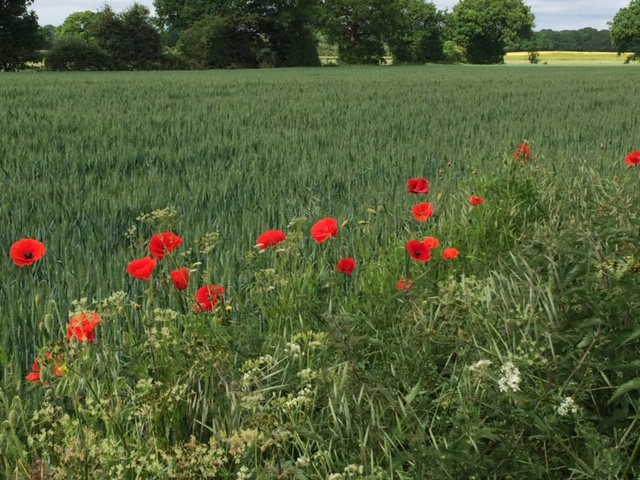
I sometimes wonder if writing is my calling or just something I love to do. Maybe dogs are my calling – or animals. Or maybe it’s writing funding applications to support animal welfare and conservation! I certainly find great solace in nature and love being away from screens and devices, chatter, noise and distraction. Walking out across the fields in Nottinghamshire yesterday, bright red poppies dotting the landscape and foamy cream hawthorn blooms bordering the path, I stood and ‘chatted’ with a cow, who stopped his meditational chewing and turned to look at me, its eyes full of knowingness. Mindful moments like those remind me how wondrous it is to be alive. And, for all the self-help and psychobabble, we don’t need to have all the answers. Another brilliant quote from The Friend by Rilke: “Have patience with everything that remains unsolved in your heart… live in the question.”


The Republic of Words 2 of 3: Timeless on the Silk Road by Heather Ellis

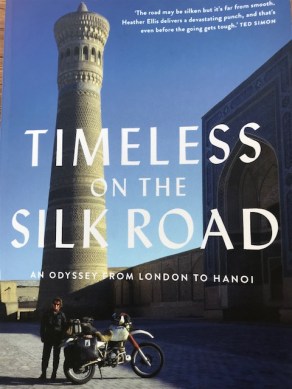
The second book in my Republic of Words series is Timeless on the Silk Road by Heather Ellis. If I were to sum up what this book is about in one word, it would be Trust. Capital intended. As a book about venturing into an unknown and uncertain future, I took great comfort from it. It strengthened my post-work resolve to let go of needing answers about what next and to simply wait and see.

You may be familiar with books that illustrate a spiritual path through story-telling. I remember reading The Celestine Prophecy back in the ’90s and I also read Paul Coelho’s The Alchemist, but I have to admit I’m not really a fan of spiritual teachings delivered via fiction. And that’s what I loved about Timeliness on the Silk Road, it’s the author’s lived experience of a solo motorbike journey along the 4000-km Silk Route from Europe through Russia and Central Asia to South East Asia. Told with extraordinary courage and honesty – it’s visceral, raw and unashamed not to mention compelling.

But this is no ordinary traveller’s tale. Following a solo motorbike trip across Africa in 1993, Heather is diagnosed with HIV.  The book starts in 1994 when she is working as a motorcycle courier in London and receives the devastating news of her diagnosis. Overcoming periods of doubt and despair, she is determined to embark on this her last journey – she is given five years to live – and to trust in the same universal energy that guided and protected her in Africa (I highly recommend her previous book, Ubuntu: One Woman’s Motorcycle Odyssey Across Africa). She says: ” I felt all those chance encounters and coincidences that came my way, often to save me in the nick of time, were more than just good luck. Maybe, just maybe, I would be saved again.”

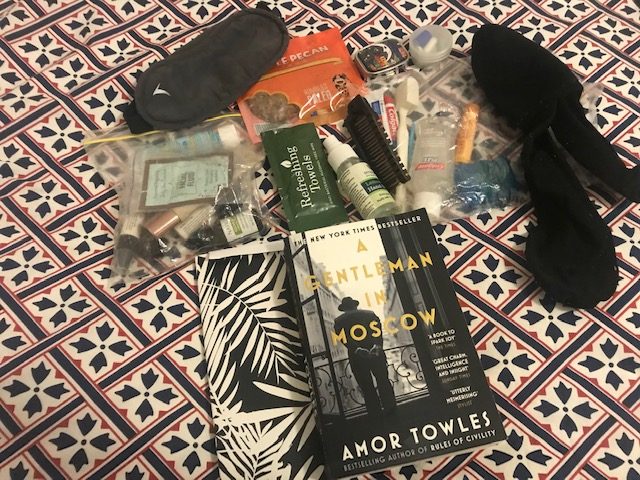
Setting off from London on a grey November day on her trusty steed, her TT600, Heather lets go of any need to control how her journey pans out. And I admire that greatly! Packing for my trip to the UK recently – admittedly a longish trip involving many different people and events, not to mention the vagaries of the British weather – I tackled it, as I always do, like a military campaign leaving nothing to chance and planning for all eventualities. My hand luggage alone is carefully considered – from the  compression socks, eye mask and neck pillow to a small vial of oregano oil to ward off germs, some peppermint oil to pep me up the other end, some de-clogging aspirin and a homeopathic jet lag remedy, organic (no less) mouthwash, snacks, reading material and other lotions and potions to make me more comfortable. Had I travelled in Edwardian times, I would have probably had a suite of trunks. Packing lightly is not my forte.

Pernickety packing

There’s little room for creature comforts when all your luggage has to fit on a motorbike but Heather does take a stock of medication to treat Pneumocystis pneumonia (PCP) in the event she contracts the life-threatening lung infection. And she does have to use it quite early on in her trip. Small wonder that she has death musings in Delphi, Greece, or that a fellow worker in a café in Istanbul notes: “I feel you carry a big problem, and it weights heavy on you, but I know you are strong. Allah is with you.” Call it Allah or benevolent universal energy, Heather’s trust is challenged at times and her health starts to decline towards the end of the trip, but she never gives up. And the irony is that, away from the trappings of the modern world and living day to day, she doesn’t have access to the internet, where she’d have learnt about advances in HIV treatment.

Timeless on the Silk Road is a geographic and spiritual journey against a backdrop of majestic mountains, nomadic pastures and ancient cities. I was fascinated to learn more about the ‘Stans, countries that were once part of the Soviet Union: from the lost city of Merv in Turkmenistan, built on the site of a large oasis around 3000 BC but destroyed by Genghis Khan in 1221; Baku in Azerbaijan, the Paris of the region built on oil money; to the Chuysky Trakt, one of the world’s ten most scenic roads in the vast Altai Mountains between Mongolia and Russia.

Heather is an extraordinarily resilient woman and gets into some narrow scrapes fending off testosterone- and vodka-fuelled men in Georgia, sleeping (unknowingly) atop deadly spiders in Turkmenistan, coming close to being shot by a Tajik border guard, almost running out of food in Kazakhstan and playing cat and mouse with Chinese Government officials. And yet, miraculously, something always turns up – whether it’s the Turkish sheepdogs protecting her tent, the warm and generous hospitality of nomadic people’s in Krygyzstan and Siberia, meeting a kindly long-distance truck driver from Wales or three Russian horsemen in the Altai. At times, it reads like a modern-day fable tale punctuated by moments when time seems suspended – hence the title – such as when she witnesses a mesmerising sunset over the Caspian Sea from the bows of a rusted ferry. Inspiring, uplifting and life-affirming, this is a book that will prompt you to question your own journey through life. You can purchase this and Heather’s previous book Ubuntu via Amazon or in Australia from Readings bookshops. For author-signed copies (including postage) please go to Heather’s website at: https://www.heather-ellis.com/.

The Republic of Words 1 of 3: Pie and Mash down the Roman Road

“How’s retirement?” “How’s the lady of leisure?” friends asked when I left a busy job at the end of March to take time-out to pause, refresh and reflect. Not surprisingly, it took a while to come off the million-miles-an-hour adrenal whirl, and I struggled to carve out leisure time amid catching up on everything I had neglected in favour of work. Every time I tried to create some lazy space something or somebody would butt in.  Relaxing and letting go takes practice!

Swimming against the tide – jumping out of work at my stage of life  – has its challenges. But whenever, I fidget and fret, wondering how, why, what, what if and what next, I’ve been experimenting with embracing whatever emerges. Instead of being goal-driven and pushing ahead with an agenda, I am seeing what happens if I open up to receiving life, wisdom and guidance in whatever forms it takes. My biggest treat when I let go of the to-do list is sitting on the sofa, drinking tea and reading with Bertie nestled beside me. T

In a recent radio interview journalist Louis Theroux  described he environment he grew up in as a  Republic of Words. I’ve decided to borrow that – books are my current credo, my anchor, my therapy, relaxation and intellectual stimulation. And each book I have read so far has resonated or contained some kind of message.

The first book, Pie and Mash down the Roman Road: 100 Years of life in one East End Market, tapped into my English heritage – in much the same way as an exhibition entitled: Royal Portraits: from the Tudors to the Windsors –  and my fascination with history and the cultural, social and political movements that have shaped my country of origin and who I am.

The Roman Road is the oldest trading route in Britain and, around 1900, stalls extended for a mile. The  book follows the lives of key families who lived, ate, worked, married and had kids in East End. The pie makers, tram drivers, eel dealers, printers, barrow-makers, Billingsgate porters, dockers, costermongers, the lady who looked after the public toilets, Sylvia Pankhurst (Emmeline’s daughter,  leader of the Suffragette movement) and the notorious Kray Twins.

by Melanie McGrath

G.Kelly’s Pie and Mash shop at 526 Roman Rd in Bow is another fixture  – the business has been in the same family for nearly 100 years.  I lived in London for nine years in the late ’80s and early ’90s but have to confess I’ve never eaten pie (minced beef), mash and liquor (which is a mix of flour, water and parsley). The Romans first introduced meat in a pastry envelope to Britain and they got it from the Greeks who probably got it from the Egyptians! That same global thread is mirrored in the waves of migrants who have populated the East End. And what a rich mix from Protestant Huguenot weavers in the 17th Century to the migrants from Ireland, Italy and Portugal, Jews from the Iberian Peninsula and then in the late 19th Century Eastern European Jews fleeing the pogroms. By the 1950s the Jamaicans were coming in, and in the 70s it was the turn of the Bangladeshis. Research suggests that sub-Saharan Africans, who were sold as slaves to planters and colonial officials in the 17th and 18th centuries, have been living in London from the 12th Century.

The other migrants are the eels of stewed and jellied fame, whose complex lifestyle sees them travel across the Atlantic Ocean before they reach the coasts of Europe as young eels, from where they head up rivers and streams and, as mature eels, migrate over 3000-miles back to their spawning grounds in the Sargasso Sea. The author Melanie McGrath has done extensive research both of people and place, and I learnt that eels have been eaten since Anglo Saxon times. As well as being the food of the poor, they have a reputation as an aphrodisiac. One Aldgate eel dealer used to cry out: “Everyone’s a baby.”

Talking of babies, there’s mention of Nonnatus House, which, of course, features in Call the Midwife, a TV series based on the memoirs of a lay midwife who lived and worked with the nuns in Poplar, more than 60 years ago.

This book paints a picture of a strong community, based in hard work and resilience.  The East End was very badly hit in the Second World War – most of the 1.2 million homes lost in the Blitz of 1941 were here. The author describes the area around Kelly’s pie shop in 1945 as resembling “a bad set of dentures; discoloured, smelly and uneven, full of gaping holes.”. As the rubble and slums were cleared, however, and new high-rise developments came in, the easy access to the market, the dance halls, social clubs, dog tracks, pubs and lidos disappeared.

For all the mod cons including indoor bathrooms, the new tower blocks lack the community spirit of the streets where grandmothers sat out on their stoops, peeling vegetables and chatting, and children played hopscotch. And the high rises are no good when the electrics fail. When Rita Willets goes into labour in 1964, she’s living on the 14th floor, the lift doesn’t work and her husband can’t reach the runs at Nonnatus house by phone. In the olden days, the street grapevine would have summoned someone to help. Someone like Marian Old, who worked at the Bryant & May match factory and, although too young to take part, recalled the first all-female strike of 1888 when women campaigned for better pay and conditions. Before conditions improved, women fell victim to ‘phossy jaw’, phosphorus poisoning that resulted in fluorescent vomit and jawbones disintegrating. Men and women alike did it hard in those days; Martha supplemented her wages with egg box-making, midwifery and pickling onions.

Another of my favourite characters is Ron Moss who grew up on Fish Island, now redeveloped as part of the Olympic Park, then a river backwater. Known as the Artful Dodger, he came from a poor family and lived by his wits quickly learning to leaf (Cockney rhyming slang for thief: tea leaf = thief). He forages for food, snares rabbits, steals swans’ eggs and fish from the river and on market days along the Roman he pinches sausages and other food, which he hides in his long-pocketed coat.

Then there’s Marian Old who cleans the toilets and loves her work. She is her own boss and sings while she mops and cleans. She has cups of teas with her regulars and keeps up with all the gossip, even giving sartorial advice as women and girls try on garments they have bought in the market. “She’s grown accustomed to handing out everything from fashion to family to romance advice with the sheets of crispy, disinfectant-smelling Izal paper.” The East End is well known as the home of London’s Rag Trade. Interestingly, the children’s rhyme Pop Goes the Weasel references the manufacture of clothing: Pop is a cockney term for pawn, a weasel both slang for the yarn-winding machine and part of ‘weasel and stoat’, cockney rhyming slang for coat. Incidentally, my father referred to champagne as weasel – as in popping corks!

Redevelopment since the Second World War has changed the social fabric of the East End considerably – Bryant & May’s was converted into one of London’s first gated communities of apartments in the ’80s, and, more recently, areas such as Docklands and the Isle of Dogs have become home to glittering tower blocks, with some areas yuppified and others hippified (think smashed avo and artisan coffee instead of pie and mash). And, yet, the old East End survives in patches; Kelly’s Pie and Mash shop at 526 Roman Road is still going strong albeit catering to contemporary palettes (chicken and leek pie and vegetarian options) and under renovation.

The author explains the pull of pie and place for customers all over the world searching “for a taste of the past that still lives vividly inside them, or that they may hardly recall or only know from older relatives but to which they nevertheless feel viscerally connected.” That neatly describes how I feel about England – which is why I so loved this book.  Much as I love my life in Australia, you can’t take the Brit out the girl – there’s an essence of Englishness that sits in my DNA. I am heading back to Britain soon and a trip to the East End is definitely on my list.

In praise of staycations – and the luxury of time

One of my Christmas presents was My Little Happy Book – a journal to record happy moments, happy scribbles, happy songs, quotes, meals – even dreams. Curiously there’s also a section called My Happy to-do List. While I am huge fan of lists, happiness over the Christmas holidays has been an absence of lists, deadlines and rushing. That’s the beauty of Christmas falling in the summer months – I’ve just about got used to hot, light, beach-y, seafood-y Australian Christmases, the sky an endless blue, the flowering gums alive with the squawking of Rainbow lorikeets, the jacarandas dropping purple confetti.

Like August in some European countries, the whole place slows down, the vibe shifts to something kinder and gentler allowing the days to blur into one another. It’s like slipping into a timeless zone and pressing pause. At one point last year I had thought of visiting America or heading to the coast for the Festive Season.  Neither plan materialised and, so, I have luxuriated in the simple pleasures afforded by a staycation.

I like to honour the Christmas rituals of my childhood, one of them being attending church. Whether you are a believer or not, Jesus’ birth is a magical story and presents an opportunity for reflection and renewal. Over the years I have been to a local church – one year with both my parents when visiting from England, and last year with my mother. While I escaped my usual Yuletide sense of geographic dislocation and depression this year, I didn’t want to push it by attending a church service so redolent of Mum and Dad. My father used to love belting out O Come All Ye Faithful and Hark the Herald Angels Sing – I can see him, now, half singing, half conducting.

Attending a German Meetup Group before Christmas, I discovered that there was a service on Christmas Eve at the German Lutheran Church in East Melbourne at 7pm.

Here was an opportunity to embrace the Christmas spirit without any emotional triggers. I enjoyed listening to familiar readings from the Bible in German and tuning into the cadence of the language as well as singing well-known carols to German lyrics; it’s harder than you would think to get the phrasing and pacing right!

Just over the road is St Patrick’s Cathedral, and as our service concluded, theirs was just starting, the bells ringing out in great rippling peals. One of my favourite sounds, I could have been anywhere in ‘Mittel Europa’ what with the magnificent tree sparkling in the chancel. Only momentarily, though, as the heat – half the congregation were fanning themselves with the service sheet – brought me firmly back to the Southern Hemisphere.

After a delicious Christmas Day with my brother and his family of feasting, present-giving, snoozing, swimming in the pool and reading, I arm-chair-travelled back to Germany in the following days. Airbnb guests earlier in December recommended a German drama on SBS entitled Kurfürstendamm 56 and the second series Ku’Damm 59.  Set in Berlin in the 50s, it’s the story of a mother and her three daughters at a time of huge political and social change. They own a dance school along the Ku’Damm and the advent of rock ‘n’ roll – and the looser morals that went with it – are just one of the challenges to the old order of genteel waltzes and tea dances. What a joy it was to have time to watch six 90-minute episodes and to give it my full attention. Although the plot became a little contrived towards the end of the second series, I was transported back in time and found myself gripped.

I also went off to Oxford courtesy of a wonderful book called A Honeybee Heart Has Five Openings by Helen Jukes. The author reminded me of me! I also used to live in Oxford and worked for a charity. I, too, sometimes struggle with the rigours of the workplace, the pressure, the ever-shifting KPIs (key performance indicators) and suffer from computer neck. Jukes takes up bee-keeping as a way of changing her way of sensing and seeing the world. Another highlight was listening to a reading on BBC Radio 4 of Italian classic The Leopard by Lampedusa. English actor Alex Jennings inhabited the world of the fading grandeur of the Sicilian aristocracy of the 1860s brilliantly, inserting just the right measure of pathos and humour. Nectar – forgive the bee pun.

I had a list of things I planned to do over the break and have ditched most of them in favour of rest, relaxation and a few refreshing swims in the sea with my dog Bertie. And the tasks I did accomplish had a quality of a spaciousness and didn’t have to be rushed, teeth gritted. Did I mention I managed to crack my dental splint towards the end of last year? The KPIs can wait till I start work again next week. I am hoping I don’t return to the scenario faced by Jukes after Christmas one year: “When I arrive there’s a new set of ‘key performance’ indicators on my desk – a New Year’s greeting from Head Office. Thirty fresh targets, divided into six neat categories, which we are now required to report on each quarter. Everyone’s fuming about it […] I want to throw the performance indicators in the dust bin.” I’m not saying anything.

Blind Dates and Silent Movies: 36 hours in the Barossa Valley, South Australia

Could I trust him? Take him at his word? Or would he lead me astray (not again, I hear some of you murmur)? Even though – let’s call him George – spoke nice RP (Received Pronunciation) English, cut glass diction is no guarantee of reliability. George, you see, was very much a blind date.

Although just about everyone else I know – bar perhaps Mum and other octogenarians – uses GPS navigation to get them from A to B, I am a bit of a Luddite and still use hard copy maps and the Melway. It’s part silent protest at the increasing digitisation of our lives, and part preference for following a route across the pages from end to end. So here I was in my rented Toyota Corolla, a sat nav virgin, with George the GPS my co-pilot.

My brain wiring isn’t used to screen, voice, road and dashboard interactivity – there was no way I could listen to the radio as well as tune into George and take heed of the endlessly changing speed limits (I jumped the first time George beeped with a road safety camera warning). What would have happened if something went awry with George’s wiring and I ended up in, say, Port Lincoln, rather than Tanunda in the Barossa? You really have to trust the technology. To be fair to George, he got me to Tanunda although I had to ring the B&B where I was staying for directions for the last two kilometres as he took me in a big loop beginning and ending in Seppeltsfield Road.

I arrived after an afternoon meeting in Adelaide about 4.30pm on Friday, just in time for a quick sunset walk. My original plan, had I left in the morning, had been to drive via German/Australian artist Hans Heysen’s (1877-1968) studio, The Cedars, near Hahndorf.  Instead I spent a very enjoyable hour and a half in the Adelaide’s Art Gallery. The permanent collection in the Melrose Wing is divided into themes and combines some European classics – think Rodin, Van Dyck, Gainsborough, Hogarth, Reynolds, Stanley Spencer, Lucian Freud – with Australian artists such as Sidney Nolan, Hans Heysen and members of the Heidelberg school. And alongside cabinets filled with 18th century bonbonnières, scent bottles and snuff boxes are some arresting modern pieces, one of them titled We are all flesh, a sculpture of two horses made from horse skins (acquired from a tanner in Brussels) suspended from the ceiling.

We are all Flesh by Berlinde De Bruyckere (2011-12)

Saturday was my only full day in the Barossa so, as is my wont, I rather packed it in – barrelling around in more ways than one – as I had two fixtures shaping my day: a 2 pm cookery demonstration at Maggie Beer’s Pheasant Farm and a 7.30 pm silent movie night with live organ accompaniment in Tanunda. With George stuffed in the glove box, I started my day at the Mengler’s Hill Sculpture Park admiring the sixteen or so sculptures, most of which are hewn from local marble and granite, and enjoying views over the verdant Barossa Ranges.

Chateau Tanunda was my next stop, a family-owned winery and bluestone estate built in the late 1880 by migrants from Germany – as is the case with so many of the Barossa wineries. As well as sampling some oaky reds and a botrytis (dessert wine), I enjoyed looking at the vintage photos of when the estate had its own railway. Next up was a trip to the Barossa Bush Gardens, a volunteer-planted native garden with prolific bird life and a backdrop of laughing kookaburras and screeching galahs and parrots. In the neighbouring nature reserve there’s an open-air chapel with a huge gum tree acting as a kind of altar and pews hewn out of tree trunks. I had a mini contemplative moment or two,  but wanted to get to Maggie Beer’s so I’d have plenty of time for tastings in the Farm Shop before the cookery demonstration.

For those who don’t know of her, Maggie Beer is an Australian national treasure – a bit like Britain’s Mary Berry. In fact, she wasn’t around on Saturday as she was resting in between filming the Great Australian Bake Off in Sydney. She pioneered the use of Verjuice (green juice from unripe grapes) in cooking and is also big on Vincotto (cooked wine made from non-fermented grapes). After wandering through the shop sampling delicious pâtés, salad dressings, jams, pickles, dark chocolate and vincotto paste, salted brandy caramel and passion fruit curd (I had thirds of the last three), it was time for the demonstration.  Simple but delicious, we witnessed and tasted how much zip a bit of verjuice can add to sautéed mushrooms and roasted vegetables.

After a cup of reviving chai and a quick flick through the papers in a café in Tanunda, I had just enough time to return to my B&B, shower and change for the evening. Tanunda is the kind of place where restaurant kitchens close at 9 pm so I needed to get dinner around 6 pm to make the silent movie show. And what a highlight that was. Built for Adelaide Town Hall in 1875, the magnificent Hill & Son organ, the oldest concert organ on the Australian mainland, is now housed in the Barossa Regional Gallery. The evening included a selection of 1920s silent film classics ranging from Charlie Chaplin and Buster Keaton to Felix the Cat. Accompanied by David Johnston, considered Australia’s finest exponent of silent movie accompaniment, it was a gem of an evening. What skill it is to play the soundtrack to those slapstick silent films and get the timing, intensity and nuancing right. My favourite was Felix the Cat: with just four main characters the laundry-washing mother; the piano-playing boy; Felix; and a bunch of cheeky mice, it’s crisp, funny and deceptively simple. What a treat.

Walking back to my car I passed a wine bar with live music playing. Savouring a glass of smooth Cab Sav named Audrey (making me think Hepburn, a bit of a pin-up of mine) I caught the last quarter of an hour of music and got chatting to some interesting locals, one of whom I met for coffee the next morning.

After coffee on the Sunday, my belly full of an enormous B&B breakfast, I drove back to Adelaide via a few more wineries: Langmeil (long mile in German) was once a small village which extended over a mile (hence the name) from the site of the winery to the church. Here I sampled some delicious reds, my favourite the 2015 Valley Floor Shiraz, and then I walked up to a small boutique winery, David Franz, with wonderful views over the hills. Here I tried and bought a rich, syrupy Shiraz liquor – rather like a young port. Then it was time to rehabilitate George and let him get me back to the airport, which he did, and on time. All is forgiven. I might even take him out again.

I never can say goodbye: RIP Woody

Last week was a bit of a flat-liner for me; life consisted of patchy nights and weary bleary days of fog-brain and fatigue. By the end of my working week on Thursday I felt desiccated in mind and body and was ready to hang up my tools. As I was wolfing down some pasta (gluten-free, of course) before choir practice that evening, a text came in from my friend Nick. And it was bad news: the eldest of his two Border Collies, Woody, had been diagnosed with internal bleeding and tumours. The vet was due to go to their house that night to release him from his old age infirmity – he was thirteen and a half.

Tears welled up and dropped into my dinner. I felt the grief as sharply as if it were my dog, Bertie. That all-familiar sense of absence and loss. Beautiful Woody, who, although increasingly arthritic as he aged, still embodied so much joy, innocence and playfulness whether luxuriating in puddles or hanging out with his ‘bitser’ girlfriend Minnie, a dog about a tenth of his size. Woody had the biggest heart – he’d rush across the park to greet me with great whooping barks and then he’d dance around and make a fuss of me. He made me feel special – I used to joke with Nick that if I found a man as devoted as Woody, I’d be doing well.

On arrival at choir, I felt dizzy and spaced out and, when a fellow chorister, Steve, who also writes grants for a living, mentioned a particular grant round, I couldn’t make sense of what he was saying. And that was it: the floodgates were unleashed, this time in great wracking sobs. My speech somewhat incoherent, I tried to explain how the news about dear Woody had tapped into a seam of grief. And I was so sad I hadn’t had chance to say goodbye – particularly as I hadn’t seen Woody for several months.

We’re not very good at goodbyes in our family and I am no exception.  There have always been so many comings and goings; by the time I was fifteen, I had lived in nine houses and been to eight different schools with a spell at boarding school. You could argue that all the chopping and changing of friends and places might have made us more practised in the art of efficient, painless farewells, but the opposite seems to have been the case.

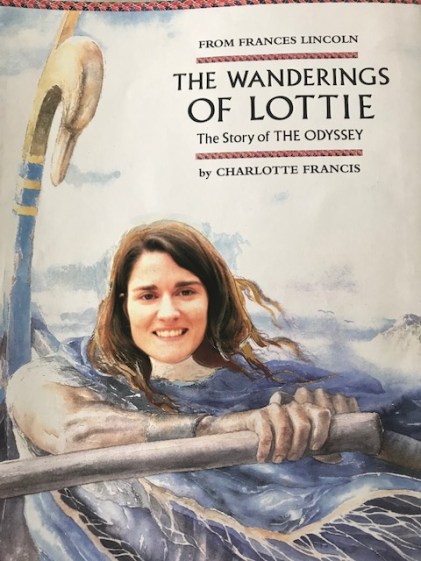
Even when I make a conscious decision to leave something or somewhere that no longer serves me or gives me joy, it can create emotional upheaval. Reading recently that Frances Lincoln Ltd, a publishing company where I worked from 1988-1995, had been sold to the Quarto group, brought back a flood of memories. Started by Frances in 1977 it was the publishing house for quality gardening and illustrated books; the attention to detail was extraordinary. I realise now what a privilege it was to work there. And it was fun; trips to book fairs in Bologna and Frankfurt and to publishing houses in Europe and America. As the article notes –  there was a huge overseas market back then for books on Gloucestershire ladies’ gardens. I loved my job but was feeling a bit burned out when I left after seven years. I jumped off with no job to go to and, instead, took off to on my travels – mainly to Australia. It was a bold move back then when the concept of the adult gap year was still in its infancy.

I was given the most lavish and warm-hearted send-off – and a hand-made card designed like one of the titles on the children’s list complete with the most cleverly-worded blurb full of in-jokes and references. Although I was excited about pastures new, I cried almost non-stop the day after my leaving party, reflecting on the friendships I had formed and the many shared experiences – all those publication deadlines, conferences and overseas trips were deeply bonding. My colleagues had become part of my family. Grief can strike at your very core even when you have chosen to move on.

And that’s why farewelling an animal friend, one that has shared our life day and night over several years is so extraordinarily painful. Because we can’t intellectualise, verbalise or rationalise with our animal friends – as we might prepare for the end, say, with an elderly relative – it requires us to be present emotionally and to communicate with our senses and heart fully engaged. Maybe that’s why even the toughest and most pragmatic of people crumple when their dogs depart this life.

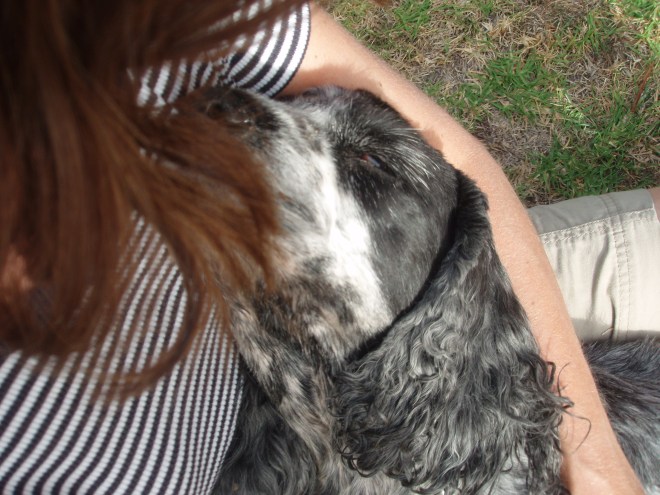
When I first moved to Australia, I bonded with my brother’s Blue Roan Cocker Spaniel Mudgee. Looking back, she helped me get through those first few difficult few months. She was a loving presence offering unconditional love and support. When she died, I cried on and off for weeks, great noisy sobs that shook my whole body.

A love-in with Mudgee

But there is a silver lining to this tale. After choir on Thursday I got another text from Nick to say that the vet had failed to show up and that he would bring Woody for a final sniff round Dendy Park on Friday morning.  A bit like a person with a terminal illness might rally before they finally succumb, Woody had a spring in his step, was barking and loving all the attention as his tearful human friends gathered to say goodbye. And I am happy to report that Woody got to enjoy one more weekend on earth and swam in the sea on Saturday.

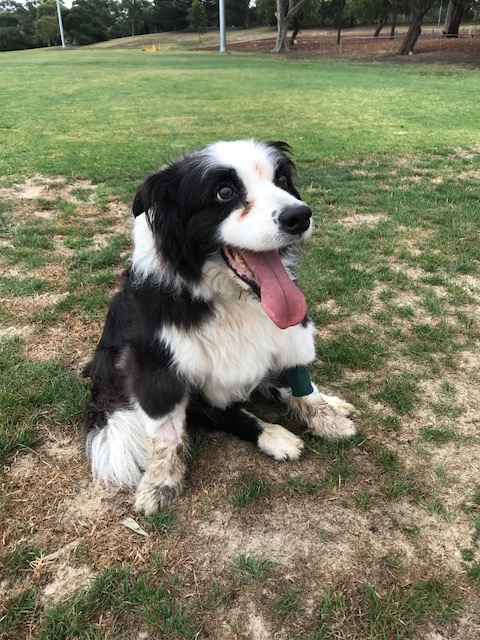
I feel so blessed to share my life with a canine companion. Woody’s departure (last night) reminds me to cherish Bertie all the more. If it weren’t for him, I would never have net Nick, his wife Saabi and their dogs (Woody leaves behind Jessie and Belle).  Even writing this post is wringing the emotion out of me.

This blog is dedicated to Woody and to all my canine friends past and present. Their gift to us silly humans who make such a mess of so many things with our supposed superior intellect and powers of reasoning is their unfailing and constant loyalty, devotion and love.  They stand by us through thick and thin; they don’t say one thing and mean another, harbour grudges, judge, change their tune, blow hot and cold,  play games (unless it’s ball-chasing) or leave us guessing. Theirs is the language of unadulterated love. They just are.  Which is why it’s so very heart-breaking when they go. RIP dear, dear Woody. You will be greatly missed.

Cupid Calling – App-y Valentine’s Day

Whatever the history of Valentine’s Day – and there are conflicting versions – the month of February has come to be associated with romance, love hearts, lots of coochy-cooing, red roses, chocolates, gift giving and specially themed dinners, not to mention Hallmark greeting cards.

So I thought it was a good time to revisit the thorny (that’s the trouble with the roses…) issue of dating and how to find love. Friends who have been married for many years or ensconced in long-term relationships – perhaps envying me my freedom and flexibility – tell me not to bother: “You don’t want to tie yourself down.” Then Dad’s partner used to worry that I wouldn’t want to iron a man’s shirts and put dinner on the table each night. I didn’t have the heart to tell her he would iron his own shirts and that we would most likely share the cooking.

Just because romance may have been killed off or long ago faded for some shouldn’t spoilt it for the rest us.  I haven’t yet abandoned the pursuit of romance, frills, bows, bells and all – just spare me the Valentine’s schmaltz.

Past child-bearing age and the pressures of juggling work and a young family, romance for the 50-something can be wonderfully rich and satisfying with opportunities for love, passion, companionship, shared travel and joint voyaging through all that life has to offer. There’s a more mature model on offer with less to prove and more to enjoy.

According to the Australian Bureau of Statistics divorce rates have increased among the 55-plus age bracket – a trend that is being driven mostly by women (so what’s new?) – but what this means is that there is a pool of second-time-arounders coming back onto the market. During a brief flirtation with internet dating a year ago, most of the men I met had very recently separated – some were still dividing up the spoils down to the pots and pans – and clearly nursing wounded egos hence their rush to go online and re-partner. But I did also meet others who had let themselves settle and adjust. Just none that I felt like pursing.

There’s no question that there are men out there, but is it possible to by-pass all the frog-kissing, data-trawling, profile-perusing trials and tribulations of online dating and find love in the real world? I’ve decided to conduct a social experiment and find out.

I went to a party recently and got chatting to a woman in her late 50s. She told me she’d been widowed, sold the suburban family house and bought a flat with fabulous city views. Noticing she had a new partner, I asked how they had met.  Although they were introduced by a mutual friend, Angie had dabbled in online dating and instanced one man who had suggested, as a first meeting, a rendezvous at the airport on the way to a holiday in Hawaii! Talk about speed dating!

They suggested I take up golf – the idea being that there are always men on hand to help and advise with one’s technique. This puts a new spin on swingers, just that these ones would be in collared Polo shirts, checked trousers and studded shoes.  Golf is just not me – from the clothes to the clubiness. Although if a potential partner were a keen golfer, I’d be sure to get some space and time to myself. I am not looking to trade flying solo to being joined at the hip 24/7. I’ve written in previous blogs about maintaining some degree of independence, perhaps living in separate houses but as a committed couple – at least to start with; it’s known as LAT – Living Apart Together.

A friend suggested I downloaded Bumble, an app designed by women for women. Women make the first swipe (to the right) and men have 24 hours to respond. As with Tinder, it’s a location-based app that relies heavily on appearances and, I think, tends to attract men keen on a fling rather than a deeper connection. “Not your average 50-year-old – take me for a spin around the block,’ says one and another, “let’s see if there’s chemistry for a fling or more.” Some advertise that they are passionate and sensual, or good kissers.

Radio National’s Life Matters program is running a series on Online Dating, and last week it was dedicated to the over 50s. One woman, who did succeed in finding love, believes that the profile and how it is written is all-important – forget photo-based apps. For her, one spelling mistake or errant comma spells a no. I’m inclined to agree. And I liked her idea of meeting a date in an art gallery – it’s a good testing ground and on neutral territory. How a potential partner responds to an exhibition provides a good insight into their personality too.

But what is the likelihood of meeting an available man – I seem to have been a magnet for married men all my life – by chance in a gallery and getting cosy over the captions? Which brings me back to options in the real world and my determination to try a few. Hanging out in cafes with my dog and an interesting book is not new, but I will aim to frequent different cafes in different neighbourhoods (interestingly, a friend recently sent me an article detailing which Melbourne suburbs have the highest density of singletons).

Then a girlfriend and I plan to go to book launches and other events that have a social component, the kind of functions where you can start a conversation with someone based on what you have just seen or heard. Solo travel can be exciting on all levels too, and there’s a you-never-know element. I got chatted up by a 30-year-old barman in Frankfurt a few years ago – he was a bit of a lush and a bit louche to boot but it did my ego the world of good and reminded me that anything is possible.

In a concession to Cupid, I considered going to a Valentine’s Day event billed as a ‘Single, Mingle’ hosted by Bumble. With menu items including a kiss booth, photo booth, match-making and speed-dating it sounded much more 20s to 40s than my vintage. I emailed to ask about the age range and a week later got a reply: “unfortunately we have been unable to provide further details to users about this as of yet.” I decided against it.

Instead I am going to a German Meet-Up group which will get my brain cells into gear if nothing else.  Last time I was having a deep and meaningful chat with Fritz (not his real name) who told me he was an introvert and came across as a bit lonely. I was enjoying our chat until someone came up and asked how his wife was. Plus ca change as the French would say.

Ah well, if the real world bears no fruit, I might have to eat my words, swing a golf club or two, swipe an App or craft a word-perfect profile.  Watch this space.

Luxury is not all it’s cracked up to be

I recently read I am, I am, I am by Irish writer Maggie O’Farrell, an account of her Seventeen Brushes with Death. In one of the episodes she’s at a luxury resort in East Africa as part of a press trip.  She brilliantly sums up the claustrophobic level of attention to guest needs, their every whim indulged, as she seeks refuge in the sea.

“No one is in danger of rushing towards me with an ice-bucket, a finger-bowl, a complimentary tray of hand-made chocolates.  No one is trying to clean the sea.”

Although in recent years, I’ve sometimes upgraded to Premium Economy flights and from shared house Airbnb accommodation to boutique hotel, for much of my life budget travel – think 2 to 3-star hostels and hotels, packed lunches (or sandwiches made at breakfast and smuggled out of hotel buffets), DIY holidays and everything BYO – has been the go.  Whereas I’ve always liked comfort and my ‘Princess and the Pea’ tendencies have increased when it comes to beds, I am also a big fan of learn as you go experiences.

I recently had a small taste of the luxury end of the market when I met up with my mother (we met halfway between the UK and Australia before flying on to Melbourne) at the Mandarin Oriental Hotel in Singapore. It’s large, sleek, formal and rather sombre with a glass lift at the heart of the place whirling guests between floors. Yes, the beds were super comfy and the high thread count sheets gloriously soft, but the much-advertised breakfast buffet, where everything from Indian to Asian, Western and American was on offer, offered quantity over quality. With many of the dishes sweating under a hot lamp, you could have got the same fare at a Little Chef motorway café in the UK. And although the staff were impressively attentive remembering our names, newspaper, dietary and tea and coffee preferences on the second day, it felt a little intrusive and a bit obsequious. Just because I had camomile tea on day one doesn’t mean I wanted it again on day two. I simply wanted to make my own choices and be left in peace.  At one point, a waiter adjusted the lid on my teapot as he came past our table.

The one time I managed to get down to the pool, a white fluffy towel and robe magically appeared along with a glass of iced water. But it started to rain when I got into the water which was fine by me, but not by the attendant who told me the rules forbade swimming in the rain. Luxury is not just suffocating, it can be bossy too!

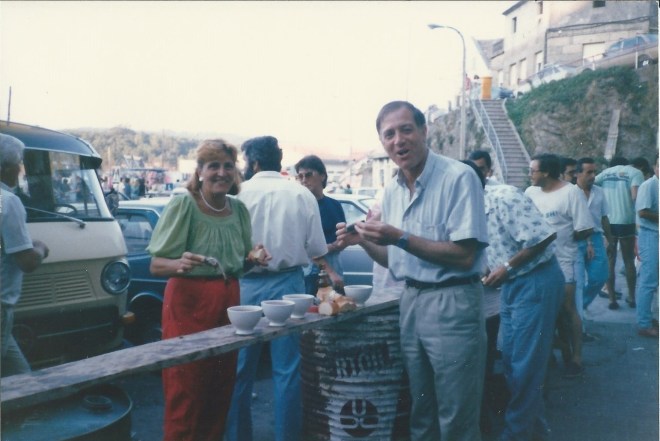
The Singapore experience prompted me to look back on some of my memorable travel experiences, and none of them involved luxury.  Back in the 80s a school friend and I went to Galicia in Northern Spain. We arrived in the town of Pontevedra on a fiesta weekend to find a no room at the inn situation. The only room we could find was above a bar and it had a bare light bulb, sagging beds and the loo in the bathroom along the corridor had no seat. But we had a fabulous time; that night we met a charming couple José and Maribel who invited us to join them for dinner – they were cooking fresh sardines over repurposed oil drums. How deliciously fresh, meaty and smoky they were, complemented by the local rosé wine. Jose took us on a drive the next day and we stayed in touch for a few years after that.Later in the trip we travelled by overnight train in a sleeper compartment from La Coruña to Madrid. We’d come straight from the beach and our bikini bottoms were still gritty with sand. A man with a dark five o’clock shadow and reeking of garlic came into our compartment early in the night and claimed the third of four bunks.  After a few station stops where, each time, travellers would slide open the door to our compartment in search of a bed, garlic man got up, swearing a very Spanish joder (Google it!) and locked the door. Terrified as to his motives, we whispered frantic contingency plans, but soon realised that he simply wanted to get a good night’s sleep without disturbance.  Selfish maybe, but not a sexual deviant, his swearing was replaced by snores. No joder simply a bit of roncar!
A 1990s holiday in a rental house in the South of France with a bunch of friends relied on simple pleasures: self-catering, walks, reading, swimming in the lake, drinking wine and playing silly games in the evening. One night we went to a local festival of music and, after a few glasses of wine, ended up dancing with total abandon on the roof of our hire car. And then we visited a restaurant specialising in all things duck starting with jambon de canard (cured meat like parma ham) followed by duck pâté, pâté de foie gras and then roast duck. I’d never tasted foie gras before and wanted to know if they sold tins of it. I asked – in all innocence – “avez vous du foie gras dans un préservatif?” Which caused an explosion of mirth – I had asked whether they sold foie gras in condoms!


Playing ‘Who Are you?

And that’s my quibble with in-your-face luxury; all that pampering and pre-empting of one’s every need takes away the joy of discovery, the journeying, exploring and mishaps along the way. And I feel uncomfortable around the servile attitude of those delivering a luxury service. It all feels like a throwback to colonial times.

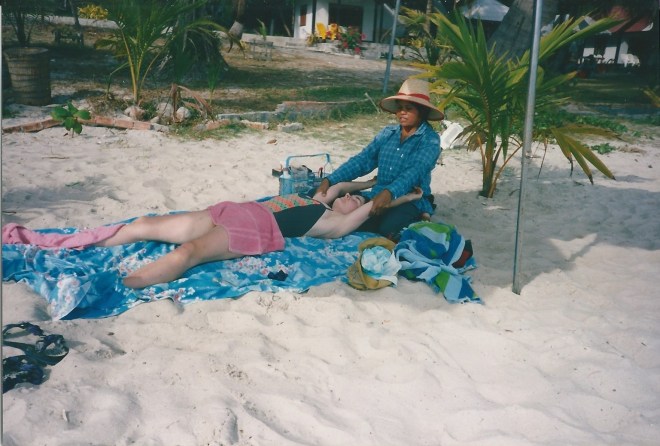
I’ll never forget the expert massage I received from a hill tribe woman in the Chang Mai region in Thailand back in the 80s. I was stiff from trekking and she walked on my back, pushed and pulled and smoothed out all the knots. It was bliss. Yet there were no dolphin music or pan pipes in the background, no white robes, scented candles or oils.  Simple pleasures.

In the words of Eugene Fodor: “You don’t have to be rich to travel well.”

Slowing Down to survive the Season

How was your December? Did you remain in one piece? By Christmas Eve I was bit done in.  I’d been through an intense month at work, flown to Singapore for a few nights to meet my 86-year-old mother who came in from England. On day two her viral aches flared up big time and I got gastro so there we were in our twin-bedded luxury hotel room, me rushing to the bathroom and my mother whimpering with pain, making the next day’s onward flight to Australia a bit of a challenge to say the least.

On arrival in Australia, Mum got the gastro (which lasted two weeks) and I had to fly straight up to Brisbane for work the following morning at 7am. Still a bit of digestive disaster, I had stayed overnight in a pretty basic motel at Tullamarine and, distracted by worry about Mum,  managed to leave my laptop on the conveyor belt at Security. Inconvenient, but I did get it back the next day; as a dear friend quipped, security is a pretty safe place to leave your computer.

The previous week, rushing for a train, I had nearly fallen down the steps at Flinders Street and the Friday before  Christmas I was so caught up in thoughts that I threw the ball for my dog Bertie into the road rather than into the trees. Bertie has zero road sense and, but for the timely appearance of a Guardian Angel disguised as a fellow dog walker, he would have run out in front of the cars. Like so many of us I was galloping mindlessly towards the end of the year.

By Christmas Eve, although the gastro had gone, I had a touch of Bridget Jonesitis (the world can appear very smugly married at Christmas time with everything screaming happy families and TIS THE SEASON TO BE JOLLY).  Remember Colin Firth’s reindeer jumper in the film of Bridget Jones’ Diary?  To add to the heady mix, I had some personal life entanglements – the jolly season does tend to heighten emotions – and the night before Christmas I experienced a resurgence of grief for my father who died last December.  How I wished I could pick up the phone and chat to him. Dad loved Christmas and was always the life and soul of the party – I can remember him drinking a bit too much and playing catch with a bowl of Christmas pudding one year.

Never one to be defeated and wallow, I took a deep breath – well several – and spent the evening dipping into some inspirational texts, quotes, poems and other self-help bits and pieces which I have collected and curated over the year, treating myself to a philosophical and spiritual immersion.  One of the texts I returned to was by Henry Scott Holland, a piece that was read at my grandmother’s memorial service and at my father’s funeral in January. Here’s an excerpt.

“Death is nothing at all…I have only slipped away into the next room. I am I and you are you. Whatever we were to each other, that we still are. Call me by my old familiar name, speak to me in the way in which you always used. Put no difference in your tone, wear no forced air or solemnity or sorrow. Laugh as we always laughed at the little jokes we enjoyed.”  

My father and I enjoyed lots of in-jokes, references that only we understood, and we invented multiple silly languages that involved Mr Bean-type gesticulations. That humorous and playful thread still connects me to the essence of my father. Then I came across Mad Dogs and Englishmen (as in they who go out in the midday sun), the song written and sung by Noel Coward (although some attribute the words to Rudyard Kipling) in 1931. It satirises the failure of the British to adapt to foreign climates and starts like this:

“Mad Dogs and Englishmen
Go out in the midday sun,
The Japanese don’t care to
The Chinese wouldn’t dare to.
Hindus and Argentines sleep firmly from twelve to one
The Englishmen detest a siesta.”

While my father was not an embarrassing English man ‘abroad’, he was quintessentially English and always had dogs at his side. I can picture him now striding across heather-clad moors with his black Labradors. How these memories nurture me.

Then I dipped into a bit of Buddhist compassion – for self and others, remembering to slow down and simply be present to what is and to surrender to things and situations I can’t control and change; life doesn’t always deliver what we want.  I love the concept of coming back to the senses as a way of circuit-breaking the chatter of the mind. There’s a softness to kindness and compassion – it’s the opposite of achievement-driven rushing. And softness can twin with resilience; I remember an Ayurvedic retreat where we visualised a strong spine, our support system, while breathing in and out peace.  Just ten deep breaths can re-set an agitated system. Ahh…By Christmas Day I had undergone something of a 360-degree transformation. When I walked my dog in the morning, I felt my feet on the ground, listened to the rustling of the trees and the orange of the canna lilies and the purply blue of the agapanthus flowers jumped out at me. I spent a joyous day with my mother and my brother and his family celebrating in the traditional way.

A few days later, I heard a wonderful program on BBC Radio 4 about sloths and the benefits of taking life at a more leisurely pace. Slow-moving animals live longer – and even creatures associated with industriousness have some less active members among them – think un-busy bees and lazy ants. The only time that sloths speed up is when they have sex and that’s all about survival. As they normally keep a low profile to reduce their exposure to predators, raucous sex and lots of movement puts them at risk, making it sensible to get it over with quickly. Well, we don’t have to take too many leaves out of the sloth’s book, but a few maybe, and those that we do, we should digest slowly – they take a week to digest their food!

Happy New Year to all my readers! May it be evenly-paced, kind and mindful.