The second book in my Republic of Words series is Timeless on the Silk Road by Heather Ellis. If I were to sum up what this book is about in one word, it would be Trust. Capital intended. As a book about venturing into an unknown and uncertain future, I took great comfort from it. It strengthened my post-work resolve to let go of needing answers about what next and to simply wait and see.
You may be familiar with books that illustrate a spiritual path through story-telling. I remember reading The Celestine Prophecy back in the ’90s and I also read Paul Coelho’s The Alchemist, but I have to admit I’m not really a fan of spiritual teachings delivered via fiction. And that’s what I loved about Timeliness on the Silk Road, it’s the author’s lived experience of a solo motorbike journey along the 4000-km Silk Route from Europe through Russia and Central Asia to South East Asia. Told with extraordinary courage and honesty – it’s visceral, raw and unashamed not to mention compelling.
But this is no ordinary traveller’s tale. Following a solo motorbike trip across Africa in 1993, Heather is diagnosed with HIV. The book starts in 1994 when she is working as a motorcycle courier in London and receives the devastating news of her diagnosis. Overcoming periods of doubt and despair, she is determined to embark on this her last journey – she is given five years to live – and to trust in the same universal energy that guided and protected her in Africa (I highly recommend her previous book, Ubuntu: One Woman’s Motorcycle Odyssey Across Africa). She says: ” I felt all those chance encounters and coincidences that came my way, often to save me in the nick of time, were more than just good luck. Maybe, just maybe, I would be saved again.”
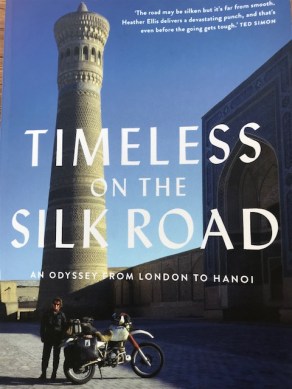
Setting off from London on a grey November day on her trusty steed, her TT600, Heather lets go of any need to control how her journey pans out. And I admire that greatly! Packing for my trip to the UK recently – admittedly a longish trip involving many different people and events, not to mention the vagaries of the British weather – I tackled it, as I always do, like a military campaign leaving nothing to chance and planning for all eventualities. My hand luggage alone is carefully considered – from the compression socks, eye mask and neck pillow to a small vial of oregano oil to ward off germs, some peppermint oil to pep me up the other end, some de-clogging aspirin and a homeopathic jet lag remedy, organic (no less) mouthwash, snacks, reading material and other lotions and potions to make me more comfortable. Had I travelled in Edwardian times, I would have probably had a suite of trunks. Packing lightly is not my forte.
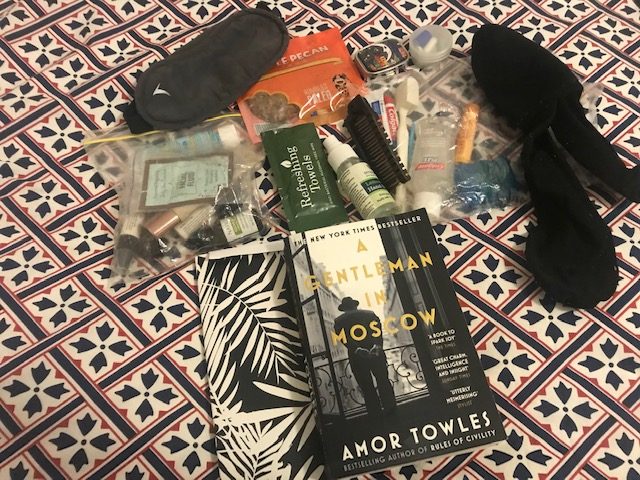
Pernickety packing
There’s little room for creature comforts when all your luggage has to fit on a motorbike but Heather does take a stock of medication to treat Pneumocystis pneumonia (PCP) in the event she contracts the life-threatening lung infection. And she does have to use it quite early on in her trip. Small wonder that she has death musings in Delphi, Greece, or that a fellow worker in a café in Istanbul notes: “I feel you carry a big problem, and it weights heavy on you, but I know you are strong. Allah is with you.” Call it Allah or benevolent universal energy, Heather’s trust is challenged at times and her health starts to decline towards the end of the trip, but she never gives up. And the irony is that, away from the trappings of the modern world and living day to day, she doesn’t have access to the internet, where she’d have learnt about advances in HIV treatment.
Timeless on the Silk Road is a geographic and spiritual journey against a backdrop of majestic mountains, nomadic pastures and ancient cities. I was fascinated to learn more about the ‘Stans, countries that were once part of the Soviet Union: from the lost city of Merv in Turkmenistan, built on the site of a large oasis around 3000 BC but destroyed by Genghis Khan in 1221; Baku in Azerbaijan, the Paris of the region built on oil money; to the Chuysky Trakt, one of the world’s ten most scenic roads in the vast Altai Mountains between Mongolia and Russia.
Heather is an extraordinarily resilient woman and gets into some narrow scrapes fending off testosterone- and vodka-fuelled men in Georgia, sleeping (unknowingly) atop deadly spiders in Turkmenistan, coming close to being shot by a Tajik border guard, almost running out of food in Kazakhstan and playing cat and mouse with Chinese Government officials. And yet, miraculously, something always turns up – whether it’s the Turkish sheepdogs protecting her tent, the warm and generous hospitality of nomadic people’s in Krygyzstan and Siberia, meeting a kindly long-distance truck driver from Wales or three Russian horsemen in the Altai. At times, it reads like a modern-day fable tale punctuated by moments when time seems suspended – hence the title – such as when she witnesses a mesmerising sunset over the Caspian Sea from the bows of a rusted ferry. Inspiring, uplifting and life-affirming, this is a book that will prompt you to question your own journey through life. You can purchase this and Heather’s previous book Ubuntu via Amazon or in Australia from Readings bookshops. For author-signed copies (including postage) please go to Heather’s website at: https://www.heather-ellis.com/.
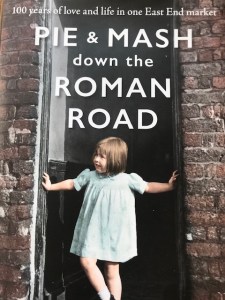
 The other migrants are the eels of stewed and jellied fame, whose complex lifestyle sees them travel across the Atlantic Ocean before they reach the coasts of Europe as young eels, from where they head up rivers and streams and, as mature eels, migrate over 3000-miles back to their spawning grounds in the Sargasso Sea. The author Melanie McGrath has done extensive research both of people and place, and I learnt that eels have been eaten since Anglo Saxon times. As well as being the food of the poor, they have a reputation as an aphrodisiac. One Aldgate eel dealer used to cry out: “Everyone’s a baby.”
 Although films and books such as Sebastian Faulks’ Birdsong have informed my knowledge of the Great War – the war that was to put an end to all wars – I never studied it formally in school. Even if I had, the focus would have been on the battles, movements of troops around the various fronts, logistics and numbers rather than the human stories.
 Soon after, I spotted Peter Jackson’s (Lord of the Rings) film They Shall Not Grow Old, which was on limited release in Australia. This extraordinary film co-commissioned by 14-18 NOW and The Imperial War Museum in London in association with the BBC used original footage from the trenches (stored in the Imperial War Museum’s archives) and used modern day technology to deliver it to us in colour. Using oral histories from surviving British veterans as the soundtrack and actors voicing beyond-the-grave dialogue based on forensic lip-reading of the silent footage, this film is a tour de force and offers a visceral snapshot of life in the trenches and on the frontline. The oral histories were recorded by the Imperial War Museum in the 1960s around the 50th Anniversary of WW1, the first time the human element of the war was captured.



 The Canary Island Pine is in Brighton’s Billilla Gardens, an English-style nineteenth century garden with lawns, trees (many of them non-natives), flower beds and a water fountain surrounding the Art Nouveau mansion built in 1878. Now owned by the Council but leased to a Jewish Orthodox school, the gardens are open to the public. Other ‘migrant’ trees include two Bunya Bunya pines and a Canary Island Date Palm. Before the Suez Canal opened, the Canary Islands were a stopping-off point for sailors to the New World. Hence Carmel’s reference to trees as metaphors for Australia as a “nation enriched by displaced and transplanted peoples.”
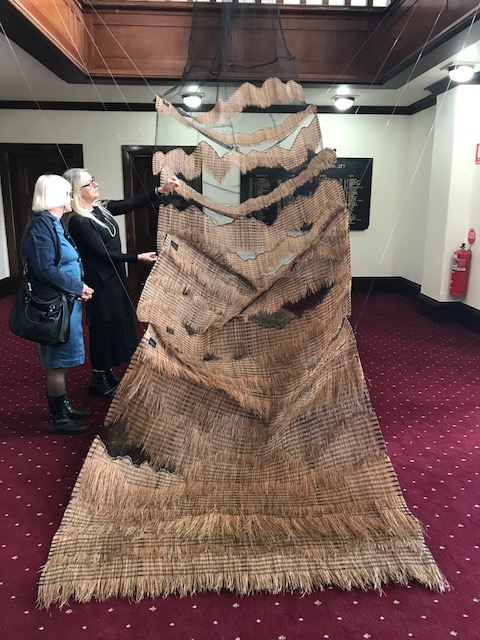
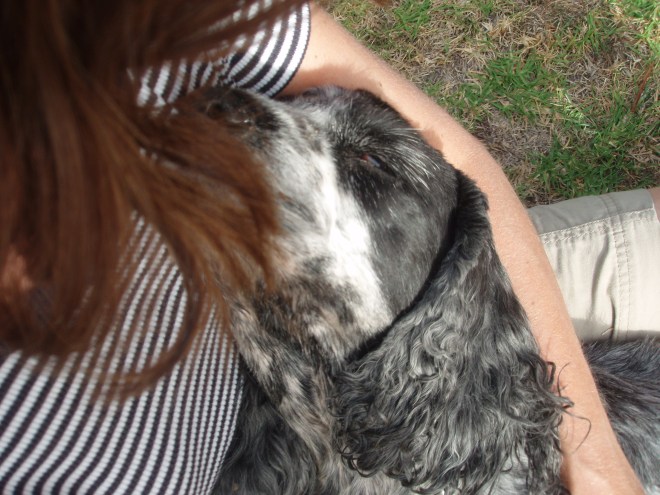
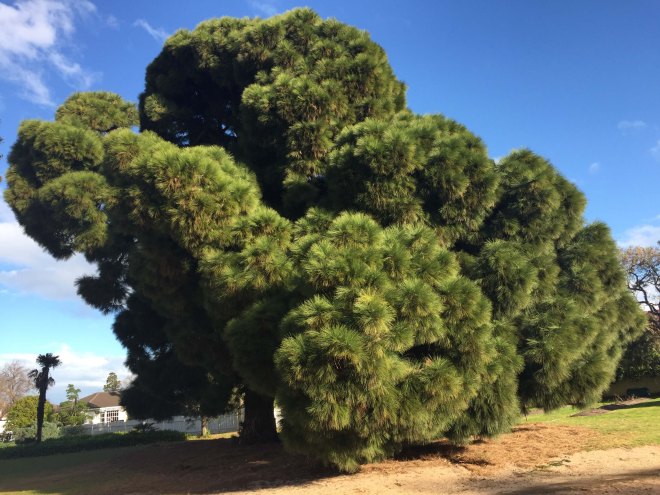 I have wandered many a time in the lush and leafy gardens, sometimes with my dog Bertie, or on summer days I sometimes go alone and lie under a tree with a book with just the rustling of trees for company. You can’t fail to spot the iconic Canary Island Pine with its distinctive shape. From the side it resembles the bustle on a Victorian dress with its backward curve. I love the way it commands the space. Sitting on a deep carpet of pine needles and weaving a row or two with Carmel, I discovered that the tree owes its singular form to a lightning strike in 1918 and that it is listed on the National Trust Register of Significant Trees. You can see the scars where the tree has lost branches, but I’d never lingered long enough to notice the jewel-like beads of sticky resin.
 Standing under the broad canopy of the tree and looking up offers a quite different perspective; the mosaic of sky peeking through the gaps in the branches, the sparkling droplets of resin sparkling against the reddish bark and the vivid green of the pine needles.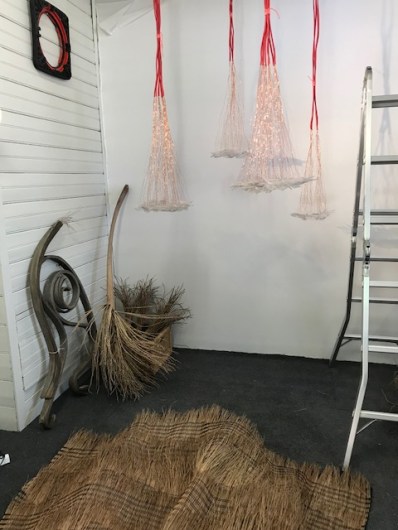




 This Quirky Life