A room to call my own: Paris

The truth is, people, that staying with family and friends for weeks at a time – while full of blessings, love, connection, reminiscing, giggles and wonderfulness- ­­­­doesn’t afford the same restorative and mind-clearing opportunities that, say, a walking holiday in the Tuscan hills or a week by the beach might. And only ex-pats who trot back and forth to their country of origin get it; others think we are moaning Minnies! But visiting lots of people you don’t see on a regular basis involves a deep dive into lots of lives with all their ups, downs, highs, lows and challenges. Sometimes I find myself lying awake at night reflecting on all these various lives; it can be a bit enmeshing and involving and I sometimes find it hard to detach myself.

Enough of my preamble. Suffice it to say, I enjoyed having a base I could call my own for a few days in a tiny (and I mean tiny) one-room apartment in Vincennes in Paris, an eastern suburb just outside the Paris peripherique. From the outside it didn’t look that promising and my heart sank as I climbed the wooden staircase, plaster peeling off the walls, to the dark broom cupboard where I retrieved the key from the key safe. But, once inside, it was exactly as advertised; stylish, well equipped, comfortable and cosy with very clever use of the space and storage. The only thing it lacked was a fan, which given the intense heatwave, would have made sleep easier! On the upside, the severe canicule (heatwave) meant that the Forfait Anti-Pollution ticket on public transport made travel very cheap. And it was good to see a Government-backed scheme encouraging people to leave their cars at home.

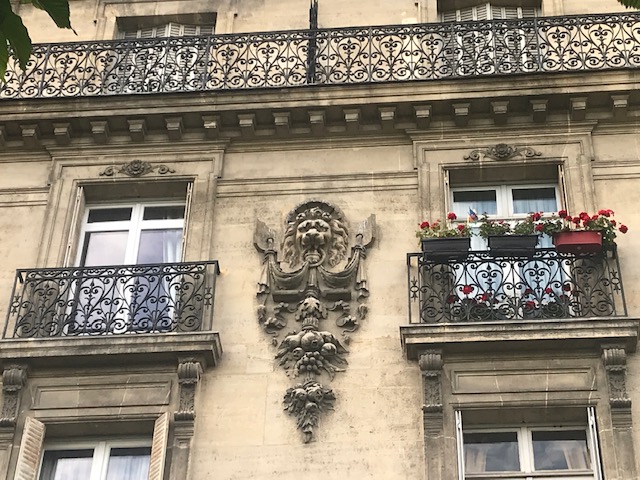
Wandering out my first evening I took in my surroundings: a crêperie, a dressmaker’s/alteration place, a spirituality centre advertising a talk on life after death, a café, a plumber’s, a nail salon, a couple of independent grocer’s, some small dogs on leashes being dragged out for walks in the blistering heat, and even the railway sidings planted up with shrubs and flowers, the tall hollyhocks reminding me of an English border. What I love about Paris is that everywhere you look there’s something interesting; whether it’s a bright red geranium on a wrought-iron balcony, the ornate buildings – decorated with here a Roman head, there a lion or a swag of flowers, the characteristic round attic windows and the flatiron buildings.

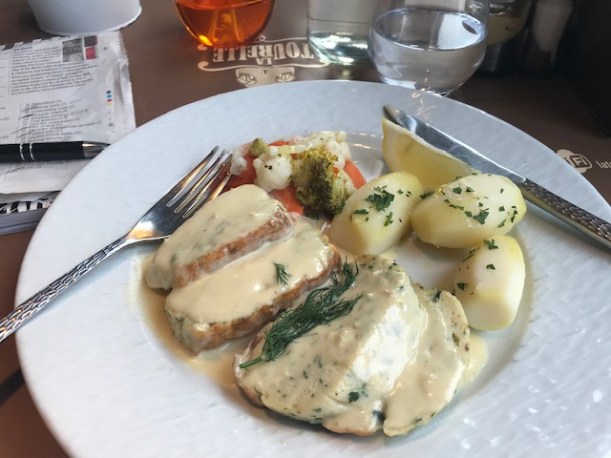
The first night I enjoyed a delectable dinner in a local brasserie, the hot mousseline de poisson (fish terrine) something I have never eaten in England or Australia but, then again, I am not a frequenter of French restaurants.

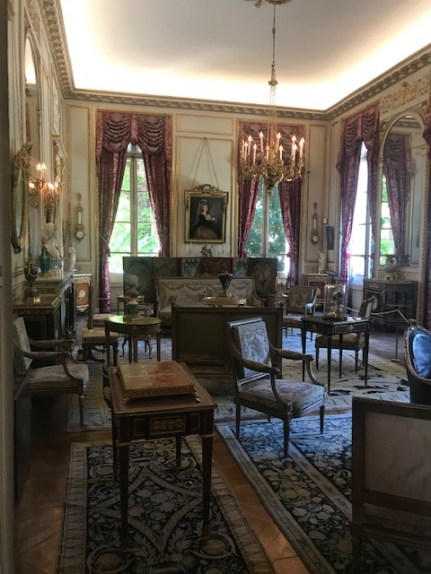
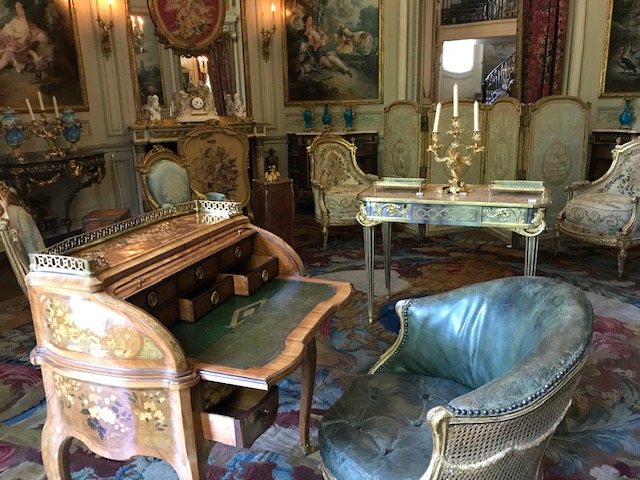
Unable to eat all three courses, I chose fruit salad for pudding and took it back to my garret for breakfast. That morning I indulged in a bit of very gentle tourism, before meeting a friend for lunch,  and visited the Musée Nissim Camondo, a small but exquisite house museum overlooking the Parc Monceau. The house, modelled on the Petit Trianon at Versailles, was built in 1911 by Count de Camondo, a member of a wealthy Jewish banking family, to house his collection of eighteenth-century art and furniture and objects from the reign of Louis X1V.

Some of my favourite pieces were the Gobelin and Aubusson carpets and tapestries, a marquetry desk made of over ten different woods, a roll-top desk inlaid with porcelain plaques (one of only ten in the world), the dining room laid up with a silver service presented by Catherine the Great to her lover, and the display of Sèvres porcelain, the Buffon collection, decorated with exotic birds dating from the late 1700s. The Camondo story, though, is a tragic one, the collection, which Moïse bequeathed as a museum on his death, is all that survives of the family. His son Nissim died in action in the first World War and his daughter Beatrice and her two children died in Auschwitz.

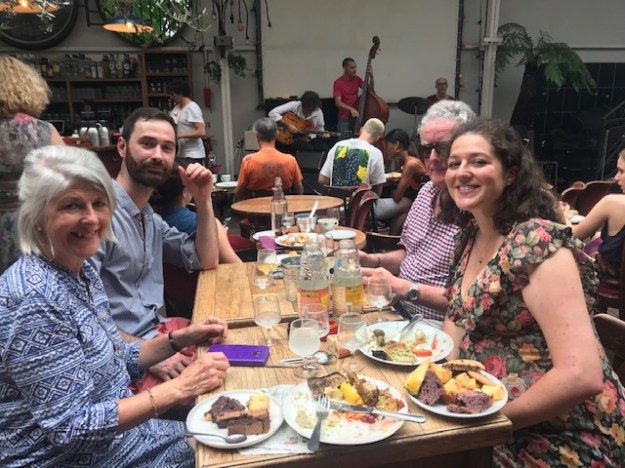
On Saturday night I headed to a birthday barbeque my niece, Georgie, and her husband, Manu,  were hosting in their garden in the green and leafy, once communist suburb, of Fontenay-sous-Bois. We oldies – my sister, her husband and I – enjoyed chatting to the youngsters but the pièce de resistance had to the the three-tiered cake – Victoria sandwich with fresh raspberries – that my sister had brought over from London on the Eurostar! The same beloved sister that met me for breakfast at Kings Cross Station at 7 a.m. the Sunday in May I flew in from Perth.  She’s a champ.On Sunday morning we headed off to the more ethnic 20th arrondissement to the Bellevilloise, an art nouveau cultural centre, once a cooperative – hence the warehouse-y feel – founded in 1877 also housing a café and restaurant. We were there for Georgie’s 30th birthday jazz brunch and we feasted like kings on the all-you-can-eat buffet. Even though weary from the night before and full of food, I insisted that we made a detour to the nearby Père Lachaise Cemetery, resting place of so many notable people and surely a perfect place for the spiritualists’ talk on life after death?
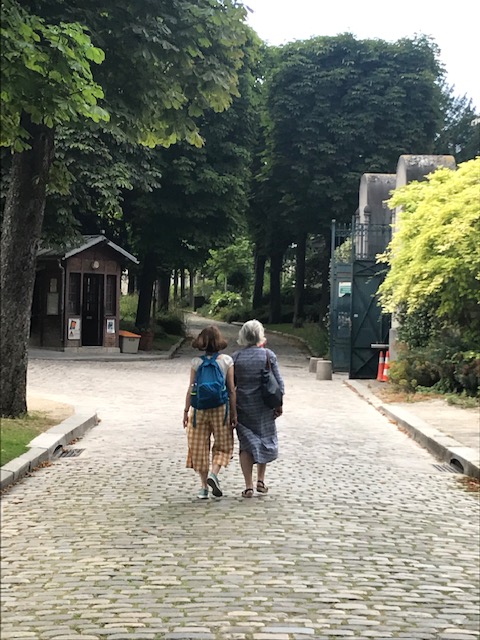
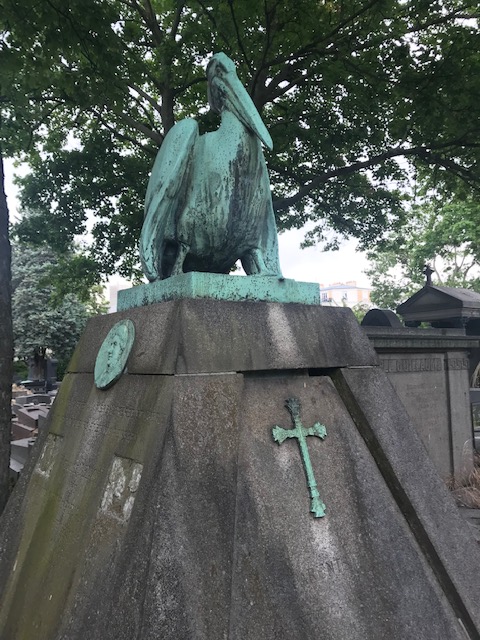
I dragged the family around with me, determined to the last – I’m like that – it’s an annoying perfectionist streak – tofind the tomb of at least one famous person.

My sister and I in Pere Lachaise

We did eventually find Oscar Wilde’s, although it didn’t really live up to the hype!  And for some years it’s been enclosed behind protective glass to prevent Wilde fans defiling it with lipstick-mouthed kisses. Ah well, at least we ticked it off! The most fascinating thing about Père Lachaise is that when it was first built in 1804, it was considered too far from the city and not well used so the administrators decided to attract more custom by moving the remains of some famous names starting with Molière and La Fontaine. Clearly a successful marketing strategy!

Not Oscar’s but another tomb that caught my eye

As I write this I am on the train – the wonderful TGV – heading towards Provence (tall cypresses that remind me of Van Gogh landscape visible in the distance). Provence means it’s time to pause, time to hang up my tools and let my mind go fallow. No more blogs for a bit – maybe I’ll even do a digital detox!

Wandering down Memory Lane

It’s been a week of reminiscing – meeting up with two university friends after a gap of 32 years and visiting Oxford, my home from 1997 to 2002.  The amazing thing about meeting Victoria and Charlotte (la otra Carlotta – we all read modern languages at Bristol) was that we just picked up where we left off. And, yes, we’ve all aged but, conversely, we all looked exactly the same. What had changed was our choice of food and drink. Prosecco wasn’t the drink du jour back then, fancy grains like quinoa hadn’t come to the West and spiralized didn’t exist as a verb and certainly not when teamed with vegetables!

I received the warmest of welcomes from my friends Hilary and John in Oxford. Freshly picked roses and a selection of hand creams by my bed, a kettle and a supply of herb teas in my room along with a stack of interesting books including Rose Tremain’s memoir, Rosie. How I love my creature comforts! Drinks and nibbles in their stylish garden followed by a delightful dinner was the perfect prelude to a good sleep.  Breakfast the next morning was beautifully laid-up with gluten-free cereal and bread, sliced mango and pomegranate and a pot of Cooper’s Oxford Marmalade. Luxury.

On Saturday morning Central Oxford was heaving with shoppers, tourists, students, day-trippers, school kids, buskers and performers – you name it. I met Juliette – I worked with her husband Giles at the Wildlife Trust and she and I used to sing in the same choir – and we wandered, chatting ceaselessly, through Christchurch Meadows where traditional England was in full swing: green striped lawns; punts gliding by; students in full regalia hurling themselves into the Isis to celebrate the end of exams; a cricket match in progress and cows grazing. We crossed over Magdalen Bridge and walked up a good stretch of East Oxford’s Cowley Road, known for its more Boho and multi-ethnic scene, to a park where Giles was DJ-ing between bands. I wish I had had more time to hang out at the Florence Park Festival and tap into the earthy, folksy, eco-friendly, funky vibe. I caught a bit of music over some polenta chips before bussing back to Central Oxford to give myself a little break before the next chat fest.

Another delightful dinner with friends Tom and Annemarie that evening, this time in Kidlington. And in a belated celebration of the summer solstice we sat outside after dinner overlooking a scruffy field, a donkey sanctuary (I also spotted a fox slope by), warmed by a crackling fire with the occasional bat flying over.

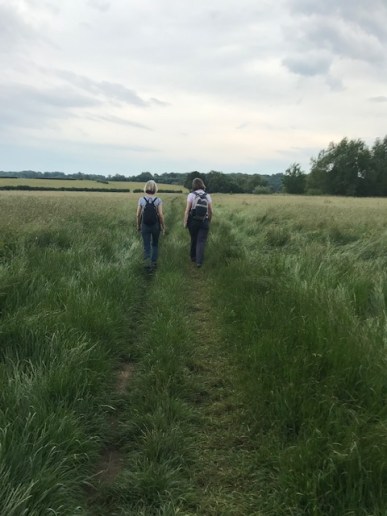
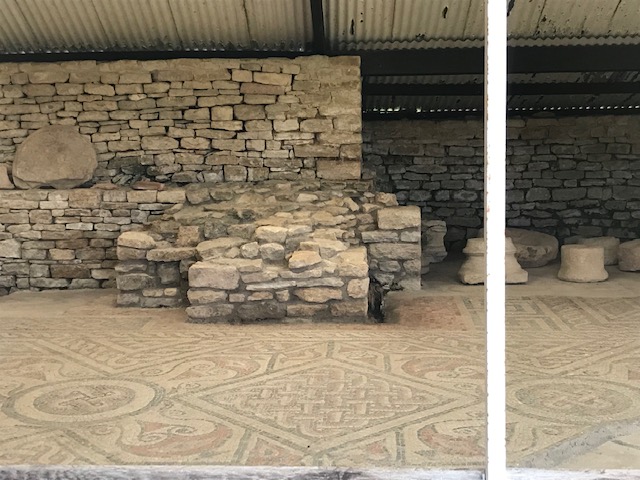
On Sunday I caught up with two girlfriends, Anne and Michele, and in the afternoon we all went for a walk through the fields (one of the things I miss most about living in Australia) starting in the village of Stonesfield and ending in Coombe. The walk so carefully planned by Anne ticked every box and more: green fields with red kites wheeling overhead; hedgerows dotted with fragrant elderflower and dog rose; a gently flowing river; country cottages adorned with blowsy climbing roses (lots of these); AND the ruins a 4th Century AD Roman villa in North Leigh, once one of the largest in Britain.

And the highlight: a section of a surviving Mosaic floor complete with patterns of leaves, knots, stylised pots and a swastika or ‘Greek Key’ pattern possibly serving as a maze to ward off evil spirits. The colours of the stone tesserae have faded, but it’s easy to imagine the original blues and reds and the wealthy Romans lounging around on couches, enjoying the underfloor heating.

I could have done with underfloor heating in my Oxford terrace, a rather hotchpotch house full of quirks and wonky angles, and not nearly as light and airy as my house in Australia. The energy always felt a bit stagnant – not helped by rivers of condensation that poured down the north-facing front window in winter. I recall an alternative health practitioner – Dr J – who I consulted in my digestive disaster days attributing my health imbalances to geopathic stress! Something to do with  underground nuclear testing since the Second World War causing splits in the earth’s crust. He said it was often present in people with syndromes and illnesses that failed to respond to other treatments, and who were living in damp or mouldy houses, plagued by wasps, bees or ants.  That was my house to a tee including invasions by wasps and bees nesting in the attic in summer.

Driven by an overwhelming urge to visit my old house – lifting the lid on the past is seductive and is maybe a subconscious desire to take stock of the present – I knocked on the door on Sunday afternoon. Sadly, I had just missed the current owner but I managed to peek through the window and saw that she’s put in a new kitchen and got rid of the cat-scratched carpets and replaced them with polished boards. I caught up with the neighbours on each side, both still living in Islip Rd, and found out my house has also had a loft conversion.  One can only hope that the makeover has driven out any geopathic radiation and ushered in feelgood vibes!

My house is/was the first on the left

Returning to my mother’s house talked out and ready for a rest – it gets very intense jumping into so many people’s different lives and absorbing and integrating information – I went to make a cup of tea after lunch only to find the kitchen windowsills teaming with ants. Geopathic Stress?! Probably not, I’d put it down to Climate Change and the strange weather and humidity. I am off to Paris this weekend where the temperatures are going to be in the late 30s, quite a change from today’s cloudy 19 degrees!


Scarecrows, Sprockers and State Visits

Have you ever thought about the history of scarecrows? I hadn’t but the 12th annual Ranskill and Torworth Scarecrow Festival – a village fundraiser close to where my mother lives in Nottinghamshire – prompted me to do some research. The Egyptians were the first to make wooden scarecrows in the likeness of deities to deter the birds from eating grain. In medieval Britain children would walk through the fields throwing stones at birds raiding the crops but when the Black Plague decimated the population in 1348, there weren’t enough people to work in the fields so they made scarecrows out of straw with turnips or gourds for heads.

I always think of that song in Joseph and his Technicolour Dreamcoat (still one of my favourite musicals of all time) Stone the Crows, the one that comes after Joseph interprets Pharaoh’s dream:

Well, stone the crows
This Joseph is a clever kid
Who’d have thought that 14 cows
Could mean the things
He said, they did

And who remembers Worzel Gummidge, the TV series from the 70s and 80s, based on the books by Barbara Euphan Todd with John Pertwee aka Dr Who as Worzel, the scarecrow? I’ve just read that the BBC is filming a new adaption to be screened later in the year. There’s something very lovable about a scarecrow who comes to life and befriends children, getting up to tricks and mischief.

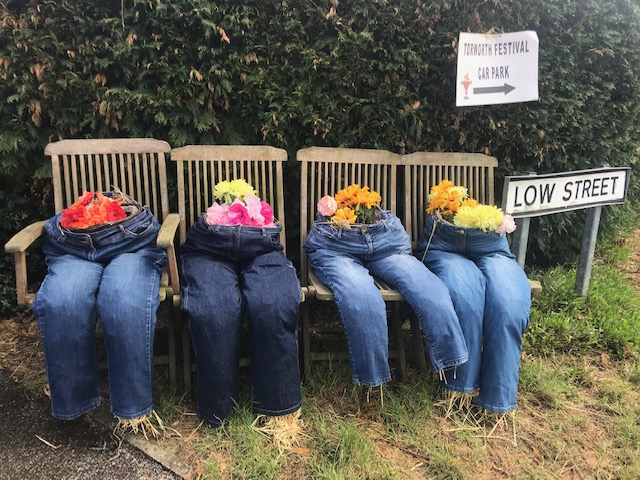
I didn’t count the scarecrows lining the roads around the two villages but there must have been a good fifty or more covering topics ranging from humour to history, cartoon characters, fiction, fantasy and fairy tale. Mum and I hopped on Wilfreda Beehive, a 1965 London Routemaster Bus, to view the exhibits in style.

Some of my favourites included three Spitting Image-style politicians: Theresa May, Jean Claude Juncker and Jeremy Corbyn, a policeman holding a hairdryer as a speed detector and a robed figure sitting on a chair entitled Mindfulness. Positioned atop trees and hedges along the route were knights on horseback, astronauts and children’s favourites such as Peppa Pig. A lot of fun.

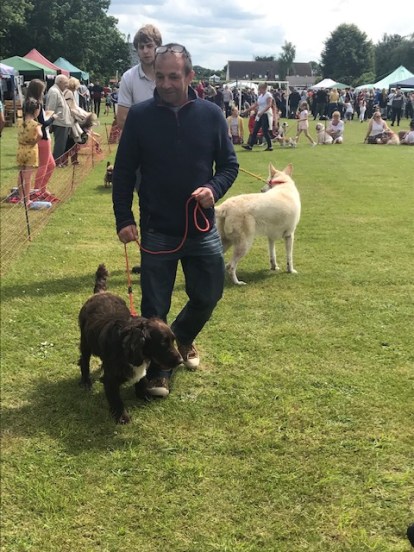
But there was more: amid the stalls selling hand-crafted bags and natural skincare products there was a dog show and competition with categories including Gundogs, Working Dogs and Hounds, Pedigree, Pastoral and Toy, Good Looking Boy/Girl and Most Appealing Eyes. Drawn to the spaniels, I met several Bertie lookalikes. They were, in fact, sprockers – a mix of cocker and spring spaniel. Bertie is the result (one of ten) of an accidental mating between a field spaniel and a cocker spaniel. What does make him? A focker, a flocker? The mind boggles. That same day I accompanied Mum to St Peter’s Church in nearby Clayworth, home to theTraquair Murals by renowned Scottish Arts and Crafts artist Anna Traquair (1852-1936). I reckon Mum goes more for the social connection than any deep-rooted faith. The somewhat happy clappy vicar – it was Pentecost Sunday (reminding me of our/Australia’s Pentecostal PM, Scott Morrison) – challenged us to reflect whether we were ready for God’s Kingdom on earth. The lady in the front pew assented with a vigorous YES and clapped her hands in the penultimate hymn. Mum, meanwhile, whispered all too loudly, that the service was going on way too long and she hoped there wouldn’t be yet another hymn. There was. I enjoyed a bit of time out to reflect, count my blessings (excuse the pun) and admire the fabulous murals.
Not to be defeated by the rain, we also visited Retford’s local museum housed in a handsome Georgian mansion. A mix of various private collections – china, glass etc – and displays of bygone eras, I enjoyed the Second World War Kitchen, the cabinet full of lotions, potions and medicines such as Dr MacLean’s Stomach Powder and the Victorian schoolroom. Although once a thriving market town (granted its first charter by Henry III in 1246) and then a coal-producing centre connected by a network of canals, it’s gone rather downhill and is now full of shops such as Primark and Poundstretcher.

There’ve been some afternoon naps – I’ve bagged what was Dad’s reclining chair and plugged in a little hot pad in an attempt to create a sun lounger experience. I’ve done lots of cooking and, to Mum’s delight, tried recipes that I have collected over the years with only one culinary flop so far. And all this against the backdrop of the ongoing Brexit debacle: no deal, a revised deal, a postponed deadline, proroguing Parliament, a General Election, scrapping Brexit or remaining. It’s chaos. And the way the Conservative party leader selection process is going, it looks like the UK and the US will each will be ruled by blond blusterers with bad haircuts. I met a lady on the train to London who was on the Conservative Executive Committee under Thatcher and was injured in the Brighton Hotel bombing in 1984. She knows Boris and insists that the buffoonery is all an act and that he is a shrewd player. Let’s hope she’s right!

Trump, of course, basked in the attention, pomp and ceremony surrounding his State Visit to the UK (labelling anti-Trump protests as fake news) to mark the extraordinarily emotional 75th Anniversary of the D-Day landings. Britain being Britain, he was highly criticised for his sartorial faux-pas with the vest of his white-tie outfit way too long under the jacket. Then there was the errant h in his spelling of the Prince of Whales and his vicious verbal attack on the Mayor of London. By contrast, the Queen so dignified and chipper and doing her bit for that so-called special relationship between the two countries.


The Republic of Words 1 of 3: Pie and Mash down the Roman Road

“How’s retirement?” “How’s the lady of leisure?” friends asked when I left a busy job at the end of March to take time-out to pause, refresh and reflect. Not surprisingly, it took a while to come off the million-miles-an-hour adrenal whirl, and I struggled to carve out leisure time amid catching up on everything I had neglected in favour of work. Every time I tried to create some lazy space something or somebody would butt in.  Relaxing and letting go takes practice!

Swimming against the tide – jumping out of work at my stage of life  – has its challenges. But whenever, I fidget and fret, wondering how, why, what, what if and what next, I’ve been experimenting with embracing whatever emerges. Instead of being goal-driven and pushing ahead with an agenda, I am seeing what happens if I open up to receiving life, wisdom and guidance in whatever forms it takes. My biggest treat when I let go of the to-do list is sitting on the sofa, drinking tea and reading with Bertie nestled beside me. T

In a recent radio interview journalist Louis Theroux  described he environment he grew up in as a  Republic of Words. I’ve decided to borrow that – books are my current credo, my anchor, my therapy, relaxation and intellectual stimulation. And each book I have read so far has resonated or contained some kind of message.

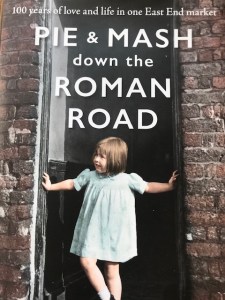
The first book, Pie and Mash down the Roman Road: 100 Years of life in one East End Market, tapped into my English heritage – in much the same way as an exhibition entitled: Royal Portraits: from the Tudors to the Windsors –  and my fascination with history and the cultural, social and political movements that have shaped my country of origin and who I am.

The Roman Road is the oldest trading route in Britain and, around 1900, stalls extended for a mile. The  book follows the lives of key families who lived, ate, worked, married and had kids in East End. The pie makers, tram drivers, eel dealers, printers, barrow-makers, Billingsgate porters, dockers, costermongers, the lady who looked after the public toilets, Sylvia Pankhurst (Emmeline’s daughter,  leader of the Suffragette movement) and the notorious Kray Twins.

by Melanie McGrath

G.Kelly’s Pie and Mash shop at 526 Roman Rd in Bow is another fixture  – the business has been in the same family for nearly 100 years.  I lived in London for nine years in the late ’80s and early ’90s but have to confess I’ve never eaten pie (minced beef), mash and liquor (which is a mix of flour, water and parsley). The Romans first introduced meat in a pastry envelope to Britain and they got it from the Greeks who probably got it from the Egyptians! That same global thread is mirrored in the waves of migrants who have populated the East End. And what a rich mix from Protestant Huguenot weavers in the 17th Century to the migrants from Ireland, Italy and Portugal, Jews from the Iberian Peninsula and then in the late 19th Century Eastern European Jews fleeing the pogroms. By the 1950s the Jamaicans were coming in, and in the 70s it was the turn of the Bangladeshis. Research suggests that sub-Saharan Africans, who were sold as slaves to planters and colonial officials in the 17th and 18th centuries, have been living in London from the 12th Century.

The other migrants are the eels of stewed and jellied fame, whose complex lifestyle sees them travel across the Atlantic Ocean before they reach the coasts of Europe as young eels, from where they head up rivers and streams and, as mature eels, migrate over 3000-miles back to their spawning grounds in the Sargasso Sea. The author Melanie McGrath has done extensive research both of people and place, and I learnt that eels have been eaten since Anglo Saxon times. As well as being the food of the poor, they have a reputation as an aphrodisiac. One Aldgate eel dealer used to cry out: “Everyone’s a baby.”

Talking of babies, there’s mention of Nonnatus House, which, of course, features in Call the Midwife, a TV series based on the memoirs of a lay midwife who lived and worked with the nuns in Poplar, more than 60 years ago.

This book paints a picture of a strong community, based in hard work and resilience.  The East End was very badly hit in the Second World War – most of the 1.2 million homes lost in the Blitz of 1941 were here. The author describes the area around Kelly’s pie shop in 1945 as resembling “a bad set of dentures; discoloured, smelly and uneven, full of gaping holes.”. As the rubble and slums were cleared, however, and new high-rise developments came in, the easy access to the market, the dance halls, social clubs, dog tracks, pubs and lidos disappeared.

For all the mod cons including indoor bathrooms, the new tower blocks lack the community spirit of the streets where grandmothers sat out on their stoops, peeling vegetables and chatting, and children played hopscotch. And the high rises are no good when the electrics fail. When Rita Willets goes into labour in 1964, she’s living on the 14th floor, the lift doesn’t work and her husband can’t reach the runs at Nonnatus house by phone. In the olden days, the street grapevine would have summoned someone to help. Someone like Marian Old, who worked at the Bryant & May match factory and, although too young to take part, recalled the first all-female strike of 1888 when women campaigned for better pay and conditions. Before conditions improved, women fell victim to ‘phossy jaw’, phosphorus poisoning that resulted in fluorescent vomit and jawbones disintegrating. Men and women alike did it hard in those days; Martha supplemented her wages with egg box-making, midwifery and pickling onions.

Another of my favourite characters is Ron Moss who grew up on Fish Island, now redeveloped as part of the Olympic Park, then a river backwater. Known as the Artful Dodger, he came from a poor family and lived by his wits quickly learning to leaf (Cockney rhyming slang for thief: tea leaf = thief). He forages for food, snares rabbits, steals swans’ eggs and fish from the river and on market days along the Roman he pinches sausages and other food, which he hides in his long-pocketed coat.

Then there’s Marian Old who cleans the toilets and loves her work. She is her own boss and sings while she mops and cleans. She has cups of teas with her regulars and keeps up with all the gossip, even giving sartorial advice as women and girls try on garments they have bought in the market. “She’s grown accustomed to handing out everything from fashion to family to romance advice with the sheets of crispy, disinfectant-smelling Izal paper.” The East End is well known as the home of London’s Rag Trade. Interestingly, the children’s rhyme Pop Goes the Weasel references the manufacture of clothing: Pop is a cockney term for pawn, a weasel both slang for the yarn-winding machine and part of ‘weasel and stoat’, cockney rhyming slang for coat. Incidentally, my father referred to champagne as weasel – as in popping corks!

Redevelopment since the Second World War has changed the social fabric of the East End considerably – Bryant & May’s was converted into one of London’s first gated communities of apartments in the ’80s, and, more recently, areas such as Docklands and the Isle of Dogs have become home to glittering tower blocks, with some areas yuppified and others hippified (think smashed avo and artisan coffee instead of pie and mash). And, yet, the old East End survives in patches; Kelly’s Pie and Mash shop at 526 Roman Road is still going strong albeit catering to contemporary palettes (chicken and leek pie and vegetarian options) and under renovation.

The author explains the pull of pie and place for customers all over the world searching “for a taste of the past that still lives vividly inside them, or that they may hardly recall or only know from older relatives but to which they nevertheless feel viscerally connected.” That neatly describes how I feel about England – which is why I so loved this book.  Much as I love my life in Australia, you can’t take the Brit out the girl – there’s an essence of Englishness that sits in my DNA. I am heading back to Britain soon and a trip to the East End is definitely on my list.

Lest we forget and the legacy of a black cello

Sitting at a favourite beachside café recently, I spotted among the display of black and white photos one featuring a group of World War 1 soldiers on the beach.  According to the caption they were on leave or recovering from injury – there was a Rehabilitation Hospital in nearby Hampton. How they must have savoured escaping the squalor and carnage of the trenches.Although films and books such as Sebastian Faulks’ Birdsong have informed my knowledge of the Great War – the war that was to put an end to all wars – I never studied it formally in school. Even if I had, the focus would have been on the battles, movements of troops around the various fronts, logistics and numbers rather than the human stories.

A friend of mine curated an an exhibition at the Melbourne Museum called Love and Sorrow, documenting the wartime experience of eight service personnel and their families. The exhibition was on for two years but, as it turned out, I got to see it the week before it closed – just before the Centenary of World War 1 in November last year.The exhibition started with the propaganda posters and parades extolling the virtues of courage, patriotism and duty. But following the trajectory of the eight characters and their families through photos, scrapbooks, letters, diaries and other personal effects, it soon became a story of separation, loss, trauma, mental and emotional disfigurement.

One mother, on hearing her son was missing in action, was catapulted into premature senility, another sent her husband their new baby’s booties only to have them sent back – redirected – in the same envelope. How chilling it must have been to read the words: Return to Sender.  One of the most confronting sections was ‘Men with Broken Faces’ – before the advent of sophisticated technology and plastic surgery, facial reconstruction methods were cumbersome and crude. One man who underwent surgery never went out in public without wearing a scarf over his mouth, his self-esteem and confidence as shattered as his jawbone.

One of the more positive stories concerned Lil Mackenzie, an enormously plucky nurse who cared for patients in France and Italy close to the front-lines. She was summoned to Buckingham Palace to receive a Royal Red Cross 2nd Class for her outstanding public service. On returning to Australia, Lil and her sisters set up a care home in Boronia, Melbourne, and many of her patients were veterans. She lived to 90 but suffered bouts of depression after the war; no one came back from WW1 without some form of physical or mental scarring.

The statistics were sobering too: over 60,000 Australians died in the war and thousands more went on to die of war injuries out of a population of only five million people. The stories of the eight characters got under my skin, and their sacrifice and suffering lent context and poignancy to a Centenary of Armistice 2018 service that I attended at Green Point overlooking the Bay in Brighton. As the Last Post sounded before the one-minute silence, I thought of all those who had set out with ideas of glory and heroism and either lost their lives or returned broken, tearing families, friends and communities apart.Soon after, I spotted Peter Jackson’s (Lord of the Rings) film They Shall Not Grow Old, which was on limited release in Australia.  This extraordinary film co-commissioned by 14-18 NOW and The Imperial War Museum in London in association with the BBC used original footage from the trenches (stored in the Imperial War Museum’s archives) and used modern day technology to deliver it to us in colour.  Using oral histories from surviving British veterans as the soundtrack and actors voicing beyond-the-grave dialogue based on forensic lip-reading of the silent footage, this film is a tour de force and offers a visceral snapshot of life in the trenches and on the frontline. The oral histories were recorded by the Imperial War Museum in the 1960s around the 50th Anniversary of WW1, the first time the human element of the war was captured.

What struck me was the no-nonsense approach of the soldiers who approached the war as a job they had to get done whatever it took. Resilient, hard-working, committed and uncomplaining they got on with it. Watching footage of them enlisting (many lied about their age to qualify and none had an ounce of spare flesh– no fast food in those days), it was clear that they had to take whatever boots, shirts and uniforms they were given, irrespective of the fit. And they only had one change of shirt. Quite apart from the bombing, bloodshed and loss of life, life in the trenches was gruelling; from dysentery to rats, lice, the stench of rotting bodies, foot rot, frostbite, lack of sleep and the general filth and all-pervasive mud. And, yet, such camaraderie and mutual concern among the soldiers as well as an ability to make the most of any down time –playing cards, laughing, joking, telling stories and, of course, smoking. Lots of that back then.

My immersion in all things WW1 prompted me to ask an uncle about our own family’s involvement. My great-grandfather and two great uncles served in the war but, amazingly, they all survived; how I wish I had known enough to ask them questions while they were still alive.

However, my uncle did share a wonderful story of a musical legacy. In the 1890s a Belgian family came to live in England and in 1904 the father gave his musically-gifted son a black cello. So talented was the boy that he played for Queen Victoria. But in 1914 with the advent of the war, he packed the cello away and went to the front to fight for the British army. Senior officers heard that that the boy was a virtuoso player and gave him ten days leave to return to the UK to get his cello so that he could play for the troops. The cello got damaged along the way but was glued together and survived the war as did the man, who went on to teach cello at the famous independent school, Eton. Cut to 12 November 2018 and a contemporary pupil played part of Elgar’s Cello Concerto on the very same black cello as part of a Centenary Remembrance Service for the 1570 Old Etonians who were killed in World War. If that cello could talk, I wonder what stories it would have to tell.

Manifesting wealth: Walnut Baths, Barsony Lamps and Book Boxes

I’ve been in a very quest-y phase, working on creating what comes next in my life. Other people get hooked on drugs, gambling, food, shopping – name your poison – but I find self-development can be quite addictive. I’ve always been very determined to steer my life forward, even more so when setbacks occur.

One of my goals this year is to build my finances, which, for me, equates to freedom of choice. I’m not interested in designer labels, handbags and luxury restaurants; it’s more that I don’t want to be doing a desk job at 75, or even 65 for that matter! But I do want to increase opportunity and decrease stress.

Earlier this year I signed up to a 27-day online course – I forget the exact title – but something about manifesting financial abundance. It involved creating a positive ‘attitude of gratitude’, re-framing limiting beliefs and writing affirmations. The values and mindsets we grow up with do play a part in our relationship around money –  that bit rang true for me. But I found the affirmations written in quasi Biblical archaic language risible: ‘my lamps are now filled with the oil of faith and fulfilment.’ But, for sheer ridiculousness, nothing compared with the Feng Shui cures.

I’m pretty broad-minded when it comes to ‘alternative’ stuff whether it’s past lives, angel guardians, karma, soul contracts, tarot or the one-ness of all things, but I draw the line at these hocus pocus cures and the investment of time they require. For example, the cure that called for water collected from nine successful businesses between 11 a.m. and 1 p.m.  Once collected, you had to put the water in an empty vase, rub a little over your hands and chant a mantra visualising the water turning into not just wine (Biblical scholars will pick up the reference), which was spelled as whine (ouch), but actual money. Then there was the instruction to collect soil from a rich person’s house – with their permission. There are plenty of wealthy people living in expensive real estate in my suburb, but I am not going to go round with a trowel and ask if I can dig up a bit of their garden so I can plant my seeds of wealth. Who knows, maybe they would think I was some kind of plant thief or worse!  The crazier the cure, the longer the explanation; this one also required Chinese coins, silk or cotton in five different colours, money from nine different countries, dried foodstuffs and 100 coins of any denomination. Coins and foodstuffs combined have happy memories for me – Christmas pudding baked with sixpences inside, a tradition that harks back to ancient Yuletide customs. 

Talking of baking, another cure recommended fixing one or three convex mirrors above the stove in the kitchen. The aim being to energise your money luck and prevent your money going up in smoke. But my favourite was the one about bathing for precisely eight minutes in walnut juice (made from boiling whole walnuts that had been soaked overnight), making sure you immersed yourself fully – head included – seven times to wash away any feelings of unworthiness blocking your money luck. I don’t know about you but I prefer my walnuts in a piece of cake or encased in chocolate.

Interestingly although abundance did not manifest in 27 days (who knows what would have happened had I faffed around with vases of water, bowls of rice under my bed, jade plants with coins buried in the soil not to mention walnut baths), some useful financial tools and tips came my way. A friend recommended comedian Claire Hooper’s Pineapple Project on Radio National. To quote from the blurb: learn what rich people know, how poor people think, and how you can take control of your coin. From how to save smarter, to earning more, and setting yourself up for a secure future, it’s all the money skills no one ever taught you. Incidentally, did you know that a $50 dollar note in Australia is colloquially referred to as a pineapple? I didn’t.

The podcasts covered lots of ground from interviews with super rich retail giant Gerry Harvey to a  mother feeding a family of four on $50 a week. But it was the episode on debt control – or lack of it – and low levels of financial literacy among women that made the greatest impression. Particularly the story of a woman in her 20s who had been through an acrimonious divorce and, keen to cease contact with her ex as soon as possible, settled for the investment property while he kept the apartment they had shared.  She thought that sounded fair until she realised the investment property was heavily mortgaged. Alone and devastated by the divorce she sought refuge in spending with the help of four credit cards, and soon failed to keep up with the mortgage payments. It wasn’t until she received a letter from the bank re-possessing the property that she realised the gravity of her situation.  But what I found most upsetting is that this woman, already up to her eye balls in debt, then invested $15,000 on ‘Get Rich Quick’ courses and workshops. It seems as if her ex-husband, the bank and so-called self-styled gurus were all out to manipulate her. At this point, I should say that my online dabble in financial self-helpery only cost me $30.

In a nice twist of synchronicity, the following week I received an invitation to a free local seminar – Inspiring Conversations for women: Empowering Your Finances. I reckon I will come away with some useful tips, none of which involve water or walnuts.  And creating a budget and finishing reading The Barefoot Investor are on my list.

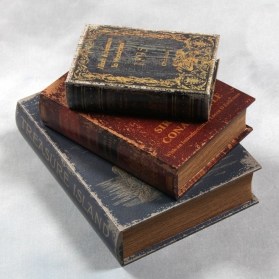
But I confess to still being a bit of a dreamer and, secretly, long to be part of a discovering a-million-dollar-Old-Master-in-the-attic story. A few weeks ago, I went on an Airbnb Experience, an Antique and Treasure Hunt. Darren used to be in insurance dealing with cyclone and bush fire-related claims,  but got tired of ‘dealing with death’. He now has a portfolio career and plays in a couple of bands, is an Airbnb host and buys and sells antiques online. It’s all about having a keen eye and knowing what sells. We had a fun day out and I learnt about some of the things that command a good price such as antique book boxes (trinket boxes masquerading as old classics), Barsony lady table lamps (Barsony denoting matt black coloured ceramics named after Hungarian refugee George Barsony who came to Australia in 1949) and Kiss (the band) memorabilia. My purchase of the day was a $13 pair of jeans that fit me like a glove – nothing I can translate into retirement millions, but a good money-saving buy.


And last week I had two wins: a fine bottle of wine in a door price and $37 in the lottery. Maybe my cup will soon runneth over. Meanwhile I should have enough oil to keep my lamps of faith and fulfilment burning brightly!

For all Melbourne-based vintage and treasure hunters, check out Darren Trott’s Facebook page for some finds: https://www.facebook.com/antiqueandvintagemelbourne/


Amsterdam Part 2: All’s well that ends well

I stayed in Amsterdam either side of the International Fundraising Congress in mid-October. And the two experiences couldn’t have been more different. I booked the first weekend’s Airbnb in the Jordaan well in advance but, at the suggestion of a friend, I left booking the last couple of nights until I got there. Little did he or I know that Amsterdam often reaches full occupancy (well, in the sought-after areas anyway), and that ADE (Amsterdam Dance Event– a massive five-day electronic dance festival) coincided with my last weekend.

Either I had to pay an extortionate price to stay in the centre amid the canals and tall gabled houses, or I had to look further afield.  Time was not on my side and the price band I put into my internet search yielded few results. But the aptly named Ozo Hotel in South East Amsterdam sounded a reasonably good bet. The reviews spoke of friendly staff, comfy beds and proximity to the Metro. Still not cheap, but doable and available, I booked without doing any further research.

After the conference the shuttle buses dropped us at Amsterdam Central Station. Still sporting some disco glitter on my eyes and cheeks from the closing night gala, I grabbed the first available taxi, hefty luggage in tow (one of my goals for 2018 is to, once and for all, master the art of travelling light), and gave the address of the Ozo. The Turkish taxi driver told me – with glee, I now realise – that it was way out of Amsterdam; he held up Google Maps to prove it, and said he doubted it was near the Metro. Heart-sinking, glitter fading, energy flagging and metre ticking over – we arrived at the Ozo about twenty-five minutes later. The bill was a hefty 70 Euros. In truth, I don’t remember seeing a metre or getting a receipt – later I found out I had been well and truly fleeced. Never mind, I didn’t make the same mistake again, and, on my last day, took a short taxi ride to a train station where I got a five Euro train to the airport. Thankfully the hefty luggage had wheels!

Although the Ozo was bland, IKEA-ish and situated in a business park, it had everything I needed (including a restaurant that, while soulless, served up one of the best meals of my trip: gloriously fresh cod baked with spinach and potatoes)  and the Metro was, as advertised, in walking distance even if the graffiti-adorned urban landscape lacked canal-side charm.

In fifteen minutes I was back at the Central Station and heading off in sheeting rain and battling past ADE and other tourists (the relative peace at the Ozo began to appeal) to Anne Frank’s House in the Prinsengracht.  It is one of the more touristy  attractions, and you have to put up with shuffling along in a long line. But as you climb more and more stairs to reach the secret annex (Achterhuis) above the offices and warehouse of the spice and gelling companies Otto Frank worked for, Opekta and Pectacon, you sense just how constricted and trapped they were with eight people confined to a few rooms and the threat of discovery ever present.  When they were raided after two years in hiding, everything was cleared and seized bar a few personal effects – including Anne Frank’s diary – which survived. Looking at the photos of how they arranged their living space converting bedroom to living and dining room and back again each day, I was amazed at how orderly, respectable and even cosy they managed to make it. I asked a volunteer guide if it is known who informed on the two families and was surprised to learn that an ex-FBI agent has been trying to solve the case for the last three years.

The bookcase covering the door to the Annex where the Franks were hiding

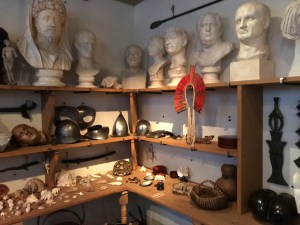
By contrast, Rembrandt’s House (also in the heart of Amsterdam) with its attractive red and green shutters is a fully restored 17th century house that allows you to go behind the scenes and see where Rembrandt worked and taught other artists. Along with an extensive display of his etchings and sketches, there are hands-on demonstrations of how Rembrandt mixed pigments with linseed oil to make his paints.He bought the house in 1639 but didn’t manage to pay off the 13000 Gilder mortgage. The house was reconstructed from the inventory that was drawn up when he went bankrupt in 1656 and had to move out. As well as his box bed, I was fascinated by the collection of objects which he used as models for his paintings such as Venetian glassware, marble busts, seashells, dried animals and exotic weapons. Considered one of the great artists of all time, Rembrandt was, apparently, a moody man, and enjoyed a scandalous love life involving  extra-marital affairs with his nanny and then a 20-year old girl.
Saving the best for last, I visited the Van Gogh Museum on my final day. Another scandal-ridden artist with a prolific output. Not only did he paint 900 paintings in his short ten-year career, but he was also a skilled draughtsman and made nearly 1100 drawings, half of which are kept in the museum and displayed on a rotational basis due to their sensitivity to light. Some of his letters – many to his brother Theo – are also on display giving an insight into Vincent’s  troubled emotional life.From his famous Potato Eaters peasant painting through to his self-portraits, orchards in bloom, Sunflowers, and the emotionally-imbued landscapes of waving wheat, blue skies, gardens and rural scenes of his final days in Auvers-sur-Oise, this was the highlight of my trip.  Getting up close and personal with his paintings was to experience their intensity of colour, depth of expression and extraordinary beauty. As Van Gogh himself said: “Paintings have a life of their own that derives from the painter’s soul.”
I’m happy to say that my immersion in Dutch culture continues back in Australia. Last week I went to see the film Loving Vincent. In fact, I didn’t love it as I found the plot weak and a bit clichéd but, as the first fully painted feature animation, it’s visually stunning; each frame is hand-painted on canvas with oil paints – it took 150 artists six years to paint over 65000 frames.

And even better, I just found that Rembrandt and the Dutch Golden Age: masterpieces from the Riijksmuseum is showing at Sydney’s Gallery of NSW until mid February 2018.

Amsterdam Part One: Hippies and Rosehips, Canals and Cafes

I never dreamed that a fundraising job based in Australia would take me to Europe – until I got the chance to attend the International Fundraising Congress in Amsterdam in mid-October. The Congress was in Noordwijkerhout, about half an hour outside Amsterdam, in the bulb growing region famed for its tulips. October is not the time for spring tulips, but Noordwijkerhout is also situated about 5km from the North Sea. The day before the conference kicked off, a group of us hired bikes – those wonderful Dutch bikes with the wrap-around handle bars that ensure effortlessly good posture – and rode to the sea through the sandy dunes, dotted with bracken, rose-hips and autumn leaves. And how different the North Sea is to Port Phillip Bay here in Melbourne – the water so grey, the landscape so flat, the beach dotted with windbreaks, a line of defence against the chilly winds.

I got to Amsterdam the weekend before the conference and stayed in an Airbnb place in the Jordaan, in the heart of the city centre, an area that in the 17th century was home to the working classes and immigrants – Amsterdam was known for its tolerance towards other political and religious beliefs. It’s still a pretty tolerant kind of place – where else does marijuana waft out from seemingly every other bar and café? Having spent a couple of weeks in the UK visiting my mother and other relatives and friends – one long, if enjoyable, talkfest ­­­­– I arrived in Amsterdam exhausted and with a sore throat. The upside was that I learnt to override my normal tendency to move into manic sightseeing mode and, instead, to take it more gently, absorbing the place in a more visceral way.

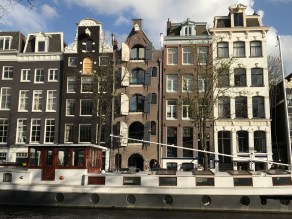
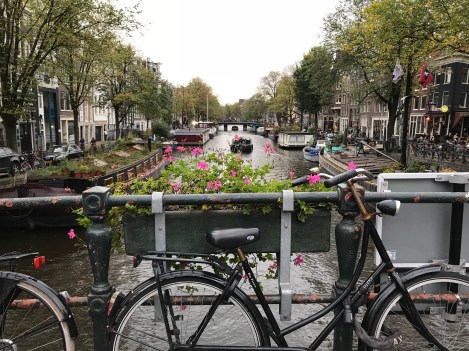
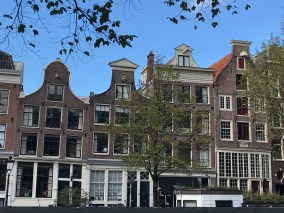
Had I never gone further than the Jordaan’s many canals and flower-decked barges, zig-zagging over bridges, dodging the multitude of bikes, and window-shopping in the narrow streets lined with eclectic shops selling everything from antiques and antiquarian books to vintage, vinyl records, jewellery, designer goods and more, I would have come away sated. Every building, street corner, view and vantage point is a delight to the eye.  Like every other tourist (the bane of the locals’ lives) I found myself standing on the various bridges and marvelling at the canals lined by tall, narrow houses – some of them lop-sided and leaning Pisa-like to one side –  with their distinctive gables and winches, which are still used to hoist furniture in and out through the windows.


My first stop was the Noordermarkt, which, on Saturday, sells organic and fresh produce as well as second-hand clothes, bric-a-brac and craft items.  After sampling different cheeses and cured meats and browsing the many stalls and hearing a bit of folk music, I ordered a lemon and ginger tea (excellent for the throat) in a nearby café.

Bas-relief of Saint Nikolaus


I got talking to a permaculture-loving hippie who was reading ‘The Freedom to be Yourself’ by Osho. He was pondering whether you have to step out of mainstream life to find freedom or whether it’s more of a mental attitude. I noticed a jar of thick, orange-coloured liquid on the table and asked what it was. Turns out it was home-made rosehip puree, packed with vitamin C. He offered me some and it was delicious, and I credit it with knocking my sore throat on the head. Who knows, maybe ingesting one of his vials of home-brewed therapeutic grade cannabis oil minus the mind-altering THC would have done the trick, but I stuck to the hips. Amusingly, my soul-searching friend drinks two strong espressos follow by a slug of cannabis oil to calm him back down. Each to their own.

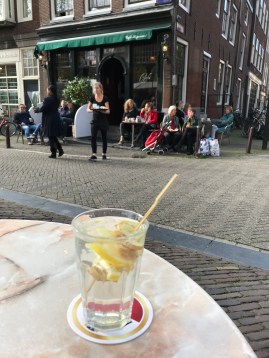
From there I headed off to another market in the Lindengracht, this time tasting salted caramel-coated almonds before plonking myself down in a canal-side café to drink Earl Grey, write post cards and people watch. A man with an unleashed dog trotting along at pedal height cycled past, then a woman balancing a suitcase on the back of her bike, and another with groceries piled up  in a large box attached to her front wheel.  A girl with a German shepherd dog – no Nanny State health and safety fuss here – came into the café and ordered her coffee.

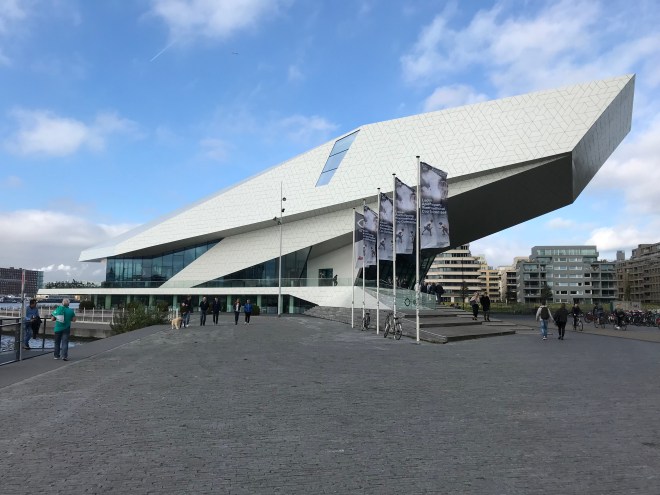
In the afternoon, I took a ferry (a free, three-minute trip) over the River LJ to Noord Amsterdam, an area that was once home to industry and shipbuilding but is now vibrant, edgy and home to places such as Café Pllek, made out of converted shipping containers, and the iconic EYE Film Institute, a modern geometric building with floor to ceiling glass windows designed to mimic film concepts of the illusion of light, space and movement.

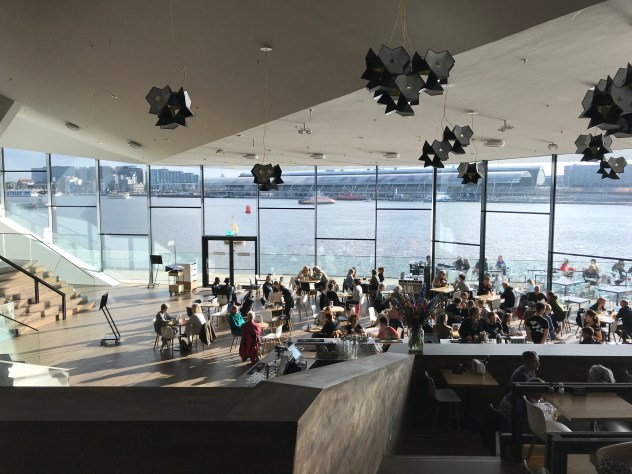
I had lunch (this time with fresh mint tea) in the terraced café with views over the water (it’s a similar concept to the Sydney Opera House minus the sails and sun) and then explored the exhibition.

The EYE documents the history and evolution of film to the present day. From dioramas and zoetropes to the magic lantern and a showcase full of static frames, it’s a fascinating journey through the world of moving image with lots of interactive exhibits including a 360-degree panoramic room where you can choose from various film fragments on subjects such as slapstick, celebrity culture and voyages of discovery. I also watched part of a German vintage film in one of the film booths.


Sunday was a glorious warm and sunny day and I started with pancakes (a must-do in Amsterdam) – goats cheese, spinach and smoked salmon – followed by a browse in a vintage clothes shop where I fell into conversation with an American couple. I overheard them mention Frankfurt and knowing the Frankfurt book fair is in October (I used to be in publishing) got chatting. Beyond Words are the company that published the hugely successfully self-help book The Secret. Later that evening, I bumped into them in the Thai restaurant next door to my Airbnb place and we had a drink – I even gave them an idea for a book. I was starting to like this more spontaneous style of sightseeing.


Two more cafés (and I thought Melbourne was the café capital) punctuated my day; one right by the water and with a selection of international newspapers, and the other one –  Rembrandt’s Corner – a nice post-brunch, pre-dinner refuelling stop after a tour round the Greater Master’s house (who would have guessed he went bankrupt and couldn’t pay his 13,000 Gilder mortgage? – more on Rembrandt’s House in Part 2).

A few days in London: from pearls to plywood and the Pickwick Papers

Being a tourist in a city where I once lived  as a worker, commuter, tax payer and home-owner is a joy. It’s an absence makes the heart grow fonder scenario. Although I made the most of London when I lived there from 1987 to 1996, there’s nothing sweeter than returning, unencumbered by day to day responsibilities, with the time and space to experience the place afresh, and inspired by the appreciative perspective of a long-distance traveller. Google tells me London is 10,497 miles away from Melbourne.

This time I tapped into a bit of glamour with dinner at the Athenauem Club in Pall Mall, one of London’s oldest clubs which counts 52 past and present Nobel Prize winners among its members and has oil paintings of Dickens, Darwin and other dignitaries lining the walls. Another night, my sister took me to the theatre to see the Ferryman by Jez Butterworth at the Gielgud Theatre in Piccadilly. The play set in the 80s about four generations of an Irish family was mesmerising with 22 actors on stage at one time plus a live rabbit and a real-life baby. It’s a tale of grief, disappearance and loss – an aunt to dementia and an elder son’s body is found in the bog. Woven throughout the family narrative are myth, magic, ‘the Troubles’ and the corrosive and threatening presence of the IRA.

IMG_0438

Pall Mall at night

Before the theatre we strolled through the Burlington Arcade admiring its high-end jewellery, leather, cashmere, shoe and perfume stores all so exclusive that, in most cases, you must ring the bell to be admitted. For fun, we enquired about the price of a beautiful pearl necklace only to find it was £77,000!

IMG_0403

Pricey Pearls

As if to bring things down to earth – albeit in an airborne way – the ceiling space in the Arcade featured the work of French artist Mathilde Nivet whose 300 bird sculptures, painstakingly crafted from paper, fluttered overhead.

IMG_0401

After that it was onto Fortnum & Mason known as Fortnum’s for short, an elegant and gracious store with its plush red carpet and spiral staircase connecting the floors selling luxury hampers, teas, coffees, cheeses, biscuits and fine wines all presented in its trademark green tins or boxes. It’s a bit like entering a fairy tale until you come to pay the bill.

IMG_0407

A quick trip to the Victoria & Albert Museum offered plenty of contrast. An exhibition about plywood  showed how layering cross-grained veneers to make material stronger than solid wood has been used since 2600 BC in Ancient Egypt, but the advent of mechanised saws in the 1830s saw it emerge as a key material in the industrial age as it was cheaper than cast metal.  From the covers for Singer Sewing Machines, tea chests, car parts, surf boards and the moulded fuselage of Mosquito aeroplanes in the Second World War, the exhibition highlighted the versatility of plywood. Today, plywood has become popular as a material for digital design due to rise of digital fabricating machines known as CNC Cutters (Computer Numerical Control).

IMG_0423

IMG_0432

No visit to the V & A would be complete without a wander through the fashion section where we took in (crazy) cumbersome court mantuas, corsets and crinolines –  the starchy, scratchy and restrictive Victorian costumes were a perfect segue to a trip to the Dickens Museum the next day.

IMG_0435

A court mantua worn by women in the 1750s to royal assemblies and balls

Dickens and his wife Catherine lived at 48 Doughty Street in Bloomsbury from 1836-1839, and this is where he wrote OIiver Twist, the Pickwick Papers and Nicholas Nickleby. Some samples of his hand-written drafts – they were published in monthly parts – are on display along with his writing desk and chair and one of his reading desks, from where he performed his public readings. He’d edit his own text and write himself stage directions in the margins. Upstairs in one of the bedrooms is a mirror in which he practised impersonating some of his characters so he could ‘see’ them.

IMG_0454

A hand-written draft page from Oliver Twist

Other more quirky exhibits include a model of a hedgehog in the kitchen (they were kept in Victorian kitchens to eat insects and keep the bug population down), a commode with a letter from Dickens to his doctor complaining about: “distention and flatulency, and disagreeable pains in the pit of the stomach and chest, without any disarrangement of the bowels.” Sounds like a long-winded way (forgive the pun) way of describing indigestion. Dickens was also a big fan of cane chairs, perhaps the latest in ergonomic design back then. He writes to a friend: “I can testify there is nothing like it. Even in this episodical hotel-life, I invariably have my cane chair brought from a bedroom, and give the gorgeous stuffed abominations to the winds.” I’m sure Dickens would have been a fan of mattress toppers had they existed in his day. See: To sleep, perchance to dream

Berlei bras, Bridges and Bakelite Radios: Brave New World

It’s easy to put on rose-tinted glasses and think that the world used to be an easier, better place in bygone eras. Pick your decade and add a touch of sepia and a few cherry-picked memorable events, and it can all seem much more glamorous, if not romantic.

Wandering round the NGV Australia’s exhibition of life in 1930s Australia – Brave New World, named after Aldous Huxley’s classic futuristic dystopian novel – I was struck by how many of the themes and concerns of that era still preoccupy us today – from consumerism, traffic congestion and the loss of individuality in an increasingly fast-paced and mechanised world to the position of women in society.

The exhibition starts with paintings and photos documenting the building of the Sydney Harbour Bridge.  The painting by Grace Cossington-Smith (a nice overlap for me as I saw some of her work recently at an exhibition entitled O’Keeffe, Preston, Cossington Smith: making modernism at the Art Gallery of New South Wales) of the bridge during construction has an optimistic feel; there’s colour, movement and expansive skies. It’s as if the bridge – the largest single-arch bridge in the world when it was completed in 1932 – heralds the dawn of a new era. Horizons were expanding and skyscrapers going up – Melbourne’s tallest building at the time, the Manchester Unity building, was built in 1932.


Grace Cossington-Smith

Speed, efficiency and expanding road and rail networks gave artists working in new media and styles a rich source of imagery. Max Dupain’s 1938 photo of Rush Hour in Kings Cross hints at the stresses of modern life, although, to my contemporary eye, the moody black and white finish and all those vintage cars feels more 42nd Street than Darlinghurst Road. It’s sepia-tinted nostalgia at play again.

A non-stop daily train from Melbourne to Albury – the Spirit of Progress – averaging 70 mph first ran in 1937 and featured an ‘ultra modern’ kitchen meaning passengers could choose a 3-course dinner for six shillings. The menu is wonderfully dated and includes delights such as consommé or clam chowder, boiled leg of mutton or boiled flathead with parsley sauce and, for dessert, steamed Victoria pudding or compote of peaches and custard.

The position of women in society was changing as it became acceptable for women to live alone, work and even frequent nightclubs! At the same time, a leaner body type became fashionable with defined waists and more revealing clothing. To help women achieve a more sculpted figure, clothing companies such as Berlei used a Figure Type Indicator, a measure that made sure women wore suitable foundation garments to correct their ‘figure faults’. An amusing ad by Berlei – It isn’t Done –  that ran in cinemas in 1930, plays on a screen. You can view it here:  https://aso.gov.au/titles/ads/berlei-it-isnt-done/clip2/.  Women’s rights still had a long way to go.

One of my favourite parts of the exhibition is a whole room of radios from those that were set into pieces of furniture to portable Bakelite models and others with fancy Art Deco grilles. How exciting it must have been when radios first brought the outside world live into the home! A soundtrack playing in the background includes Fred Astaire favourites such as Night and Day and Cheek to Cheek.

A single black negligée on display hints at glamour and the Hollywood femme fatale – and, interestingly, an advert for a white goods blends glamour, romance and elegance with a photo of a fridge flanked by a couple in evening wear. Although it was still not acceptable for middle-class women to light up a cigarette in public in the 20s, by the 30s smoking was portrayed as being sophisticated. There’s a wall of paintings of women of the era, some of them smoking or looking suitably louche or rebellious.

Peggy Crombie painted by Sybil Craig

Reactionaries like the photographer Max Dupain didn’t like to see women emerge from being just wives and mothers and begrudged them their new-found freedoms: “there must be a great shattering of modern values if woman is to perpetuate the race… In her shred of a dress and a little helmet of a hat, her cropped hair, and stark bearing, the modern woman is a sort of solider… It is not her fault it is her doom.”

Contrast his views with those of Jean Broome-Norton, a sculptor whose Hippolyta and the Amazons defeating Theseus depicts the Queen of the Amazons with a proud and strong physique complete with conical breasts – Madonna didn’t get there first.  Worryingly, between the war years, there was a move away by some sections of society from what was perceived as the corrosive influence of Europe and a tendency to look inwards.  The human body and physical form and prowess expressed through references to Classical Greece and mythology became synonymous with nationhood. A new Australian ‘type’ became desirable, a white Australian hailing from British stock, but one that was muscular and athletic from swimming and surfing.  With the benefit of hindsight and historical knowledge, this cult of the body is uncomfortably close to the Nazi Party’s Aryan ideal and racial cleansing.

As war loomed in the 1930s, lifesavers became linked with military service as they were trained for ‘battle’ in the surf and male lifesavers became poster boys – literally– for ads marketing Australia to tourists.  It was all about manhood, military service, muscles and virility.Of course, no exhibition of this inter-war period would be complete without reference to the Great Depression. In contrast to the negligees, glamorous gowns, airbrushed posters, radios, fridges, cars and speedy trains with restaurant cars, there was huge unemployment (levels reached nearly 32 per cent in 1932) and poverty.  A series of photos and black and white grainy film depict life in the slums in the cities, while works by artists such as Arthur Boyd and Albert Tucker express anxiety and existentialism.

One of the last photos in the show is by Max Dupain and it reflects concerns at the time that machines and mechanisation were destroying the body, perhaps even humanity. Brave New World (1938) shows a woman trapped by technology. Naming the piece after a book that had been banned by the Australian Customs Department, with existing copies rounded up and burnt, was provocative. One wonders how Dupain reacted (he lived till he was 81 in 1992) to the first man in space, women’s liberation and the pill. Not to mention how he would fare in today’s world where much of life is actioned by the swipe of a finger across a screen.  Brave New World is on at the NVG until 15th October, 2017.